
What Is an Antalgic Gait, and Why Am I Limping?
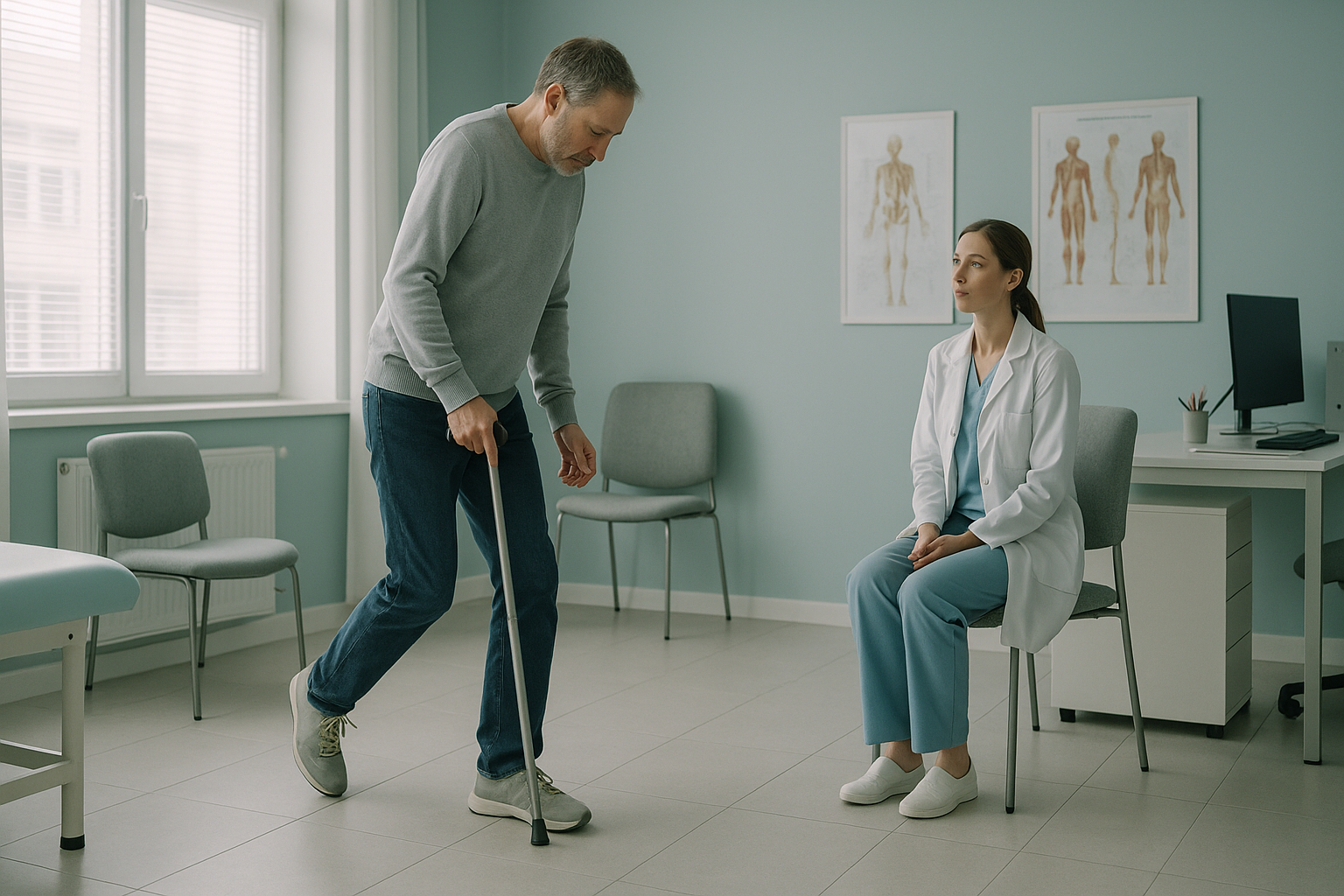
An antalgic gait is a limp your body creates to avoid pain. You spend less time standing on the sore leg, so each step on that side is quicker and lighter. It is one of the most common types of abnormal gait in adults. The key to understanding what is going on is finding the source of the pain, not just looking at the limp itself.
Key points
- An antalgic gait is a limp to avoid pain, where the stance phase on the painful leg is shortened.
- The cause can be in the foot, knee, hip, pelvis or spine, and pain often shows up away from where it really starts.
- Scans done lying down can miss alignment problems that only appear when you are standing and bearing weight.
- A standing whole-body EOS scan captures the full picture from head to feet in one image.
- If your limp came on suddenly with numbness, weakness, or loss of bladder or bowel control, seek urgent medical attention.
What does antalgic gait actually mean?
Antalgic gait means a way of walking shaped by pain. The word "antalgic" comes from the Greek for "against pain." When you put weight on one leg, your nervous system senses discomfort. It then automatically shortens the time that leg spends on the ground. This shortened stance phase is the main sign of the limp.
You may not even realise you are doing it. Friends or family might notice the limp before you do. Over time, the muscles and joints above and below the painful area start to compensate. You can then develop aches in places that were fine before.
How do I know if my limp is an antalgic gait?
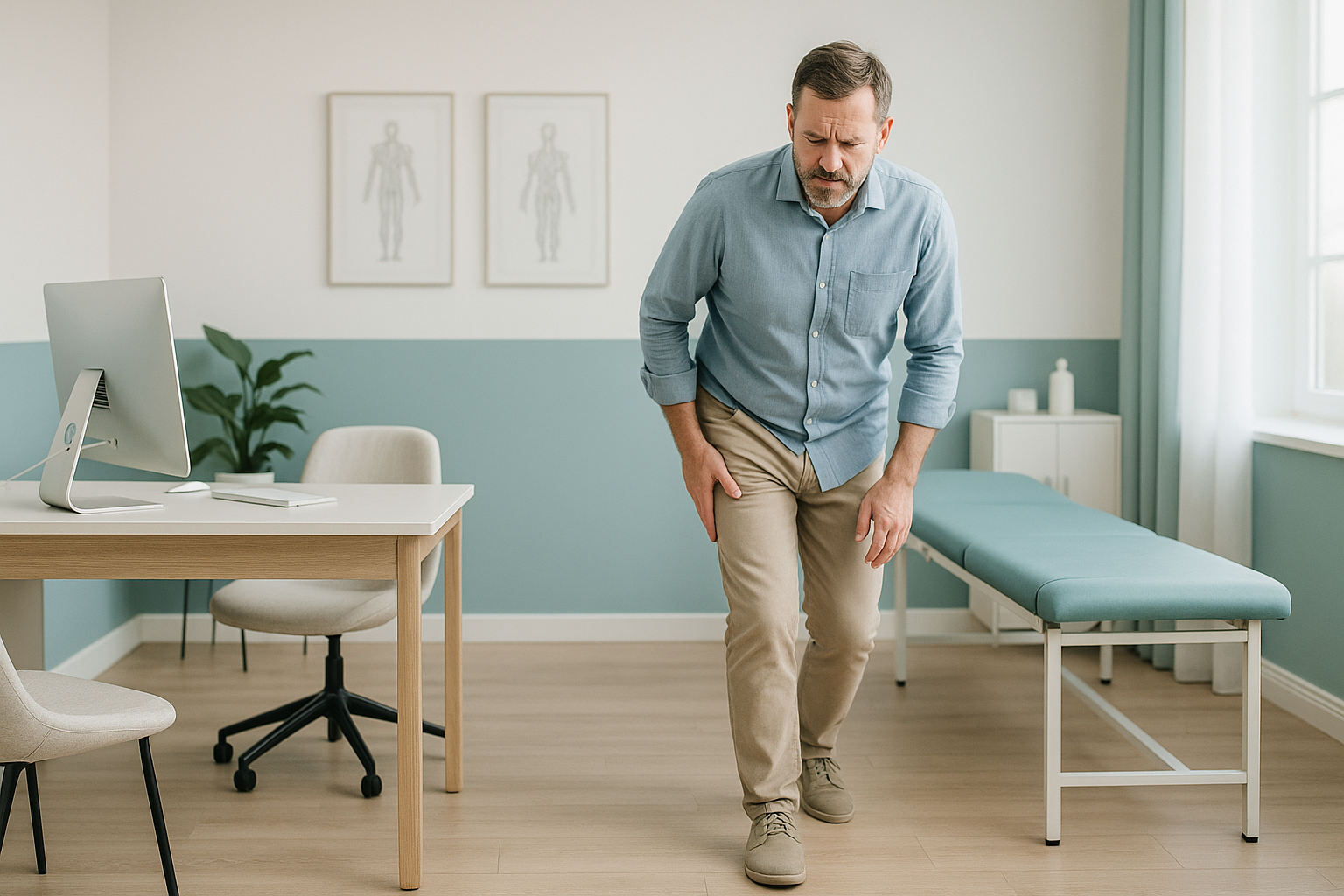
You can usually recognise an antalgic gait by watching how you walk, or by asking someone else to watch. The common signs are below.
Your foot spends less time on the ground on the painful side.
Your upper body tilts to the other side to take load off the sore leg.
You naturally slow down to limit the force going through the painful area.
Your arms may swing unevenly as the rest of your body adapts to the limp.
Important. If your limp appeared suddenly along with numbness, leg weakness, or any loss of bladder or bowel control, please seek urgent medical attention. Contact your doctor or go to your nearest emergency department.
What causes a painful limp in adults?
Many different problems can trigger an antalgic gait. The pain does not always come from the place you expect. A problem in the hip can make the knee hurt. A stiff lower back can change how your foot lands. Below are some of the most common sources.
Arthritis, labral problems, or wear from misalignment. Read more about hip pain and alignment.
Osteoarthritis, meniscus damage, or tracking problems that get worse under load.
A pelvic tilt or a spine problem can send pain down one leg and cause a limp.
Plantar fasciitis, stress reactions, or ankle stiffness change how you push off.
Sometimes people develop a painful limp with no obvious injury. This is common after years of subtle misalignment. One joint slowly becomes overloaded. The pain only becomes noticeable once the compensation can no longer keep up.
Why does pain show up away from the real problem?
Your body is a connected chain from your feet to your head. When one link in that chain is stiff, weak or misaligned, the links above and below it adjust to keep you moving. This is called compensation.
For example, a mild hip rotation can change the angle of your knee and the way your foot strikes the ground. You might feel pain in the knee or the ankle rather than the hip. Treating only the painful spot often gives short-term relief, because the underlying cause has not been addressed.
This is also why a gait analysis that looks at the whole body, rather than one joint alone, can show connections you might not expect.
How is an antalgic gait assessed with standing imaging?
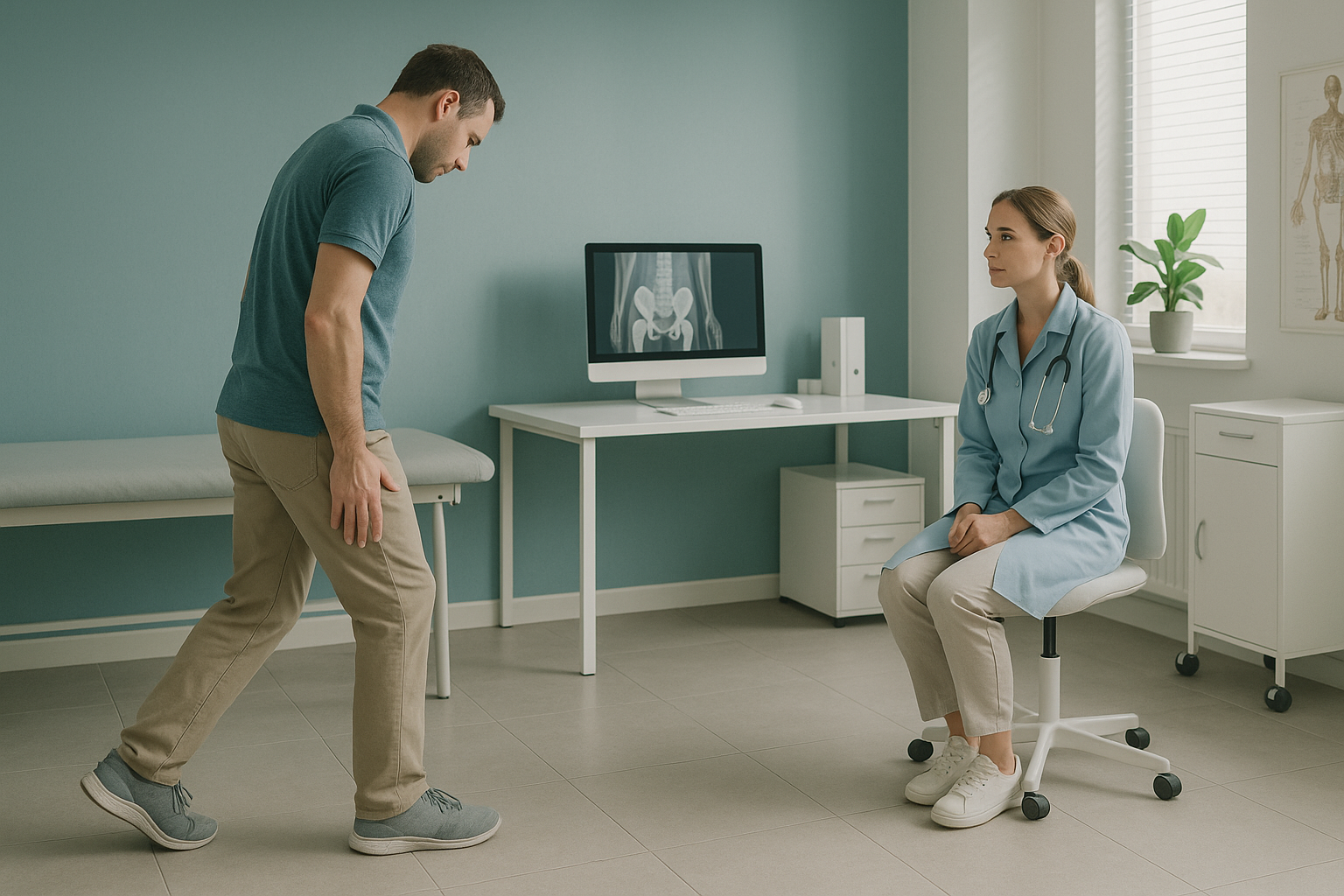
A standing, weight-bearing scan captures your skeleton exactly as it works when you walk. Conventional imaging, such as a standard X-ray, CT or MRI, is usually done lying down. When you lie flat, your muscles relax and your pelvis settles. The alignment problems that cause your limp can then disappear from the image.
You stand naturally inside the EOS scanner. The machine captures a full image from your head to your feet in a single pass. Gravity loads your joints just as it does when you walk, so any tilt, rotation or asymmetry shows on the image. The scan uses about 90% less radiation than a standard X-ray, around ten times less.
When you lie on a table for a conventional scan, the weight is taken off your joints. A difference in leg length, a subtle pelvic tilt, or a knee that only drifts inward under load may not be visible. The scan may look normal even though you walk with a clear limp.
ScanAlign standing EOS imaging captures the full alignment picture in one appointment. Your radiographer can see exactly how your feet, knees, hips, pelvis and spine relate to each other while gravity is doing its work.
When MRI is the better choice. EOS shows bones, joints and alignment. For soft-tissue problems such as discs, nerves, ligaments or cartilage, MRI is usually the better tool. Your treating clinician may recommend one or both, depending on what they suspect.
What can be done about an antalgic gait?
The first step is finding out why you are limping. A limp is a symptom, not a diagnosis. Once the underlying cause has been found, your treating clinician or specialist can recommend the right way forward. That might include physiotherapy, orthotics, targeted exercise, or further tests.
ScanAlign is a diagnostic imaging clinic. We do not provide treatment. Our role is to give you and your treating clinician a clear, whole-body standing image. That way, any alignment problem adding to your limp is visible, measured and recorded.
Before you start a treatment, or change the one you are on, it is worth getting a detailed diagnosis. Knowing whether the cause sits in your pelvis, your legs or your spine changes what will actually help.
Wondering whether a standing alignment scan could explain your limp? You can book a gait and alignment scan, or start with a free video consultation from home to talk about your situation before you plan a trip to London.
Book a free video consultationFrequently asked questions about antalgic gait
It is a limp caused by pain. Your body automatically shortens the time you spend standing on the sore leg to reduce discomfort.
An antalgic gait is driven by pain. A Trendelenburg gait is caused by weakness in the hip abductor muscles, which makes the pelvis drop on the opposite side. The two can sometimes happen together.
Gradual wear, subtle misalignment, or early joint changes can cause pain without an injury you remember. The limp may only appear after years of quiet compensation.
Yes. If exercise loads a joint that is already slightly misaligned or worn, pain may appear afterwards and cause a temporary limp. The pattern is the same: your body shortens the stance phase to protect the sore side.
A standing EOS scan captures your full alignment under gravity. A conventional X-ray taken lying down removes the effect of body weight, so tilts, rotations and differences in leg length may not show.
EOS uses about 90% less radiation than a standard X-ray, around ten times less. It is a very low-dose system.
No. You can book directly yourself. We offer a free video consultation first, so we can make sure the scan is right for your situation.
The price for patients travelling from abroad is confirmed during the free video consultation, and you can find other answers on our FAQs page.
You stand still inside the scanner for a few seconds while the image is taken. There is no tunnel, no loud noise, and you stay fully upright throughout.
Seek urgent medical attention if your limp appeared suddenly along with numbness, weakness in the leg, loss of bladder or bowel control, or severe pain. Contact your doctor or go to your nearest emergency department.
Find out why you are limping
A free video consultation lets you talk through your symptoms with our team from home, before you commit to anything.
Book a free video consultationWritten by Abbas Dhami (Specialist Diagnostic Radiographer)
Sources
- Whittle, M.W. Gait Analysis: An Introduction, 5th ed. Butterworth-Heinemann, 2012.
- Perry, J. & Burnfield, J.M. Gait Analysis: Normal and Pathological Function, 2nd ed. SLACK Incorporated, 2010.
- NHS. "Limping in adults." nhs.uk. Accessed 2024.
This page is general information and not a diagnosis.
ScanAlign is the trading name of CoreMed Solutions Ltd and operates under The Harley Street Hospital's CQC licence.