
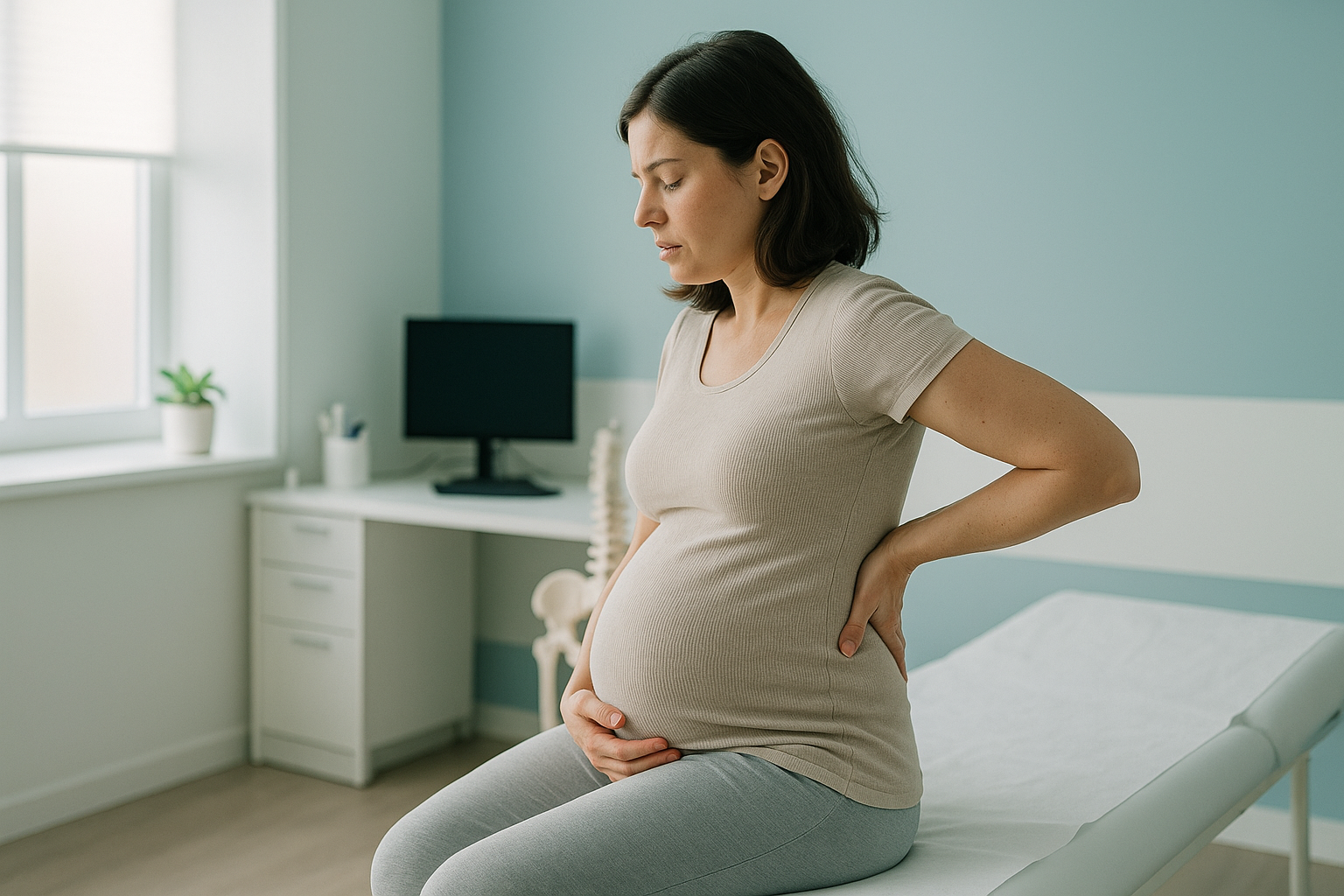
What Causes Back and Pelvic Pain in Pregnancy?
Back pain in pregnancy is caused by a mix of hormone changes, a shifting centre of mass and extra load on joints that were not designed for it. The hormone relaxin loosens your pelvic ligaments to prepare for birth. But it also makes the joints less stable. As your bump grows, your lower spine curves more and your pelvis tilts forward. This puts strain on muscles, joints and nerves.
Key takeaways
- Up to two thirds of pregnant women have back or pelvic pain at some stage.
- Relaxin, weight gain and a forward shift in your centre of mass all play a part.
- Pain often appears in the lower back, the sacroiliac joints or the pubic bone.
- Most back pain linked to pregnancy improves after birth, but it can linger if alignment changes are not addressed.
- X-ray based imaging (including EOS) is not used during pregnancy. A standing alignment assessment is an option once you have given birth.
Back and pelvic pain during pregnancy is extremely common. It can range from a mild ache to pain that makes walking, sleeping and daily tasks truly difficult. Knowing what is happening inside your body, and why, can help you manage it. It can also help you know when to seek more help.
Why does pregnancy cause back and pelvic pain?
During pregnancy your body changes in several ways at once. Each change can put extra stress on your spine and pelvis. The pain is rarely down to one single factor. It is usually a mix of the causes below.
This hormone softens the ligaments around your pelvis. This is good for birth, but it loosens joints and can cause instability and pain.
As your bump grows, your lower back arches more. This is a form of increased anterior pelvic tilt, and it compresses the joints at the back of your spine.
The extra weight of the baby, fluid and placenta adds a lot of load to your spine, pelvis and legs, especially in the third trimester.
Your centre of gravity moves forward. Your muscles and spine work harder to keep you upright. This leads to tiredness and aching.
Your body works as a connected chain. When the pelvis tilts forward, the lower back makes up for it by curving more. The muscles in your back, hips and tummy are forced to work in new patterns. This is why lower back pain in pregnancy often spreads into the hips and legs as well.
What does back pain in pregnancy feel like?
Back and pelvic pain in pregnancy varies a lot. Some women feel a dull constant ache. Others have sharp, stabbing pain with certain movements. Common patterns include the following.
A deep, broad ache across the lower back, often worse after standing or walking for a long time.
Pain at the back or front of the pelvis, around the sacroiliac joints or pubic bone. Often worse when walking, climbing stairs or turning in bed.
Sometimes called sciatica in pregnancy. A sharp or burning pain that runs from the buttock down the back of the leg.
Pain that wakes you when turning over or getting out of bed. It is often linked to pelvic joint instability.
When to seek urgent help. If you develop sudden numbness or weakness in your legs, or lose control of your bladder or bowels, contact your midwife or doctor, or go to the nearest emergency department straight away. These symptoms are rare but need immediate medical attention.
What are pelvic girdle pain and SPD in pregnancy?
Pelvic girdle pain (PGP) is the broad term for pain felt across the pelvis during pregnancy. Symphysis pubis dysfunction (SPD) is a specific type of PGP. Here the pain centres on the pubic joint at the front of the pelvis. Both are driven by the same hormone and mechanical changes.
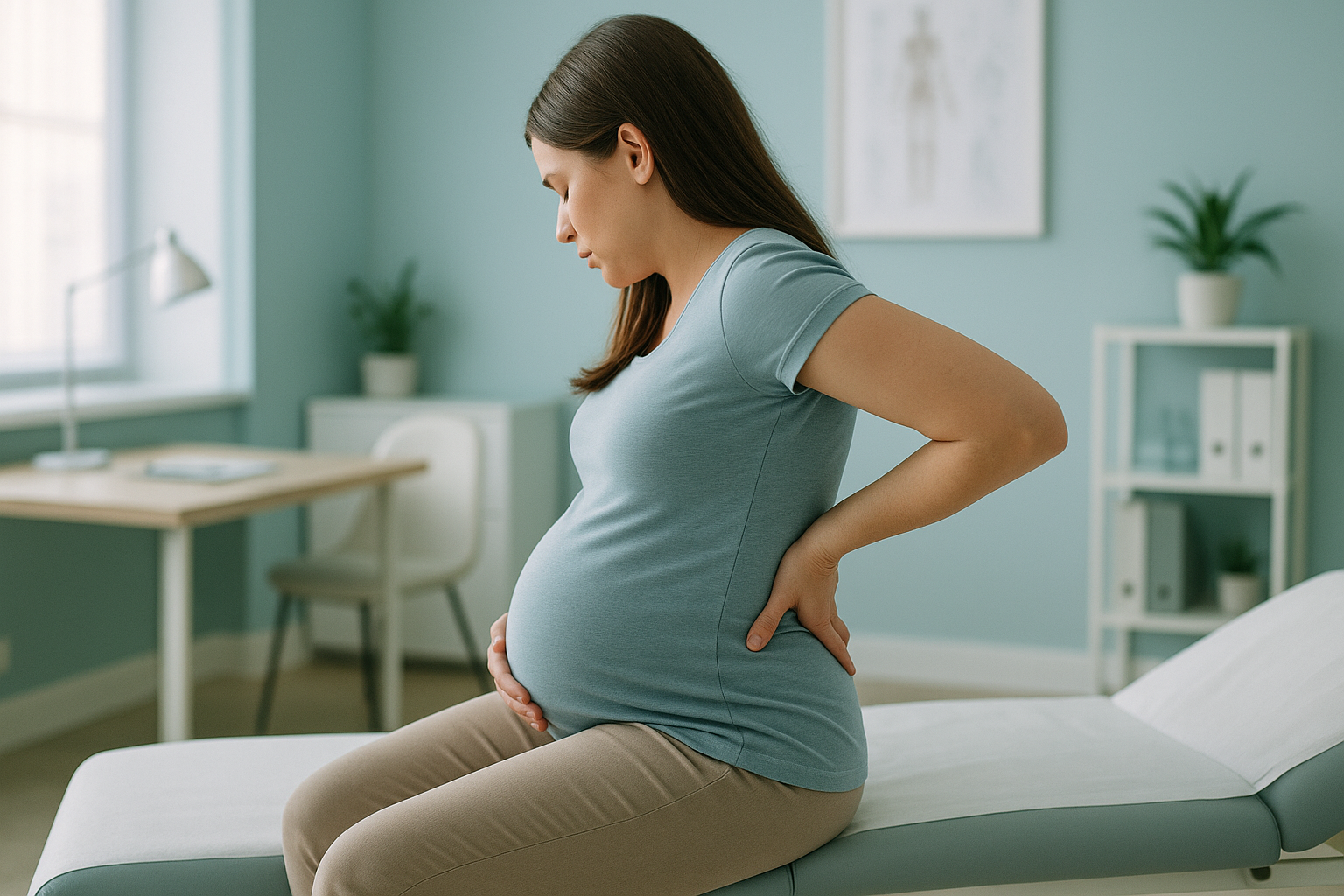
SI joint dysfunction is another common source of pelvic pain. The sacroiliac joints sit at the back of the pelvis, where the spine meets it. When relaxin loosens the ligaments around these joints, they can shift slightly. This can cause a deep ache on one or both sides of the lower back and buttocks.
During pregnancy, you may have one of these problems on its own, or a mix of them at the same time.
How can you manage back and pelvic pain during pregnancy?
Most back pain in pregnancy can be eased with a few practical changes. Your midwife or doctor can refer you to a physiotherapist who specialises in pain linked to pregnancy. Below are some commonly recommended approaches.
- Physiotherapy. A pregnancy physiotherapist can teach you safe strengthening exercises for your core and pelvic floor. They can also help you move in ways that reduce joint strain.
- A support belt. A maternity support belt can take some of the load off your pelvis and lower back, especially during the third trimester.
- Sleep position. Lying on your side with a pillow between your knees can help keep the pelvis aligned and reduce night pain.
- Safe exercise. Walking, swimming and pregnancy yoga or Pilates can keep muscles strong without overloading joints. Always check with your midwife or physiotherapist before starting something new.
- Pacing and rest. Avoiding long periods of standing or walking without a break helps prevent flare-ups.
A note on imaging during pregnancy. EOS standing X-ray, standard X-ray and CT all use radiation and are not suitable during pregnancy. MRI can sometimes be used safely during pregnancy if your clinical team decides the benefit outweighs the risk, but it is typically kept for urgent situations. For most back pain in pregnancy, your midwife or doctor will assess you clinically without imaging.
What if back or pelvic pain continues after giving birth?
For most women, back pain linked to pregnancy improves in the weeks and months after birth. But some women find the pain lingers, mainly around the pelvis, sacroiliac joints or lower back. This can happen when the alignment changes that developed during pregnancy do not fully settle on their own.
Postnatal alignment assessment. If your back or pelvic pain has not settled within a few months of giving birth, a standing whole-body imaging assessment can show exactly how your spine and pelvis are aligned under your full body weight. A lying-down scan can miss this kind of detail, because gravity and muscle activity are not in play when you are flat. ScanAlign standing EOS imaging captures the whole skeleton in one low-dose standing image. Your clinician can then see whether lingering pelvic tilt, spinal curve changes or joint asymmetry might be adding to your ongoing pain.
You can check who our scan is suitable for on our eligibility page. If you have given birth and still have back or pelvic pain, you can arrange an assessment after birth in London once you and your medical team are happy the time is right.
Before you start a treatment, or change the one you are on, it is worth getting a detailed diagnosis. Knowing whether the cause sits in your pelvis, your legs or your spine changes what will actually help.
Frequently asked questions
Yes. Back pain during pregnancy is very common and affects up to two thirds of pregnant women. It is usually caused by hormone changes, extra weight and a shift in your centre of gravity. But common does not mean you should ignore it. If pain is affecting your daily life, speak to your midwife or doctor.
Pelvic girdle pain (PGP) is the umbrella term for any pain around the pelvis during pregnancy. Symphysis pubis dysfunction (SPD) is a specific form of PGP where the pain centres on the pubic joint at the front. Both are driven by the hormone relaxin loosening the pelvic ligaments.
Yes. True sciatica, caused by compression of the sciatic nerve, can occur during pregnancy. More often, the shooting leg pain people call "sciatica" in pregnancy is actually referred pain from the sacroiliac joint or from muscles tightening around the nerve. A physiotherapist can help tell the two apart.
By the third trimester, the extra weight of the baby is at its greatest. Your centre of mass has shifted further forward, and relaxin levels are high. Your lower back curves more to make up for it, and the pelvic joints are at their loosest. Together, these factors make the third trimester the most common time for back and pelvic pain.
No. Any X-ray based imaging, including EOS, uses ionising radiation and is not used during pregnancy. If imaging is urgently needed, your clinical team may consider MRI, which does not use radiation. For back pain in pregnancy, a clinical assessment by your midwife or physiotherapist is usually the first step.
For most women, yes. Hormone changes reverse, weight returns to normal and the pelvic joints become stable again. But some women find the pain lingers for months or longer. If alignment changes that developed during pregnancy have not resolved, a postnatal standing assessment can help identify the cause.
If back or pelvic pain is affecting your ability to walk, sleep or carry out daily activities, ask your midwife or doctor to refer you to a physiotherapist who works with pregnant women. There is no need to wait until after birth. Early guidance on movement and exercises can make a real difference.
In most cases, gentle exercise such as walking, swimming and pregnancy yoga or Pilates is safe and helpful. Strengthening the muscles around the spine and pelvis can reduce pain. Always check with your midwife or physiotherapist before starting a new exercise programme.
Many women find a maternity support belt eases pelvic and lower back discomfort, especially during the third trimester. A belt works by taking some of the load off the pelvis and giving a sense of stability. It is not a substitute for physiotherapy, but it can be a useful addition.
If pelvic pain continues for several months after giving birth, it may be worth having a standing alignment assessment. This can show whether postural or structural changes from pregnancy are still present. It can guide targeted physiotherapy or other treatment. Speak to your doctor as a first step, and consider a postnatal EOS assessment once you are ready.
Still in pain after giving birth?
If your back or pelvic pain has not resolved after pregnancy, a standing whole-body alignment assessment can help your clinician find the cause. No referral needed.
Arrange an assessment after birthSources
- NHS. Back pain in pregnancy. nhs.uk, 2023.
- Vleeming A, Albert HB, Ostgaard HC, et al. European guidelines for the diagnosis and treatment of pelvic girdle pain. European Spine Journal. 2008;17(6):794-819.
- Royal College of Obstetricians and Gynaecologists (RCOG). Pelvic girdle pain and pregnancy information leaflet. rcog.org.uk.
Written by Abbas Dhami (Specialist Diagnostic Radiographer).
This page is general information and not a diagnosis.
ScanAlign is the trading name of CoreMed Solutions Ltd and operates under The Harley Street Hospital's CQC licence.