
Why Does My Back Hurt When I Sit for Long Periods?
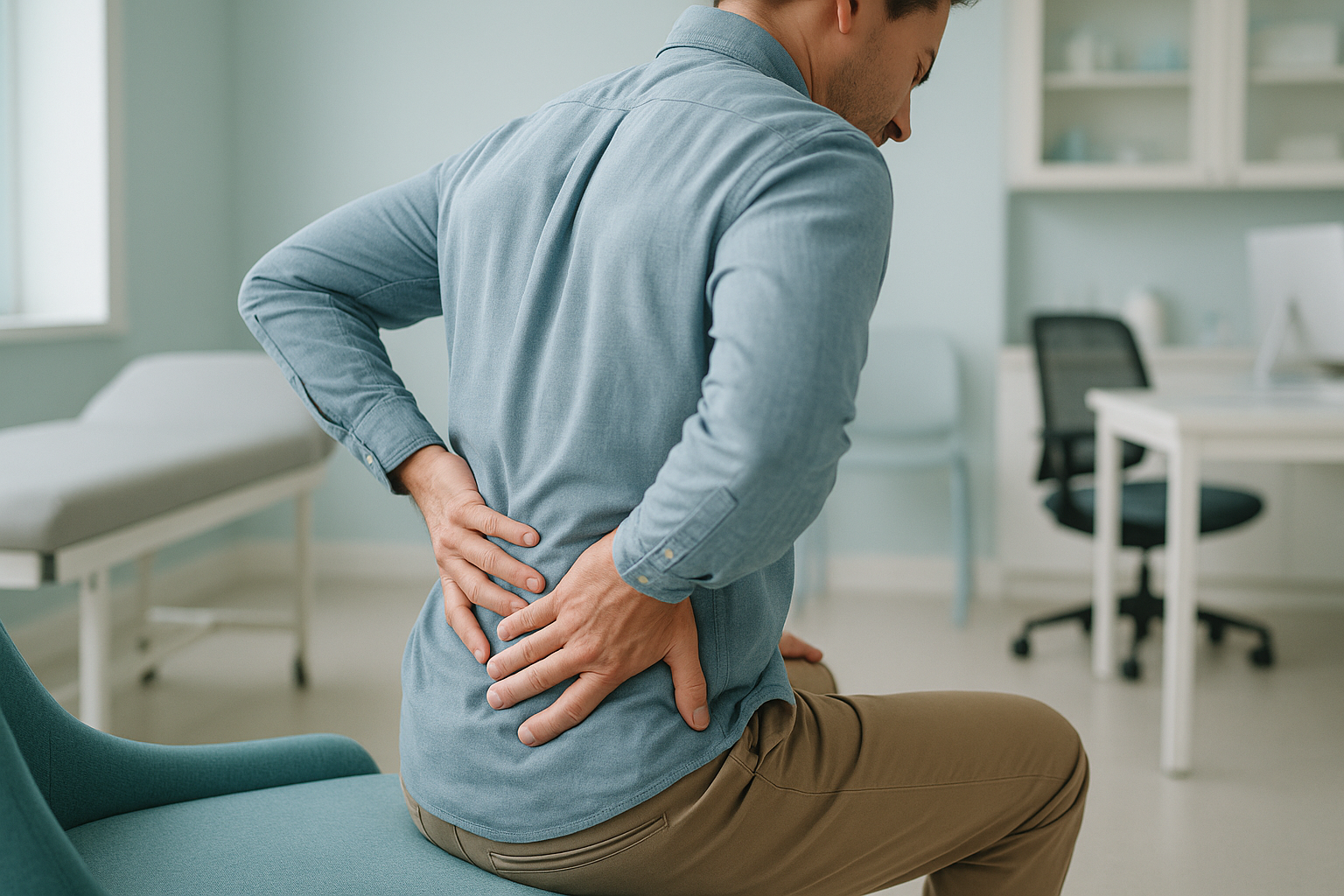
Lower back pain while sitting is usually caused by extra pressure on the discs and joints of your lumbar spine. Sitting, especially when you slouch, loads these parts more than standing or walking. Over time, tight hip flexors and weak core muscles make the problem worse. A standing, whole-body image can show alignment problems that a lying-down scan may miss.
Key takeaways
- Sitting puts more load on your lower spine than standing upright.
- Slouching rolls the pelvis backwards and flattens your natural lumbar curve.
- Pain in one area often comes from a postural imbalance somewhere else in the chain.
- Lying-down scans can relax the spine and hide problems that only appear under load.
- A standing EOS image shows how your whole skeleton lines up while gravity acts on it.
Why does sitting put more pressure on your lower back?
Sitting increases the squeezing load on your lumbar discs compared with standing. When you sit, your hip joints bend and your pelvis tends to tilt backwards. This flattens the natural inward curve of your lower back (your lumbar lordosis). Weight shifts towards the back of each disc, and the ligaments behind the spine are stretched.
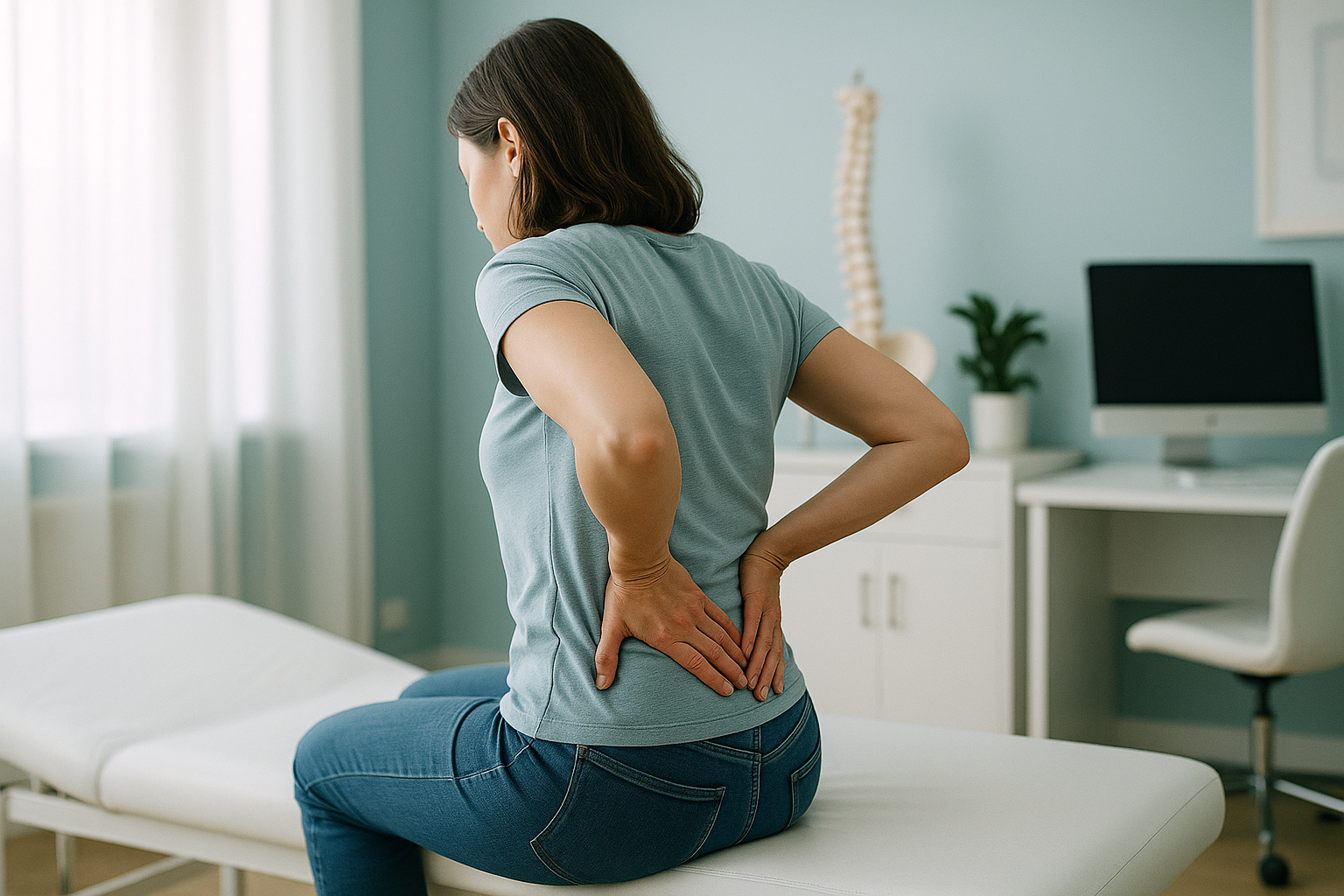
If you hold this position for hours, the muscles that support your spine get tired. Your body then relies more on passive structures, including the discs and ligaments, to keep you upright. That is why the pain often creeps in after 30 to 60 minutes rather than straight away.
Importantly, many people notice back pain when sitting but not when standing or walking. This difference is a strong clue that posture and loading are central to the problem, not just the wear and tear seen on a standard scan.
What are the signs that sitting is causing your back pain?
The pattern of your symptoms often tells a clear story. Here are the most common signs that long hours of sitting are driving your lower back pain.
A dull ache that builds the longer you stay seated, often across the lower back or into the buttocks.
It is hard to straighten up when you first stand. Sometimes you need a few steps before the stiffness eases.
Pain eases quickly once you move. This suggests the problem is related to posture rather than structural damage alone.
Symptoms are worst during desk work, driving or any long seated activity, then settle with rest or gentle movement.
What causes lower back pain from sitting at a desk?
Sitting pain usually comes from a mix of factors rather than one single problem. Here are the most common ones.
Sitting bends the spine forward and increases load on the front of the lumbar discs. Over time this can contribute to degenerative disc disease.
Slouching rolls the pelvis backwards into a posterior pelvic tilt, removing the protective lumbar curve.
Hours of sitting tighten the hip flexors. When you stand, this pulls the pelvis and lower spine out of their natural alignment.
Holding any position for too long tires the small stabilising muscles around the spine. Stress then shifts to passive tissues.
Your body is a connected chain from your feet to your head. So tightness or weakness in one area often shows up as pain somewhere else. Your lower back may be where the stress builds up, but the underlying cause might be in your pelvis, hips, or even lower down.
Why can a lying-down scan miss the cause of sitting back pain?
Standard imaging, whether X-ray, CT or MRI, is usually done lying down. When you lie flat, gravity is taken off the spine. The muscles relax, the discs decompress slightly, and alignment problems that only appear under load can disappear from the image.
When you lie on a scanner bed, gravity no longer compresses your spine. Your pelvis settles into a neutral position and your muscles relax. A subtle tilt, a small curve imbalance, or the way your spine shifts under load simply will not show.
This is why many people with genuine sitting pain are told their scan looks "normal".
An EOS scan takes a full-length image of your skeleton while you stand. Gravity is doing exactly what it does when you sit or walk. Any tilt, shift or curve that your muscles are working to make up for shows on the image.
At ScanAlign, a specialist radiographer analyses how your whole skeleton lines up from head to feet, not just the painful spot. This gives clinicians the loading picture they need to guide the right next step.
The EOS system also uses about 90% less radiation than a standard X-ray, around ten times less. That makes it practical for capturing your entire spine, pelvis and legs in one upright image.
When MRI is better. EOS excels at showing bones, joints and alignment under load. If your clinician suspects a disc bulge pressing on a nerve, torn ligaments, or any other soft-tissue problem, MRI is usually the better tool. The two scans complement each other well.
What can help with back pain from sitting?
ScanAlign provides diagnostic imaging, not treatment. Still, knowing what tends to help gives useful context. The points below are general guidance, not a substitute for a professional assessment.
- Movement breaks. Standing up and walking for a couple of minutes every 30 to 45 minutes reduces sustained disc loading.
- Lumbar support. A small cushion or built-in chair support helps keep your natural lower back curve. Seat height matters too. Your feet should rest flat on the floor, with your knees roughly level with your hips.
- Sit-stand desks. Switching between sitting and standing through the day can reduce the total time your spine spends bent forward.
- Core endurance. Gentle exercises that build endurance in the muscles around your trunk help support the spine during long spells of sitting.
- Targeted stretching. Regular stretches for lower back pain and for the hip flexors can ease tightness that pulls your pelvis out of position.
If these steps are not making a noticeable difference, a whole-body alignment image can help work out whether a structural or postural factor is keeping the cycle going.
Before you start a treatment, or change the one you are on, it is worth getting a detailed diagnosis. Knowing whether the cause sits in your pelvis, your legs or your spine changes what will actually help.
Wondering whether your alignment is part of the problem?
You can book a posture and spine assessment to discuss your symptoms with a specialist radiographer, free of charge, before deciding on a scan.
Frequently asked questions
Sitting bends your lumbar spine forward and increases disc pressure. Standing restores the natural curve and spreads the load more evenly. If your pain changes with position like this, posture and alignment are likely contributors.
Research suggests that sitting for more than 30 to 45 minutes without a break starts to increase loading on the lumbar discs and tire the supporting muscles. Short, regular movement breaks help more than one long walk after hours of sitting.
A chair that does not support your lumbar curve, or that is the wrong height, can encourage slouching. Over weeks and months, this sustained poor posture increases the load on discs and ligaments. A supportive chair helps, but it will not fix an underlying alignment problem on its own.
An EOS scan is a low-dose, standing X-ray that captures your full skeleton in one image. Because you are upright, it shows how your spine, pelvis and legs line up under gravity. This can reveal tilts, shifts and compensations that lying-down scans miss. That is especially useful when pain is related to posture.
Yes. An EOS scan uses about 90% less radiation than a standard X-ray, around ten times less. This low dose makes it practical to image the entire spine, pelvis and legs in a single session.
No. ScanAlign is a private, self-pay clinic. You can refer yourself directly. A free video consultation is the first step. A specialist radiographer reviews your history and confirms whether a scan is appropriate.
The price for patients travelling from abroad is confirmed during the free video consultation. There is no obligation to go ahead.
EOS clearly shows loss of disc height and the alignment of the vertebrae around a disc, which are signs of disc degeneration. However, if you need to see the disc itself, a bulge, or nerve compression, MRI is the better tool. The two scans work well together.
Yes. A posterior pelvic tilt flattens the lumbar curve and shifts weight to the back of the discs. Sitting naturally encourages this tilt. If your pelvis already tends that way, the effect is amplified. A standing whole-body image can confirm the tilt and measure its impact.
You speak with a specialist radiographer who reviews your symptoms, medical history and any previous scans. They will explain whether a standing EOS scan is likely to add useful information in your case. There is no pressure or obligation to book a scan afterwards.
Still living with back pain from sitting and no clear answer?
A free video consultation with a specialist radiographer can help you understand whether a standing whole-body image is the right next step, before you plan a trip to London.
Book a free video consultationSources
- Nachemson, A. (1981). Disc pressure measurements. Spine, 6(1), 93–97. Classic study measuring pressure inside the disc in different postures.
- NHS. Back pain: overview. nhs.uk. General UK guidance on causes and self-management of back pain.
- Illés, T. & Somoskeöy, S. (2012). The EOS imaging system and its uses in daily orthopaedic practice. International Orthopaedics, 36(7), 1315–1323.
Written by Abbas Dhami (Specialist Diagnostic Radiographer)
This page is general information and not a diagnosis.
ScanAlign is the trading name of CoreMed Solutions Ltd and operates under The Harley Street Hospital's CQC licence.