
Do Back Support Belts Help or Make Things Worse?
A back support belt can give short-term relief during heavy tasks or flare-ups. But wearing one all day, every day may lead to muscle deconditioning. The evidence suggests belts work best as a temporary tool, not a long-term fix. Knowing why your back hurts matters more than strapping it up.
Key takeaways
- Back support belts raise intra-abdominal pressure, which can reduce the load on your spine during heavy lifting.
- Long-term daily use may weaken the muscles your spine relies on for stability.
- A belt deals with the symptom, not the cause. Structural alignment problems need a proper assessment.
- Standing imaging shows alignment problems that lying-down scans can miss completely.
- This page covers lumbar support belts and weightlifting belts. It is not about upper-back posture correctors, which are a different product.
How does a back support belt actually work?
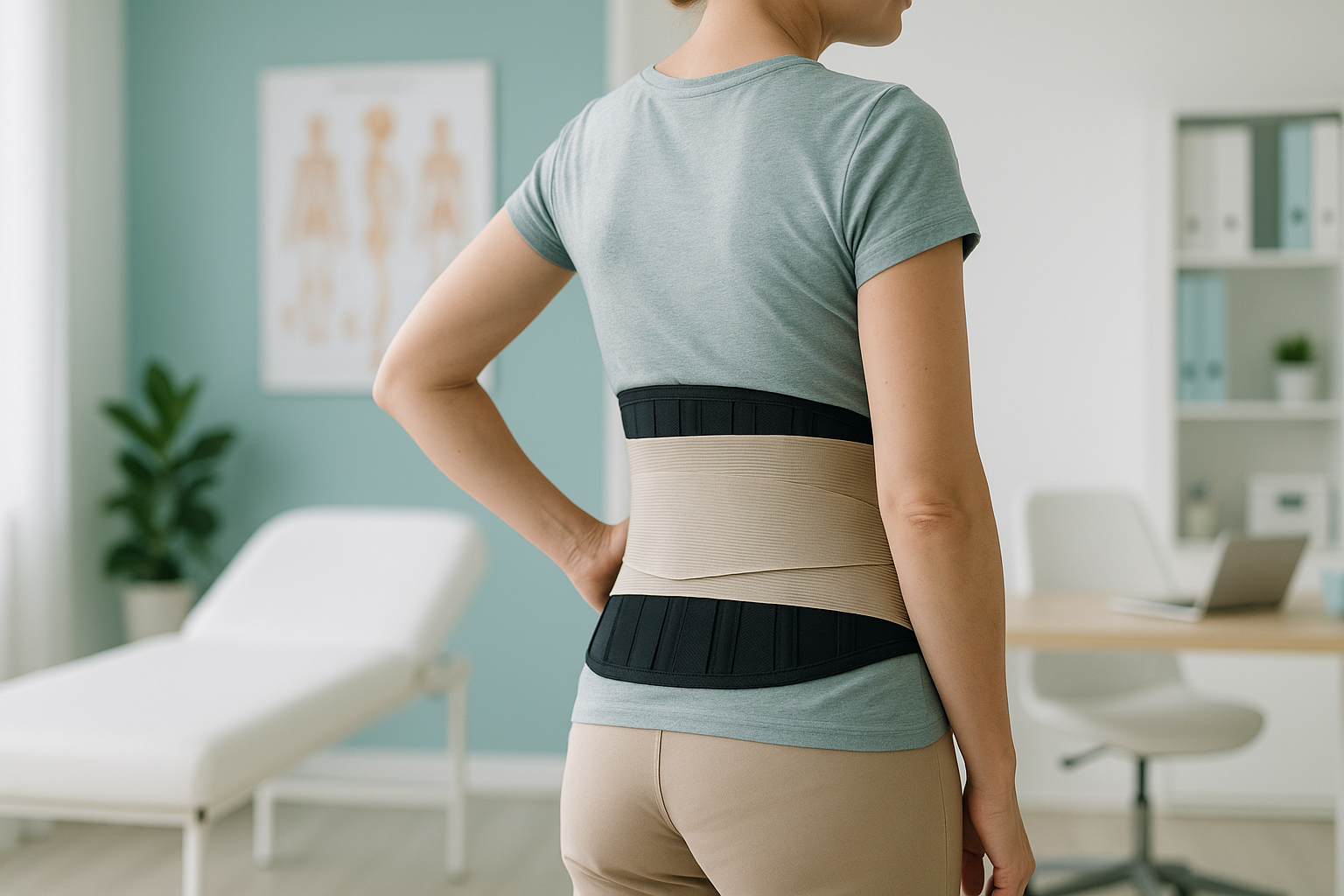
A back support belt works by raising the pressure inside your abdomen. This intra-abdominal pressure acts like an internal splint. It takes some of the compressive load off your lumbar spine. At the same time, the belt limits how far you can bend and twist. This gives your lower back some mechanical protection during hard physical tasks.
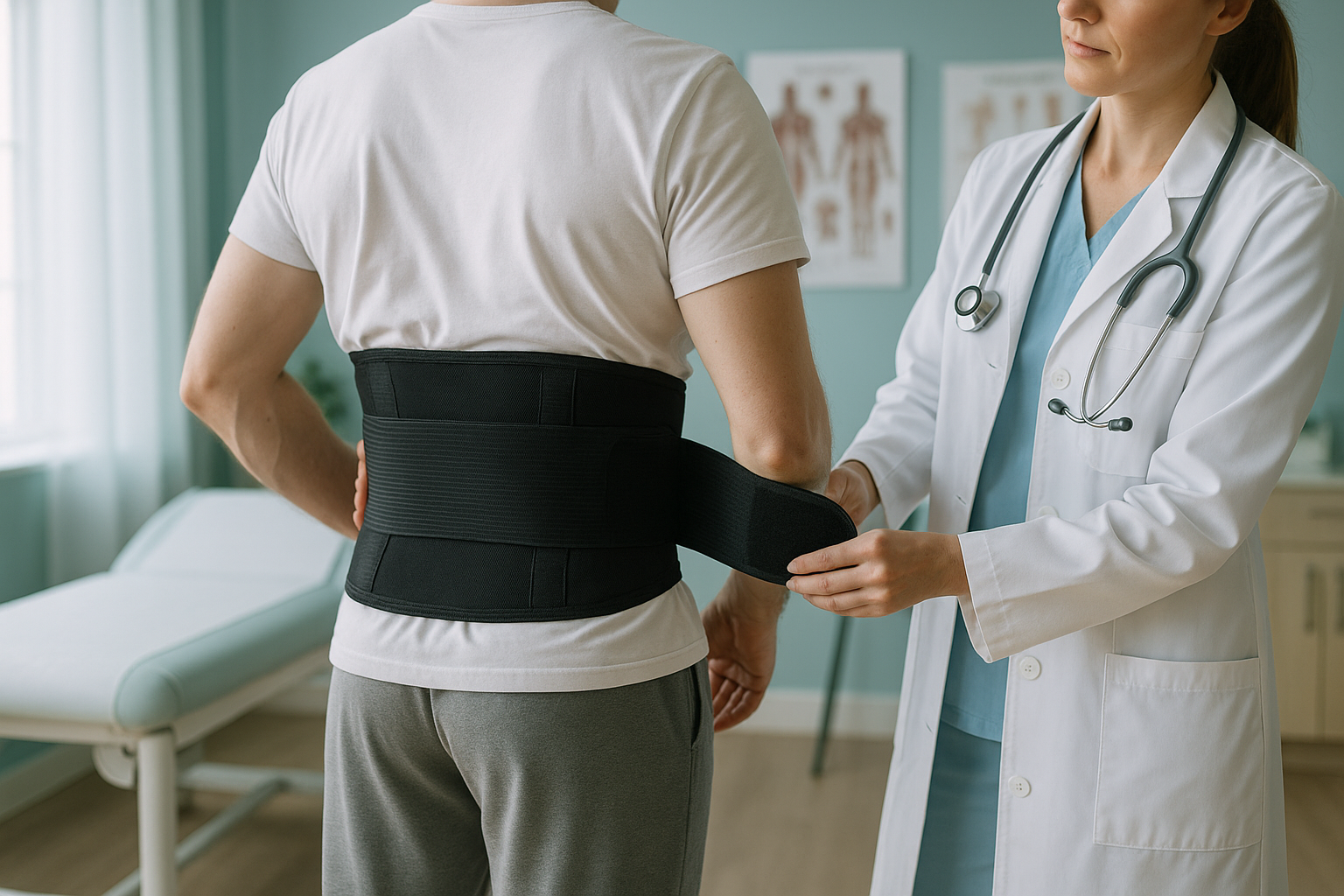
Think of it like a pair of crutches for a sprained ankle. They help while you heal, but you do not want to rely on them once the acute phase has passed.
A weightlifting belt works on the same principle. It gives your core something rigid to brace against during a heavy squat or deadlift. This lets you build more intra-abdominal pressure than you could on your own. That is a controlled, short use. It is quite different from wearing a lumbar support belt for eight hours at a desk.
Do back braces weaken your muscles over time?
This is the question most people search for. The honest answer is: it depends on how you use them. The concern is real, but it is often overstated.
- Your deep stabilising muscles (multifidus, transverse abdominis) get less work to do
- Over weeks and months, those muscles can become weaker and slower to respond
- You may feel you cannot cope without the belt, which creates a psychological dependence
- The underlying cause of the pain is not dealt with
- Flare-ups of acute lower back pain
- Physically demanding work shifts with repeated lifting
- Recovery after an operation, under clinical guidance
- Brief use during heavy training sets (weightlifting belt)
Research from the Cochrane Library found limited evidence that lumbar support belts prevent back pain at work. A belt can act as a useful proprioceptive cue, reminding you to brace your core and lift properly. But the reminder is the valuable part, not the belt itself.
If you have worn a back brace for lower back pain for months and your symptoms have not improved, the belt is probably masking something rather than fixing it.
When is a back support belt genuinely useful?
A back support belt is genuinely useful when it is part of a short-term plan, not a permanent habit. Below are the situations where the evidence supports using one.
Warehouse, construction or care-work shifts where you lift again and again. Wear the belt for the task and take it off during breaks.
After spinal surgery, a brace may be prescribed for some weeks to limit movement while the tissues heal. Always follow your surgeon's advice on how long to wear it.
Using a belt for a day or two can help you keep moving during a severe episode. Combine it with gentle stretches for lower back pain as soon as you can manage them.
A weightlifting belt helps during heavy compound lifts. Take it off between sets so your core still learns to stabilise itself.
In every case, the belt is a short-term bridge. The aim is to strengthen the muscles around your spine so that you no longer need the belt.
Why does a belt not fix the real problem?
A belt does not fix the real problem because it supports the symptom without looking for the cause. Many people reach for a lumbar support belt when their back aches at work. But the ache itself is often a sign that something structural is out of balance.
Your body is a connected chain. It runs from your feet through your knees, hips, pelvis and spine up to your head. When one area is out of alignment, other areas compensate. A slight pelvic tilt, for example, can shift load unevenly across your lumbar spine. That pattern of compensation can lead to muscle imbalance, stiffness on one side, and in the end pain. A belt squeezes around all of that and holds everything in place for a while. But the underlying imbalance is still there the moment you take it off.
If your back pain keeps coming back despite rest, exercises and using a belt, it is worth asking whether an alignment problem is driving the cycle.
Wondering if alignment is behind your recurring back pain? A free video consultation, held before you travel to London, can help you decide whether imaging is the right next step.
Book a free video consultationHow does standing imaging show what a belt hides?
Standing imaging shows the body under its own weight, just as it works in real life. When you lie down for a standard X-ray, CT or MRI, gravity is taken away and your muscles relax. A tilted pelvis may level out. A curved spine may straighten. The image looks reassuring, but it does not show what is happening when you stand, walk or lift.
ScanAlign standing EOS imaging captures the full skeleton from head to feet while you stand naturally. The EOS system uses about 90% less radiation than a standard X-ray, around ten times less. Because the whole body is in the picture, the report can map how your spine, pelvis, hips and legs work together as a single mechanical chain.
Some people have worn a back support belt for months with no lasting improvement. For them, a standing whole-body image can show the structural reason the pain keeps coming back. That information gives your clinician, physiotherapist or surgeon a clearer starting point than guesswork.
When MRI is the better choice: EOS shows bones, joints and alignment in excellent detail. If your clinician suspects a disc bulge, nerve compression or soft-tissue damage, MRI is usually the more suitable test. The two scans answer different questions, and sometimes both are needed.
When should you seek urgent help instead of wearing a belt?
Seek urgent medical help if your back pain comes with numbness or tingling in your legs, sudden weakness in your feet, or any loss of bladder or bowel control. These are signs of possible nerve compression that needs to be checked straight away. Contact your doctor or go to your nearest emergency department. Do not rely on a belt or wait for a scan appointment.
For back pain that is not an emergency, a detailed diagnosis is worth getting before you start a treatment or change the one you are on. Knowing whether the cause sits in your pelvis, your legs or your spine changes what will actually help.
Frequently asked questions about back support belts
It is best to wear it only during the most demanding tasks, such as heavy lifting. Take it off during breaks or lighter work. Wearing a belt for a full shift, every shift, can reduce the work your stabilising muscles do over time.
Long periods of daily use can contribute to muscle deconditioning, especially of the deep core muscles. Based on current evidence, short-term or task-specific use does not appear to carry the same risk.
Both work on the same basic principle of raising intra-abdominal pressure. But weightlifting belts are stiffer, wider at the back, and made for brief use during heavy sets. A lumbar support belt is usually softer and meant for longer wear during daily activities.
Most clinical guidelines suggest limiting brace use to the acute phase of pain, usually a few days to a couple of weeks. If you still need it after that, it is worth looking into the underlying cause rather than continuing to mask the symptoms.
A belt can remind you to sit or stand straighter, acting as a proprioceptive cue. But it cannot correct structural posture problems. Real improvement in posture comes from strengthening the right muscles and dealing with any underlying alignment problems.
An EOS scan captures your full skeleton while you stand. So it shows how your spine, pelvis, hips and legs line up under your body weight. A conventional X-ray usually images one area at a time, often while you are lying down, which can hide weight-bearing alignment problems.
Yes. The EOS system delivers about 90% less radiation than a standard X-ray, around ten times less. It is one of the lowest-dose skeletal imaging methods available.
No. ScanAlign is a private self-pay clinic. You can book an assessment directly, without a referral from your doctor or consultant.
The price for patients travelling from abroad is confirmed during the free video consultation, and you can find other answers on our FAQs page.
Build strength in your core and posterior chain through targeted exercises. If the pain continues despite steady effort, find out whether a structural alignment problem is driving it. Standing whole-body imaging is one way to get that clarity.
Still relying on a belt? Find out what is really going on.
A free video consultation with our team, from wherever you are, can help you understand whether a standing alignment assessment in London is the right next step for your back.
Book a free video consultationAuthor: Abbas Dhami (Specialist Diagnostic Radiographer)
Sources
- Cochrane Database of Systematic Reviews. "Lumbar supports for prevention and treatment of low back pain." (van Duijvenbode et al., 2008).
- NHS. "Back pain: Treatment." nhs.uk/conditions/back-pain/treatment.
- European Spine Journal. "The role of lumbar orthoses in low back pain management." (Morrisette et al., 2014).
This page is general information and not a diagnosis.
ScanAlign is the trading name of CoreMed Solutions Ltd and operates under The Harley Street Hospital's CQC licence.