
Where Can You Get Clinical Gait Analysis in London?
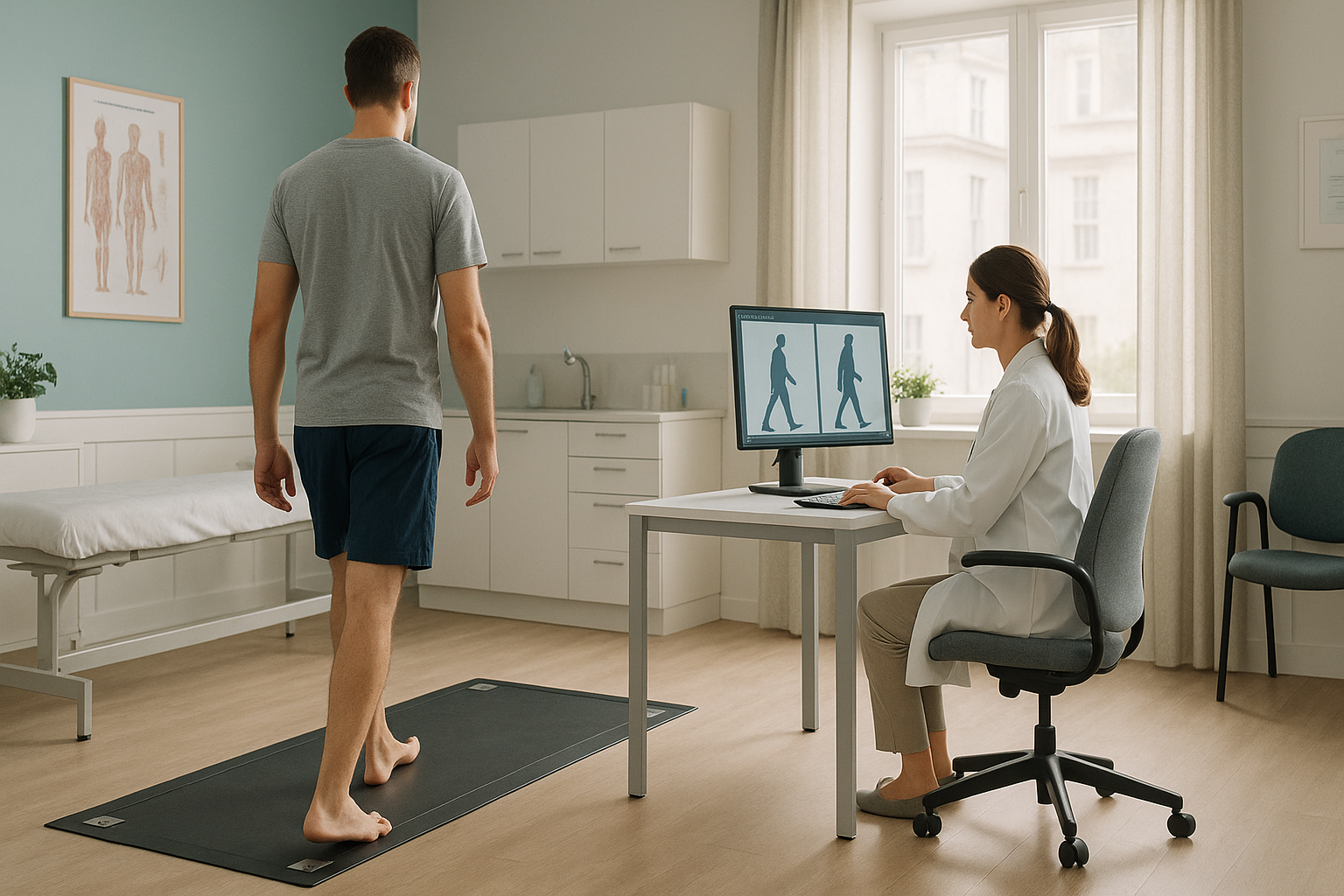
London offers several types of gait analysis. They range from treadmill checks in running shops to physiotherapy video assessments and full standing skeletal imaging. The right choice depends on what you need: advice on shoes, coaching on how you move, or a detailed picture of the bone and joint shape that drives how you walk.
Key points
- Gait analysis in London ranges from free checks in running shops to clinical skeletal imaging.
- Treadmill and video assessments show how you move. Standing skeletal imaging shows why.
- A clinical gait assessment can identify problems like leg length discrepancy or rotation problems that camera-based tools cannot measure.
- Many people benefit from combining treadmill analysis with a skeletal assessment for the fullest picture.
- ScanAlign offers standing whole-body EOS imaging at 19 Harley Street, London. No referral is needed.
You may have a persistent limp, hip pain, knee trouble, or a running injury that keeps coming back. If you are thinking of travelling to London for gait analysis, it helps to know the options. London has more choices than most cities, but they differ greatly in what they actually measure. This page explains the main choices so you can pick the one that matches your problem.
What types of gait analysis are available in London?
There are three broad types. Each one measures something different. None is automatically "better" than the others. They answer different questions.
A short run on a treadmill, filmed with a slow-motion camera. The aim is to choose the right shoes. Most specialist running shops in London offer it, often free when you buy shoes.
A longer session with a clinician using video from several angles, pressure plates or force platforms. The aim is to look at movement patterns, muscle timing and orthotics prescription.
A low-dose standing X-ray (such as EOS) that shows the skeleton from head to feet in one image. The aim is to look at bone shape, joint angles, lower limb alignment and structural differences between the two sides.
What is the difference between clinical and retail gait analysis?
The main difference is depth. A running-shop check is designed to guide your choice of shoes. A clinical gait assessment looks deeper at why your movement pattern exists in the first place.
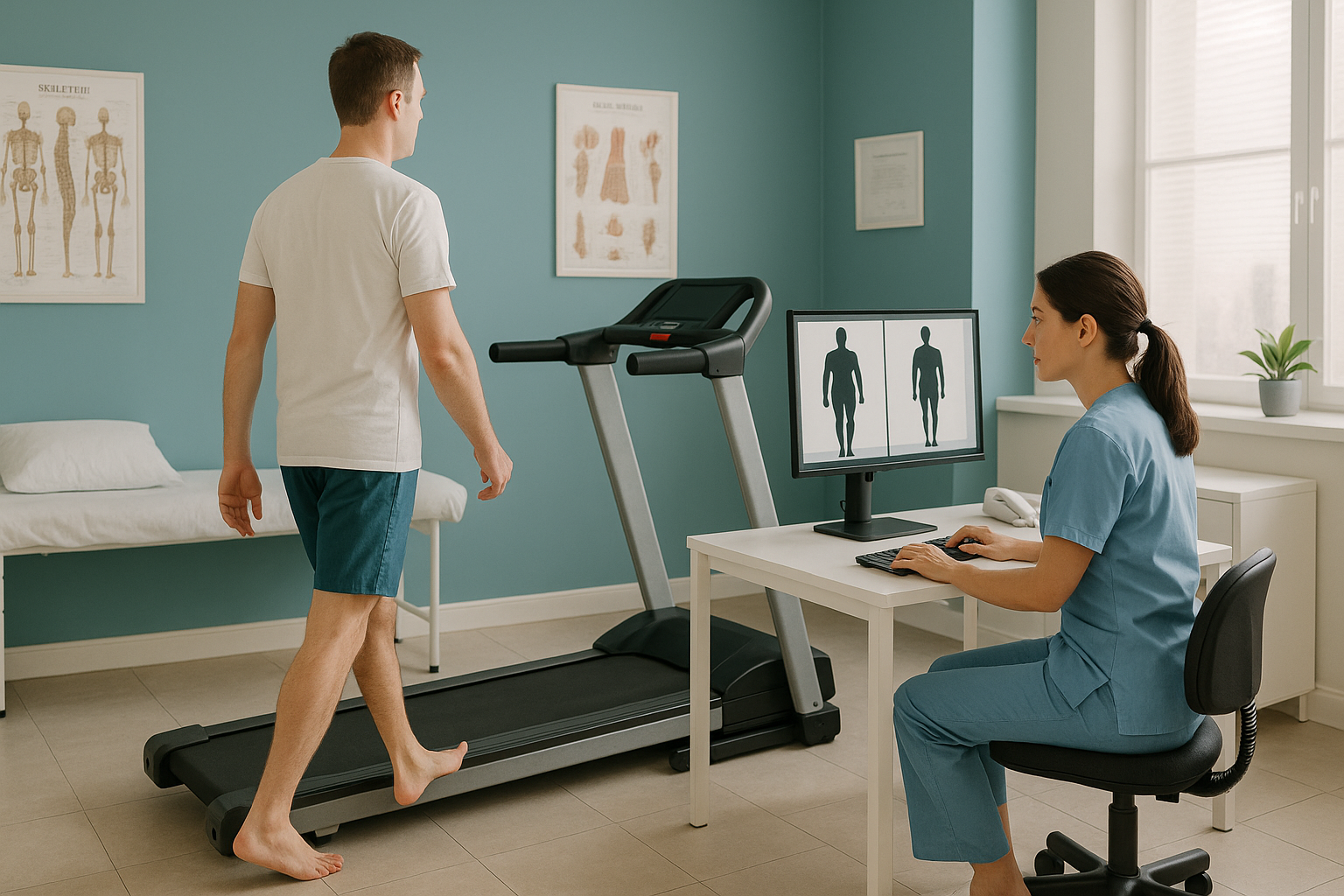
Retail analysis is useful. If you are buying running shoes, a treadmill check helps narrow down the choice. But it cannot tell you whether a leg length discrepancy, femoral rotation or pelvic tilt is the reason your foot rolls inward. A clinical assessment can.
Think of it this way: treadmill analysis shows what happens when you walk or run. Skeletal imaging shows why it happens.
Is treadmill gait analysis worth it?
Yes, for what it is meant to do. A treadmill assessment is a practical starting point, especially for runners. It can show overpronation, cadence problems and obvious differences between the two sides. Many physiotherapy and podiatry clinics in London combine treadmill work with pressure-plate data and clinical observation.
Treadmill analysis reaches its limit when the problem sits inside the skeleton rather than in the muscles or movement habits. A camera cannot see bone torsion, true leg length differences, or the angle at which your hip socket faces. If treadmill analysis and orthotics have not solved your problem, that is usually a sign that something structural is going on underneath.
Already had a treadmill assessment? A standing skeletal scan can show whether a structural cause explains what the treadmill found. You can book a skeletal alignment scan with no referral needed.
How does standing skeletal imaging help with gait problems?
Standing skeletal imaging captures your bones and joints while they carry your full body weight. This matters because lying-down scans relax your muscles. Your joints then settle into a neutral position, which can hide the very differences that affect your gait.
At ScanAlign, standing EOS imaging in London, an EOS scanner takes a full-length image of your skeleton from the front and side in a single pass. The scan uses about 90% less radiation than a standard X-ray, around ten times less. From this image, your report can detail:
- True versus apparent leg length differences
- Hip, knee and ankle alignment on each side
- Pelvic tilt and spinal balance
- Rotation patterns in the femur or tibia
These measurements give surgeons, physiotherapists and podiatrists the structural data they need to make your treatment plan more precise.
When MRI is the better tool. EOS shows bones, joints and alignment. If your clinician suspects a soft-tissue cause, such as a torn tendon, cartilage damage or nerve compression, MRI is usually the better choice. The two scans answer different questions and often work well together.
Who should consider a clinical gait assessment in London?
A clinical gait assessment is worth considering if simple solutions have not worked. Here is a rough guide. Before you start a treatment, or change the one you are on, it is worth getting a detailed diagnosis. Knowing whether the cause sits in the pelvis, the legs or the spine changes what will actually help.
- Have a persistent limp or uneven stride
- Have hip, knee or ankle pain that keeps coming back
- Have been told you have a leg length discrepancy
- Are planning or recovering from joint replacement
- Have had treadmill analysis and orthotics without lasting improvement
- Want advice on choosing a new pair of trainers
- Have a soft-tissue injury with no bony pain
- Need a muscle-strength or flexibility programme
- Have sudden numbness, weakness or loss of bladder or bowel control (get urgent medical help from your doctor or the nearest emergency department)
Frequently asked questions about gait analysis in London
Most specialist running shops offer free treadmill analysis. Physiotherapy and podiatry clinics across London offer clinical video-based assessments. For standing skeletal imaging, ScanAlign at 19 Harley Street, London offers full-body EOS scans without a referral.
Running-shop treadmill checks are often free or included when you buy shoes. Clinical physiotherapy or podiatry gait sessions vary by clinic. For patients travelling from abroad, the ScanAlign price is confirmed during the free video consultation.
Most private gait analysis providers in London let you book yourself. ScanAlign does not need a referral from your doctor or a consultant. You begin with a free video consultation to check the scan is right for you.
Running gait analysis looks at your stride, foot strike and pronation while you run on a treadmill. Clinical gait analysis goes deeper. It uses video, pressure platforms or skeletal imaging to understand the structural and muscular causes behind your movement pattern.
Video gait analysis can suggest an apparent difference, but it cannot measure the bones directly. A standing full-length skeletal scan is the most reliable way to confirm a true leg length discrepancy. It can also tell it apart from a pelvic tilt that makes the legs look unequal.
Yes. An EOS scan uses about 90% less radiation than a standard X-ray, around ten times less. It is one of the lowest-dose skeletal imaging options available.
You stand still inside the EOS scanner while it takes a full-length image of your skeleton from the front and side. The scan itself takes under a minute. You carry your full weight the whole time, so the image shows your skeleton exactly as it works in real life.
Yes, and this often gives the fullest picture. The treadmill shows how your body moves. The skeletal scan shows the bone shape and alignment underneath. Together they help your clinician understand both the movement pattern and its structural cause.
Gait analysis is a diagnostic tool, not a treatment. It identifies what may be contributing to your symptoms. The findings then guide the treatment plan set by your physiotherapist, podiatrist or surgeon.
Start with a free video consultation. A specialist radiographer reviews your history, confirms the scan is suitable, and books your appointment at 19 Harley Street, London. No referral is needed.
See the structure behind how you move
A free video consultation with a specialist radiographer will help you decide whether a standing alignment scan is the right next step before you travel.
Book a free video consultationWritten by Abbas Dhami (Specialist Diagnostic Radiographer)
Sources
- Baker R. Measuring Walking: A Handbook of Clinical Gait Analysis. Mac Keith Press, 2013.
- Illés T, Somoskeöy S. The EOS imaging system and its uses in daily orthopaedic practice. International Orthopaedics. 2012;36(7):1405-1411.
- NHS inform. Gait problems and movement disorders. Available at: nhsinform.scot (accessed 2024).
This page is general information and not a diagnosis.
ScanAlign is the trading name of CoreMed Solutions Ltd and operates under The Harley Street Hospital's CQC licence.