
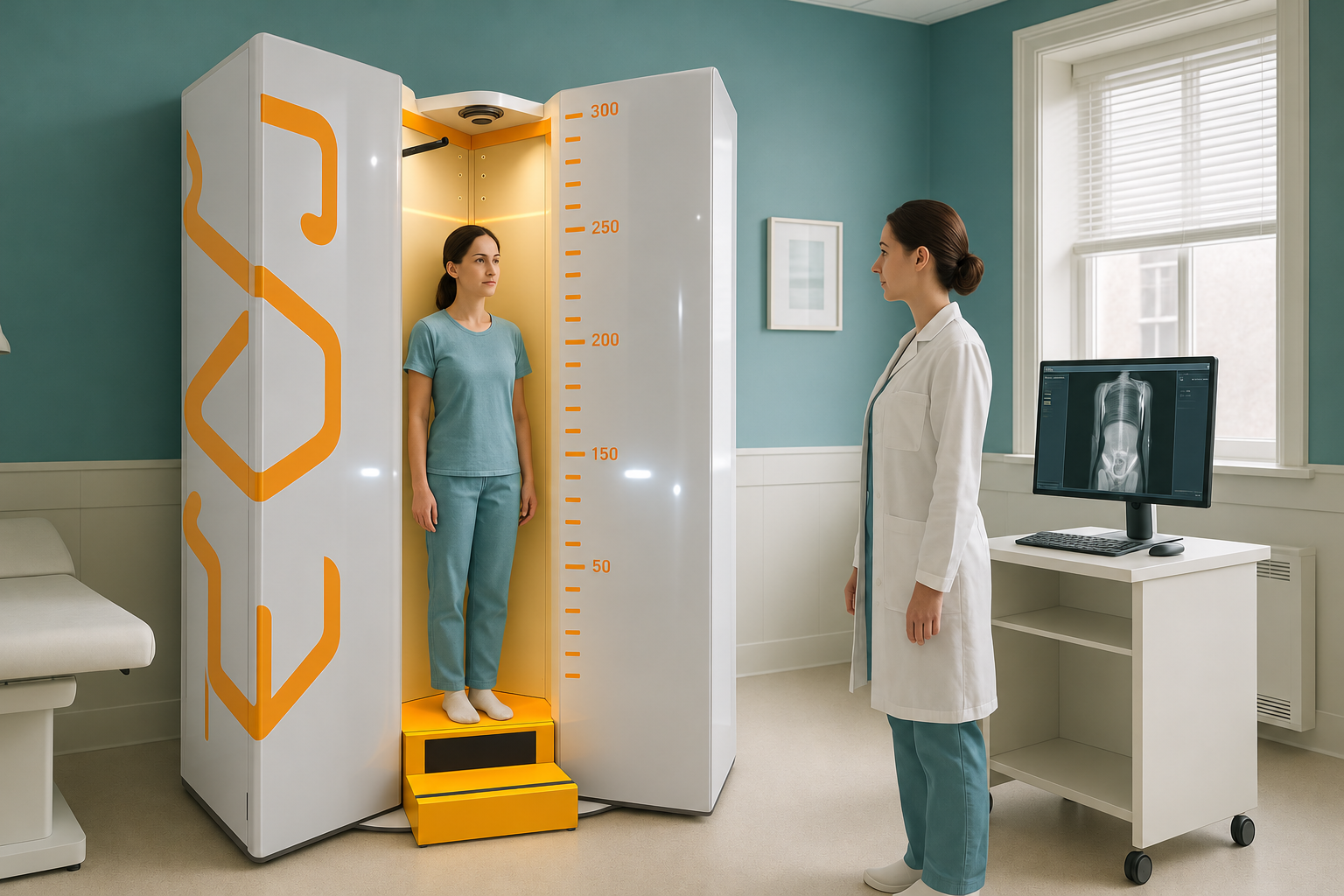
Does Private Health Insurance Cover an EOS Scan?
It depends on your policy. Some private health insurance plans may pay you back for an EOS scan if it is judged medically necessary and you have the right referral. But cover varies widely between insurers and between policies. ScanAlign is a self-pay clinic. You pay at the time of your scan, then claim the money back from your insurer if your policy allows.
Key points
- ScanAlign is a self-pay service. You pay upfront, then claim back if you are eligible.
- Whether your insurer covers an EOS scan depends on your policy wording, your excess and your outpatient limit.
- Most insurers need a referral from your doctor or a consultant, and pre-authorisation, before they will look at a claim.
- You do not need a referral to book a scan at ScanAlign, but your insurer may need one to pay you back.
- The price for patients travelling from abroad is confirmed during the free video consultation. You can also see our EOS scan cost page.
How does private health insurance work for diagnostic scans?
In the UK, private health insurance policies usually cover diagnostic imaging when a GP or consultant asks for it to look into a specific medical problem. The insurer decides whether to pay based on your policy wording, any outpatient benefit limits, and whether the type of scan is on their approved list.
EOS is a fairly uncommon imaging technology in the UK. Because of this, not all insurers have a specific claim code or policy line for EOS. That does not mean you cannot claim. It means you may need to speak to your insurer directly to confirm whether your plan covers it.
What should you ask your insurer before booking?
Call your insurer before your appointment and ask clear questions. This avoids surprises and gives you the best chance of a successful claim. Here is what to cover.
Ask whether you need pre-authorisation for outpatient diagnostic imaging. Many policies need this before you attend.
Most insurers need a referral letter from your doctor or a named consultant. ScanAlign does not need one, but your insurer may.
Ask if "standing X-ray" or "EOS imaging" is covered under your outpatient diagnostics benefit. Ask for the right claim code.
Check your policy excess (the amount you pay before cover starts) and whether your outpatient benefit has a cap.
If your insurer confirms they will cover the scan, ask them to send that confirmation in writing or by email. Keep it for your records.
Can you self-pay and then claim back from your insurer?
Yes. ScanAlign is a self-pay clinic. You pay for your scan at the time of your appointment. You then receive a detailed invoice, your radiographer's report and your images. Many patients then send these to their insurer to be paid back.
Whether you are paid back depends entirely on your policy. Some policies let you pay upfront at a provider outside their network and claim back. Others only cover scans at recognised facilities within their own network. This is why it is important to check before you book.
A note on MRI. EOS shows bones, joints and whole-body alignment while you stand under your own weight. For soft-tissue problems such as disc injuries, ligament tears or nerve compression, MRI is usually the better tool. If your insurer has approved an MRI, that is likely the right choice for a soft-tissue question. EOS answers a different question: how does your skeleton actually line up when you are upright?
What are the steps to book and claim?
Follow these steps for the smoothest experience, whether you are paying yourself or hoping to claim back.
Check your policy
Call your insurer and ask about cover for outpatient diagnostic imaging, pre-authorisation, your excess and any referral rules.
Book your consultation
You can book a scan directly with ScanAlign. We do not need a referral, but get a referral letter from your doctor or consultant if your insurer needs one.
Attend and pay
Come to your appointment at 19 Harley Street, London. Pay at the time of your scan. You will receive a full invoice, your images and a detailed report.
Submit your claim
Send your invoice, report and any referral letter to your insurer with your claim form. Keep copies of everything you send.
If you are not sure whether an EOS scan is right for you, our free video consultation can help you decide before you commit to the trip. See who our scan is suitable for as a starting point.
Before you start treatment, or change the one you are on, it is worth getting a detailed diagnosis. Knowing whether the cause sits in the pelvis, the legs or the spine changes what will actually help.
Frequently asked questions about insurance and EOS scans
It depends on your own policy. Some insurers may pay you back for an EOS scan if you have the right referral documents and pre-authorisation. Contact your insurer directly to check.
No. ScanAlign accepts self-referrals. But if you want to claim the cost back from your insurer, they will almost certainly need a referral letter from your doctor or a consultant.
Pre-authorisation is approval from your insurer before you have a scan. Most private health insurance policies need it for diagnostic imaging. Without it, your claim may be declined.
Yes. ScanAlign is a self-pay clinic. You pay at your appointment and receive a detailed invoice. You can then send this to your insurer to be paid back if your policy allows.
The price for patients travelling from abroad is confirmed during the free video consultation. You can also visit our EOS scan cost page.
We cannot confirm whether any specific insurer covers EOS scans, as it depends on your own policy, benefit level and clinical reason for the scan. Contact your insurer directly and ask about cover for outpatient standing X-ray or EOS imaging.
Usually you will need your invoice from ScanAlign, a copy of your scan report, any referral letter from your doctor or consultant, and your insurer's claim form. Check with your insurer for their exact requirements.
Yes. EOS uses about 90% less radiation than a standard X-ray, around ten times less. You can read more on our frequently asked questions page.
EOS is a low-dose imaging system that captures your full skeleton while you stand. Standing imaging shows how your bones and joints actually line up under your body weight. Lying-down scans can miss alignment problems because gravity and muscle tension change when you are flat. Learn more at ScanAlign, private standing imaging in London.
It is a short, no-obligation video call. We discuss your symptoms, explain what the scan involves, and help you decide whether it is the right next step. There is no charge and no pressure.
Not sure whether an EOS scan is right for you?
Talk to us before you plan your trip. Our free video consultation is a quick, no-pressure way to find out whether standing imaging could answer your question.
Book a free video consultationWritten by Abbas Dhami (Specialist Diagnostic Radiographer)
Sources
- Association of British Insurers (ABI), "Making a Claim on Health Insurance," abi.org.uk
- NHS, "Using Private Healthcare," nhs.uk
- EOS imaging (now part of Alphatec Spine), "EOS System: Low Dose Imaging," eos-imaging.com
This page is general information and not a diagnosis.
ScanAlign is the trading name of CoreMed Solutions Ltd and operates under The Harley Street Hospital's CQC licence.