
Do Flat Feet in Children Need Treatment?
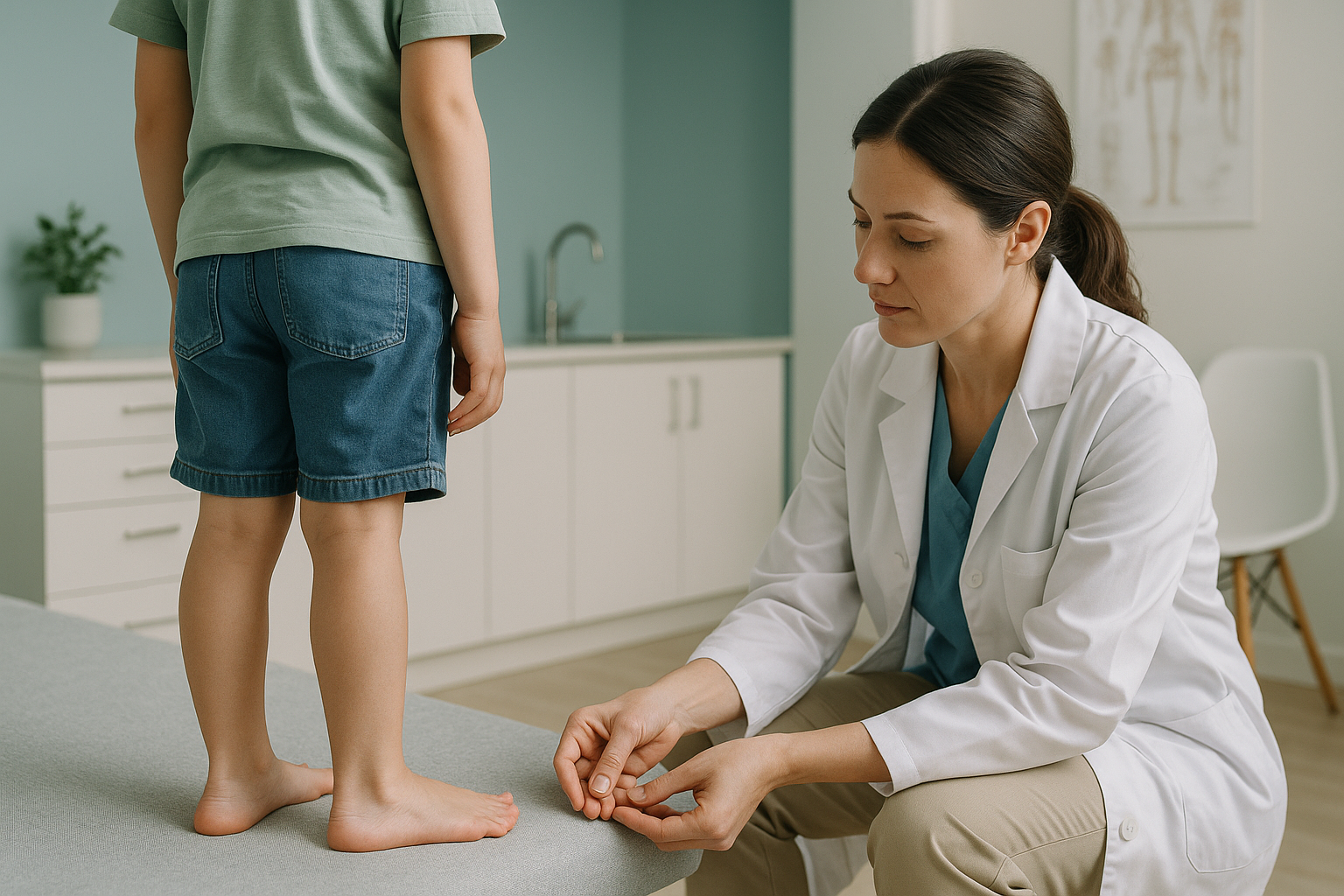
Most children with flat feet need no treatment at all. Flat feet are a normal stage of growing up. The arch usually forms on its own by the time a child is about six to eight years old. Treatment is only worth thinking about when flat feet cause pain, stiffness or difficulty walking, and this is uncommon.
Key points
- Nearly all toddlers have flat feet. It is part of normal growth.
- The arch usually develops between the ages of three and eight.
- Flat feet that are painless and flexible rarely need any treatment.
- Rigid flat feet, pain or difficulty walking are reasons to get advice.
- Standing imaging shows how the feet and legs line up under real body weight. Scans taken lying down cannot show this.
What are flat feet in children?
Flat feet means the whole sole of the foot touches the ground when a child stands, with little or no arch to be seen. The medical name is pes planus. It is very common in babies, toddlers and young children, because the arch has not formed yet.
In younger children, a pad of fat under the arch can also make the foot look flatter than it really is. As the child grows, this fat pad gets smaller. The muscles and ligaments of the foot get stronger, and the arch starts to show.
When does the arch develop in children?
The arch usually starts to form at about age three. It keeps developing until roughly age six to eight. Some children take a little longer. Some adults never get a clear arch at all, yet have no pain and no problems with how their feet work.
Because the arch forms slowly, it is usually too early to worry about flat feet in a toddler. Your family doctor or a children's specialist will usually check again at a later age rather than step in early.
What signs suggest flat feet might be a problem?
Flat feet on their own are not a problem. They only become a concern when they cause symptoms or affect how a child moves. Look out for these signs.
Your child says their feet, ankles, knees or legs are sore, especially after activity.
Walking on the outer edges of the feet, tripping often, or getting tired quickly.
The foot feels rigid, or the child cannot stand on tiptoe comfortably.
A flat foot on just one side can suggest a structural difference that is worth looking into.
If your child has flat feet but no pain and moves freely, the most likely outcome is that the arches will develop in their own time.
What is the difference between flexible and rigid flat feet?
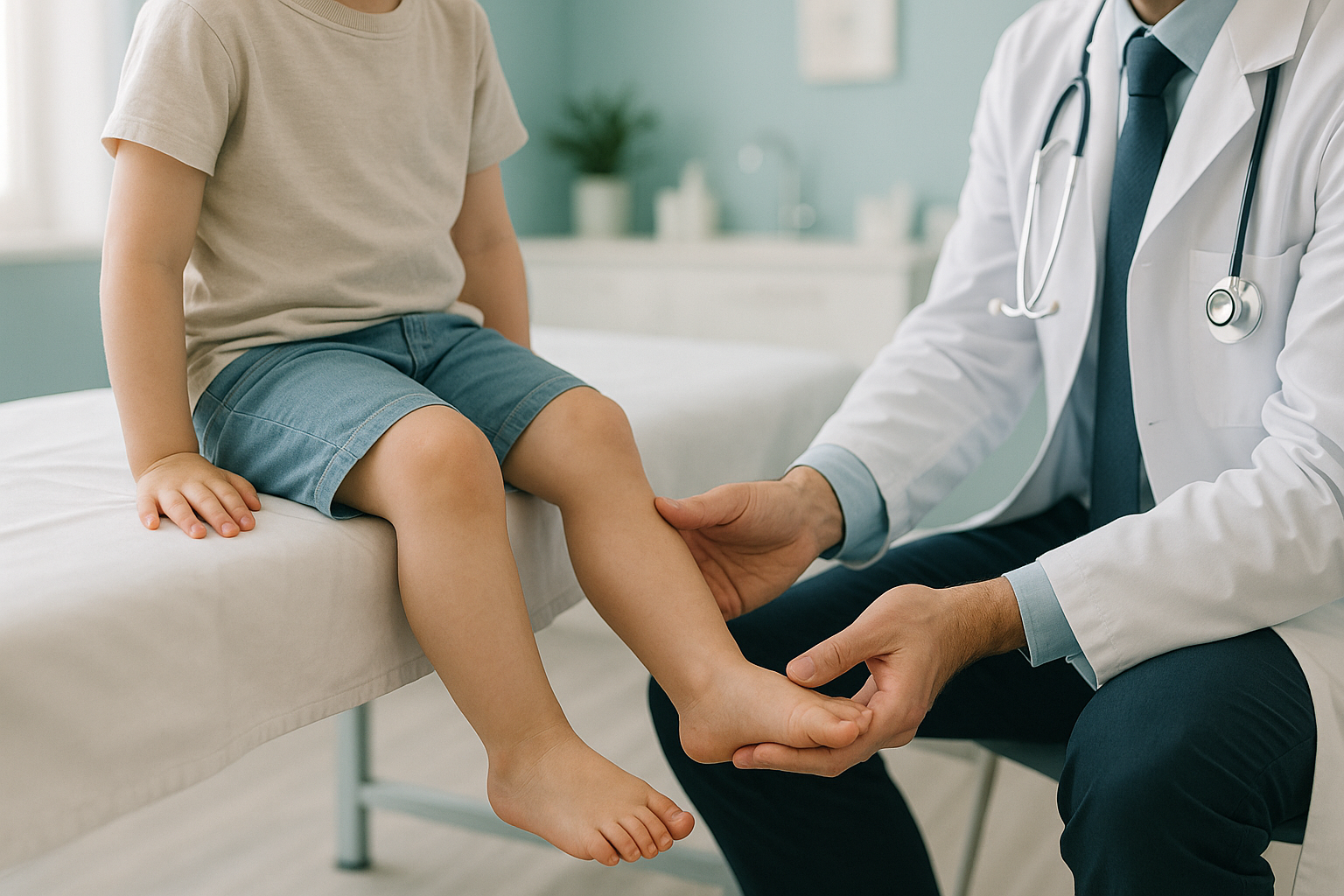
Flexible flat foot is by far the most common type. The arch disappears when the child stands. It comes back when the child sits, stands on tiptoe, or when you gently lift the big toe. This is the type that almost always gets better on its own.
Flexible flat foot is normal in young children. The foot is supple and painless, and the arch comes back when the foot is not carrying weight. The tiptoe test (asking the child to rise onto their toes) is a simple way to check. If an arch appears on tiptoe, the flat foot is almost certainly flexible.
Usually no treatment is needed. Supportive, well-fitting shoes help, but expensive insoles or special shoes are rarely necessary.
Rigid flat foot is much less common. The foot stays flat whether the child is standing, sitting or on tiptoe. It can be caused by a bony bridge between two foot bones, called a tarsal coalition, or by other structural conditions.
Rigid flat feet are more likely to cause pain or difficulty walking. They need a proper assessment, and imaging can help a specialist understand the structure underneath.
How does standing imaging help check flat feet in children?
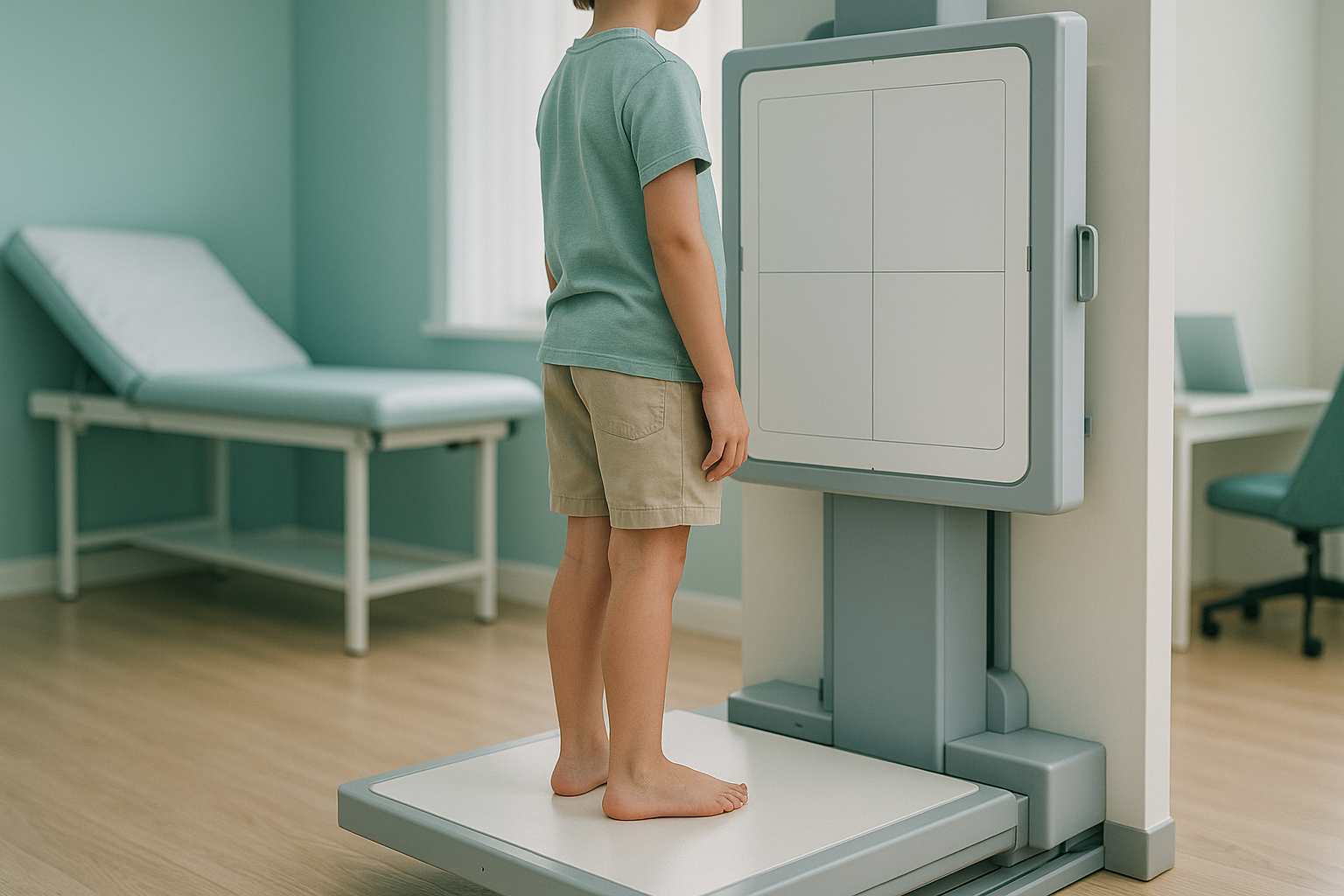
Standing, weight-bearing imaging shows the bones and joints of the foot and leg in the position they actually work in. When a child lies down for a standard X-ray, gravity is taken away and the muscles relax. The foot can then look different from how it behaves in daily life.
An EOS scan captures the whole of both legs while the child stands naturally. This lets a specialist see how the feet, ankles, knees and hips relate to each other as one connected chain. A flat foot can change the alignment higher up the leg, and standing imaging shows those knock-on effects in a single image.
EOS uses about 90% less radiation than a standard X-ray, around ten times less. For children, where keeping radiation exposure low matters most, this is an important advantage. Learn more about children's imaging at ScanAlign.
When is MRI better? EOS shows bones, joints and alignment. If a specialist suspects a soft-tissue, ligament or tendon problem in your child's foot, MRI is usually the better tool for that. The two types of imaging answer different questions.
Do children with flat feet need insoles or orthotics?
For most children with painless, flexible flat feet, the evidence does not support using insoles or orthotics as a routine. Several studies have found that arch supports do not speed up the natural development of the arch.
Orthotics may help if a child has painful flat feet or a specific structural problem found by a specialist. In those cases, they are used to manage discomfort, not to "fix" the arch. Read more about orthotics and overpronation.
Well-fitting, supportive shoes matter more than expensive inserts. Letting younger children go barefoot on safe surfaces can actually encourage the natural development of the arch and foot muscles.
- Your child has foot, ankle or knee pain
- The foot is stiff or rigid
- They cannot stand on tiptoe
- Only one foot is flat
- Symptoms are getting worse as they grow older
- Both feet are flat but pain-free
- Your child is under six
- An arch appears on tiptoe
- They run and play normally
- There is no stiffness
Not sure whether your child's flat feet need looking into? A short video consultation with our specialist radiographer, from wherever you are, can help you decide whether a scan is worthwhile, or whether reassurance is the right answer.
Book a free video consultationWhat general advice helps children with flat feet?
For the vast majority of children, the best approach is simply time and reassurance. A few practical things can support healthy foot development.
- Barefoot time. Walking barefoot on grass, carpet or sand helps strengthen the small muscles of the foot.
- Well-fitting shoes. Shoes should be the right size and give support without being rigid. Avoid hand-me-down shoes that have moulded to another child's foot.
- Stay active. Running, climbing and lots of different movement all help build foot and leg strength naturally.
- Watch, do not worry. See your family doctor again if pain develops, or if the feet have not changed by age eight to ten.
If your child does need further tests, a gait analysis or a standing alignment scan can show how the feet relate to the knees, hips and overall posture while carrying real body weight.
If your child's flat feet are causing problems, it is worth getting a detailed diagnosis before starting treatment or changing the one they are on. Knowing whether the cause sits in the pelvis, the legs or the spine changes what will actually help.
Frequently asked questions about flat feet in children
Most specialists suggest waiting until at least age six to eight before treating flat feet as a concern. The arch is still developing before that age. If your child has pain or stiffness at any age, it is worth mentioning to your family doctor.
Ask your child to stand on their tiptoes. If an arch appears along the inner edge of the foot, the flat foot is likely flexible and normal. If the foot stays completely flat, or if your child cannot rise onto their toes, mention it to your family doctor.
Not always. Most toddlers develop an arch over time, but some children and adults have flat feet all their lives with no ill effects. A small number have a structural cause that may need a specialist's input.
There is a genetic part. If parents or close relatives have flat feet, a child is more likely to have them too. This does not mean they will cause problems.
For painless, flexible flat feet, special shoes are not necessary. Well-fitting, supportive everyday shoes are enough. Going barefoot in safe places also helps build foot strength.
In some cases, flat feet can affect how the leg is aligned. This may add to discomfort higher up the chain, at the knee, hip or lower back. Standing alignment imaging can show whether this is happening.
A tarsal coalition is an abnormal bridge of bone, cartilage or fibrous tissue between two bones in the back of the foot. It can cause a rigid flat foot that does not correct on tiptoe. It is uncommon and is usually diagnosed with imaging.
EOS uses about 90% less radiation than a standard X-ray, around ten times less. This makes it especially suitable for children, where keeping radiation exposure as low as possible is a priority. Learn more about children's imaging at ScanAlign.
No referral is needed. You can book a children's assessment directly. We always recommend discussing the results with your child's doctor or specialist afterwards.
For patients travelling from abroad, the price is confirmed during the free video consultation. You can also see our frequently asked questions page.
Wondering whether your child's flat feet need a closer look?
A free video consultation with our specialist radiographer will help you understand whether a scan in London is the right next step, or whether reassurance is all that is needed.
Book a free video consultationSources
- NHS. Flat feet. nhs.uk/conditions/flat-feet (accessed 2024).
- Pfeiffer M, et al. Prevalence of flat foot in preschool-aged children. Pediatrics. 2006;118(2):634-639.
- Evans AM, Rome K. A Cochrane review of the evidence for non-surgical interventions for flexible pediatric flat feet. European Journal of Physical and Rehabilitation Medicine. 2011;47(1):69-89.
Written by Abbas Dhami (Specialist Diagnostic Radiographer), ScanAlign, low dose standing imaging, 19 Harley Street, London.
This page is general information and not a diagnosis.
ScanAlign is the trading name of CoreMed Solutions Ltd and operates under The Harley Street Hospital's CQC licence.