
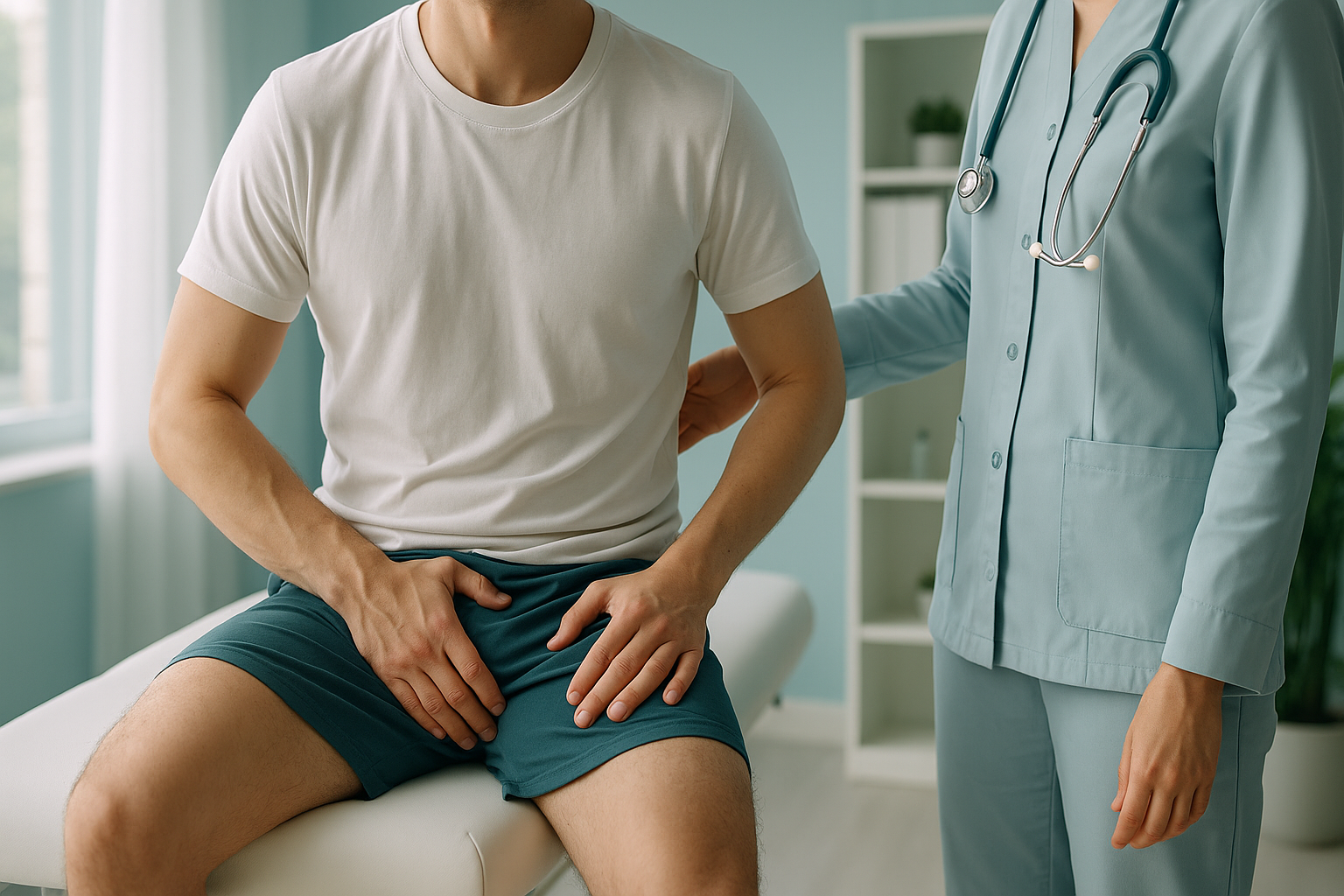
What Causes Groin Pain in Athletes, and When Is It the Hip?
Groin pain in athletes usually comes from overloaded muscles or tendons around the inner thigh and pubic bone. But in many cases the hip joint itself is the real source, especially when the pain lingers despite rest. A standing, weight-bearing assessment of the whole pelvis and both hips can show alignment problems that lying-down scans miss.
Key points
- Most groin pain in sport involves the adductor muscles, the pubic symphysis or the hip joint, and often more than one at a time.
- Chronic groin pain that does not settle with rest should raise suspicion of a hip joint problem, such as hip impingement (FAI) or a hip labral tear.
- Lying-down scans relax the muscles and take the weight off the pelvis, so alignment problems and subtle joint problems may not show up.
- A standing whole-body scan captures the pelvis, hips and legs under real weight. It shows how your body actually takes load during sport.
- An EOS scan uses about 90% less radiation than a standard X-ray, around ten times less.
What is athletic groin pain?
Athletic groin pain is a broad term for any persistent or recurring pain in the groin that is linked to sport. It is extremely common in sports with cutting, kicking, sprinting and quick changes of direction, particularly football, rugby, hockey and athletics. The Doha agreement is a widely used clinical framework. It groups athletic groin pain by where the pain comes from: the adductor muscles, the inguinal canal (sometimes called a sportsman's hernia), the pubic bone, or the hip joint itself.
The difficulty is that several structures sit close together in the groin. Pain from the hip can feel the same as pain from the adductor tendons. Pain from the pubic symphysis can blur into hip joint stiffness. Without a clear picture of the whole area under real weight-bearing load, the true source is easy to miss.
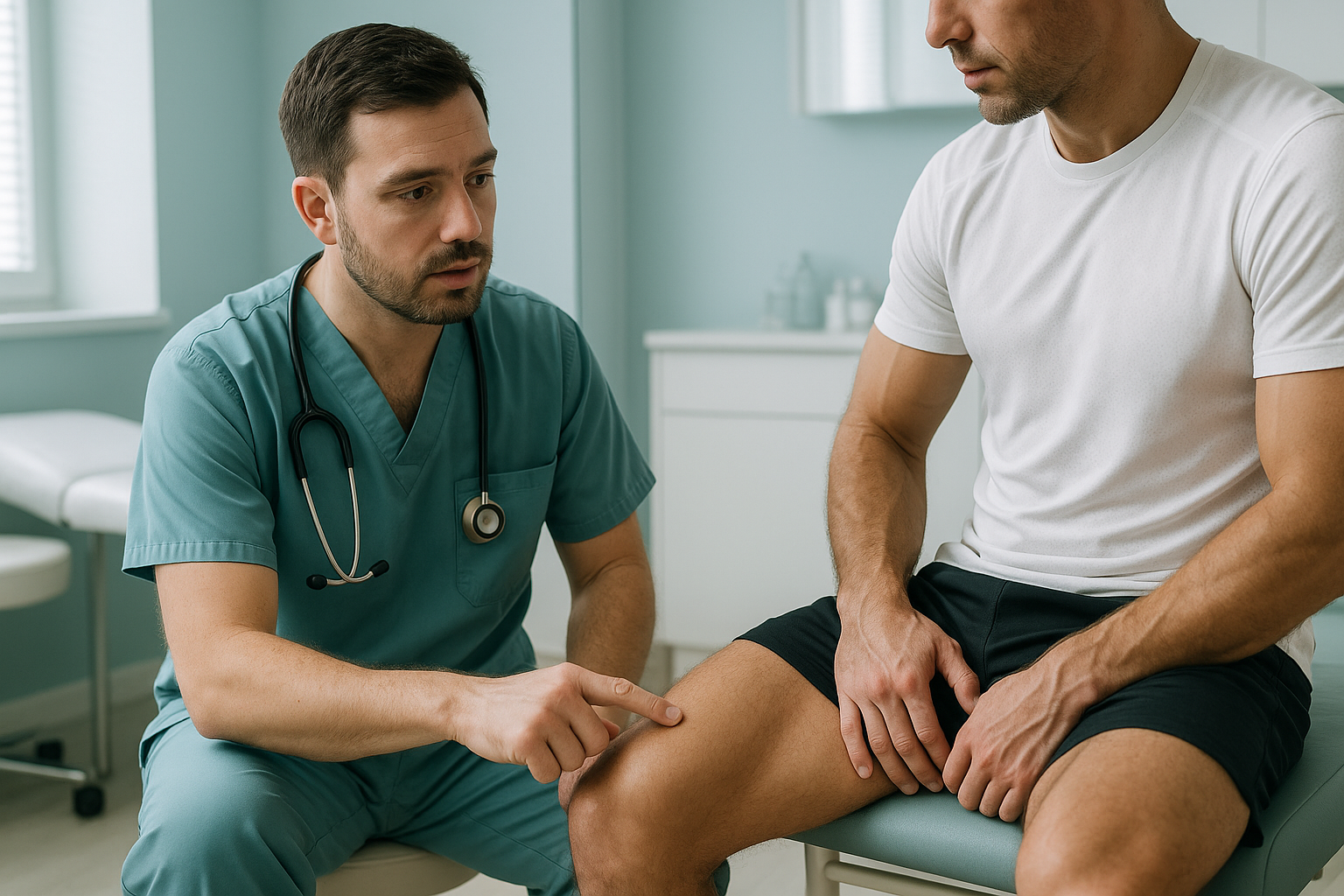
What does chronic groin pain in sport feel like?
Chronic groin pain in sport usually builds up slowly rather than starting at one moment. You may recognise several of these patterns.
A dull ache that appears mid-session and gets worse the more you do, especially kicking or sprinting.
Pain or tightness when you first get up in the morning or after sitting for a long time.
The pain sits deep in the groin, inner thigh or front of the hip, and is hard to point to with one finger.
Weeks of rest reduce the pain, but it comes back quickly when you return to full training.
What are the main causes of groin pain in athletes?
The most common causes fall into a few overlapping groups. Many athletes have more than one at the same time. This is why diagnosing groin pain can be so frustrating.
Overload of the inner-thigh muscles where they attach to the pubic bone. The most frequent cause in footballers.
Weakness or strain around the inguinal canal, sometimes called a sportsman's hernia (though it is not a true hernia).
Inflammation at the pubic symphysis (osteitis pubis), often from repeated shearing forces.
Conditions such as hip impingement or a labral tear that refer pain into the groin and often go unrecognised for months.
How can you tell if groin pain is coming from the hip joint?
Hip joint problems are one of the most under-recognised causes of chronic groin pain in sport. The hip joint sits deep inside the groin. So pain from the joint itself feels almost the same as adductor or pubic bone pain. Several clues suggest the hip is involved.
- Pain that wraps into the front of the hip or catches when the hip bends deeply, such as squatting or getting in and out of a car.
- Less rotation in the hip compared with the other side.
- A clicking or locking feeling during movement.
- Groin pain that continues despite enough rest and rehabilitation of the adductors.
Two hip conditions are particularly common in athletes. Hip impingement (FAI) involves extra bone at the rim of the hip socket or the top of the thigh bone. This limits movement and pinches the soft tissue inside the joint. A hip labral tear often happens alongside impingement and can cause deep, catching pain. Both are often missed on standard scans because they can look subtle when there is no weight on the hip.
Pelvic alignment also matters. If one side of the pelvis sits higher or rotates differently under weight, the hip and adductor tendons on that side take uneven load. This kind of imbalance can contribute to SI joint dysfunction and create a chain of problems from the lower back down through the groin.
Why does a standing scan matter for groin pain?
A standing scan matters because it captures your bones, joints and alignment under real body weight, just as they take load during sport. When you lie down for an X-ray, CT or MRI, your muscles relax and the weight comes off your pelvis. Subtle differences in leg length, pelvic tilt and hip joint angles can disappear completely.
Pelvis under load. The scan shows the real position of each hip socket, any pelvic tilt, and how the legs line up from hip to ankle. If one side is higher or rotated, the image makes it clear.
Full kinetic chain. The image captures you from head to foot in a single exposure. So your clinician can see whether a groin problem links to something higher (the lower back or SI joint) or lower (the knee or foot).
Low radiation. An EOS scan uses about 90% less radiation than a standard X-ray, around ten times less. That matters if you need repeat scans to track progress.
Muscles relax. Gravity no longer pulls on the pelvis, so alignment problems flatten out and can look normal even when they are not.
One area only. A standard hip X-ray or MRI focuses on one joint. It cannot show how the pelvis, spine and legs work together as a connected chain.
Missing context. The scan may show a normal hip when the real issue is how that hip takes load compared with the pelvis and the other side. This is only visible when standing.
ScanAlign standing EOS imaging captures both hips, the full pelvis and the legs in one low-dose standing exposure. Your images are reviewed by a specialist radiographer and reported by a consultant radiologist. This gives you and your treating clinician a complete picture of what is happening under load.
When MRI is the better tool: EOS shows bones, joints and alignment. For soft-tissue detail, such as the adductor tendons, the labrum inside the hip or the inguinal canal, MRI is usually the more suitable scan. In many cases both types of scan work together to give the full picture.
What helps with chronic groin pain in sport?
The right approach depends entirely on the cause. This is why an accurate diagnosis comes first. In general, management may include load management and structured rehabilitation, addressing any underlying pelvic or hip alignment problem, and, where a hip joint problem is confirmed, a discussion with an orthopaedic specialist about further options. ScanAlign does not provide treatment. It provides the imaging that helps you and your clinician understand exactly what is going on.
Before you start treatment, or change the one you are on, it is worth getting a detailed diagnosis. Knowing whether the cause sits in the pelvis, the legs or the spine changes what will actually help.
Struggling with groin pain that keeps coming back? A standing hip and pelvis scan can show whether alignment is part of the problem.
Book a free video consultationWhen to seek urgent help
If you develop sudden, severe groin pain after an injury, notice numbness or weakness in the leg, or have any loss of bladder or bowel control, seek urgent medical attention. Contact your doctor or go to the emergency department of your nearest hospital.
Frequently asked questions
Yes. The hip joint sits deep in the groin. So hip impingement, labral tears and early joint wear can all cause pain that feels like a muscle strain. If groin pain does not improve with rest and adductor rehabilitation, the hip joint should be assessed.
It is a term for pain coming from the area of the inguinal canal, often without a visible hernia. The current clinical term is inguinal-related groin pain. It is caused by strain on the tissues of the lower abdominal wall and is common in sports with twisting and cutting.
Rest reduces inflammation but does not fix the underlying cause. If there is a structural problem, such as hip impingement, pelvic imbalance or tendon degeneration, the pain is likely to return when the load increases again.
A groin strain is usually an acute muscle tear from a single event, such as overstretching during a tackle. Adductor tendinopathy is a chronic overuse problem. The tendon where the adductor longus attaches to the pubic bone becomes painful over time.
No. EOS imaging shows bones, joints and overall alignment. For detailed views of tendons, muscles, the labrum or other soft tissues, MRI is the more suitable tool. In many groin pain cases, both types of scan are helpful.
An EOS scan uses about 90% less radiation than a standard X-ray, around ten times less. This makes it a very low-dose option, especially useful if you need repeat scans over time.
No. ScanAlign is a private, self-pay clinic. You can refer yourself and start with a free video consultation to discuss whether a standing scan is right for your situation.
For patients travelling from abroad, the price is confirmed during the free video consultation, which you can arrange from the book a hip and pelvis scan page.
Yes. If the pelvis is tilted or rotated, one hip and the muscles around it take more load than the other. This uneven load can strain the adductor tendons or change how the hip joint moves. Both of these cause groin pain.
You speak with a specialist diagnostic radiographer who will review your symptoms and history. They will advise whether a standing EOS scan is likely to add useful information to your case. There is no obligation to go ahead.
Get the full picture of your groin and hip pain
A standing scan shows how your pelvis, hips and legs take load under real body weight. Start with a free, no-obligation video consultation from home.
Book a free video consultationWritten by Abbas Dhami (Specialist Diagnostic Radiographer)
Sources
- Weir A, Brukner P, Delahunt E, et al. Doha agreement meeting on terminology and definitions in groin pain in athletes. British Journal of Sports Medicine. 2015;49(12):768-774.
- Griffin DR, Dickenson EJ, O'Donnell J, et al. The Warwick Agreement on femoroacetabular impingement syndrome (FAI syndrome). British Journal of Sports Medicine. 2016;50(19):1169-1176.
- NHS. Hip pain in adults. nhs.uk/conditions/hip-pain.
This page is general information and not a diagnosis.
ScanAlign is the trading name of CoreMed Solutions Ltd and operates under The Harley Street Hospital's CQC licence.