
Are Growing Pains Real, and When Should You Worry?
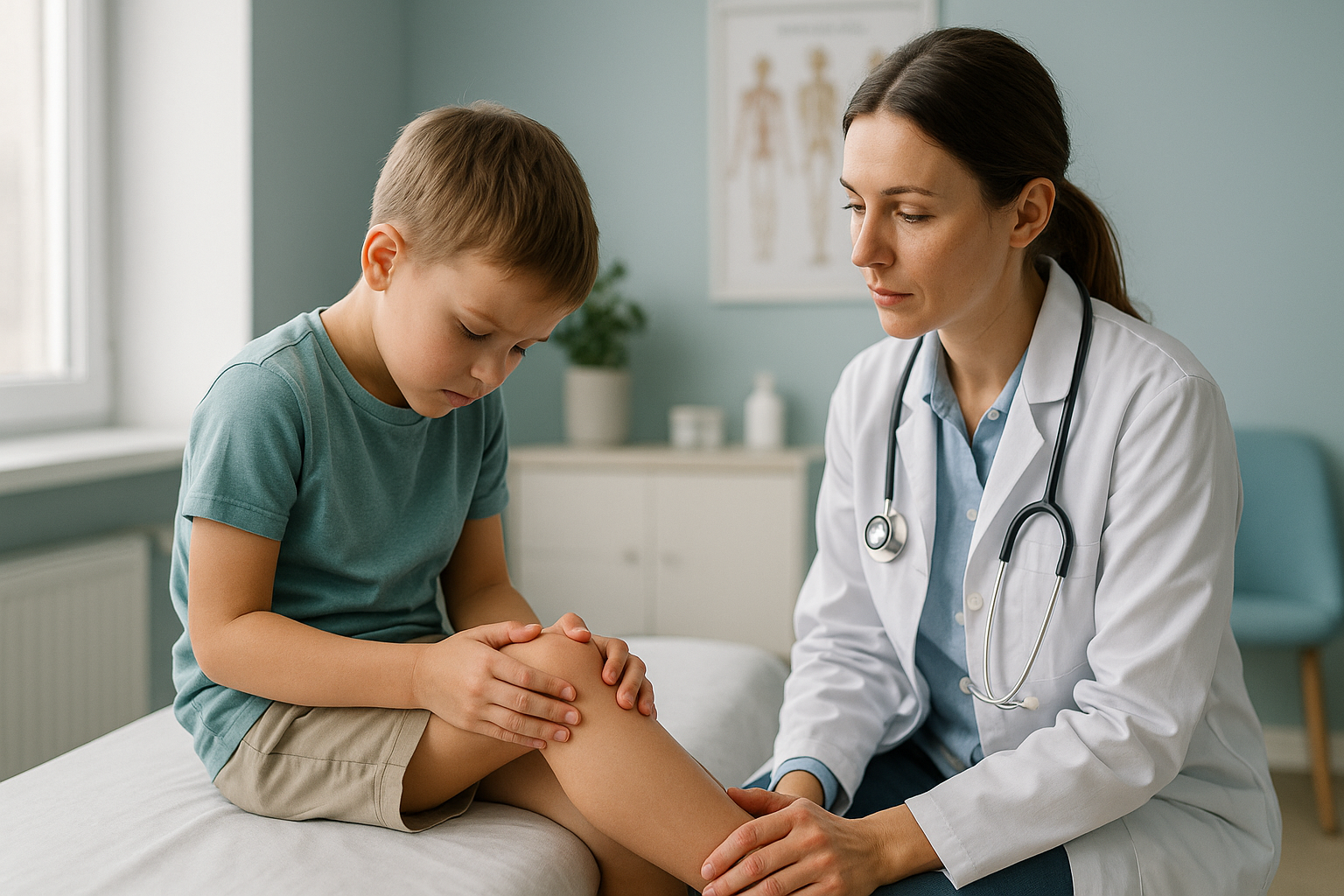
Yes, growing pains are real. They are a recognised pattern of aching leg pain in children. It usually comes in the evening or at night. Growing pains are not caused by actual growth, and they are not a sign of disease. Most children grow out of them. You should worry if the pain is on one side only, comes with swelling, fever or a limp, or stops your child from playing normally during the day.
Key points
- Growing pains are common between the ages of about 3 and 12.
- They affect both legs and come mostly in the evening or at night.
- During the day, the child moves and plays normally.
- Pain that is on one side, persistent, or comes with swelling, fever or a limp should be checked by your doctor.
- A scan is only needed when something about the pattern does not fit.
What are growing pains exactly?
Growing pains are aches in the legs that keep coming back. They affect children during periods of active growth, most often between the ages of 3 and 12. Despite the name, the pain is not caused by bones getting longer. No one is fully sure what triggers them. Current thinking points to tired muscles after an active day, a lower pain threshold in some children, and possible links to hypermobility syndrome.
The term has been in use for over 200 years. It is recognised by the NHS in the UK, the UK's Royal College of Paediatrics and Child Health, and children's orthopaedic bodies around the world. It is a diagnosis of exclusion. This means a doctor first rules out other causes and then identifies the pattern.
What do growing pains feel like?
Growing pains follow a clear pattern. Knowing it can save you a lot of worry.
The aching starts in the late afternoon, in the evening or during the night. It is gone by morning.
The pain usually affects both legs, in the thighs, calves or behind the knees. It is not limited to one spot.
Your child runs, jumps and plays normally during the day. There is no limp.
The legs look completely normal. There is no joint swelling, redness, warmth or bruising.
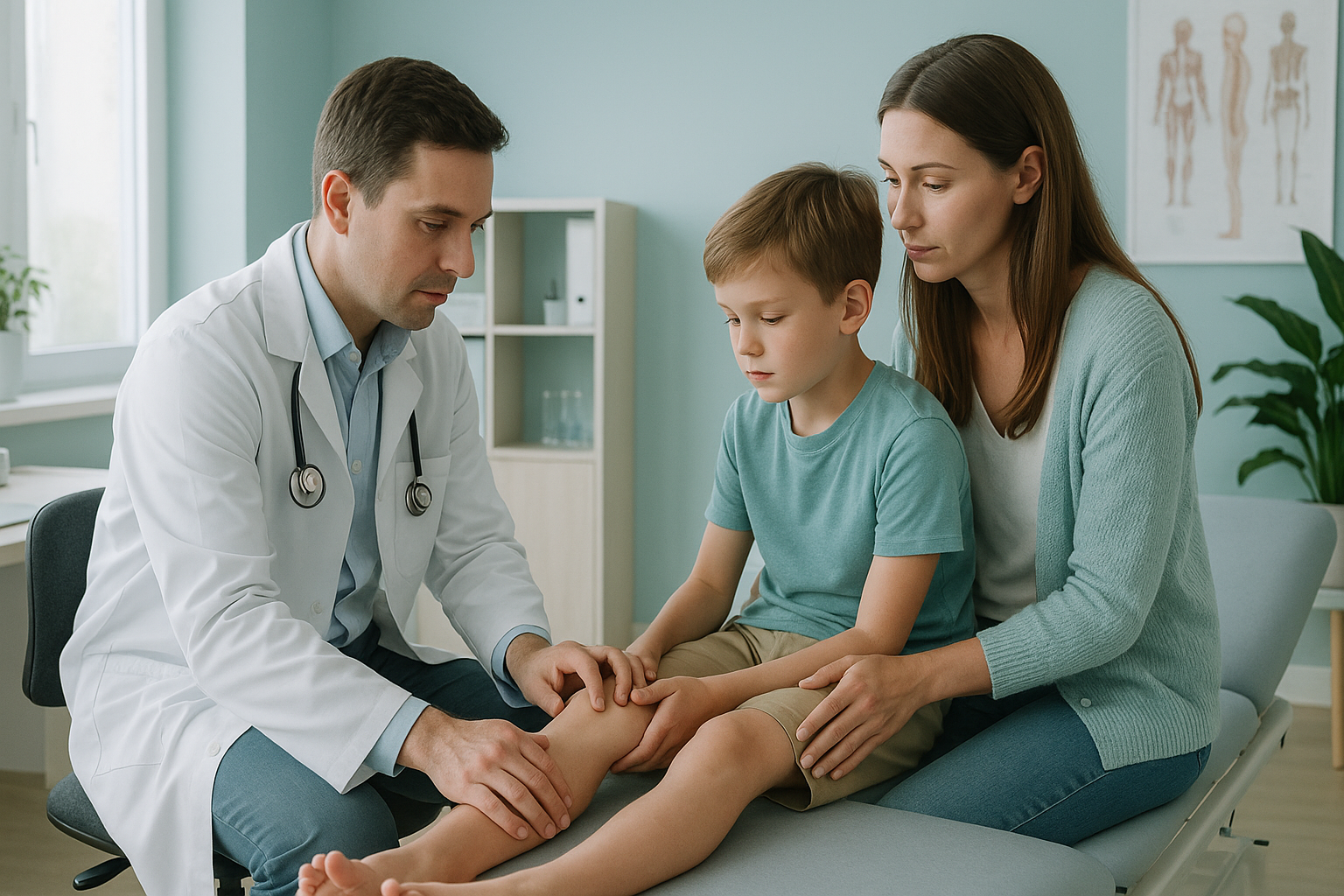
If a doctor examines a child with this typical pattern, the child usually does not need any scans or blood tests.
What causes growing pains in children?
No single cause has been proven. Research suggests several factors working together.
Active days of running, climbing and sport may leave growing muscles tired and achy.
Some children simply feel pain more strongly, and may be more sensitive to normal muscle signals.
Children with flexible, hypermobile joints may have more leg aching after activity.
Growing pains run in families. If you had them as a child, your child may be more likely to have them too.
When should you worry about a child's leg pain?
Most leg pain in children is harmless. But some signs mean you should speak to a doctor, rather than assume it is growing pains. Know when to see a specialist.
- Both legs affected
- Pain in the evening or at night
- Gone by morning
- Normal walking and running
- No swelling, redness or bruising
- Child is otherwise well
- Pain in only one leg or one joint
- Swelling, redness or warmth over a joint
- Limping or refusing to walk
- Fever along with the pain
- Pain that is there every day, including mornings
- Weight loss or tiredness with no clear reason
Important. If your child has sudden, severe leg pain with numbness or weakness, or cannot put any weight on the leg at all, get urgent medical help. Call your doctor or go to the nearest emergency department. Do not wait to book a scan.
How can you help a child with growing pains?
Growing pains are not dangerous and do not cause lasting harm. Most children simply need comfort and reassurance. Your doctor can advise on simple steps, such as gentle massage, a warm bath before bed, or pain relief suitable for your child's age if needed.
It can help to keep a short diary. Note when the pain happens, which legs are affected and what your child did that day. If you notice the pattern changing, moving to one side, or appearing during the day, take the diary to your doctor.
If your child also has very flexible joints, it may help to have them assessed for hypermobility syndrome, which can add to leg aching.
Does a child with growing pains need a scan?
In most cases, no. A child with the typical pattern usually does not need any scan. This means evening pain in both legs, normal activity in the day and no other symptoms. A doctor or paediatrician makes the diagnosis by examining the child.
A scan becomes useful when the picture does not fit. If the pain is persistent, on one side, getting worse, or comes with a limp or swelling, your doctor may ask for X-rays or other scans to rule out other causes.
Where standing, weight-bearing imaging helps, ScanAlign, low dose standing imaging uses EOS technology, which delivers about 90% less radiation than a standard X-ray, around ten times less. The child stands during the scan. So the image shows how their bones and joints line up under their own body weight, which lying-down scans cannot show. You can read more about children's imaging at ScanAlign.
Before starting any treatment, or changing the one your child is on, it is worth getting a detailed diagnosis. Knowing whether the cause sits in the pelvis, the legs or the spine changes what will actually help.
When MRI is better. EOS imaging shows bones, joints and alignment clearly. For soft tissue, discs, nerves or a suspected infection, MRI is usually the better tool. Your doctor will guide you on which scan is right for your child.
If your doctor or specialist has advised a scan, or you are not sure whether your child needs one, you can talk it through with us at no cost.
Book a free video consultationFrequently asked questions about growing pains
No. Despite the name, there is no evidence that bone growth itself causes pain. The term goes back to the 1820s and has stuck. But the aching is more likely linked to tired muscles and how active the child is.
They most often appear between the ages of 3 and 5, and again between 8 and 12. Most children grow out of them by their mid-teens.
They can come and go over weeks or months, but they are not usually there every single night. Pain that comes every night without a break, or that is there in the morning too, should be checked by your doctor.
If the pain fits the typical pattern, a routine visit to your doctor is sensible for reassurance. If anything is unusual, such as limping, pain on one side, swelling or fever, see your doctor promptly.
Classic growing pains affect the legs. Persistent arm or back pain in a child should be checked by a doctor. It is less likely to be growing pains and may have a different cause.
There is no specific test. Growing pains are diagnosed by recognising the pattern and ruling out other causes. Blood tests or scans are only used when the symptoms do not fit the typical picture.
Not necessarily, but the two do overlap. Children with hypermobile joints are more prone to leg aching after activity. If your child is very flexible and has frequent pain, mention it to your doctor.
EOS uses about 90% less radiation than a standard X-ray, around ten times less. This makes it a low-dose option when standing imaging of the whole body or legs is needed.
You can self-refer. But for children with growing pains in particular, we would always encourage an assessment by your doctor first. Most children with typical growing pains do not need a scan at all.
The price for patients travelling from abroad is confirmed during the free video consultation. You can book a children's assessment to discuss whether a scan is right for your child, and talk through their situation before committing to anything.
Not sure if your child needs a scan?
A free video consultation lets you talk through your child's symptoms with our team. No obligation, no pressure.
Book a free video consultationWritten by Abbas Dhami (Specialist Diagnostic Radiographer)
Sources
- NHS. "Growing pains." nhs.uk, last reviewed 2022.
- Evans AM. "Growing pains: contemporary knowledge and recommended practice." Journal of Foot and Ankle Research, 2008;1:4.
- Uziel Y, Hashkes PJ. "Growing pains in children." Pediatric Rheumatology Online Journal, 2007;5:5.
This page is general information and not a diagnosis.
ScanAlign is the trading name of CoreMed Solutions Ltd and operates under The Harley Street Hospital's CQC licence.