
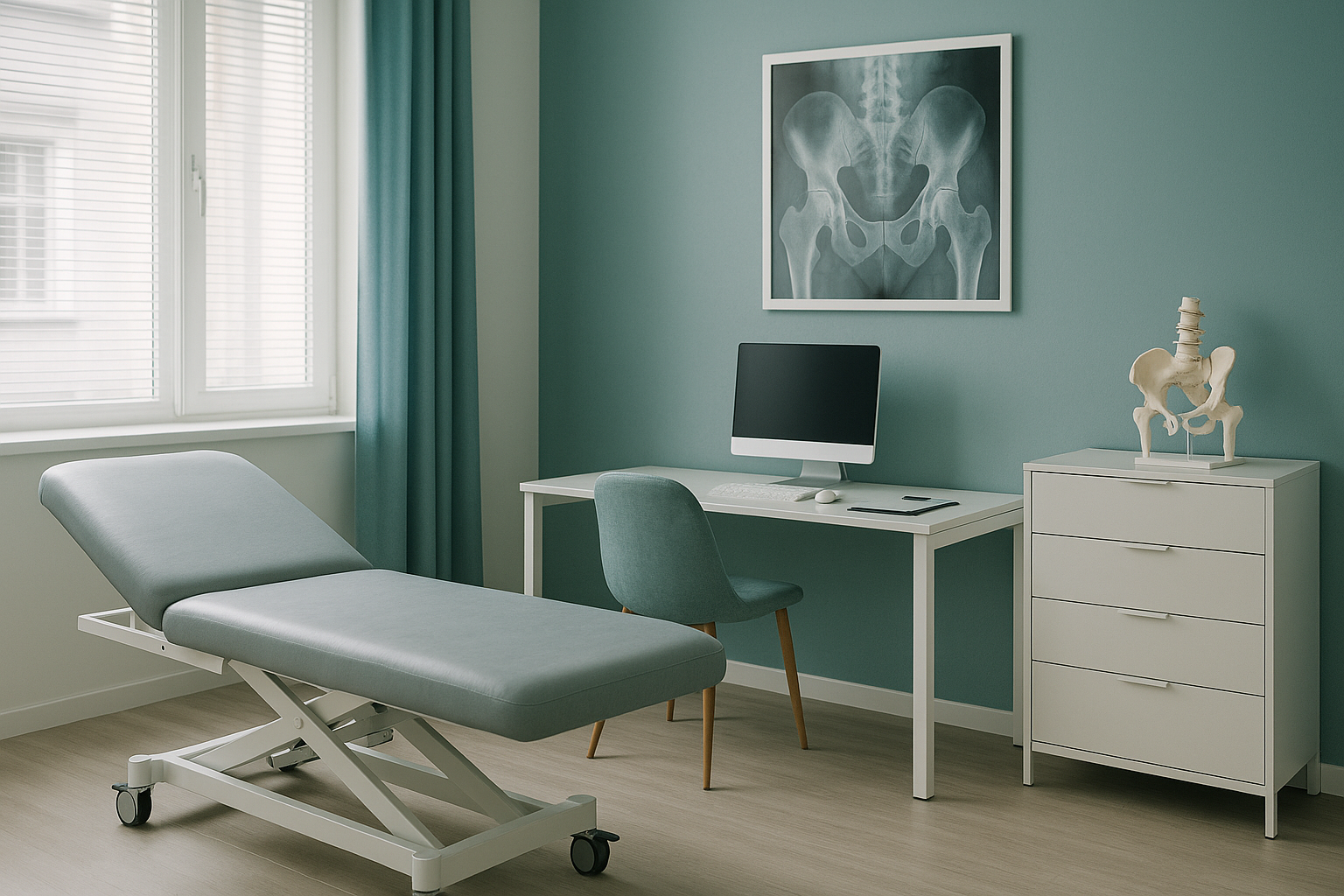
Where Can You Get a Hip Dysplasia Assessment in London?
You can have a private hip dysplasia assessment at ScanAlign, standing EOS imaging in Harley Street. EOS takes an image of your pelvis and hips while you stand. So the image shows how your hip socket covers the femoral head under real body weight. It uses about 90% less radiation than a standard X-ray, around ten times less.
Key Points
- Hip dysplasia in adults is often missed. This is because imaging done lying down hides how the socket takes load under weight.
- A standing EOS scan shows the pelvis, hips and legs in one full-length view. It captures your alignment as it really is.
- ScanAlign is a self-pay diagnostic clinic at 19 Harley Street. You do not need a referral from your doctor.
- EOS uses about 90% less radiation than a standard X-ray, around ten times less.
- Your report can support a second opinion or a referral to a hip preservation surgeon.
What is hip dysplasia in adults?
Hip dysplasia in adults means the hip socket (acetabulum) is too shallow to cover the ball of the thigh bone properly. This leaves part of the femoral head uncovered. Load then falls on a smaller area of cartilage. This can lead to pain, stiffness and early wear.
It is sometimes called developmental dysplasia of the hip, because the shape often starts to form before birth or soon after. Many people live with a slightly shallow socket for years without knowing. Symptoms may only appear in their twenties, thirties or later, when cartilage starts to thin under repeated uneven loading.
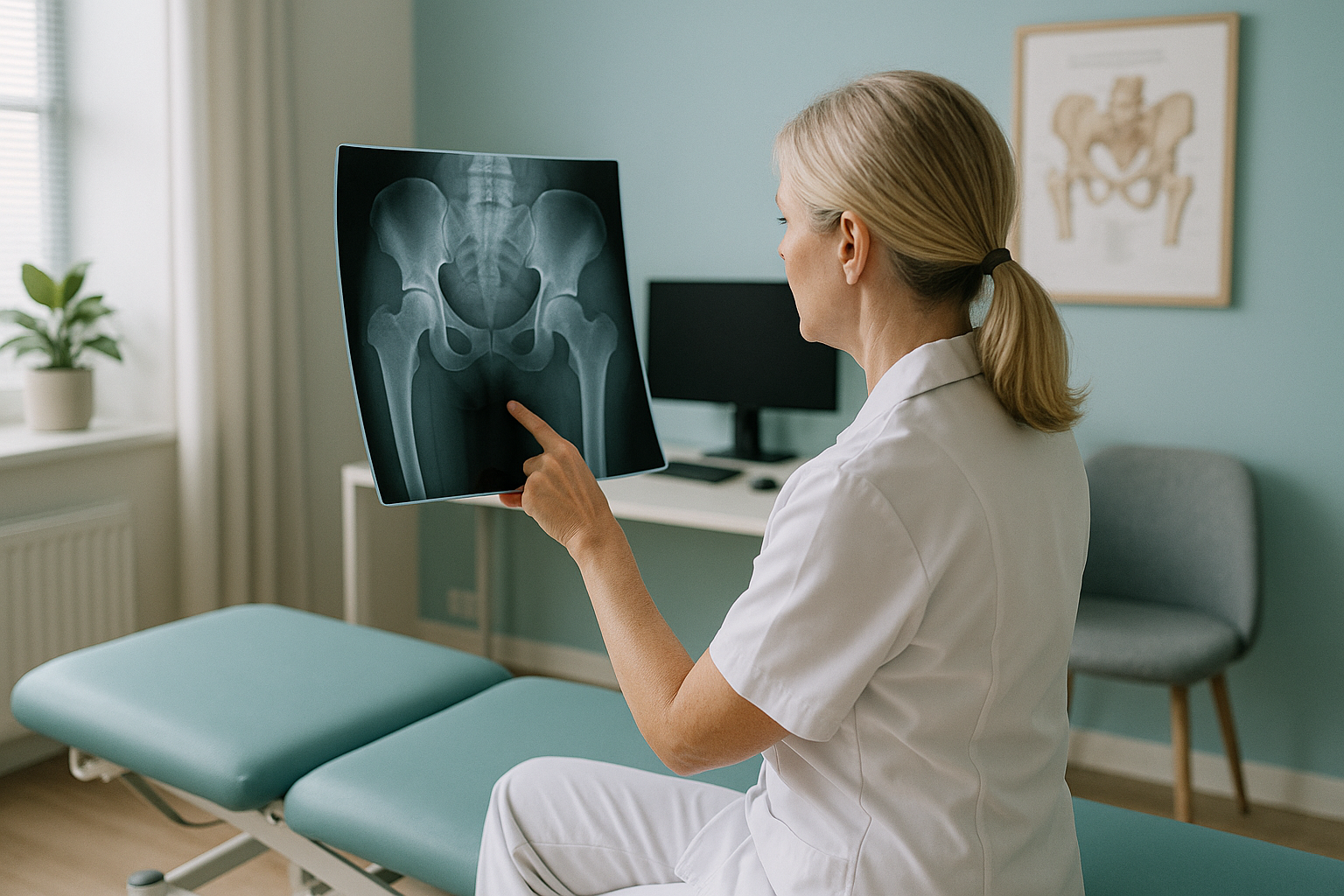
What are the signs of hip dysplasia in adults?
The most common sign is a deep, aching pain in the groin that gets worse with activity. You may also notice stiffness, clicking, or a feeling that the hip is unstable. Symptoms can be vague. This is one reason the condition is often misdiagnosed or missed.
Important: If you have sudden severe hip pain, numbness, weakness in your leg, or loss of bladder or bowel control, get urgent medical help from your doctor or the nearest emergency department rather than booking a scan.
Why does a standing scan matter for hip dysplasia?
A standing scan matters because hip coverage changes when you are upright. When you lie on a traditional X-ray table, gravity flattens the pelvis and the muscles around the hip relax. This can make a shallow socket look more normal than it really is. When you stand, body weight pushes through the joint, and any gap in coverage becomes visible.
EOS captures the full skeleton from head to feet while you stand naturally. The pelvis, both hips and both legs appear in one calibrated image. Your specialist can measure how well the socket covers the femoral head under real load. They can also see whether a difference in leg length or a tilt of the pelvis is changing the picture at the hip.
A standard X-ray taken lying down shows the hip joint, but without body weight pressing through it. The pelvis may tilt differently on the table. The image often cuts off the legs and spine, so changes elsewhere in the chain cannot be seen. A shallow socket that causes trouble when you are on your feet may look borderline when you lie flat.
Your body is a connected chain from feet to head. A shallow hip socket can tilt the pelvis. This shifts the lower spine, which makes the knee on the other side compensate. EOS captures that whole chain in one image. This helps explain symptoms that scans of a single area miss.
When MRI is the better tool: EOS shows bones, joints and alignment. If your specialist suspects a labral tear, cartilage damage or soft-tissue problems around the hip, MRI is usually the better choice. The two scans work well together.
How does a hip dysplasia assessment work at ScanAlign?
The assessment has four simple steps. It goes from a first conversation to a report you can share with any specialist.
You speak with our radiographer about your symptoms. Together you confirm the scan is right for your situation. You do not need a referral from your doctor.
You come to the clinic, change into simple clothing with no metal, and step into the EOS scanner. The scan itself takes only a few minutes while you stand still.
The EOS system produces a calibrated, full-length image of your skeleton under load, with about 90% less radiation than a standard X-ray.
Your report includes the relevant hip and pelvis measurements. You can take it to your own consultant or a hip preservation surgeon, or use it for a second opinion.
Want to find out whether a standing hip assessment is right for you?
Book a free video consultationWho should consider a standing hip dysplasia scan?
A standing assessment is most useful when you already have hip symptoms, earlier imaging that gave no clear answer, or a suspected alignment problem that standard scans have not explained.
Before you start treatment, or change the one you are on, it is worth getting a detailed diagnosis. Knowing whether the cause sits in the pelvis, the legs or the spine changes what will actually help.
- Groin pain with no clear diagnosis from earlier imaging
- Known or suspected shallow hip socket
- Thinking about a second opinion before surgery
- Difference in leg length or pelvic tilt affecting the hip
- Wanting a full picture of your alignment for a hip preservation consultant
- Suspected labral tear or cartilage damage (MRI is better)
- Acute injury that needs emergency assessment
- Unable to stand without help for a few minutes
Frequently asked questions
No. ScanAlign is a self-pay clinic, so you can book directly without a referral from your doctor. You start with a free video consultation to make sure the scan is right for you.
For patients travelling from abroad, the price is confirmed during the free video consultation, which you can arrange on our booking page.
EOS uses about 90% less radiation than a standard X-ray, around ten times less. It is one of the lowest-dose skeletal imaging systems available.
ScanAlign provides diagnostic imaging, not treatment recommendations. Your report gives your consultant accurate measurements. These help them decide whether surgery, such as a periacetabular osteotomy, is appropriate.
When you lie down, gravity changes how the pelvis sits. The socket can then look like it covers more of the femoral head than it really does. Standing imaging shows the joint under real load, which gives a truer picture of coverage.
The report includes standard hip and pelvis measurements used by orthopaedic and hip preservation specialists. They are taken from a calibrated standing image. They are given in clinical terms your consultant will recognise.
The scan itself takes only a few minutes. You simply stand still inside the EOS system while it takes a full-length image of your skeleton.
Yes. The report and images are yours. You can share them with any consultant, hip preservation surgeon or physiotherapist you choose.
ScanAlign is at 19 Harley Street, London, inside The Harley Street Hospital. The nearest London Underground stations are Oxford Circus and Regent's Park.
No. EOS shows bones, joints and alignment. For soft-tissue structures such as the labrum, cartilage or surrounding muscles, MRI is usually the better tool. Your radiographer can advise you during the free video consultation.
Ready to see your hips under real load?
Start with a free video consultation, with no obligation. We will help you decide whether a standing hip assessment is the right next step before you plan your trip to London.
Book a free video consultationAuthor: Abbas Dhami (Specialist Diagnostic Radiographer)
Sources
- Clohisy JC, Carlisle JC, Beaulé PE, et al. A systematic approach to the plain radiographic evaluation of the young adult hip. J Bone Joint Surg Am. 2008;90 Suppl 4:47-66.
- Illés T, Somoskeöy S. The EOS imaging system and its uses in daily orthopaedic practice. Int Orthop. 2012;36(7):1325-1331.
- NHS. Hip dysplasia. nhs.uk (accessed 2024).
This page is general information and not a diagnosis.
ScanAlign is the trading name of CoreMed Solutions Ltd and operates under The Harley Street Hospital's CQC licence.