
How Long Does an EOS Scan Take From Start to Finish?
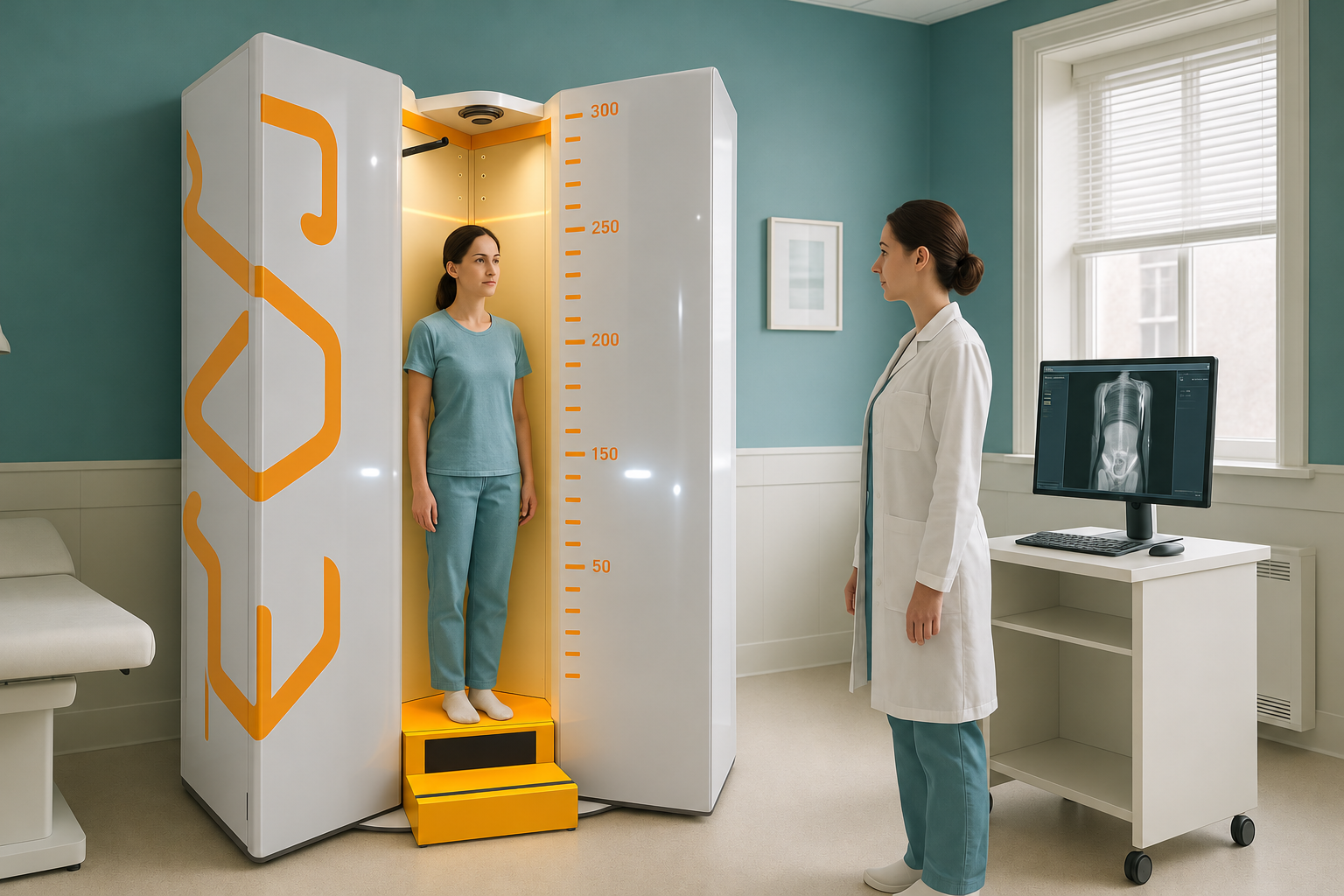
A full EOS scan appointment at ScanAlign, standing EOS imaging in Harley Street usually takes about 20 minutes, from the moment you arrive to the moment you leave. The scan itself, when the EOS system takes your images, lasts about 15 seconds. The rest of the time is for check-in, changing and getting you into position inside the open cabin.
Key Points
- The whole appointment takes about 20 minutes.
- Taking the images takes about 15 seconds.
- You stand naturally in an open cabin. There is no closed tunnel and no injection.
- EOS uses about 90% less radiation than a standard X-ray, around ten times less.
- A specialist reviews your images and a detailed report is prepared for you.
If you have had a standard spine X-ray or a hospital scan before, you may remember a long wait and then a short burst of imaging. An EOS appointment is different. The whole visit is planned to be simple and quick. The most important part, taking the images, lasts only seconds.
What are the steps during an EOS scan appointment?
Your appointment has four simple steps. Each one is explained to you before it happens, so nothing comes as a surprise. This is what a typical visit looks like.
You arrive at 19 Harley Street, London. Our team welcomes you, checks your details and answers any last questions. This takes a couple of minutes.
You may need to change into a gown, depending on the area being scanned. Metal items in the scan area, such as belts or jewellery, need to be taken off. This takes a minute or two.
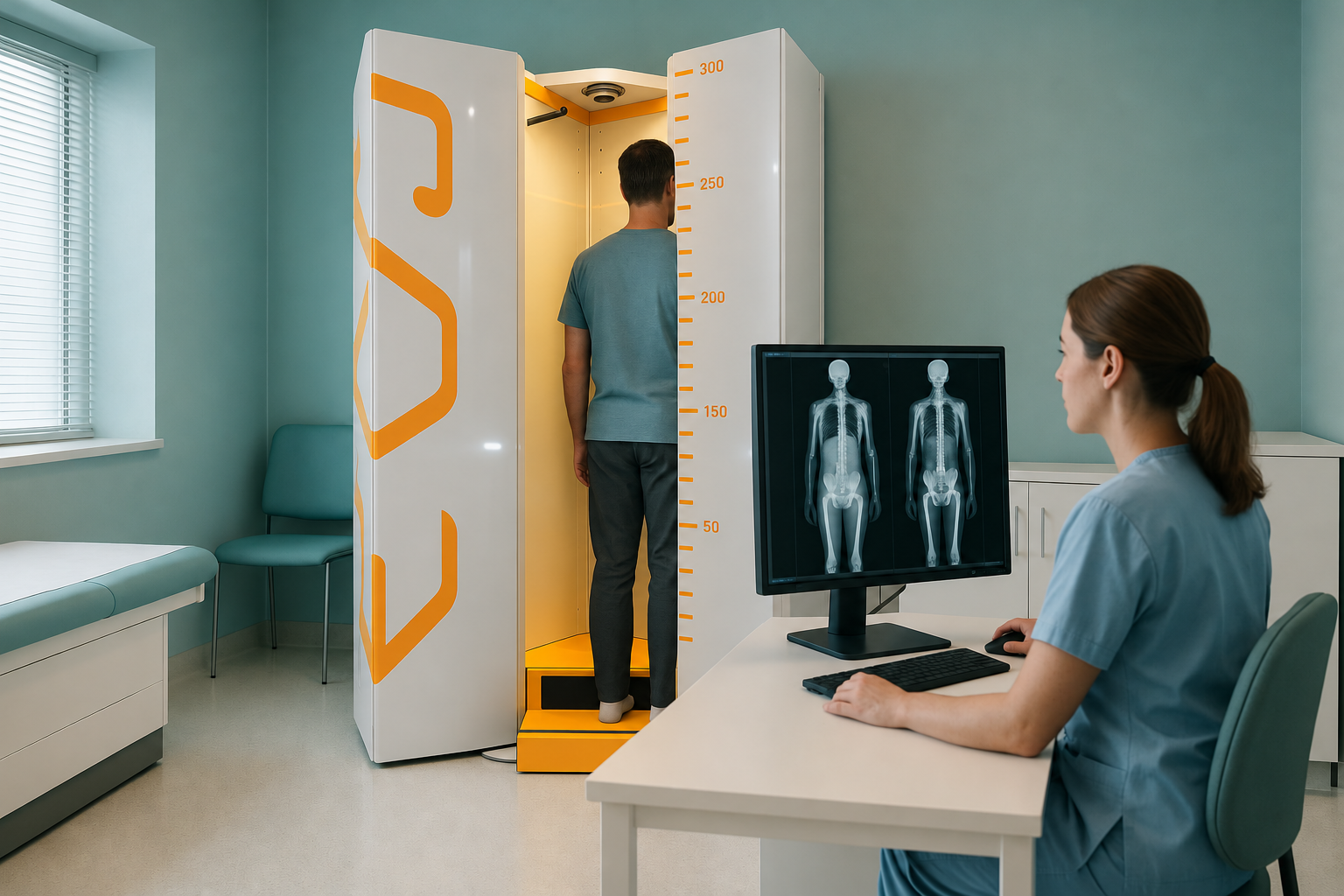
Your radiographer places you in position inside the open EOS cabin. You stand naturally, with your weight on both feet. The scan arm moves smoothly around you and takes a full image of your skeleton in about 15 seconds. There is no closed tunnel and no injection.
Once the images are checked on screen, you change back and leave. The whole visit usually ends in about 20 minutes. A specialist then reviews your images, and a detailed alignment report is prepared for you.
For a step-by-step guide to the full visit, read about what happens during an EOS scan.
Why does the EOS scan you standing up?
An EOS standing X-ray shows your skeleton in the position it really works in: upright and carrying your full body weight. Most traditional imaging, whether X-ray, CT or MRI, asks you to lie down. When you lie flat, gravity is taken away, your muscles relax and your joints settle differently. Misalignments, tilts and compensations that cause problems in your daily life can simply disappear on a lying-down scan.
Your body works as a connected chain, from your feet to your head. A shift in one area, for example the pelvis, can cause your spine and knees to compensate. Pain often shows up some distance from its root cause. Standing whole-body imaging shows these connected patterns in a single image.
A note about MRI. EOS is excellent at showing bones, joints and whole-body alignment under load. For soft-tissue detail such as discs, ligaments or nerves, MRI is usually the better tool. The two types of imaging work well together, and your treating clinician can advise which one you need.
Is an EOS scan safe?
Yes. The EOS system uses about 90% less radiation than a standard X-ray, around ten times less. There is no injection, no contrast dye and no closed tunnel. You simply stand still for a few seconds while the image is taken. It is comfortable and quick for the vast majority of people.
About 90% less than a standard X-ray.
No contrast dye or needles needed.
No closed tunnel. You stand in an open space.
How should I prepare for an EOS scan?
There is very little you need to do before the scan. Wear comfortable clothes and avoid metal items such as belts, underwire bras or heavy jewellery in the area being scanned. You do not need to fast, and there is no special preparation. If you have any metal implants from past surgery, tell us in advance so we can allow for them on the images.
You can learn more about the full visit in our guide to what to expect at an alignment assessment.
Before you start a treatment, or change the one you are on, it is worth getting a detailed diagnosis. Knowing whether the cause sits in your pelvis, your legs or your spine changes what will actually help.
No referral needed. You can book a standing EOS scan yourself. If you would like to talk about whether it is right for you, our team is happy to discuss it with you first, free of charge.
Book a free video consultationFrequently asked questions
Taking the images takes about 15 seconds. You stand still in the open cabin while the scan arm moves around you. The whole appointment, including check-in and changing, usually takes about 20 minutes.
No. ScanAlign accepts self-referrals. You do not need a letter from your doctor or consultant to book. You are welcome to bring any earlier scans or medical notes if you have them.
Not quite. Both use X-ray technology, but EOS images your whole body standing up, using about 90% less radiation than a standard X-ray, around ten times less. It also produces full-length, weight-bearing images that show the alignment of your entire skeleton in one go.
No. There is no injection, no contrast dye and no closed tunnel. You stand naturally in an open cabin for a few seconds. Most people find it very comfortable.
Comfortable clothes are best. You may be asked to change into a gown, depending on the area being scanned. Take off metal items such as belts, underwire bras and heavy jewellery from the scan area beforehand.
EOS uses about 90% less radiation than a standard X-ray, around ten times less. This lower dose is one of the key advantages of the EOS system.
A specialist reviews your images and a detailed alignment report is prepared. We will discuss the expected timeframe with you when you book.
The price for patients travelling from abroad is confirmed during the free video consultation, and you can book your scan when you are ready.
They do different jobs. EOS shows bones, joints and alignment under your body weight. MRI is better for soft tissues such as discs, ligaments and nerves. In many cases, they work well together.
Most people are surprised by how quick and comfortable it is. You can read what our patients say about their visits.
Ready to see your alignment clearly?
A free video consultation lets you ask questions, talk about your symptoms and find out whether a standing EOS scan in London is the right next step for you.
Book a free video consultationWritten by Abbas Dhami (Specialist Diagnostic Radiographer)
Sources
- EOS imaging. "EOS System: Low-dose biplanar X-ray imaging." Manufacturer documentation. eos-imaging.com
- Deschênes S, Charron G, Beaudoin G, et al. "Diagnostic imaging of spinal deformities: reducing patients' radiation dose with a new slot-scanning X-ray imager." Spine, 2010;35(9):989-994.
- NHS. "X-ray: How it is performed." nhs.uk
This page is general information and not a diagnosis.
ScanAlign is the trading name of CoreMed Solutions Ltd and operates under The Harley Street Hospital's CQC licence.