
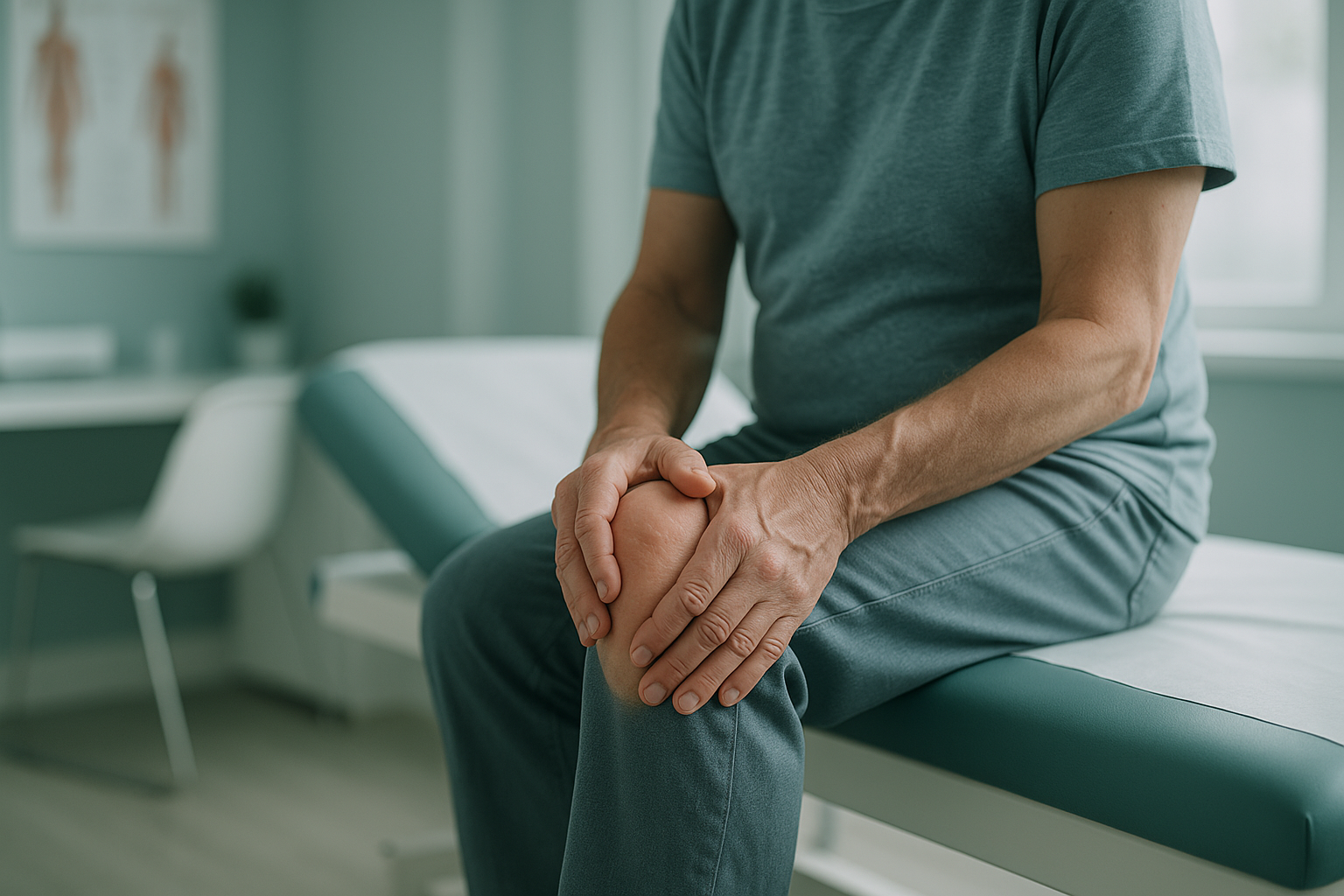
Why Do My Knees Ache More at Night and When I Rest?
Your knees often ache more at night because movement during the day keeps the joints lubricated and the muscles working. When you stop and rest, swelling can collect, inflammatory chemicals rise, and less distracts you from pain signals. Knee pain at night is common, but you should not simply put up with it. It usually points to a cause worth looking into.
Key takeaways
- Movement masks pain. Rest takes away that masking effect, so your brain notices the knee more.
- Inflammatory chemicals naturally peak in the late evening and early hours of the morning.
- Night pain can come from osteoarthritis, bursitis, alignment problems or other conditions.
- Constant, unrelenting pain at rest that wakes you again and again is a red flag. Speak to a doctor.
- A standing, weight-bearing scan can show alignment problems that lying-down imaging misses.
Why does knee pain get worse when you stop moving?
Knee pain often gets worse at rest because your body loses three things that kept the joint comfortable during the day: movement, muscle support and distraction.
While you walk, bend and climb stairs, your muscles actively hold the knee steady. The movement pumps synovial fluid around the joint and keeps the cartilage lubricated. Your brain is also busy with other sensory information, so pain signals have to compete for attention.
Once you sit down or lie in bed, your muscles relax and the fluid does not circulate as well. Swelling that built up during the day settles into the joint space. At the same time, levels of cortisol, your body's natural anti-inflammatory hormone, fall in the evening. Inflammatory chemicals such as cytokines rise. The result is a knee that felt manageable at lunchtime but throbs at midnight.

What does knee pain at night feel like?
Knee pain at night can show up in different ways, depending on the cause behind it. These are patterns people often describe.
A dull, deep ache that starts once you sit or lie down, often around the front or inner side of the knee.
Morning stiffness that lasts more than a few minutes may suggest an inflammatory pattern worth looking into.
Being woken by knee pain again and again is a sign the joint needs attention. Do not ignore it.
A knee that looks more puffy at the end of the day suggests the load through the day is more than the joint can comfortably handle.
Red flag. Constant, unrelenting pain at rest that does not ease with any change of position, or pain that comes with unexplained weight loss, fever or significant swelling, needs urgent medical attention. Contact your doctor straight away or go to your nearest emergency department.
What causes aching knees at night?
Several conditions can cause knee pain at rest or make it worse. Often more than one factor is involved.
Worn cartilage triggers low-grade inflammation. This often flares at night when cortisol falls. Arthritis knee pain at night is one of the most common reasons people look for help.
Inflamed bursae around the knee, including pes anserine bursitis on the inner side, can ache intensely when pressure is put on them in bed.
If your leg alignment is off, even slightly, the knee takes uneven load all day. By evening, the overworked side is inflamed and painful.
Old meniscus tears, ligament injuries or a previous knee replacement can leave areas that stiffen and ache once movement stops.
Your body works as a connected chain. A hip that tilts, a foot that rolls inward or a spine that shifts can all change how load passes through your knee. You may feel the pain in the knee, but that is not always where the problem starts.
How can a standing scan help with knee pain at night?
A standing, weight-bearing scan shows your knee the way it really works, under the full load of your body weight. This matters because lying-down imaging, such as a standard X-ray or MRI, lets your muscles relax and takes pressure off your joints. That can hide the alignment problems and joint-space narrowing that drive your symptoms during the day, and your pain at night.
ScanAlign standing EOS imaging captures your legs, hips and spine in a single upright image. This shows the full mechanical chain, from your feet to your lower back, so you can see whether a problem somewhere else is making your knee compensate.
The EOS system uses about 90% less radiation than a standard X-ray, around ten times less. The scan takes just a few seconds while you stand still.
When MRI is the better tool. EOS shows bones, joints and alignment. If your clinician suspects soft-tissue damage, a torn meniscus or nerve involvement, MRI is usually the better choice. The two scans answer different questions and can work well together.
Not sure which scan is right for you? A short video call with our team can help you decide before you plan a trip to London.
Book a free video consultationHow can I sleep with knee pain?
These general tips may help you manage knee pain at night while you work on finding the cause behind it. They do not replace a proper assessment.
- Pillow between the knees. If you sleep on your side, a pillow between your knees keeps them aligned and reduces pressure on the inner joint.
- Pillow under the knees. If you sleep on your back, a pillow under your knees takes tension off the joint capsule.
- Gentle movement before bed. A short walk or a few gentle bends can help move fluid around the joint so it does not collect while you sleep.
- Ice or warmth. Some people find a cool pack reduces swelling. Others prefer gentle warmth to ease stiffness. Try both and see what suits you.
- Manage load during the day. If your knees swell after activity, the day's load may be more than the joint can comfortably take. Understanding your alignment can help explain why.
If knee pain keeps you awake often, or the pain is getting worse over weeks, it is worth knowing when to see a specialist. Understanding the cause is the first step, and that starts with the right imaging.
Before you start a treatment, or change the one you are on, it is worth getting a detailed diagnosis. Knowing whether the cause sits in your pelvis, your legs or your spine changes what will actually help.
Frequently asked questions
Movement during the day lubricates the joint and keeps the muscles working. At rest, fluid collects, inflammation rises and your brain has fewer distractions from pain signals.
It can be. Osteoarthritis commonly causes night pain because inflammatory chemicals peak when cortisol falls in the evening. However, bursitis, alignment problems and other conditions can also cause it.
Waking now and then is common with joint problems. But constant, unrelenting pain that does not ease when you change position is a red flag. Speak to your doctor straight away if this applies to you.
People who sleep on their side often benefit from a pillow between the knees. People who sleep on their back can try a pillow under the knees. Both positions reduce pressure on the joint.
Yes. Your body works as a connected chain. A tilted pelvis, a foot that rolls or an uneven leg length can all change how load passes through your knee, causing pain that shows up when you rest.
EOS captures your full skeleton while you stand, showing how your weight actually loads your joints. A standard X-ray of one area can miss alignment shifts that only appear when you bear weight.
Yes. The EOS system uses about 90% less radiation than a standard X-ray, around ten times less.
No. ScanAlign is a private, self-pay clinic. You can refer yourself directly, without a referral letter from your doctor.
The price for patients travelling from abroad is confirmed during the free video consultation, where you can also find out whether a scan is right for you.
Not necessarily. Night pain on its own does not mean surgery is needed. Proper imaging and a clinical assessment help find the cause and guide the next steps.
Find out why your knees ache at night
A free video consultation with our team, from wherever you are, can help you understand whether a standing scan in London is the right next step for your knee pain.
Book a free video consultationWritten by Abbas Dhami (Specialist Diagnostic Radiographer)
Sources
- Arthritis Research UK (now Versus Arthritis). Osteoarthritis of the knee. versusarthritis.org
- Perry M, et al. Diurnal variation of cortisol and its relationship with pain perception. Annals of the Rheumatic Diseases, BMJ Journals.
- NHS. Knee pain. nhs.uk/conditions/knee-pain
This page is general information and not a diagnosis.
ScanAlign is the trading name of CoreMed Solutions Ltd and operates under The Harley Street Hospital's CQC licence.