
How Does Asymmetry Affect You When You Lift Weights?
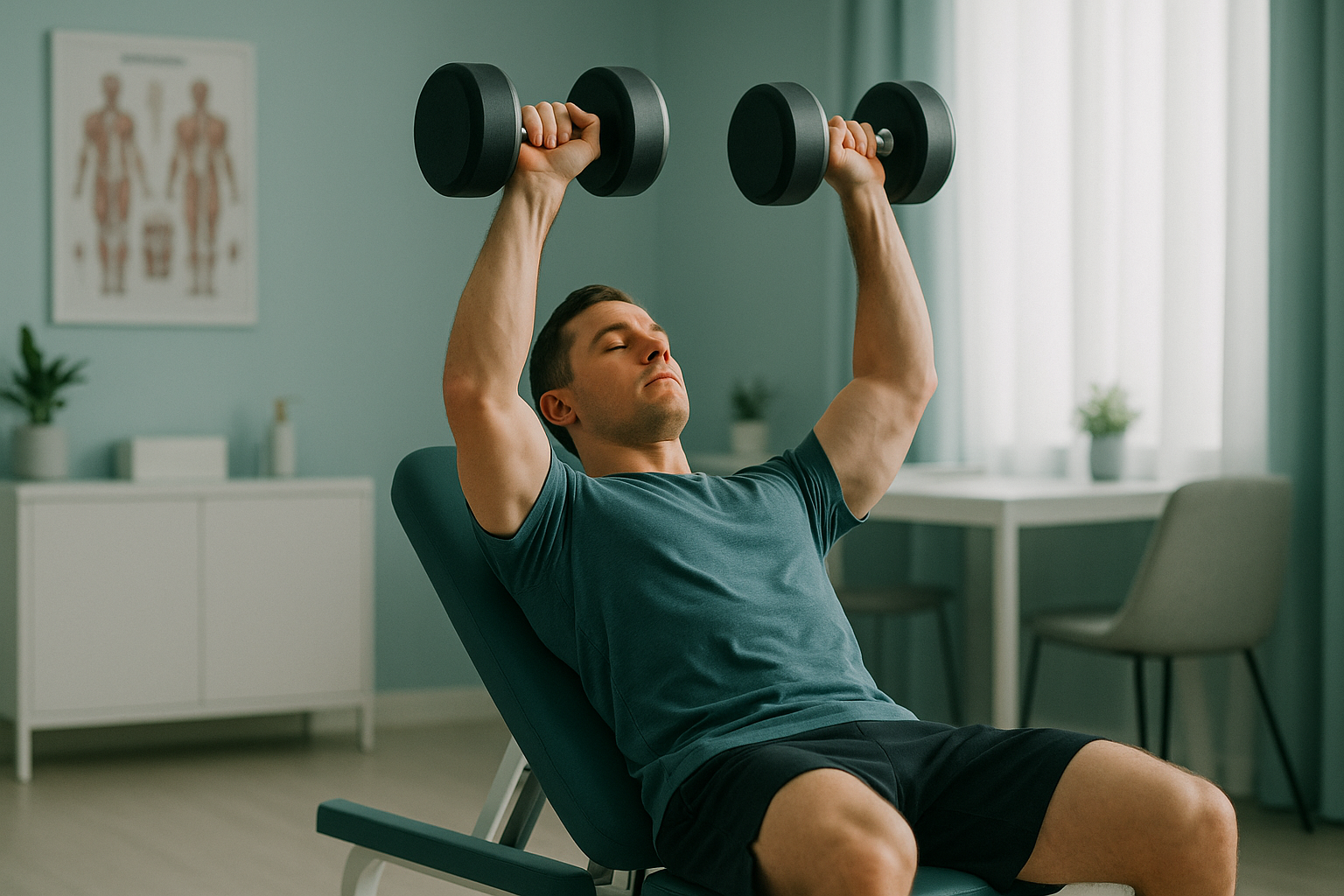
Lifting asymmetry means one side of your body works harder, or moves differently, from the other side when you train. It can come from a trained habit, a muscle imbalance, or a structural difference in your skeleton. A standing, whole-body image can show whether the root cause is in your bones and joints or only in your muscles.
Key takeaways
- Most people have some difference between their left and right side. It only matters when it causes pain, stalls progress, or increases injury risk.
- The cause can be structural (bone or joint shape) or functional (trained movement patterns).
- Lying-down scans relax your muscles and can hide alignment problems that appear under load.
- A standing EOS scan images your full skeleton under gravity, giving a true loading baseline.
- Knowing the cause helps you and your coach plan your training around it safely.
What does lifting asymmetry actually mean?
Lifting asymmetry is a clear difference between your left and right sides in strength, range of motion, or bar path during resistance training. Almost everyone has a dominant side, and small differences are completely normal. The problem starts when the gap is big enough to change how you move under load, because your body compensates.
Your body is a connected chain from your feet to your head. If one hip sits slightly higher, or one leg is a little shorter, the joints above and below adjust to keep you balanced. In daily life you might not notice. Under a heavy barbell, those compensations get amplified.
What are the signs of asymmetry in the gym?
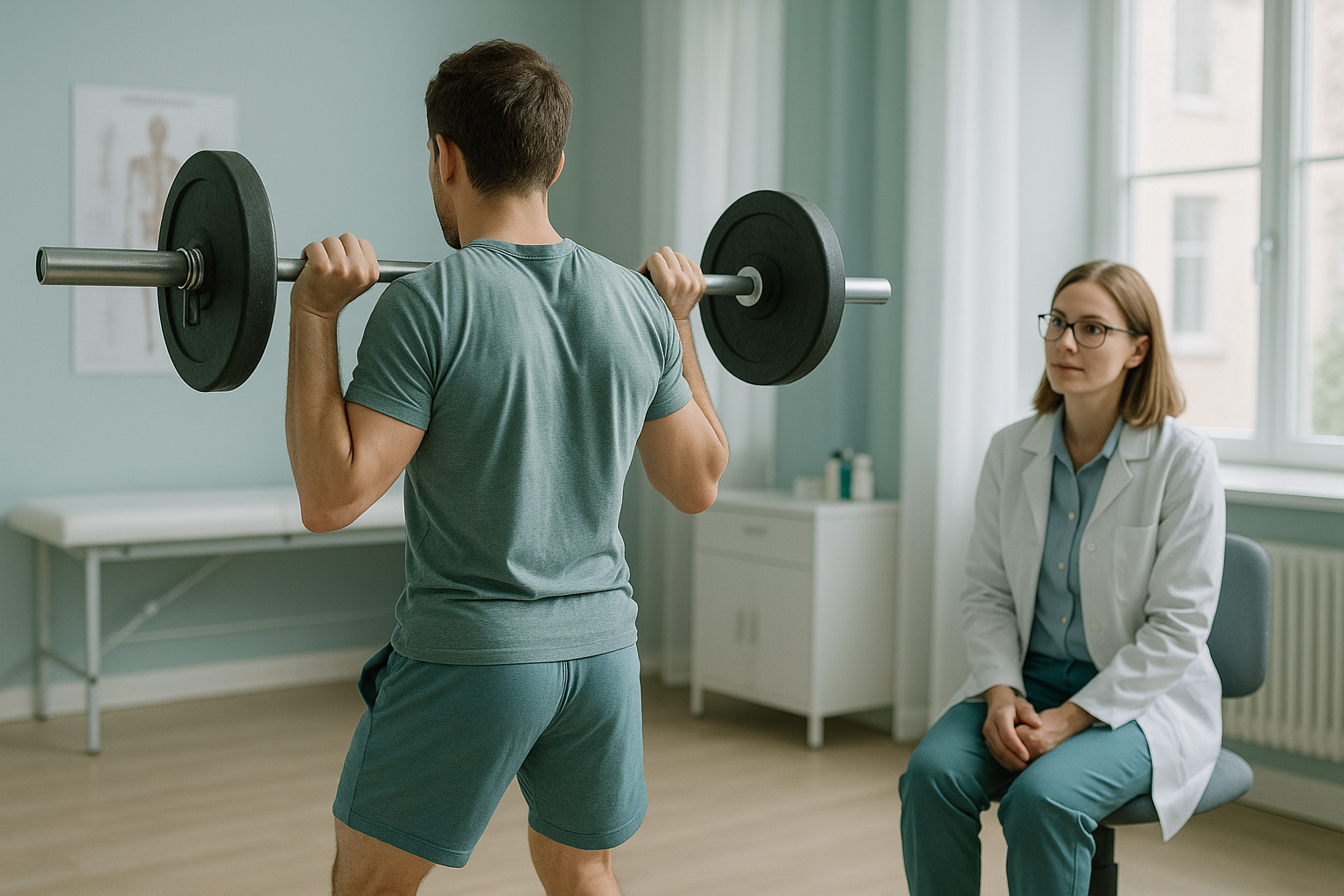
The signs are often subtle at first. You might put them down to tiredness or poor form. Over time, patterns appear that are hard to ignore.
One end of the bar drifts higher, especially with heavier weights.
You drift to one side every time you go down.
Single-side exercises show a clear gap between left and right.
The same shoulder, hip, or knee plays up after every session.
If you also notice uneven shoulders in the mirror, that can be another clue that something structural is going on underneath.
Why is one side of my body stronger than the other?
There are two broad groups: structural differences and trained differences. Most people have a mix of both.
A leg length discrepancy, a rotated pelvis, or a natural curve in the spine. These are bony differences you cannot train away.
Years of favouring your dominant hand, a sport that loads one side more, or a past injury that changed the way you move.
A small structural difference that your training habits have amplified over time. This is the most common situation.
The key question is which type you have, because the approach is different. A trained imbalance responds well to single-side exercises and changes to your programme. A structural difference needs to be understood and worked around, not forced into symmetry.
How is lifting asymmetry assessed with a standing scan?
A standing EOS scan images your whole skeleton from head to feet while you are upright and bearing your own weight. This matters for lifters. It captures your alignment the way your body actually works under gravity, not relaxed on a table.
What it shows: Your pelvis, spine, hips, knees, and ankles as they sit under your body weight. If one leg is shorter, the pelvis tilts. If the pelvis tilts, the spine compensates. The scan shows the whole chain at once, giving your clinician or coach a real-world baseline to plan training around.
EOS uses about 90% less radiation than a standard X-ray, around ten times less. You stand still for a few seconds and the image is captured in a single pass.
What it misses: When you lie down for a normal X-ray, CT, or MRI, gravity is taken away. Your muscles relax. A pelvic tilt that is obvious when you stand may flatten out completely. So the scan looks normal, but your squat still shifts to one side.
Lying-down imaging is excellent for many things, but it does not copy what happens when you load your skeleton.
When MRI is the better choice: EOS shows bones, joints, and alignment. If your concern is a disc injury, a muscle tear, nerve compression, or any soft-tissue problem, MRI is usually the right tool. Standing imaging and MRI answer different questions, and sometimes you need both.
Wondering if a structural problem is behind your lifting asymmetry? At ScanAlign, full-body standing imaging can give you a clear baseline.
Book a free video consultationWhat general training approaches help with muscle imbalance in the gym?
Knowing the root cause of your asymmetry shapes the approach. Below are principles widely recommended by strength coaches and physiotherapists. They are not treatment advice, and a qualified professional should guide your programme.
- Start with your weaker side. On single-side exercises, begin with the side that struggles. Match the reps and weight on the stronger side, not the other way round.
- Use single-side work regularly. Single-leg squats, single-arm presses, and lunges expose and slowly reduce trained differences, because each side has to work on its own.
- Film your compound lifts. A simple video from behind during a squat or deadlift can show a hip shift or bar tilt you cannot feel in the moment.
- Get a baseline measurement. If coaching cues and single-side training do not close the gap, a structural cause may be involved. That is where imaging helps. You cannot correct a bony difference with more reps.
- Work with the difference, not against it. If a standing scan shows a structural asymmetry, your coach or physiotherapist can adjust stance width, heel raises, or exercise choice so you train safely around it.
Before you start treatment, or change the one you are on, it is worth getting a detailed diagnosis. Knowing whether the cause sits in your pelvis, your legs or your spine changes what will actually help.
Frequently asked questions
A bar tilt usually means one side is producing more force or moving through a different range. Common causes include a hip shift from a pelvic tilt, a leg length difference, or simply a stronger dominant side. If coaching cues do not fix it, something structural may be involved.
Yes. A small difference between sides is completely normal and expected. It usually reflects which hand you use most and your daily habits. It only becomes a concern when it affects how well you move, causes pain, or keeps getting worse despite targeted training.
No. Single-side exercises are excellent for addressing trained muscle imbalances, but they cannot change the shape or length of your bones. If the root cause is structural, you need to understand it first and then plan your training around it, rather than trying to force symmetry.
A trained difference usually improves with targeted single-side work over a few months. If it does not change, or if you can see visible differences like uneven shoulders or a hip that sits higher, a standing scan of your full skeleton can show whether there is a bony reason behind it.
EOS is a standing X-ray system that captures your whole skeleton in one image while you are upright. For lifters, it gives a weight-bearing baseline of your alignment, showing things like pelvic tilt, leg length differences, and spinal curves as they actually appear under gravity.
EOS uses about 90% less radiation than a standard X-ray, around ten times less. It is one of the lowest-dose skeletal imaging systems available.
No. ScanAlign is a private self-pay clinic and you can refer yourself. The process starts with a free video consultation, where a specialist radiographer discusses whether a scan is right for your situation.
The price for patients travelling from abroad is confirmed during the free video consultation.
Yes. Even a small difference in leg length can tilt the pelvis, which shifts the load unevenly through your hips and spine. Under a barbell, that tilt is amplified. A standing full-body image can show whether this applies to you.
Not necessarily. If you are in significant pain or notice numbness, weakness, or loss of bladder or bowel control, stop training and get urgent medical help from your doctor or the nearest emergency department. Otherwise, reducing the weight and focusing on single-side work while you look into the cause is usually a sensible step.
Find out what is behind your lifting asymmetry
A free video consultation with a specialist radiographer can help you decide whether a standing scan in London is the right next step.
Book a free video consultationWritten by Abbas Dhami (Specialist Diagnostic Radiographer)
Sources
- Bishop, C., Turner, A., & Read, P. (2018). Effects of inter-limb asymmetries on physical and sports performance: a systematic review. Journal of Sports Sciences, 36(10), 1135-1144.
- Knapik, J.J., Bauman, C.L., Jones, B.H., Harris, J.M., & Vaughan, L. (1991). Preseason strength and flexibility imbalances associated with athletic injuries in female collegiate athletes. The American Journal of Sports Medicine, 19(1), 76-81.
- NHS. (2024). Back pain. NHS website. Available at: nhs.uk/conditions/back-pain.
This page is general information and not a diagnosis.
ScanAlign is the trading name of CoreMed Solutions Ltd and operates under The Harley Street Hospital's CQC licence.