
Osteotomy or Knee Replacement: Which Is Right for Your Knee?
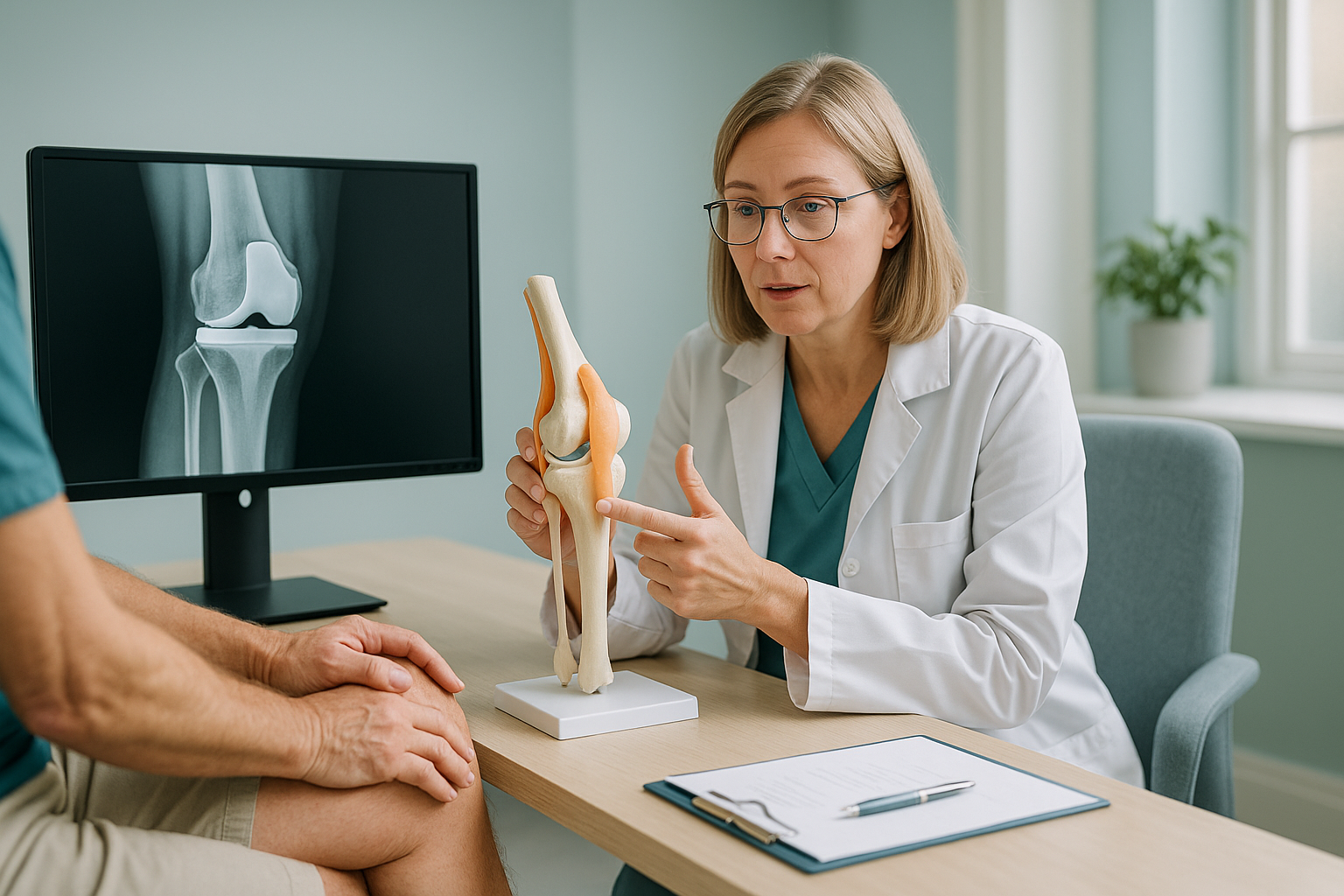
An osteotomy reshapes the bone around your knee. It moves load away from worn cartilage and keeps your own joint. A knee replacement removes the damaged surfaces and covers them with an implant. The right choice depends on your age, how active you are, how much of the joint is affected and the overall alignment of your leg. Your surgeon decides, based on accurate imaging and a clinical assessment.
Key points
- Osteotomy keeps the joint and corrects alignment. It buys time before a replacement may be needed later.
- Knee replacement removes the damaged surfaces completely. It is better suited when wear is widespread.
- The main deciding factors are age, how active you need to be and how many compartments of the knee are affected.
- Accurate measurement of your alignment while standing helps the surgeon plan either operation precisely.
- The decision is always made by your surgeon, based on your own examination and imaging.
What is a knee osteotomy, and how is it different from a replacement?
A knee osteotomy is an operation that cuts the bone above or below the knee joint and sets it in a new position. This changes the angle of the leg. Your body weight then passes through the healthier side of the cartilage instead of the worn side. The joint itself stays in place.
A knee replacement works differently. The surgeon removes the damaged surfaces of bone and cartilage and replaces them with metal and plastic parts. It can be a total or partial knee replacement, depending on how many compartments of the knee are affected.
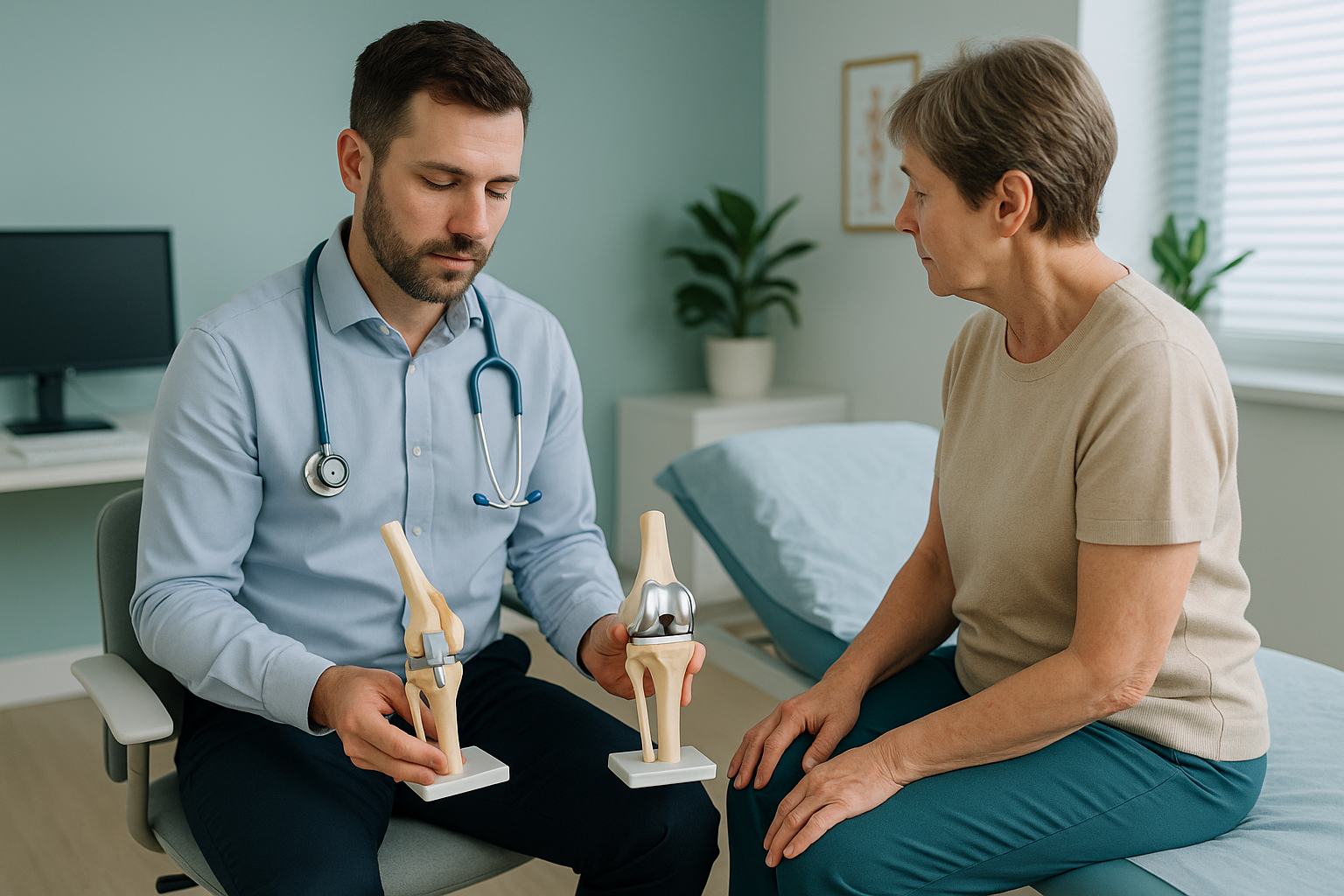
In short, an osteotomy keeps your own joint by changing the mechanics around it. A replacement removes the worn parts and puts manufactured parts in their place.
How do osteotomy and knee replacement compare?
Both operations aim to reduce pain and improve how the knee works. But they suit different situations. Here are the main differences side by side.
Knee osteotomy
- Goal: Move load onto healthy cartilage by correcting alignment.
- Best suited for: An active person whose wear is limited to one compartment (usually the inner side).
- Joint: Kept. Your own cartilage and ligaments stay.
- Activity afterwards: Many people go back to higher-impact activities, including some sports.
- How long it lasts: Often seen as a bridge. It may delay the need for a replacement by many years, though a replacement may still be needed in the end.
Knee replacement
- Goal: Replace worn surfaces with implant parts for reliable pain relief.
- Best suited for: Widespread wear, or when correcting alignment alone would not be enough.
- Joint: Replaced. Damaged bone and cartilage are removed.
- Activity afterwards: Most people walk, cycle and swim comfortably. High-impact sport is generally discouraged.
- How long it lasts: Modern implants last well, but they do wear over time. Revision surgery may be needed in the end, especially if the replacement is done at a younger age.
Am I too young for a knee replacement, or is osteotomy better?
Age is one factor, but not the only one. Surgeons weigh several things together before they recommend osteotomy or knee replacement.
Younger, more active people are often better candidates for osteotomy. It keeps the joint and delays the need for an implant, which has a limited lifespan.
Osteotomy works best when only one compartment (usually the medial, or inner, side) is worn. If two or three compartments are damaged, replacement is usually the more reliable option.
Bow legs or knock knees can speed up wear on one side. If the cartilage is otherwise reasonable, correcting that angle with an osteotomy may make more sense than replacing the joint surfaces.
For a good result, osteotomy needs intact ligaments (particularly the anterior cruciate ligament). If the ligaments are badly damaged, replacement may be preferred.
There is no strict age limit for a knee replacement. But the younger you are when you have one, the more likely it is that the implant will need revision during your lifetime. That is why joint-preserving surgery, such as osteotomy or knock knee surgery, is often considered first in younger or very active patients.
Why does leg alignment matter when choosing between osteotomy and replacement?
Leg alignment is central to both operations. When your leg is not straight, weight passes unevenly through the knee. Over time, the overloaded side wears faster. The surgeon needs to see that wear pattern clearly before recommending one operation over the other.
Your body is a connected chain from your feet to your head. A misalignment at the hip or ankle can shift load through the knee in ways that are not obvious from looking at the knee alone. Pain in one place may be driven by a mechanical problem elsewhere in the chain.
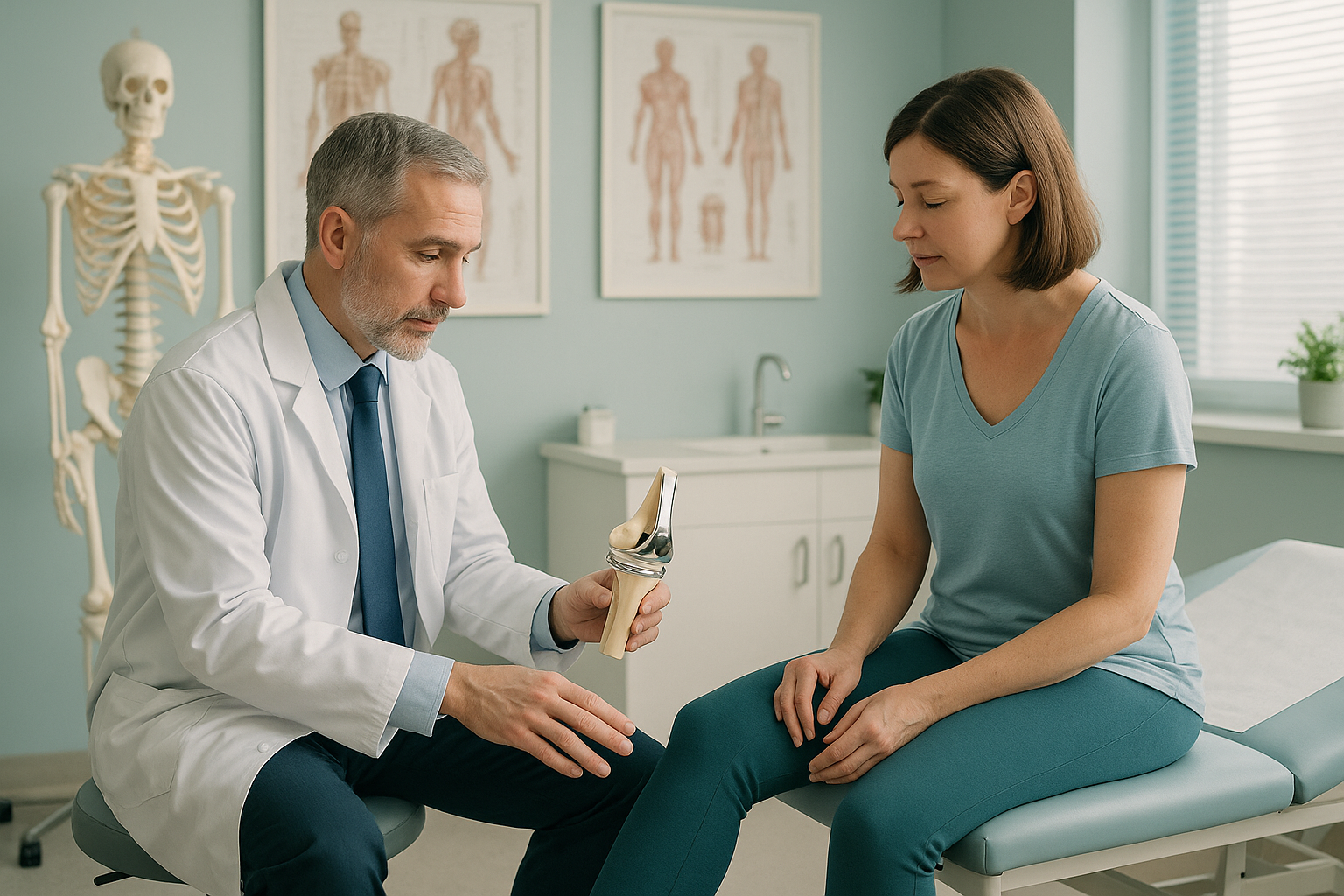
Standard X-rays, CT and MRI taken lying down are done with the muscles relaxed and without the effect of gravity. So they can miss or understate the malalignment that is really there when you stand and walk. A standing, weight-bearing image shows how the leg takes load in real life.
How does standing imaging help plan an osteotomy or knee replacement?
Standing whole-body imaging captures the alignment of your whole leg, from hip to ankle, while you are upright and bearing weight. This gives the surgeon a true picture of how your body loads the knee in real life.
For an osteotomy, the surgeon needs to know exactly how many degrees to correct. Too little, and the symptoms come back. Too much, and the other side of the knee starts to wear. For a replacement, alignment data helps the surgeon position the implant parts so that the mechanical axis of the leg is properly restored.
EOS imaging, available at ScanAlign, standing EOS imaging in London, captures the full leg in a single standing exposure with about 90% less radiation than a standard X-ray, around ten times less. Because it images you from head to toe while you stand, it shows the true alignment that lying-down scans often miss.
Before you start treatment, or change the one you are on, it is worth getting a detailed diagnosis. Knowing whether the cause sits in the pelvis, the legs or the spine changes what will actually help.
If you are thinking about osteotomy or replacement and want your surgeon to have precise standing alignment data, you can book pre-operative alignment imaging at ScanAlign in London.
Book a free video consultationWhen MRI is the better tool: EOS shows bones, joints and alignment clearly. For soft tissue detail, such as cartilage thickness, meniscus tears, ligament damage or nerve involvement, MRI is usually the better choice. Your surgeon may ask for both types of imaging to get the full picture.
Frequently asked questions
An osteotomy reshapes the bone around the knee to move load away from the worn area, keeping your own joint. A knee replacement removes the damaged surfaces and replaces them with an artificial implant.
There is no strict lower age limit. But the younger you are, the more likely the implant will need revision during your lifetime. That is why surgeons often consider joint-preserving options such as osteotomy first in younger patients.
Yes. Osteotomy is often seen as a bridge procedure. If wear gets worse over the years, moving on to a replacement is a recognised and well-documented pathway.
Results vary from person to person, but research suggests many osteotomies give good pain relief for a decade or more. The outcome depends on things like how accurate the correction is, the condition of the remaining cartilage and how active you are.
It is a significant operation done under anaesthetic. Recovery usually takes several months, with a period of limited weight-bearing while the bone heals. Your surgeon will explain your recovery plan.
Many people go back to moderate or even higher-impact activities after recovery. This is one of the advantages of keeping your own joint. Your surgeon will advise on what is realistic for you.
A standing X-ray shows how your leg really takes load under gravity. Lying-down images remove the effect of body weight, which can hide or understate malalignment. Accurate alignment data is essential for planning both osteotomy corrections and implant positioning.
An EOS scan uses about 90% less radiation than a standard X-ray, around ten times less. This makes it especially suitable when full-leg or whole-body images are needed.
No. You can refer yourself. The process starts with a free video consultation, where a specialist radiographer reviews your situation and confirms whether the scan is right for you.
The price for patients travelling from abroad is confirmed during the free video consultation.
Thinking about osteotomy or replacement?
Standing alignment imaging gives your surgeon the precise measurements needed to plan either operation. Start with a free video consultation to find out if an EOS scan in London is right for you.
Book a free video consultationSources
- Brouwer, R.W. et al. "Osteotomy for treating knee osteoarthritis." Cochrane Database of Systematic Reviews, 2014. Cochrane Library.
- National Institute for Health and Care Excellence (NICE), UK. "Osteoarthritis: care and management." Clinical guideline CG177, updated 2022.
- Paley, D. "Principles of Deformity Correction." Springer, 2002. Widely cited reference on limb alignment and osteotomy planning.
Written by Abbas Dhami (Specialist Diagnostic Radiographer)
This page is general information and not a diagnosis.
ScanAlign is the trading name of CoreMed Solutions Ltd and operates under The Harley Street Hospital's CQC licence.