
What Are the Most Common Padel Injuries?
The most common padel injuries affect the elbow, knee, shoulder, lower back, calf and Achilles tendon. Quick changes of direction, overhead smashes and balls coming off the glass walls put high loads on the joints. Many padel injuries are linked to underlying alignment imbalances that only show up on a standing, weight-bearing scan.
Key points
- Padel elbow (lateral epicondylitis) is the most reported overuse injury in padel.
- Knees, shoulders, lower backs and calves are all at risk, especially in middle-aged players who are new to the sport.
- Your body is a connected chain. A hip or pelvis imbalance can cause pain far from where it starts.
- A standing whole-body scan can show alignment problems that lying-down scans may miss.
- Warming up, building up load slowly and correcting imbalance between your two sides are your best protection.
Which parts of the body do padel injuries affect most?
Padel asks for explosive side-to-side movement, sudden stops, overhead reaching and repeated wrist action. Together, these put stress on several areas at once. These are the areas clinicians see most often.
Important. If you develop sudden numbness, weakness in an arm or leg, or loss of bladder or bowel control after an injury, get urgent medical help from your doctor or your nearest emergency department. Do not wait for a scan.
Why does padel cause so many injuries in new players?
Padel is easy to pick up with friends, but it is physically demanding from the first day. Many new players go from very little exercise to three or four sessions a week. This sudden jump in load is the biggest single risk factor for injury in casual padel.
Middle-aged players are especially at risk. Tendons lose elasticity with age. Alignment imbalances that were never a problem in daily life can suddenly matter at match intensity.
How does whole-body alignment affect padel injuries?
Your body is a connected chain, from your feet up through your pelvis, spine and shoulders. If one link is out of line, the links above and below make up for it. This means the place where you feel pain is often not the place where the problem started.
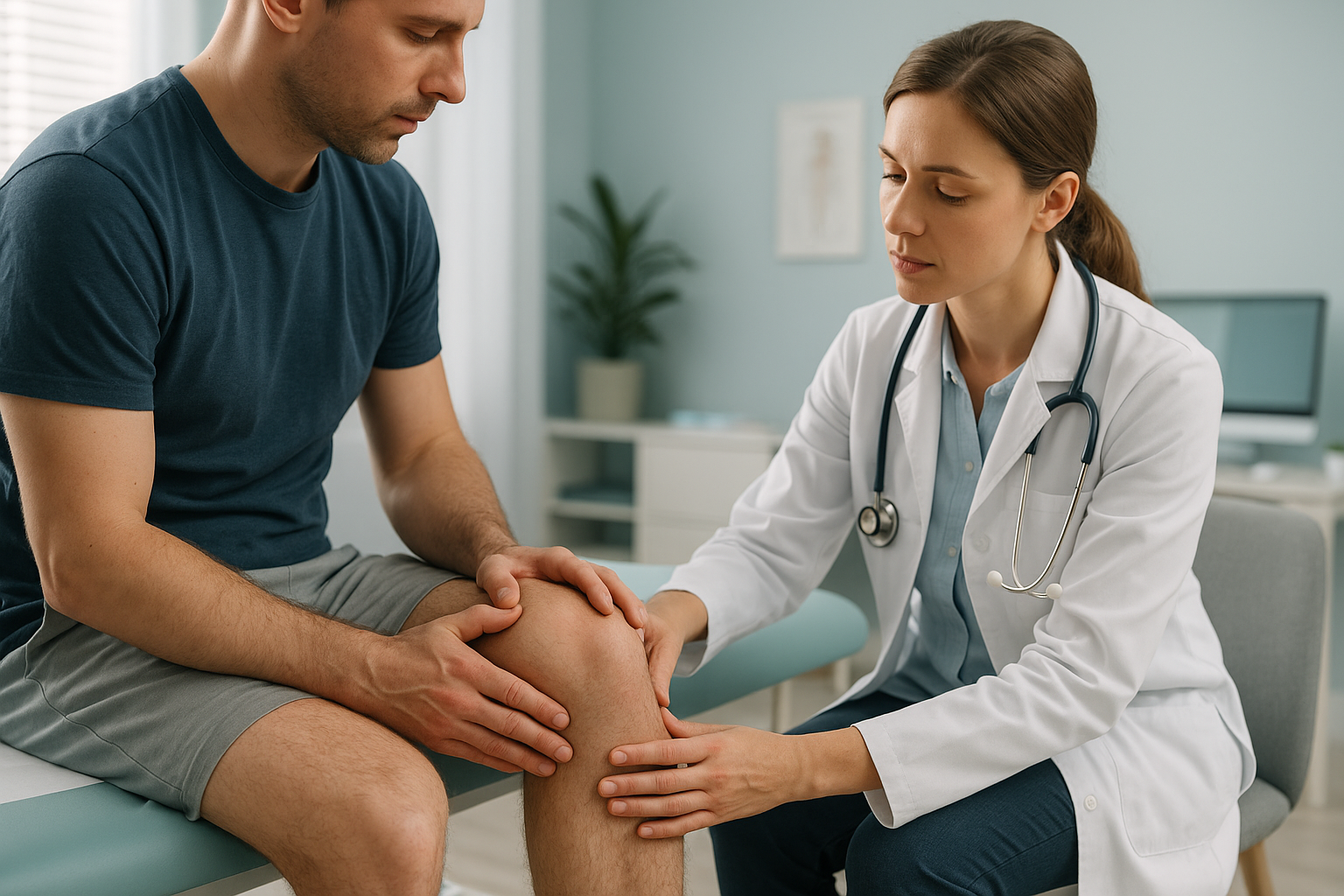
For example, a subtle pelvic tilt can change the angle at which your knee tracks during a side lunge. Over hundreds of direction changes in a match, that small misalignment adds up to tendon irritation or cartilage wear. In the same way, a slight curve in the spine can shift shoulder load unevenly. One rotator cuff then works harder on every overhead smash.
The problem is that standard lying-down scans rarely show these issues. When you lie on a table for an X-ray, CT or MRI, gravity is taken away, your muscles relax and your skeleton settles into a neutral position. The alignment issue that flares up on court is, in effect, hidden.
Before you start treatment, or change the treatment you are on, it is worth getting a detailed diagnosis. Knowing whether the cause sits in your pelvis, your legs or your spine changes what will actually help.
How can you lower your risk of padel injuries?
You can lower your risk a great deal by managing load, warming up properly and dealing with any underlying alignment issues. Read our wider guide on sports injury prevention for more detail. These are the most important points for padel in particular.
- Build up slowly. If you are new to padel, keep to two or three sessions a week for the first month. Your tendons need time to adapt.
- Warm up the right muscles. Side lunges, calf raises and gentle shoulder rotations prepare the exact movements padel needs. Five to ten minutes is enough.
- Check your grip size. A racket grip that is too small makes your forearm overwork, which speeds up padel elbow.
- Wear proper court shoes. Running shoes lack sideways support. A proper court shoe helps protect your knees and ankles during side-to-side movement.
- Balance your body. Strengthening your weaker side reduces the imbalance that one-sided racket sports create over time.
- Pay attention to small aches. Persistent elbow ache, knee stiffness or back tightness after playing are early warnings. Dealing with them early is far easier than managing a long-term injury.
How does a standing EOS scan help with padel injuries that keep coming back?
A standing EOS scan captures your whole skeleton in an upright, weight-bearing position. This shows how your bones, joints and alignment actually behave under gravity, the same conditions you face on court.
Because the scan covers you from head to toe in one image, it can show whether a knee problem is being driven by a pelvic tilt, whether shoulder overload comes from a curve in the spine, or whether a difference in leg length is putting one side under more stress. These links cannot be seen on a scan of a single body part.
EOS uses about 90% less radiation than a standard X-ray, around ten times less. That makes it a comfortable choice if you are being scanned as a precaution or for monitoring.
ScanAlign standing EOS imaging at 19 Harley Street, London, provides this full-body standing assessment with a detailed report from a specialist radiographer. No referral is needed.
When MRI is the better choice. EOS shows bones, joints and alignment clearly. For soft-tissue injuries such as torn ligaments, disc problems or nerve compression, MRI is usually the better tool. If your clinician suspects a soft-tissue injury, they may recommend MRI instead of, or alongside, an alignment scan.
Have a padel injury that keeps coming back? A standing alignment assessment can help find the underlying cause.
Book a free video consultationFrequently asked questions about padel injuries
Padel is not bad for your joints in itself. But the quick changes of direction and hard court surface do put significant sideways stress on knees and ankles. Players who build up slowly and deal with any underlying alignment issues can enjoy the sport with a much lower risk of injury.
Padel elbow is the same condition as tennis elbow, known medically as lateral epicondylitis. It causes pain on the outside of the elbow from repeated gripping and wrist extension. The shorter padel racket and enclosed court mean more volleys in each rally, which can speed up the problem.
Padel back pain often comes from repeated twisting to reach balls off the glass wall, together with the lumbar extension needed for overhead smashes. If you have an underlying imbalance in your spine, these movements load the lower back unevenly. This raises the risk of muscle strain and disc irritation.
Yes. A pelvic tilt or a difference in leg length can change the angle at which your knee tracks during side lunges and stops. Over time, this creates uneven stress on the cartilage and tendons around the knee, leading to injuries that keep returning even after rest.
Imaging can help find the cause if pain lasts more than two to three weeks after rest, keeps coming back when you return to play, or affects the two sides of your body differently. A standing alignment scan is especially useful for injuries that do not improve with standard treatment.
A standard X-ray usually images one body part while you are lying down. An EOS scan captures your full skeleton while you stand, showing how gravity and weight-bearing affect your alignment. This shows patterns of compensation across joints that a scan of one area cannot detect.
Yes. EOS uses about 90% less radiation than a standard X-ray, around ten times less. It is a very low-dose imaging method suitable for adults who need a whole-body skeletal assessment.
No. ScanAlign is a private, self-pay clinic. You can refer yourself by booking a free video consultation to discuss whether a scan is right for your situation.
The price for patients travelling from abroad is confirmed during the free video consultation.
Not necessarily. Understanding the root cause of a recurring injury often means you can change your technique, equipment or training load instead of stopping completely. An alignment assessment can give you and your physiotherapist or coach clear information to work with.
Find out what is behind your padel injury
A free video consultation lets you talk through your symptoms with a specialist radiographer and find out whether a standing alignment scan could help, before you plan your trip to London.
Book a free video consultationWritten by Abbas Dhami (Specialist Diagnostic Radiographer)
Sources
- Priego-Quesada JI, et al. "Padel: A Quantitative Overview." International Journal of Environmental Research and Public Health, 2022.
- NHS. "Tennis elbow." nhs.uk, 2023.
- Courel-Ibáñez J, et al. "Health benefits and injury patterns in padel." Science & Sports, 2019.
This page is general information and not a diagnosis.
ScanAlign is the trading name of CoreMed Solutions Ltd and operates under The Harley Street Hospital's CQC licence.