
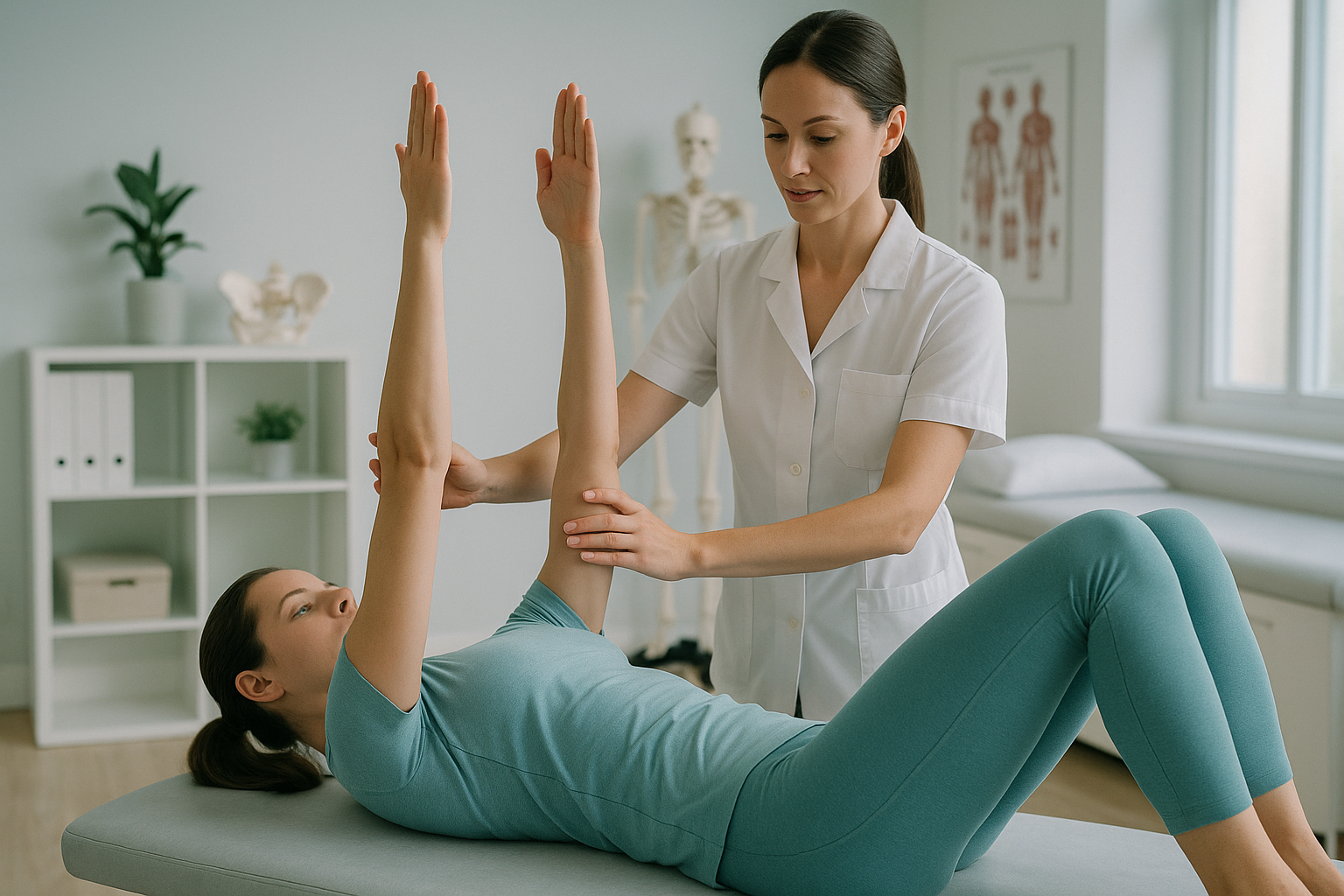
What Can Pilates Really Change About Your Alignment?
Pilates can strengthen the muscles that support your posture. It can improve core control. It can also help correct imbalances caused by habit or weakness. But it cannot reshape your bones or fix a structural alignment problem you were born with. The difference matters. A standing scan can show you exactly which group you fall into.
Key points
- Pilates builds core strength and flexibility, which can truly improve how you hold yourself.
- It works best on posture problems caused by muscles, not on problems with bone shape.
- A standing, weight-bearing scan shows what is structural and what is muscular before you begin.
- Progress can be measured objectively with before-and-after alignment scans.
- EOS imaging uses about 90% less radiation than a standard X-ray, around ten times less.
Pilates is well known for improving posture. Studios and instructors talk about a "longer spine" and "better alignment" after a few weeks of classes. Some of this is well supported by research. Some of it promises too much. You may have done Pilates for months and still feel crooked, stiff or sore. If so, the issue may not be effort or technique. The underlying problem may be structural, not muscular, and no amount of core work will change it.
This page explains honestly what Pilates can change, where its limits are, and how to find out which kind of alignment problem you have.
Does Pilates really improve posture?
Yes, for many people. Research shows that regular Pilates improves core muscle endurance, spinal flexibility and body awareness. All of these help with better posture during daily activities. A 2016 systematic review in the Journal of Bodywork and Movement Therapies found moderate evidence that Pilates reduces chronic lower-back pain and improves functional movement.
Both mat Pilates and reformer Pilates can give these benefits. The reformer adds resistance through springs. Some people find this helps them build strength more quickly. Mat work uses body weight and tends to demand more stability from the start. Either type can help, as long as the instructor is well qualified and the programme is tailored to your body.
What are the limits of Pilates for alignment?
Pilates works on muscles, not bones. Your alignment issue may come from a structural difference. Examples are one leg being slightly longer than the other, a wedge-shaped vertebra, or a bony rotation in the hip joint. No exercise programme can change that underlying shape. The muscles around it can be strengthened to compensate better, but the structural cause stays.
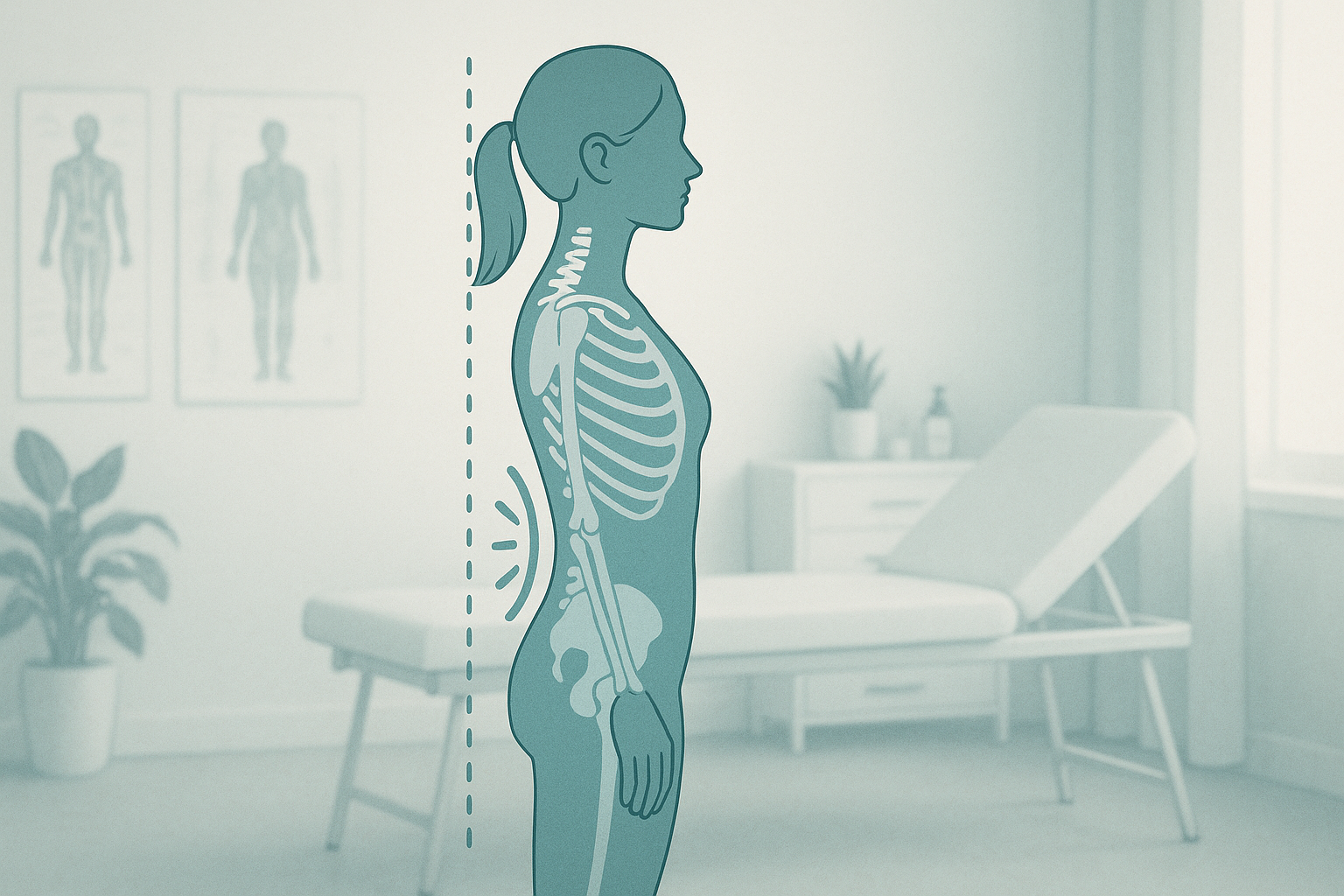
This is why some people feel "stuck" even though they practise regularly. They work hard on the muscular side, but the structural side has never been checked. For a wider view of how posture problems are grouped, see our posture correction guide.
Is Pilates or yoga better for posture?
Neither is objectively better. They work in different ways. Pilates tends to focus on controlled, repeated movements that build deep core strength and spinal stability. Yoga focuses on held stretches, balance and breathing, which improve flexibility and joint range. If your posture is mostly driven by muscle weakness or poor core control, Pilates may feel more targeted. If your issue is more about tightness and restricted movement, yoga might suit you better.
Core-focused strengthening. Pilates builds the deep stabilising muscles around your spine and pelvis. This is especially useful if your posture problem involves a weak core or a tendency to slump under load.
Controlled, low-impact movement. Reformer Pilates lets you add resistance step by step. Many physiotherapists recommend it during back-pain rehabilitation because it is easy to scale.
Held flexibility work. Yoga holds stretches for longer, which can release muscles in the hips, shoulders and thoracic spine that have been tight for a long time.
Breath and proprioception. The meditative focus of yoga can improve body awareness. It can also reduce the stress-related tension that contributes to rounded shoulders and forward-head posture.
The real question is not which practice is better overall. It is which one addresses your specific issue. You cannot answer that until you know whether your alignment problem is muscular, structural, or a mix of both.
How does a standing scan show what Pilates cannot?
Standard imaging (X-rays, CT, MRI) is usually done lying down. When you lie flat, gravity is removed, your muscles relax and your joints decompress. The image may not reflect how your body really lines up when you are standing and bearing weight, which is when posture matters.
An EOS scan takes a full-body, standing image of your skeleton from head to feet, under real load. It shows your spine, pelvis, hips, knees and ankles all in one view. This lets your clinician see the full alignment chain. ScanAlign standing EOS imaging uses about 90% less radiation than a standard X-ray, around ten times less. This makes it a practical option for baseline and follow-up scans.
Your body is a connected chain. A tilt in the pelvis can shift the spine. A rotation in the hip can change how your knee tracks. A standing scan shows these links. Lying-down scans often miss them.
This matters if you do Pilates, because it separates what exercise can fix from what it cannot. Your instructor may tell you to "find neutral spine" while your pelvis has a structural tilt. Knowing that changes the conversation completely.
When MRI is the better tool: EOS shows bones, joints and alignment very well. For soft-tissue problems like disc bulges, nerve compression or ligament tears, MRI is usually the better choice. Your clinician can advise which scan suits your situation.
Can you measure whether Pilates has changed your alignment?
Yes, and this is where objective imaging becomes truly useful. Many people do Pilates for months and feel better, but have no measurable record of what has actually changed in their skeleton. A baseline standing scan before you start, and a follow-up after several months of regular practice, gives you clear data you can compare.
This is not about obsessing over numbers. It is about realistic expectations. If your scan shows your alignment has improved, that is strong motivation to carry on. If it shows a structural element has not shifted, you can adjust your programme, involve a physiotherapist or orthopaedic specialist, and stop blaming yourself for a lack of progress. You can book a baseline posture scan before starting or restarting a Pilates programme.
Before you start any treatment, or change the one you are on, it is worth getting a detailed diagnosis. Knowing whether the cause sits in your pelvis, your legs or your spine changes what will actually help.
- Your posture problem is mainly caused by weak core muscles or tight muscle groups
- You have no structural differences in bone shape
- Your pain is muscular and gets better with movement
- A standing scan confirms your skeleton is well aligned at rest
- You have done Pilates regularly but your posture has not changed
- You have pain that does not respond to exercise
- One hip, shoulder or leg looks visibly higher than the other
- You have a history of scoliosis, hip problems or spinal conditions
Frequently asked questions
Pilates can improve posture by strengthening supporting muscles and building better habits. But you need to keep it up. If you stop practising, the muscular benefits slowly reduce. And if the cause is structural, Pilates alone will not fix it.
Both can help. The reformer adds variable resistance, which some people find works better for building strength. Mat work demands more from your stabilising muscles because there is no machine to support you. The best choice depends on your body and your goals.
Most people notice better body awareness within a few weeks. Measurable changes in muscle strength and flexibility tend to appear after around eight to twelve weeks of regular practice, usually two to three sessions a week.
There is good evidence that Pilates can reduce chronic lower-back pain for many people, especially when the pain is linked to poor core control or muscle weakness. If your back pain is severe or sudden, or involves numbness, weakness, or loss of bladder or bowel control, get urgent medical help from your doctor or your nearest emergency department.
A muscular posture problem is caused by muscle weakness, tightness or habit. Exercise can usually improve it. A structural problem is caused by the shape of your bones, such as a leg-length difference or a rotated vertebra. Exercise can help you manage it, but cannot change the bone shape itself.
No. ScanAlign is a private, self-pay clinic. You can book directly yourself, without a letter from your doctor or consultant.
Yes. EOS uses about 90% less radiation than a standard X-ray, around ten times less. This low dose makes it practical for baseline and follow-up imaging.
The price for patients travelling from abroad is confirmed during the free video consultation.
Absolutely. Your report is yours. Many instructors find a standing alignment image invaluable for tailoring exercises to your specific skeletal geometry, rather than guessing from observation alone.
A standard X-ray usually shows one area at a time, often lying down. An EOS scan captures your full skeleton from head to feet in one standing image. It shows how your spine, pelvis, hips, knees and ankles relate to each other under real weight-bearing load.
Know your starting point
A standing alignment scan shows what Pilates can change and what it cannot. Start with a free video consultation from home to find out if a scan in London is right for you.
Book a free video consultationWritten by Abbas Dhami (Specialist Diagnostic Radiographer)
Sources
- Wells C, Kolt GS, Marshall P, Hill B, Bialocerkowski A. The effectiveness of Pilates exercise in people with chronic low back pain: a systematic review. PLoS One. 2014;9(7):e100402.
- Yamato TP, Maher CG, Saragiotto BT, et al. Pilates for low back pain. Cochrane Database of Systematic Reviews. 2015;(7):CD010265.
- NHS. Exercise for back pain. nhs.uk. Available at: https://www.nhs.uk/conditions/back-pain/treatment/
This page is general information and not a diagnosis.
ScanAlign is the trading name of CoreMed Solutions Ltd and operates under The Harley Street Hospital's CQC licence.