
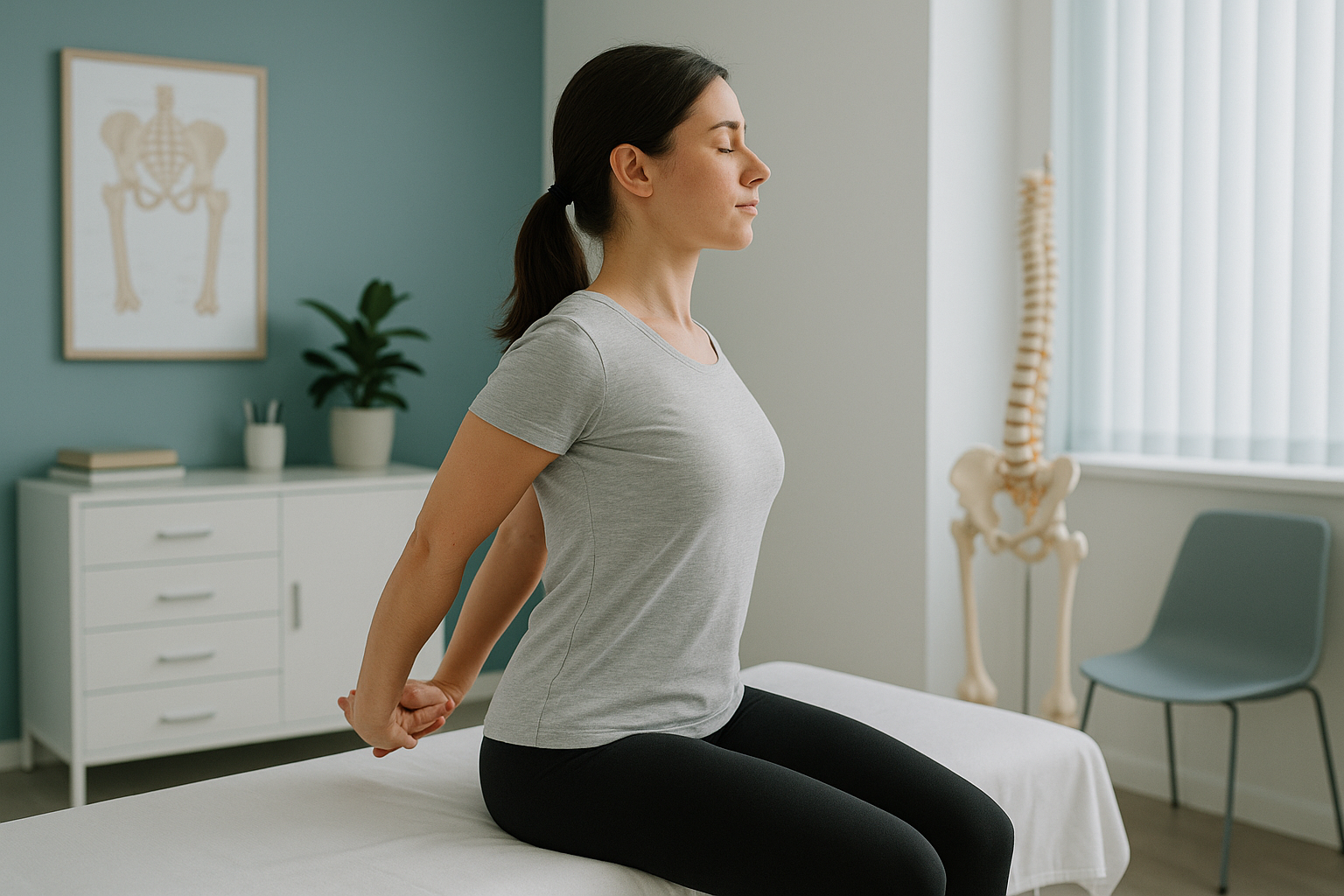
What Are the Best Exercises to Improve Your Posture?
The best posture exercises mix two things. Stretches for tight muscles, like the hip flexors and chest. Strengthening moves for weak muscles, like the upper back, deep neck flexors and glutes. Doing them regularly matters more than doing them hard. Before you start, it helps to understand your own alignment. Then you can work on the right areas instead of guessing.
Key points
- Posture exercises work best when they deal with your own muscle imbalance, not just general stiffness.
- Stretching alone is not enough. You also need to strengthen the muscles that hold you upright.
- Short daily sessions work better than long weekly workouts for lasting change.
- A standing alignment scan can show you exactly where your posture breaks down. This gives your exercises a clear target.
Why do posture exercises matter?
Posture exercises matter because modern life pulls your body into positions it was not made to hold for hours. Sitting at a desk, scrolling on your phone or driving all day shortens some muscles and weakens others. Over time, this creates a pattern. Your shoulders round forward. Your head moves ahead of your spine. Your lower back either flattens or curves too much.
The right exercises can start to reverse these patterns. They lengthen muscles that have become short and stiff. They switch on muscles that have become weak. For a wider look at how posture problems develop and what you can do about them, read our posture correction guide.
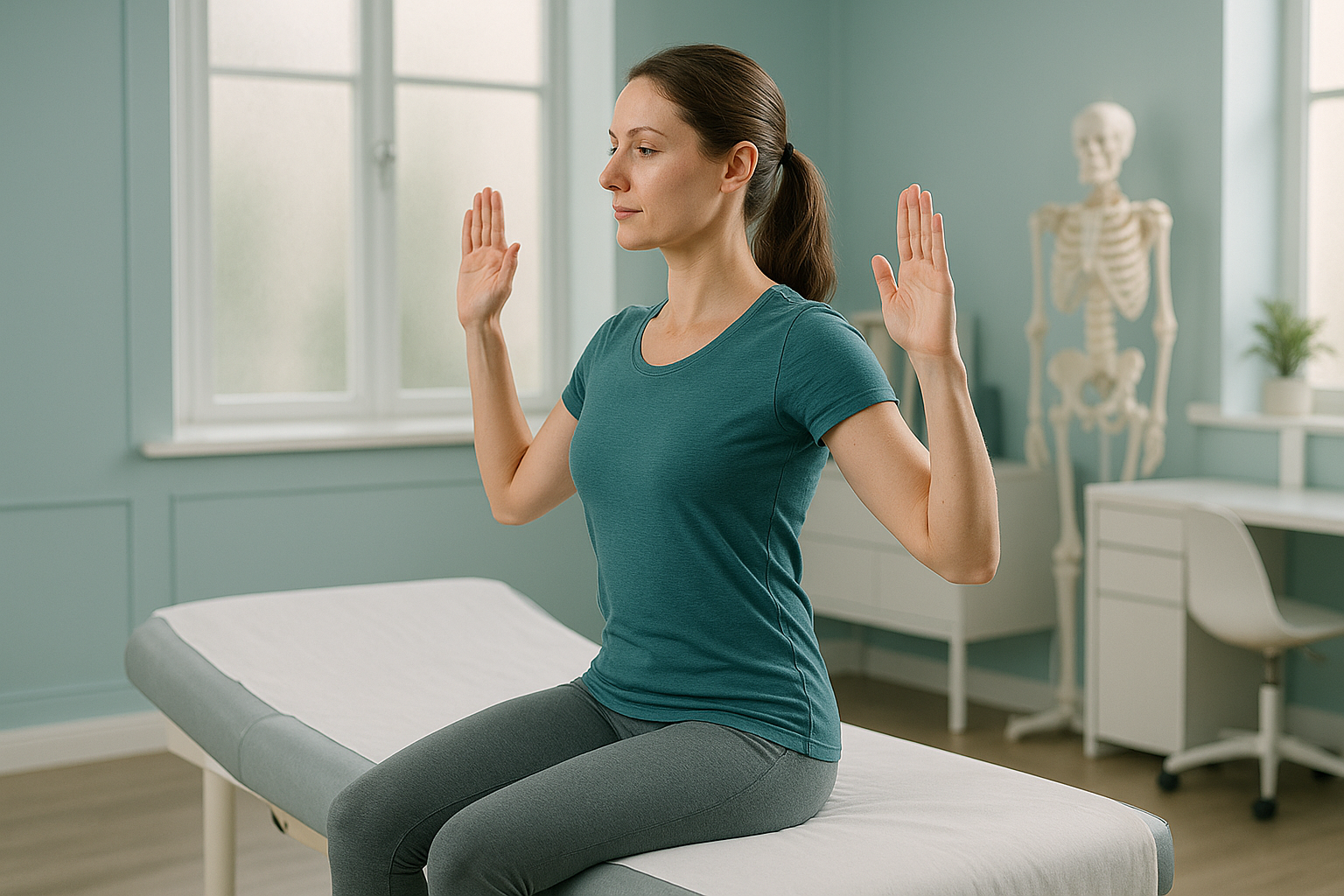
Your body works as a connected chain. When one link is out of place, the areas above and below make up for it. That is why neck pain can come from weak glutes, and knee trouble can start with a stiff mid-back. Good posture exercises work on the whole chain, not just the spot that hurts.
What are the best stretches for better posture?
The best stretches for posture target the muscles that shorten most from sitting: the chest, hip flexors and upper traps. Hold each stretch gently for 20 to 30 seconds. Repeat two or three times.
Stand in a doorway with your forearms on the frame. Step one foot forward until you feel a gentle stretch across the front of your chest. This opens the pectoral muscles that pull your shoulders forward.
Kneel on one knee with the other foot in front. Gently move your hips forward and keep your upper body upright. This lengthens the hip flexors that tilt your pelvis and increase the curve in your lower back. If you have an exaggerated curve, see our guide to hyperlordosis exercises.
Sit tall. Gently tilt your ear towards your shoulder and hold. This eases the upper traps, which tighten from stress and screen use and pull your head forward.
Which strengthening exercises improve posture the most?
Strengthening exercises are the other half of the picture. Stretching alone gives you length for a short time. But without stronger muscles to hold you in the new position, old habits come back quickly. Focus on these areas.
Stand with your back, head and arms flat against a wall. Slowly slide your arms up and down like a snow angel, keeping them touching the wall. This strengthens the muscles between your shoulder blades and trains thoracic extension.
Sit or stand tall. Gently draw your chin straight back, as if making a double chin. Hold for five seconds. This switches on the deep neck flexors that support your head over your spine instead of in front of it.
Lie on your back with your knees bent and feet flat. Push through your heels to lift your hips. This builds glute strength, which stabilises the pelvis and supports the lower back.
Lie on your back with your arms pointing to the ceiling and your knees bent at right angles. Slowly stretch one arm overhead and the opposite leg out straight. Keep your lower back flat on the floor. This builds the deep core endurance your spine needs to stay aligned.
As you get stronger, progressive loading matters. Body-weight exercises are a great start. Adding resistance bands or light weights over time keeps your muscles adapting.
How often should you do posture exercises at home?
Doing them regularly matters more than doing them hard. 10 to 15 minutes of posture exercises every day gives better results than one long session once a week. Your nervous system needs regular reminders to adopt a new default position.
A simple daily routine
- Morning (5 min): Doorway chest stretch, kneeling hip flexor stretch, upper trap stretch.
- Midday (3 min): Chin tucks and wall angels at your desk or against a wall.
- Evening (5 min): Glute bridges, dead bugs, then the chest stretch again.
This routine also works well as posture exercises for older adults. Every movement can be adapted. If kneeling is uncomfortable, do the hip flexor stretch standing, with one foot on a low step. If lying on the floor is difficult, do glute bridges on a firm bed.
The key is to keep going. Most people notice they stand a little taller within two to three weeks of daily practice. Lasting change in muscle length and strength takes around eight to twelve weeks.
How does a standing scan help you target the right exercises?
A standing whole-body scan shows your alignment as it really is when you are upright and bearing weight. Standard imaging is done lying down. This relaxes the muscles and can hide the very imbalances that cause posture problems. A scan taken while you stand captures how gravity, muscle tightness and joint position all work together in real life.
With ScanAlign standing EOS imaging in London, you get a full picture of your skeleton from head to feet in one image. This uses about 90% less radiation than a standard X-ray, around ten times less. The results show exactly where your alignment breaks down. You and your clinician can then choose posture exercises that target the real problem instead of guessing.
What it shows: Your real weight-bearing posture, any tilt or rotation in the pelvis, the true curve of your spine under gravity, and how your knees and hips line up from the ground. This gives a precise baseline measurement for your exercise programme.
What it can miss: When you lie flat, gravity is taken out of the picture. Muscles relax, joints decompress, and mild misalignments can disappear. You may look well aligned on the image while still having a noticeable postural problem when standing.
When is MRI the better choice? EOS shows bones, joints and alignment very clearly. For soft tissue problems such as disc bulges, nerve compression or ligament tears, MRI is usually the better tool. Your clinician can advise which scan suits your situation.
Before you start treatment, or change the one you are on, it is worth getting a detailed diagnosis. Knowing whether the cause sits in your pelvis, your legs or your spine changes what will actually help.
Want to know exactly what your posture exercises should target? A baseline scan takes the guesswork out of your routine.
Book a free video consultationFrequently asked questions about posture exercises
Yes, in many cases. Stretching the chest and strengthening the upper back muscles with moves like wall angels and rows can slowly pull your shoulders back into a more natural position. Results depend on how regularly you do them and on whether there is an underlying structural cause.
Most people notice they feel taller and more comfortable within two to three weeks of daily practice. Measurable changes in muscle length and strength typically take eight to twelve weeks.
Yes. Every exercise on this page can be adapted. Swap kneeling stretches for standing versions, and do floor exercises on a firm bed if needed. Start gently and build up slowly. If you have osteoporosis or another bone condition, check with your doctor or physiotherapist first.
No. ScanAlign is a private self-pay clinic. You can refer yourself by booking a free video consultation. No letter from your doctor is needed.
Yes. The EOS system uses about 90% less radiation than a standard X-ray, around ten times less. It captures a full-body image in one quick standing scan.
Gentle posture exercises often help with back pain, but you should avoid anything that increases your discomfort. If you have sudden severe pain, numbness, weakness, or loss of bladder or bowel control, stop exercising and get urgent medical help from your doctor or the nearest emergency department.
Stretching lengthens muscles that have become tight, such as the chest and hip flexors. Strengthening builds endurance in muscles that have become weak, such as the glutes and upper back. You need both for lasting posture improvement.
You can explore our posture correction guide for more about assessments. The price for patients travelling from abroad is confirmed during your free video consultation.
The scan shows your skeletal alignment in detail. It reveals any tilt, rotation or curve that points to specific tight or weak muscle groups. Your clinician can then recommend exactly which exercises to put first.
Home exercises go very well alongside professional care, but they do not replace it if you have a specific injury or condition. A physiotherapist can design a programme based on the findings from your scan and clinical assessment.
See your posture before you train it
A standing whole-body scan gives you a clear picture of your alignment, so every exercise you do has a purpose.
Book a free video consultationWritten by Abbas Dhami (Specialist Diagnostic Radiographer)
Sources
- NHS. "Back pain: how to improve your posture." nhs.uk, 2023.
- Hrysomallis C, Goodman C. "A review of resistance exercise and posture realignment." Journal of Strength and Conditioning Research, 2001; 15(3): 385-390.
- Illés T, Somoskeöy S. "The EOS imaging system and its uses in daily orthopaedic practice." International Orthopaedics, 2012; 36(7): 1405-1411.
This page is general information and not a diagnosis.
ScanAlign is the trading name of CoreMed Solutions Ltd and operates under The Harley Street Hospital's CQC licence.