
How Do You Change Your Running Form Without Getting Injured?
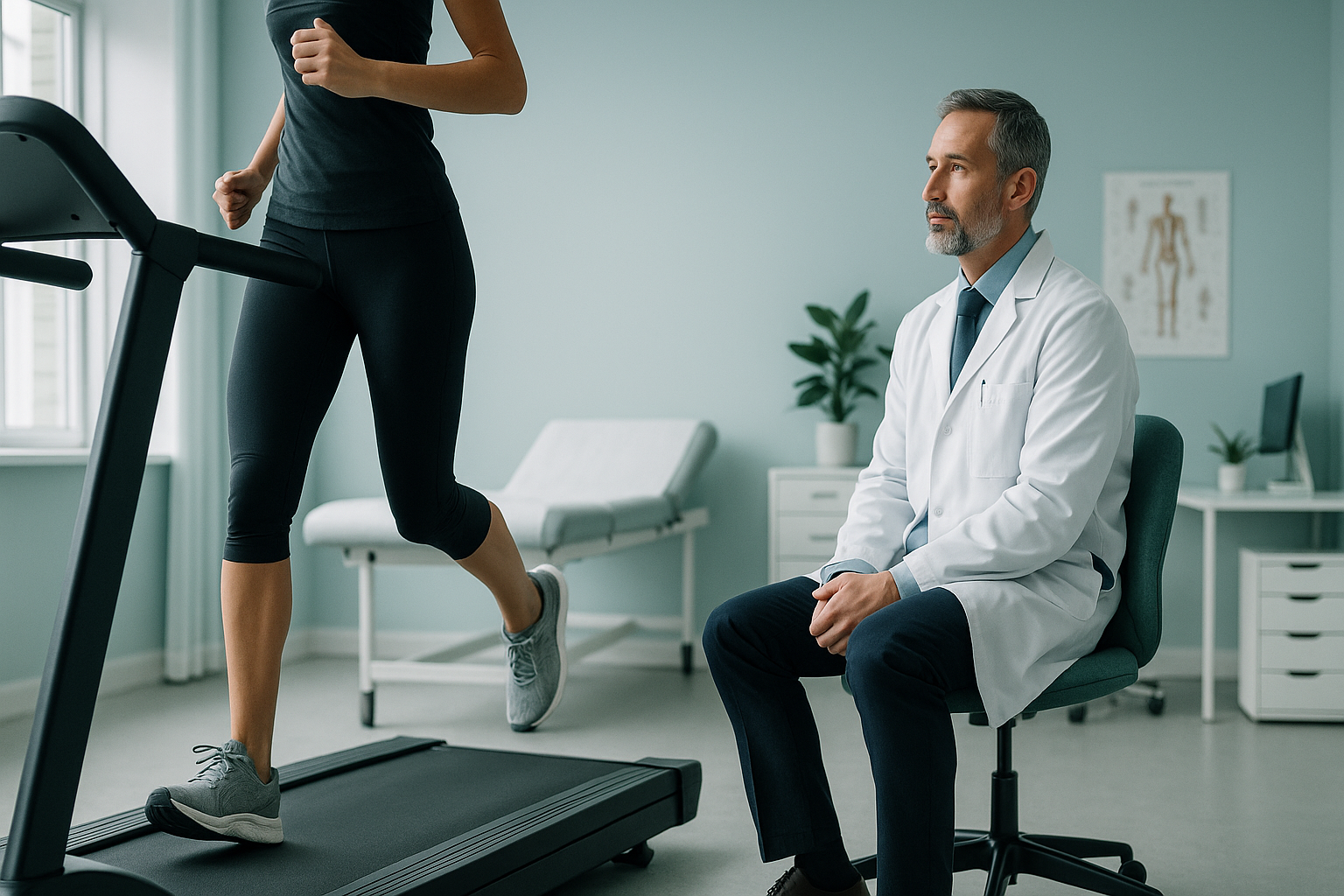
To change your running form safely, make one small change at a time and raise your training load slowly. Sudden changes in foot strike, cadence or stride length overload tissues that have not adapted yet. It helps to understand your standing alignment first. Then you know which changes your body actually needs, instead of copying a general ideal.
Key Takeaways
- Gait retraining works, but only when changes come in gradually and suit your body.
- Your running form is shaped by how your bones and joints line up, not just by habit.
- A standing, weight-bearing scan shows alignment problems that lying-down imaging can miss.
- There is no single "correct" running technique. The best form is one your structure can keep up.
- EOS imaging uses about 90% less radiation than a standard X-ray, around ten times less.
Why does changing running technique cause injuries?
Changing your running technique causes injuries because it moves load onto tissues that have not been trained to handle it. Every tendon, muscle and joint in your lower body has adapted to the form you use now. When you switch suddenly, the new pattern asks more of structures that used to be under less stress.
For example, moving from a heel strike to a forefoot strike reduces impact at the knee. But it increases load through the Achilles tendon and calf muscles. If those tissues are not ready, you can swap one injury for another. The same is true for changes in running cadence, stride length or trunk lean.
The body is a connected chain. Your pelvis, hips, knees and feet all work together. A tight hip may cause too much hip drop on one side. That hip drop puts more stress on the opposite knee and can contribute to conditions like IT band syndrome. Trying to fix one link without understanding the whole chain often makes things worse.
What are the signs your running form needs attention?
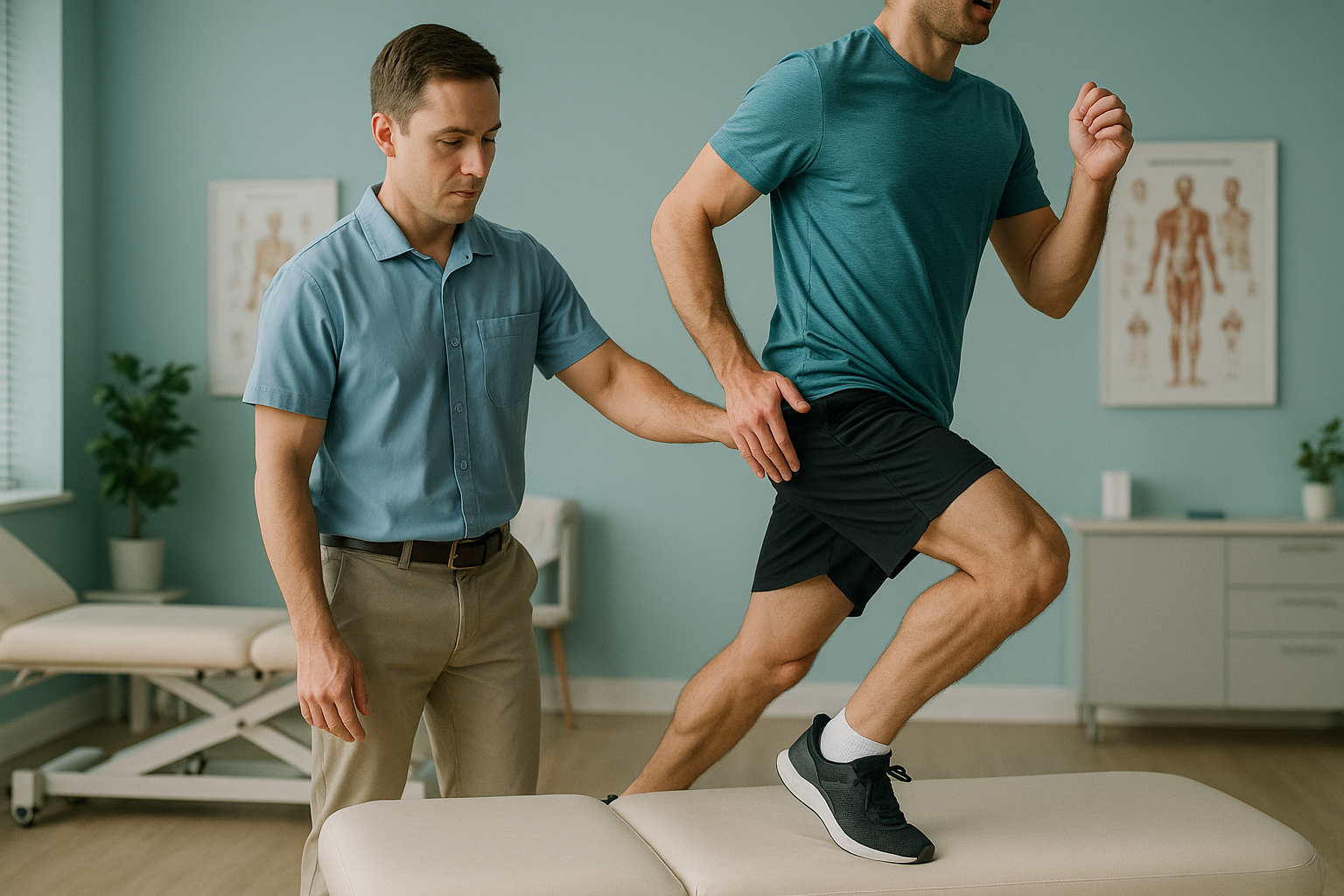
The clearest signs are injuries that keep coming back in the same area, feeling lopsided when you run, or noticing that one shoe wears out faster than the other. Here are common signs.
The same knee, shin or hip problem keeps coming back after rest. This suggests an underlying form issue.
Much more wear on one side points to uneven loading through the feet and legs.
Too much up-and-down movement (vertical oscillation) wastes energy and increases impact with each stride.
Visible dipping of the pelvis, or leaning to one side on each stride, signals weak stabilisers or uneven alignment.
How do you safely retrain your running gait?
To retrain your running gait safely, follow a few core principles: change one thing at a time, run less overall while you adapt, and build back slowly. Here is a practical approach that works for any form change.
1. Understand your starting point
Before changing anything, you need to know what your current form looks like and why. A proper gait analysis looks at how you move. But movement patterns are driven by your skeleton and joints. If a bony alignment problem is pushing your knee inward or tilting your pelvis, no amount of coaching cues will override it. That is why it matters to understand your structural alignment before you commit to technique changes.
2. Pick one variable
Common changes include adjusting running cadence (steps per minute), changing your foot strike pattern, reducing overstriding, or improving trunk position. Work on one at a time. If you try to raise your cadence and change your foot strike at the same time, you cannot tell which change is helping and which might be causing new discomfort.
3. Use the 10% guideline
When you make a form change, cut your weekly running distance by roughly a third and increase it slowly. Tissues need weeks to adapt to new loading patterns. Patience here is what separates a successful change from a stress fracture.
4. Listen to load, not just pain
Mild soreness in new muscles is expected. Sharp pain, pain that gets worse during a run, or pain that lingers the next day is a warning sign. Stop the new pattern and think again. Good sports injury prevention means responding early, not pushing through.
Want to understand your alignment before changing your form? A standing scan shows how your bones and joints line up under your own body weight, from head to foot.
Book a free video consultationIs a heel strike or forefoot strike better for running?
Neither is better for everyone. Research shows that roughly three-quarters of recreational runners are heel strikers, and most never get injured because of it. What matters more is where your foot lands compared with your centre of mass, not which part touches the ground first.
Heel strike puts more load through the knee and the front of the shin. It tends to come with a longer stride and a lower cadence. If your hips and knees are well aligned and you are not overstriding, a heel strike is perfectly fine for most runners.
Forefoot strike moves load toward the Achilles tendon, calf and foot. It often comes with a shorter stride and a higher cadence. Runners with knee problems sometimes benefit, but the change must be gradual. If your ankle alignment or calf strength is not up to it, you risk Achilles problems.
The key point is that your ideal foot strike depends on your body. A pelvic tilt, a rotated hip or a leg-length difference can make one pattern safer for you than the other. You cannot know this from a video alone.
Why does standing alignment matter for running form?
Standing alignment matters because it shows the structural factors that shape your gait. When you run, gravity and the forces from the ground travel through your skeleton. If your pelvis is tilted, one leg is slightly longer, or your knees angle inward, those forces are spread unevenly. Your muscles then compensate, and that compensation becomes your running form.
Standard imaging, like a lying-down X-ray or MRI, relaxes your muscles and removes the effect of gravity. This can hide alignment problems that only appear when you are upright and bearing weight. ScanAlign standing EOS imaging captures your whole body from head to foot while you stand naturally. It uses about 90% less radiation than a standard X-ray, around ten times less.
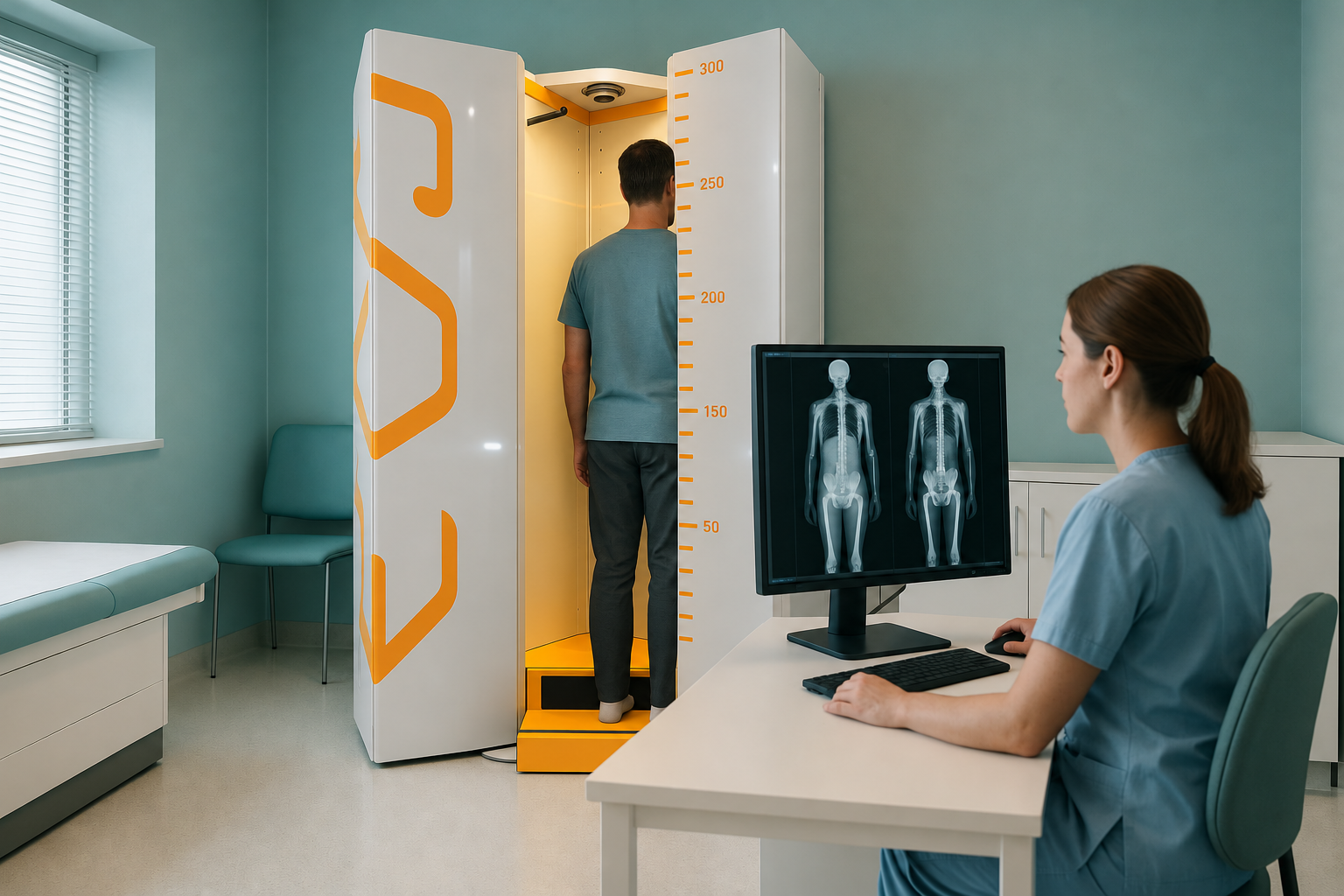
This matters for runners because the alignment you hold while standing is the alignment you run on. A scan gives your physiotherapist, coach or consultant objective data, so any form changes are based on your structure, not guesswork.
When is MRI the better choice? EOS is excellent at showing bones, joints and whole-body alignment. For soft-tissue injuries like muscle tears, disc problems or nerve compression, MRI is usually the better tool. If you suspect a soft-tissue problem, your clinician may recommend MRI instead of, or alongside, an alignment scan.
Who should consider an alignment scan before changing their running form?
An alignment scan is most useful when there is a reason to suspect your skeleton is adding to your running problem. It is not for everyone, and it is important to be honest about that.
- Running injuries that keep coming back and do not respond to rehab
- Visible unevenness in your stride or posture
- Planning a major form change (for example, changing your foot strike)
- Persistent hip, knee or lower back pain linked to running
- Previous surgery and unsure how your alignment has changed
- Acute soft-tissue injury (muscle tear, ligament sprain)
- New runner with no injury history, just looking for general tips
- Suspected nerve or disc problem (MRI is more suitable)
Before you start treatment, or change the one you are on, it is worth getting a detailed diagnosis. Knowing whether the cause sits in your pelvis, your legs or your spine changes what will actually help.
What happens when you book a runner's alignment scan?
The process is simple. Here is what to expect if you decide to book a runner's alignment scan in London.
You speak with a specialist radiographer from wherever you are. They listen to your running history and symptoms, and confirm whether an EOS scan is the right next step for you before you plan any travel.
The scan itself takes just a few seconds. You stand naturally while the EOS system captures your full alignment from head to foot.
A specialist studies the images and writes a clear report on your alignment, any unevenness, and how it relates to your running.
You take the report to your physiotherapist, running coach or consultant back home, so they can use it to guide targeted, evidence-based form changes.
Frequently asked questions about running form and gait retraining
Raising your cadence by a small amount can reduce overstriding and lower the impact force on each step. However, a big jump in cadence, done too quickly, can overload the calves and Achilles. Aim for gradual increases and watch how your body responds over several weeks.
Not necessarily. Heel striking is normal for most recreational runners and is not harmful in itself. A switch makes sense only if your current pattern is linked to a specific injury, and even then it should be done slowly. Your bone and joint alignment plays a large role in which strike pattern suits you best.
Most runners need at least six to eight weeks to adapt to a meaningful form change. Tissue remodelling is what holds things up, not muscle memory. Rushing the process is the most common cause of retraining injuries.
EOS is a standing, weight-bearing imaging system that captures your entire skeleton in one scan while you are upright. For runners, it shows how your pelvis, hips, knees and feet line up under load. This gives your clinician or coach objective data to guide form changes that match your structure.
Yes. EOS uses about 90% less radiation than a standard X-ray, around ten times less. It is one of the lowest-dose skeletal imaging methods available.
No. ScanAlign is a private, self-pay clinic. You can book directly without a referral from your doctor. Your journey starts with a free video consultation to make sure the scan is suitable for you.
The price for patients travelling from abroad is confirmed during the free video consultation.
A scan does not prescribe a running style. It gives detailed alignment data that your physiotherapist, coach or consultant uses to recommend specific, targeted changes. ScanAlign is a diagnostic imaging clinic, not a running coaching service.
EOS shows bones, joints and alignment. For soft-tissue injuries like muscle tears, tendon damage or nerve compression, MRI is usually the better choice. Your free consultation will help decide which type of imaging is right for you.
When you lie down, gravity is removed and your muscles relax. This can hide tilts, rotations and leg-length differences that only appear when your skeleton is loaded by your own body weight. A standing scan captures the alignment your body actually works with in daily life and when running.
Understand your alignment before you change your form
A free video consultation with a specialist radiographer helps you find out whether a standing alignment scan in London is the right next step for your running.
Book a free video consultationSources
- Barton, C.J. et al. "Running retraining to treat lower limb injuries: a mixed-methods study of current evidence synthesised with expert opinion." British Journal of Sports Medicine, 2016;50(9):513-526.
- Heiderscheit, B.C. et al. "Effects of step rate manipulation on joint mechanics during running." Medicine & Science in Sports & Exercise, 2011;43(2):296-302.
- NHS. "Knee pain and exercise." NHS.uk, reviewed 2023.
Written by Abbas Dhami (Specialist Diagnostic Radiographer)
This page is general information and not a diagnosis.
ScanAlign is the trading name of CoreMed Solutions Ltd and operates under The Harley Street Hospital's CQC licence.