

What Causes Stress Fractures in Runners, and Can You Prevent Them?
A stress fracture is a tiny crack in a bone. It is caused by repeated loading that happens faster than the bone can repair itself. In runners, it most often affects the shin (tibia) and the metatarsal bones of the foot. Sudden jumps in training, poor energy availability, low bone density and uneven loading from misalignment all raise the risk.
Key points
- Stress fractures build up slowly from repeated impact, not from one single incident.
- MRI is the first-line test to confirm an acute stress fracture.
- Alignment problems, such as leg length discrepancy, can cause uneven loading and repeated bone stress injuries in the same leg.
- A standing whole-body scan can show the biomechanical factors that standard lying-down scans miss.
- Prevention is about managing load, nutrition, bone health and correcting alignment.
Have you had more than one stress fracture? Do your injuries always seem to hit the same side? Then the cause may not be your training plan alone. Your whole-body alignment under load could be a factor that keeps being overlooked. It is only visible when you are standing.
What are the symptoms of a stress fracture?
The main symptom is an aching pain in one area. It gets worse with activity and better with rest. Early on, the discomfort may only come towards the end of a run. If it is left unchecked, it can progress until simply putting weight on the leg becomes painful.
Stress fracture or shin splints? Shin splints (medial tibial stress syndrome) cause a wider, spread-out ache along the inner shin. A shin stress fracture causes sharper, pinpoint pain in one spot. Both are bone stress injuries on the same spectrum. So shin splints that do not get better can sometimes progress to a stress fracture.
What causes stress fractures in runners?
Stress fractures happen when repeated loading is more than the bone can handle while it rebuilds itself. Several factors combine to push a runner past that limit.
When these factors overlap, the risk multiplies. Picture a runner with a subtle leg length discrepancy who suddenly steps up marathon training. That runner is loading one leg harder than the other, thousands of times per run. That is the recipe for a bone stress injury that keeps coming back on the same side.
How is a stress fracture diagnosed?
MRI is the first-line imaging test when an acute stress fracture is suspected. It is highly sensitive. It can detect bone oedema (swelling inside the bone) before a crack shows on X-ray, and it shows soft-tissue detail around the injury.
When MRI is the right choice. If you think you have an active stress fracture right now, with worsening pain, point tenderness or swelling, you need an MRI. EOS shows bones, joints and alignment very well. But for soft tissue, bone marrow changes and confirming an acute fracture, MRI is usually the better tool. Your doctor or a sports medicine doctor can arrange one.
Plain X-rays often miss early stress fractures, because the crack may not be visible for several weeks. A standard X-ray is also taken lying down. This means it cannot show how your bones line up under your body weight. That matters once the acute injury has healed and you want to understand why it happened.
How does whole-body alignment affect stress fracture risk?
Your skeleton is a connected chain from your feet to your head. When one link is out of position, other areas make up for it. A tilted pelvis, a difference in leg length or a rotational imbalance in the hip can redirect impact forces. Then one bone takes far more load than it should.
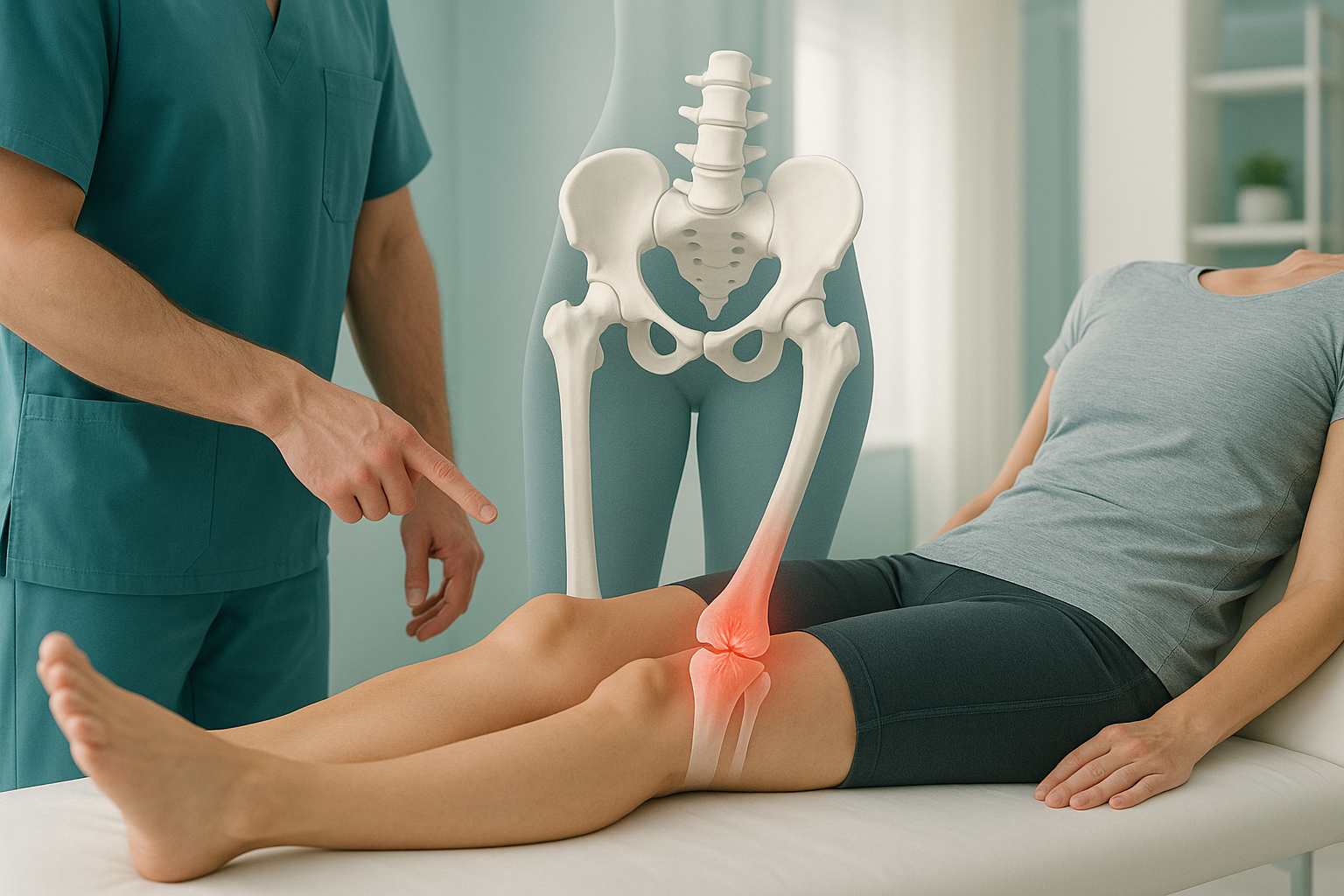
This kind of uneven loading only shows up when you are standing and bearing weight. Lying-down imaging, including standard X-ray, CT and MRI, relaxes the muscles and removes gravity. The tilt or rotation that drives uneven forces through your legs more or less disappears on the scan.
That is where ScanAlign standing EOS imaging comes in. An EOS scan captures your whole skeleton from head to feet in one upright image. It uses about 90% less radiation than a standard X-ray, around ten times less. It shows how your pelvis, hips, knees and feet line up with each other under real weight-bearing conditions, the same conditions you run in.
Had more than one stress fracture? A standing alignment assessment can help find out why your injuries keep coming back. Then your physiotherapist or sports medicine specialist can address the root cause.
Book a free video consultationHow can runners prevent stress fractures?
Prevention comes down to matching the load you put through your bones with what those bones can handle. Most advice focuses on the load. But alignment, meaning how evenly that load is spread, is just as important for runners who keep getting injured.
For wider advice on lowering your risk of running injuries, read our page on sports injury prevention.
What about stress fracture recovery time?
Recovery depends on where the fracture is and how severe it is. Most stress fractures need several weeks of reduced loading, sometimes longer for high-risk sites like the navicular bone. Your treating clinician will guide your plan for getting back to running. For long-term prevention, what matters is finding the factors that caused the fracture, so you can address them before you return to full training. If alignment played a role, the same forces will still be there when you start running again.
So before you start treatment, or change the one you are on, it is worth getting a detailed diagnosis. Knowing whether the cause sits in your pelvis, your legs or your spine changes what will actually help.
Frequently asked questions about stress fractures
The tibia (shin) is the most common site, followed by the metatarsal bones on the top of the foot. The navicular, fibula and pelvis are less common, but are still well documented in runners.
It is not recommended. If you keep running on a stress fracture, a tiny crack can turn into a complete break. That takes much longer to heal and may need surgery.
Shin splints cause a wide, spread-out ache along the inner edge of the shin. A shin stress fracture causes sharp, pinpoint pain in one spot. Both sit on the same bone stress injury spectrum. So persistent shin splints that do not get better deserve medical attention.
Often not in the early stages. A stress fracture may take weeks to show on a plain X-ray. MRI is the first-line imaging test because it picks up bone marrow changes before a crack appears.
EOS is not the tool for diagnosing an acute stress fracture. That is the job of MRI. EOS is excellent at showing whole-body bone and joint alignment under weight-bearing conditions. This helps identify the biomechanical reasons a stress fracture happened, and why it might happen again.
An EOS scan uses about 90% less radiation than a standard X-ray, around ten times less. It captures a full-body standing image in a single pass.
No. ScanAlign is a private self-pay clinic, and you can book directly without a referral from your doctor. We do recommend that you share the results with your treating clinician or sports medicine specialist.
Yes, it can contribute. Even a small difference in leg length changes how forces spread through your legs. The shorter or longer leg may take more impact with each stride. This raises the risk of a bone stress injury on that side.
Most stress fractures need several weeks of modified activity, though high-risk sites can take longer. Your doctor or physiotherapist will guide the timeline based on the location and your progress.
For patients travelling from abroad, the price is confirmed during the free video consultation.
Keep getting injured on the same side?
In a free video consultation, you can talk through your history and find out whether a standing alignment assessment could help explain why.
Book a free video consultationWritten by Abbas Dhami (Specialist Diagnostic Radiographer)
Sources
- Warden, S.J. et al. "Management and Prevention of Bone Stress Injuries in Long-Distance Runners." Journal of Orthopaedic & Sports Physical Therapy, 2014; 44(10): 749-765.
- Nattiv, A. et al. "Stress Fracture Risk Factors, Incidence, and Classification." Clinics in Sports Medicine, 2006; 25(1): 1-16.
- NHS. "Stress fractures." NHS Inform / NHS Conditions. Available at: nhs.uk.
This page is general information and not a diagnosis.
ScanAlign is the trading name of CoreMed Solutions Ltd and operates under The Harley Street Hospital's CQC licence.