
What Are the Best Stretches for Tight Hamstrings?
Good stretches for tight hamstrings include the standing forward fold, the supine hamstring stretch and the doorway stretch. But stretching alone may not be enough. If your hamstrings stay tight even though you stretch regularly, this often points to a problem with the position of your pelvis. An anterior pelvic tilt pulls the hamstrings taut. So they feel tight even when the muscle length is normal.
Key points
- Static and dynamic hamstring stretches both help. For lasting flexibility, static holds of 30 seconds or more work best.
- Hamstrings that never loosen up may be reacting to pelvic tilt, nerve tension or muscle imbalance, not just poor flexibility.
- Standing, weight-bearing imaging can show alignment problems that lying-down scans miss.
- Stretching is not a treatment for structural problems. If you are not getting better, the cause may need proper investigation.
Why are my hamstrings always tight?
The most common reason is sitting for long periods. When you sit for hours, the hamstrings stay in a shortened position. At the front, the hip flexors shorten too. Over time, this pulls on the pelvis from both sides. But that is only part of the picture.
Desk work, driving and travelling to work keep the hamstrings shortened for hours every day.
An anterior pelvic tilt tips the pelvis forward. This keeps the hamstrings on constant stretch.
Irritation of the sciatic nerve from the lower back can feel like hamstring tightness, even when the muscle is not short.
Weak glutes or tight hip flexors force the hamstrings to overwork and guard the pelvis.
This is why your hamstrings can feel tight even after weeks of stretching. If the pelvis is tilted, your skeleton is holding the muscle taut. The problem is not a lack of flexibility. No amount of stretching will fix a bone position problem.
What are the best hamstring flexibility exercises?
For most people, a mix of static and dynamic stretching works best. Static stretches build lasting flexibility. Dynamic stretches prepare the muscles for movement and are ideal before exercise.
Static stretches (hold for 30 seconds, 2 to 3 times on each side)
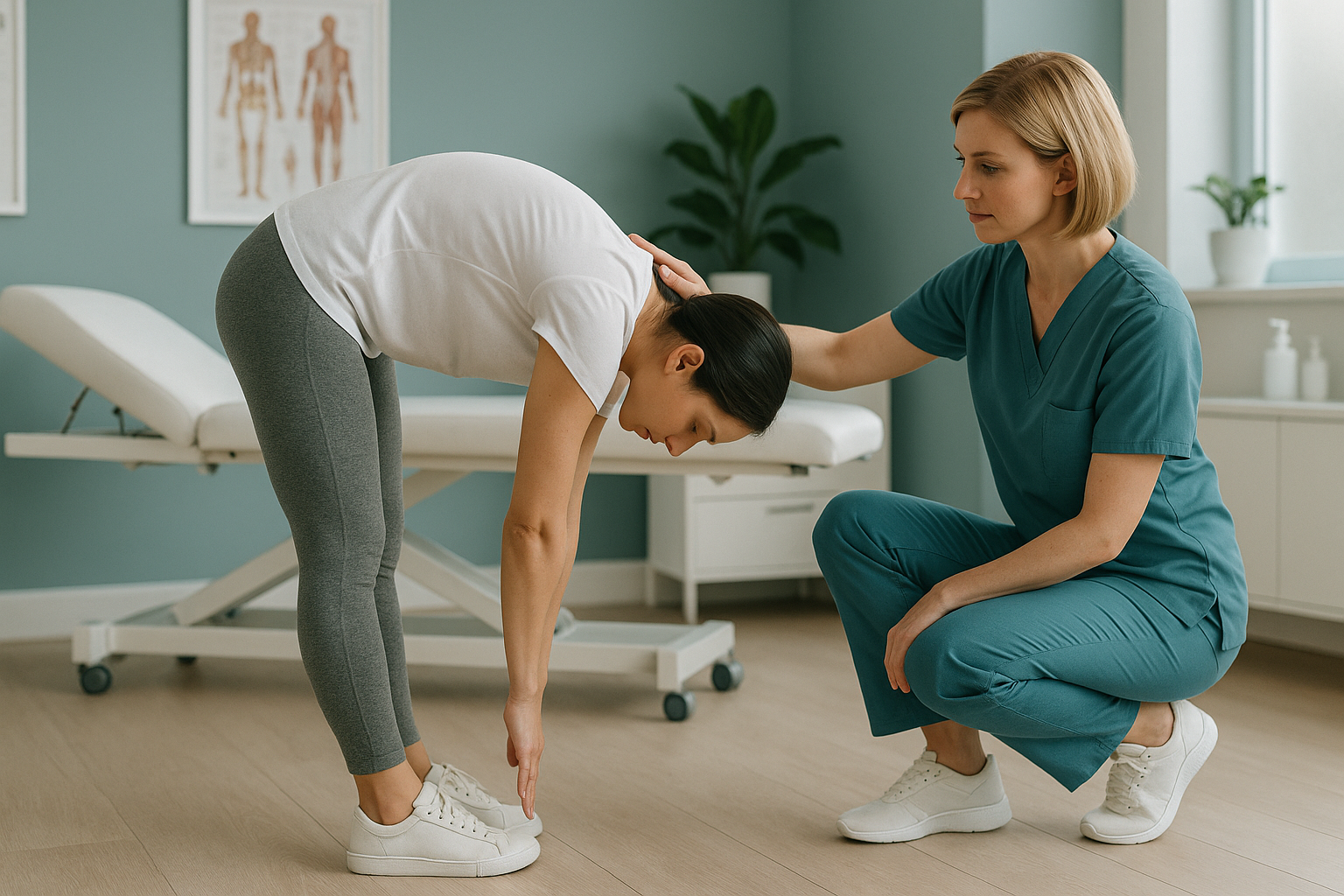
Stand with your feet hip-width apart. Bend forward from the hips and reach towards the floor. Keep your knees slightly soft. You should feel a pull behind your thighs, not pain.
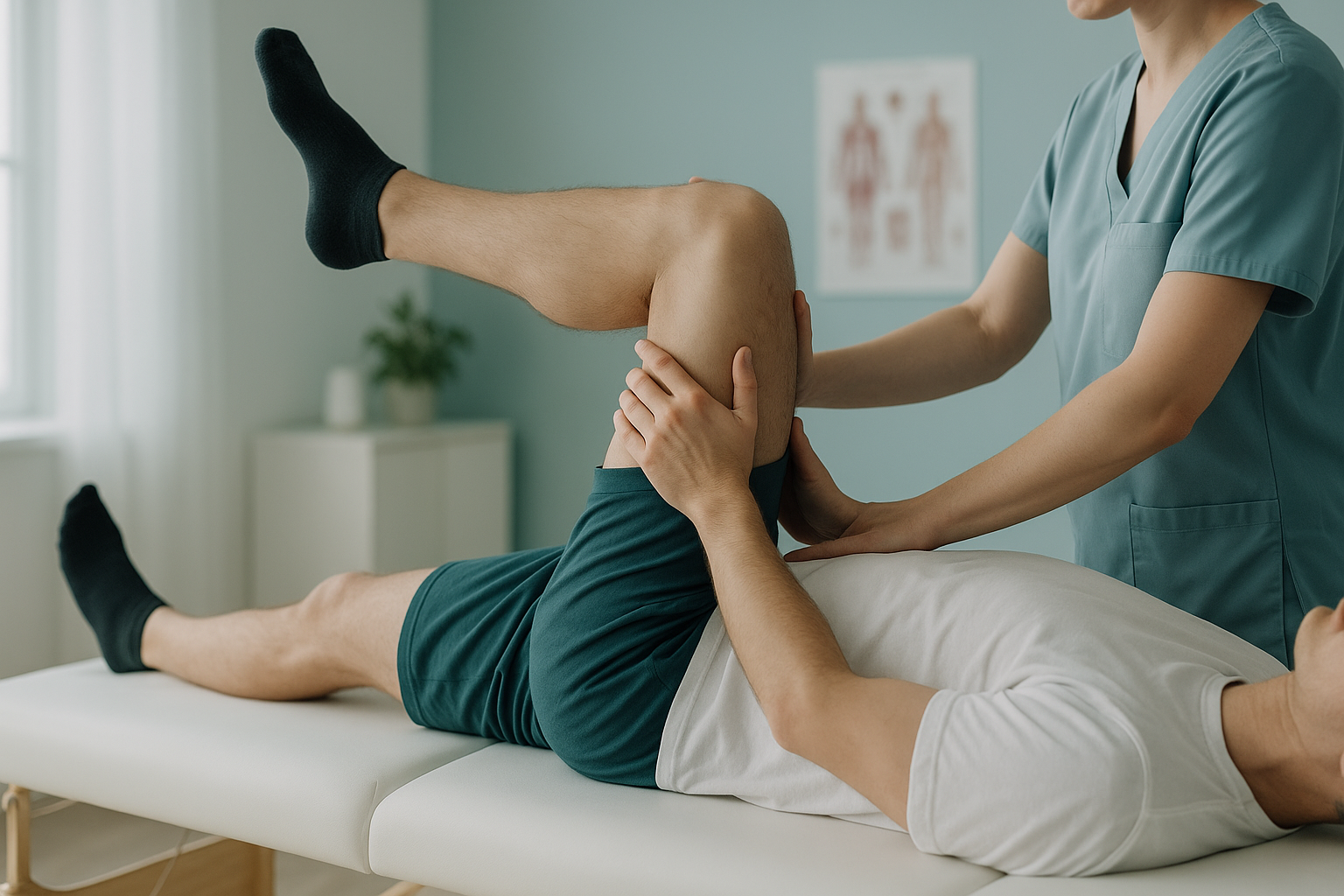
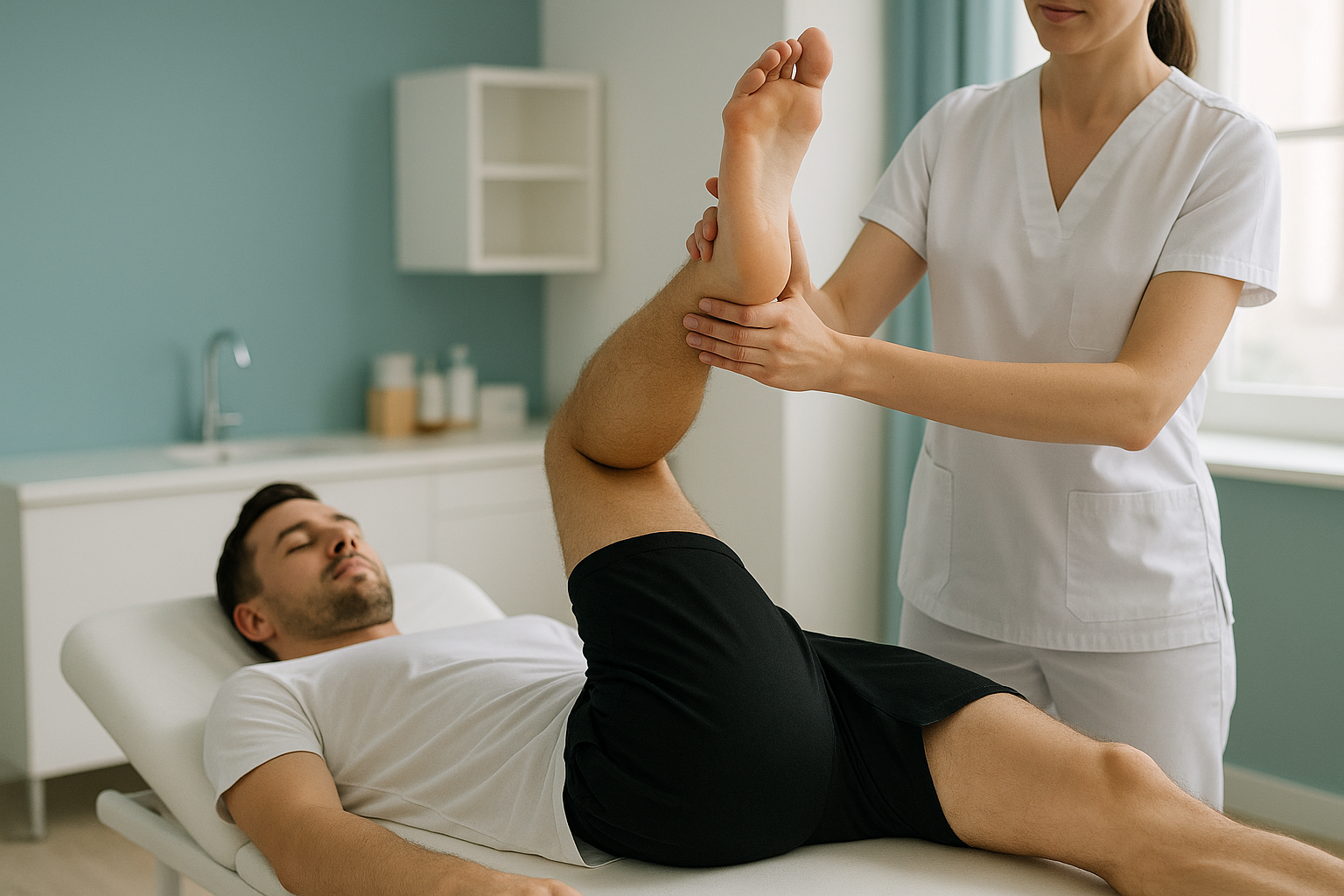
Lie on your back. Lift one leg and hold it behind the thigh or calf. Gently straighten the knee until you feel a comfortable stretch. Keep your lower back flat on the floor.
Lie in a doorway. Rest one leg up against the door frame and keep the other flat on the floor. Slide closer to the frame to increase the stretch. This is good for people who find it hard to relax into a standing stretch.
Dynamic stretches (before exercise or movement)
Hold a wall for balance. Swing one leg forward and back in a controlled arc. Start gently and slowly increase the range. Do 10 to 15 swings on each side.
Walk forward and kick one leg up straight in front of you. Reach the opposite hand towards your toes. Switch sides each time. This warms up the hamstrings and builds coordination.
Research suggests that holding a static stretch for at least 30 seconds gives the best flexibility results. Stretching every day, or at least three to four times a week, works better than stretching hard once a week. Always warm up first. Cold muscles resist stretching, and you risk straining the tissue.
If your lower back also feels stiff, combining hamstring work with stretches for lower back pain can address the whole chain more effectively.
Why is stretching not loosening my tight hamstrings?
If you have stretched regularly for weeks and your hamstrings still feel tight, the problem is probably not the muscle itself. There are two common reasons why stretching does not work.
The pelvis is tilted forward. With an anterior pelvic tilt, the sit bones (where your hamstrings attach) are pulled upward. This keeps the hamstrings on a permanent low-grade stretch. The muscle is not short. The position of the pelvis is holding it long and tense. Stretching it more can actually make things worse, because you are adding stretch to a muscle that is already overstretched and guarding.
This kind of felt tightness is extremely common in people who sit a lot. The hip flexors at the front shorten, the pelvis tips, and the hamstrings at the back fight to keep things level. It is a muscle imbalance problem, not a flexibility problem.
The sciatic nerve is irritated. The sciatic nerve runs directly under or through the hamstring muscles. When it is irritated, often from the lower back, it causes a pulling or tight feeling behind the thigh. A slump test or straight leg raise can sometimes help tell nerve tension apart from muscle tightness. If stretching brings on tingling, burning or sharp pain rather than a gentle pull, nerve tension may be the cause.
If you have numbness, weakness in your leg, or any loss of bladder or bowel control, get urgent medical help from your doctor or the nearest emergency department. These are red flag symptoms that need to be checked straight away.
In both cases, the answer is not more stretching. The answer is finding out what is causing the tightness in the first place.
How does standing alignment imaging help tight hamstrings?
A standing, weight-bearing scan shows your pelvis, spine and legs under gravity, exactly how your body works in daily life. This matters because lying-down imaging relaxes the muscles and can hide the alignment problems that cause hamstring tightness.
Your body is one connected chain from your feet to your head. A tilt at the pelvis changes how the hamstrings sit. It also changes the curve of your lower back, how your knees track and where you feel pain. Often the sore spot is not where the problem starts.
ScanAlign standing EOS imaging captures your whole skeleton in one standing image, using about 90% less radiation than a standard X-ray, around ten times less. This gives your treating specialists a complete picture of your alignment. Treatment can then target the root cause instead of chasing symptoms.
When MRI is the better choice: EOS is excellent at showing bones, joints and alignment under load. For soft tissue injuries, disc problems or nerve compression, MRI is usually the more suitable test. If your symptoms include tingling, numbness or referred pain, you may also need an MRI alongside alignment imaging.
Before you start treatment, or change the one you are on, it is worth getting a detailed diagnosis. Knowing whether the cause sits in your pelvis, your legs or your spine changes what will actually help.
If your hamstrings stay tight and stretching is not helping, your pelvis and alignment may be part of the picture.
Book a free video consultationFrequently asked questions
Hold each static hamstring stretch for at least 30 seconds. Research shows this gives better flexibility gains than shorter holds. Repeat two to three times on each side.
Aim to stretch every day, or at least three to four times a week. Doing it regularly matters more than doing it hard. A gentle daily routine works better than one hard session a week.
Yes. Tight or tense hamstrings can tilt the pelvis and flatten the natural curve of the lower back. This can add to stiffness and pain. But the reverse is also true. Lower back problems can make the hamstrings feel tight when they are not actually short.
Tightness that stays despite regular stretching often points to a pelvic position problem or nerve tension, not a flexibility problem. An anterior pelvic tilt holds the hamstrings taut no matter how much you stretch.
Use dynamic stretches like leg swings before exercise to warm up the muscles. Keep static stretches for after your workout, when the muscles are warm and lengthen more easily.
Muscle tightness usually feels like a pulling or stretching feeling behind the thigh. Nerve tension often causes tingling, burning or a sharper pain that can travel down towards the calf or foot. If you feel electric or shooting sensations during a stretch, nerve irritation may be involved.
Yes, definitely. An anterior pelvic tilt tips the sit bones upward and pulls the hamstrings into a lengthened position. They feel tight because the skeleton is holding them under tension, not because they are short.
An EOS scan is a standing, weight-bearing X-ray that captures your whole skeleton in one image. It shows pelvic position, leg length, spinal curves and overall alignment. This helps show whether a structural cause, such as a pelvic tilt or a difference in leg length, is adding to hamstring tightness.
No. ScanAlign accepts self-referrals. You can book a pelvis and posture scan directly through a free video consultation, without a letter from your doctor or specialist.
Yes. EOS uses about 90% less radiation than a standard X-ray, around ten times less. It is one of the lowest-dose skeletal imaging options available.
Still stretching with no results?
A free video consultation can help you understand whether your alignment is part of the problem, before you commit to anything or plan a trip to London.
Book a free video consultationWritten by Abbas Dhami (Specialist Diagnostic Radiographer)
Sources
- Page P. Current concepts in muscle stretching for exercise and rehabilitation. International Journal of Sports Physical Therapy. 2012;7(1):109-119.
- NHS. Back pain: exercises and stretches. nhs.uk. Available at: https://www.nhs.uk/conditions/back-pain/
- Bandy WD, Irion JM, Briggler M. The effect of time and frequency of static stretching on flexibility of the hamstring muscles. Physical Therapy. 1997;77(10):1090-1096.
This page is general information and not a diagnosis.
ScanAlign is the trading name of CoreMed Solutions Ltd and operates under The Harley Street Hospital's CQC licence.