
Is a Full Body Scan Really Worth It?
It depends on what you need. A full body scan can be truly useful when you have a specific medical question, such as unexplained pain or poor posture. It is less useful as a general screening test for healthy people with no symptoms. This is because chance findings can cause needless worry and lead to more and more tests.
Key points
- A full body scan is most valuable when it answers a specific question about your body, not as an all-in-one health check.
- Different scans show different things. MRI is excellent for soft tissue. EOS is excellent for skeletal alignment while your body carries its real weight.
- Chance findings on broad screening scans are common. They can lead to extra tests, cost and worry.
- Standing scans show alignment problems that lying-down scans can miss completely.
- Speaking to a specialist first helps you choose the right scan for your situation.
What does a full body scan actually detect?
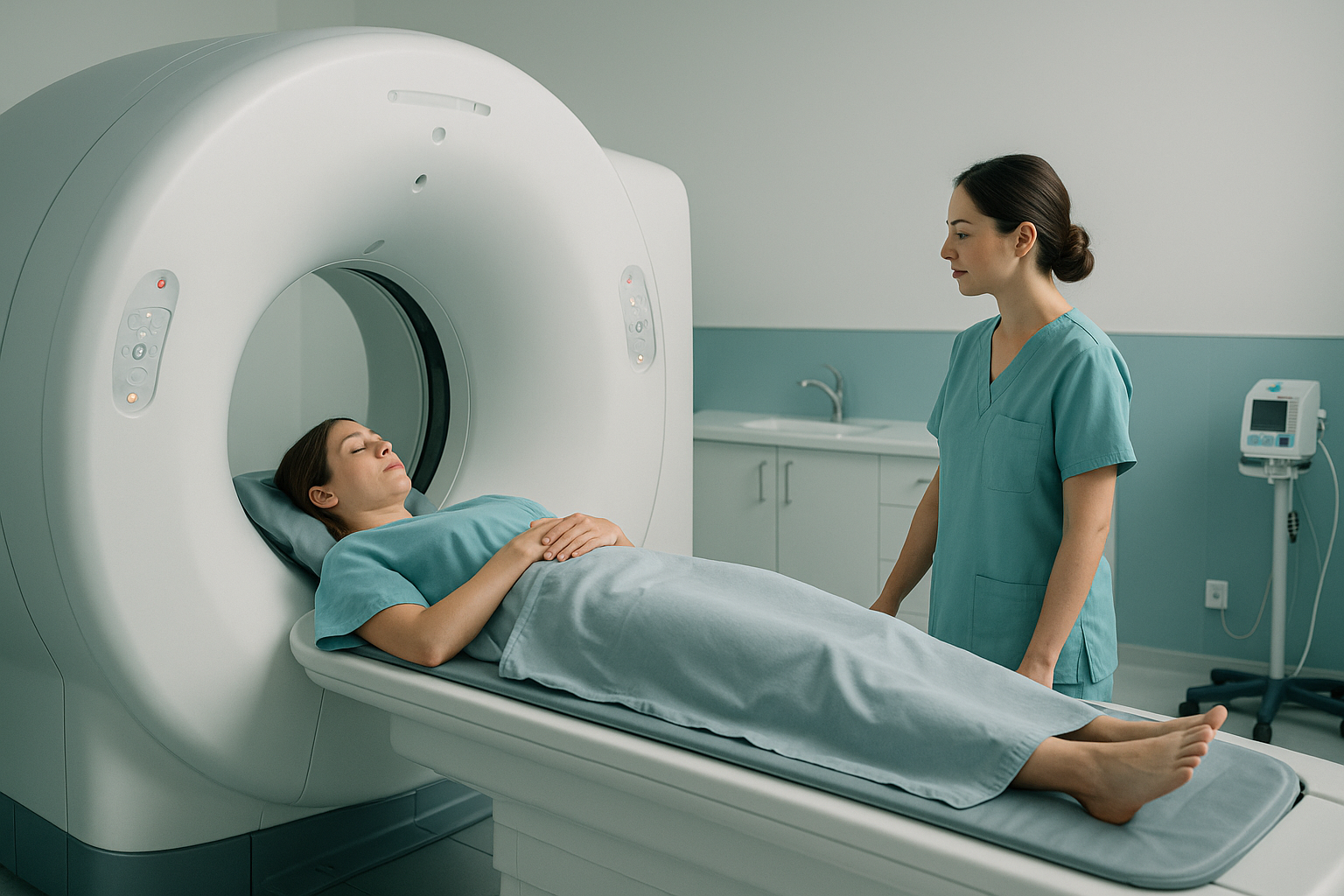
It depends completely on the type of scan. The words "full body scan" cover many different services. At one end is a whole-body MRI that looks at organs and soft tissue. At the other is a standing skeletal scan that maps your bones and joints from head to toe. No single scan sees everything. So the real question is: what are you trying to find?
Scans focused on organs look for tumours, disease of the blood vessels and other problems inside the body. Skeletal scans look for alignment problems, joint wear, differences in leg length and curves in the spine. If you choose the wrong type, you may spend money answering a question you never had, while your real question stays unanswered.
What are the different types of full body scan?
Three broad types are most common in private clinics. Each one has a different purpose.
Shows organs, soft tissue, discs and nerves. Useful for checking internal health. Does not show alignment under load.
Detailed cross-section images. High radiation dose. Usually used when a doctor suspects something specific, not for routine screening.
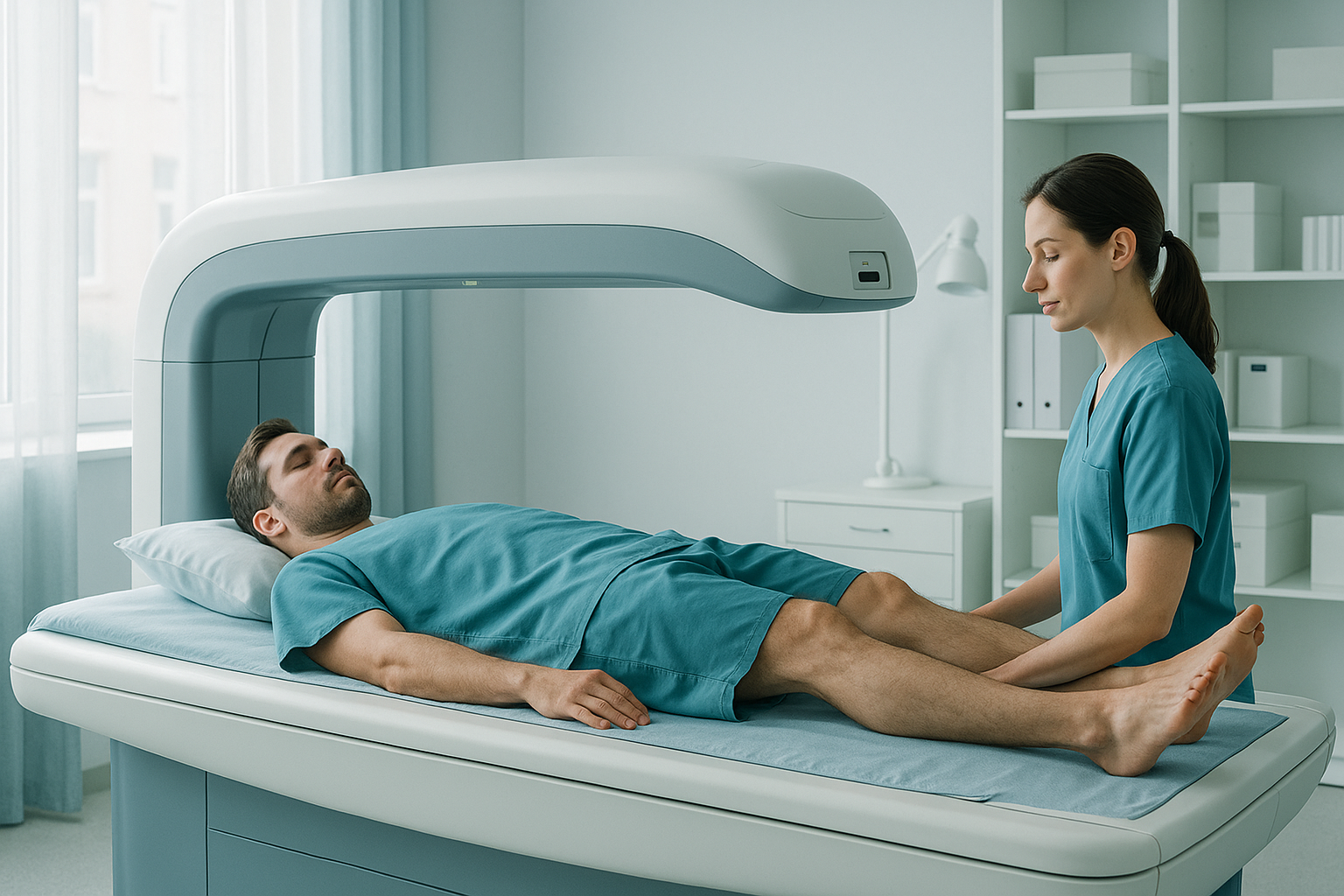
A full-length image of the skeleton taken while you stand. Shows bones, joints and alignment under your real body weight. Very low radiation.
What are the pros and cons of a full body scan?
The main benefit is information. When you have a real medical question, the right scan can save months of guesswork. The main risk is information you did not need, especially when healthy people have broad screening scans.
- Answers a specific question about your pain, posture or joint health
- Can show the root cause of a problem that a scan of one area missed
- Gives your surgeon, physiotherapist or osteopath objective data to plan the next steps
- Standing scans show how your body behaves under real, everyday load
- Chance findings are common, especially on MRI, and can cause needless worry
- Follow-up tests and specialist referrals add cost and worry
- No single type of scan sees everything, so the wrong scan wastes money
- Screening healthy people with no symptoms is not supported by most medical guidelines
The evidence is clear on one point. If you have a specific bone, joint or muscle problem, a suitable scan is usually worth it. If you have no symptoms and simply want reassurance, the risk of false positives and chance findings can outweigh the benefits. In the UK, the NHS and the Royal College of Radiologists both advise against routine whole-body screening for people without symptoms.
Why does it matter whether a scan is done standing up or lying down?
Most scans are done while you lie on a table. This relaxes your muscles, takes the load off your joints and flattens your natural curves. Your alignment can look normal on the image even when it is not normal in daily life.
You stand naturally, with weight on both feet. Gravity acts on your spine, pelvis and legs exactly as it does when you walk. The scan captures your real alignment. This includes any tilt, shift or adjustment your body makes to keep you upright. Problems that only appear under load become visible.
You lie flat. Gravity is taken out of the picture. A pelvic tilt may flatten out. A curved spine may straighten. A difference in leg length may look smaller. The scan can look normal even when your standing posture is not. This means your clinician may be working from incomplete information.
Your body works as a connected chain from your feet to your head. A problem at one level, such as a slight difference in leg length, can make your pelvis tilt, your spine curve to make up for it, and one shoulder drop. Pain often appears away from the original cause. A standing, whole-body image is the clearest way to see these adjustments as they really happen. That is the idea behind ScanAlign, full-body standing skeletal imaging.
When MRI is the better choice: EOS shows bones, joints and alignment very clearly. For soft tissue, discs, nerves or internal organs, MRI is usually the better tool. If your clinician suspects a disc bulge, a torn ligament or a tumour, MRI is the right scan. The two work together. They do not compete.
Not sure which scan you need? You can check whether our scan suits you in a free video consultation, before you commit to anything or plan a trip to London.
Book a free video consultationWho really benefits from a full body scan?
The people who gain the most are those with a real question about their body, not those looking for general reassurance.
Pain that has not improved with treatment may come from an alignment problem somewhere else in the chain.
Surgeons planning a hip or knee replacement can use whole-body alignment data to improve accuracy.
If you feel uneven or notice one shoulder dropping, a standing scan shows exactly what is happening.
A lying-down scan may have missed alignment problems that only show when your body carries its weight.
You can find more detail on who our scan is suitable for. If you have no symptoms and want a general health check, a standing skeletal scan is unlikely to be the right place to start.
You can also read about how EOS scan results are reported, so you know exactly what you would receive.
Before you start a treatment, or change the one you are on, it is worth getting a detailed diagnosis first. Knowing whether the cause lies in your pelvis, your legs or your spine changes what will actually help.
Get urgent help if: You have sudden severe back pain with numbness, weakness, or loss of bladder or bowel control. These symptoms need medical attention straight away. Contact your doctor or go to the emergency department of your nearest hospital.
Frequently asked questions
If you have a specific medical question, such as unexplained pain or a posture problem, the right full body scan can save months of trial and error. For healthy people with no symptoms, most medical bodies advise against routine screening. This is because the risk of chance findings and follow-up costs can outweigh the benefit.
A whole-body MRI shows soft tissue, organs, discs and nerves. It is done lying down inside a tunnel. A full-body EOS scan images the skeleton while you stand. It shows bones, joints and alignment while your body carries its real weight. They answer different questions. They work together and cannot replace each other.
Some types of full body scan, especially MRI and CT, may detect tumours. However, ScanAlign provides skeletal imaging with EOS technology, which is designed for bones and joints, not cancer screening. If finding cancer is your main concern, discuss the right scan with your doctor or oncologist.
The main risk is chance findings: things that show up on the scan that are harmless but look worrying. These can lead to anxiety, follow-up tests and unnecessary procedures. Radiation is another point to consider with CT scans. An EOS scan uses about 90% less radiation than a standard X-ray, around ten times less, making it one of the lowest-dose options available.
At ScanAlign you do not need a referral from your doctor. You can refer yourself. We offer a free video consultation first, so a specialist can discuss your situation and confirm that the scan is suitable for you.
Costs vary widely depending on the type of scan and the provider. For patients travelling from abroad, the ScanAlign price is confirmed during the free video consultation.
When you lie flat, gravity is taken away. Muscles relax, curves flatten and joints are unloaded. A pelvic tilt or a shift in the spine that only appears when you are upright and carrying your weight may look perfectly normal on a lying-down image. A standing scan captures your body as it really works in daily life.
Yes. EOS uses about 90% less radiation than a standard X-ray, around ten times less. The scan takes only a few seconds while you stand still. There is no contrast dye and no enclosed tunnel.
Check what the scan actually shows: bones, organs or both. Ask about the radiation dose. Make sure your results will be reported by a qualified specialist. And think about whether the scan is done standing or lying down, as this affects what it can show about alignment problems.
Your images are reviewed and a detailed report is written. You receive this with your images, which you can share with your surgeon, physiotherapist or other clinician. ScanAlign is a diagnostic imaging clinic, so any decisions about treatment are made by your own healthcare team.
Find out if a standing skeletal scan is right for you
A free video consultation lets you discuss your situation with a specialist before you commit to anything.
Book a free video consultationSources
- The Royal College of Radiologists. iRefer: Making the best use of clinical radiology. Guidelines on appropriate imaging referrals. rcr.ac.uk
- NHS. Are body scans useful? NHS guidance on private health screening scans. nhs.uk
- Deschênes S, et al. "Diagnostic imaging of spinal deformities: Reducing patients' radiation dose with a new slot-scanning X-ray imager." Spine, 2010;35(9):989-994.
Written by Abbas Dhami (Specialist Diagnostic Radiographer)
This page is general information and not a diagnosis.
ScanAlign is the trading name of CoreMed Solutions Ltd and operates under The Harley Street Hospital's CQC licence.