
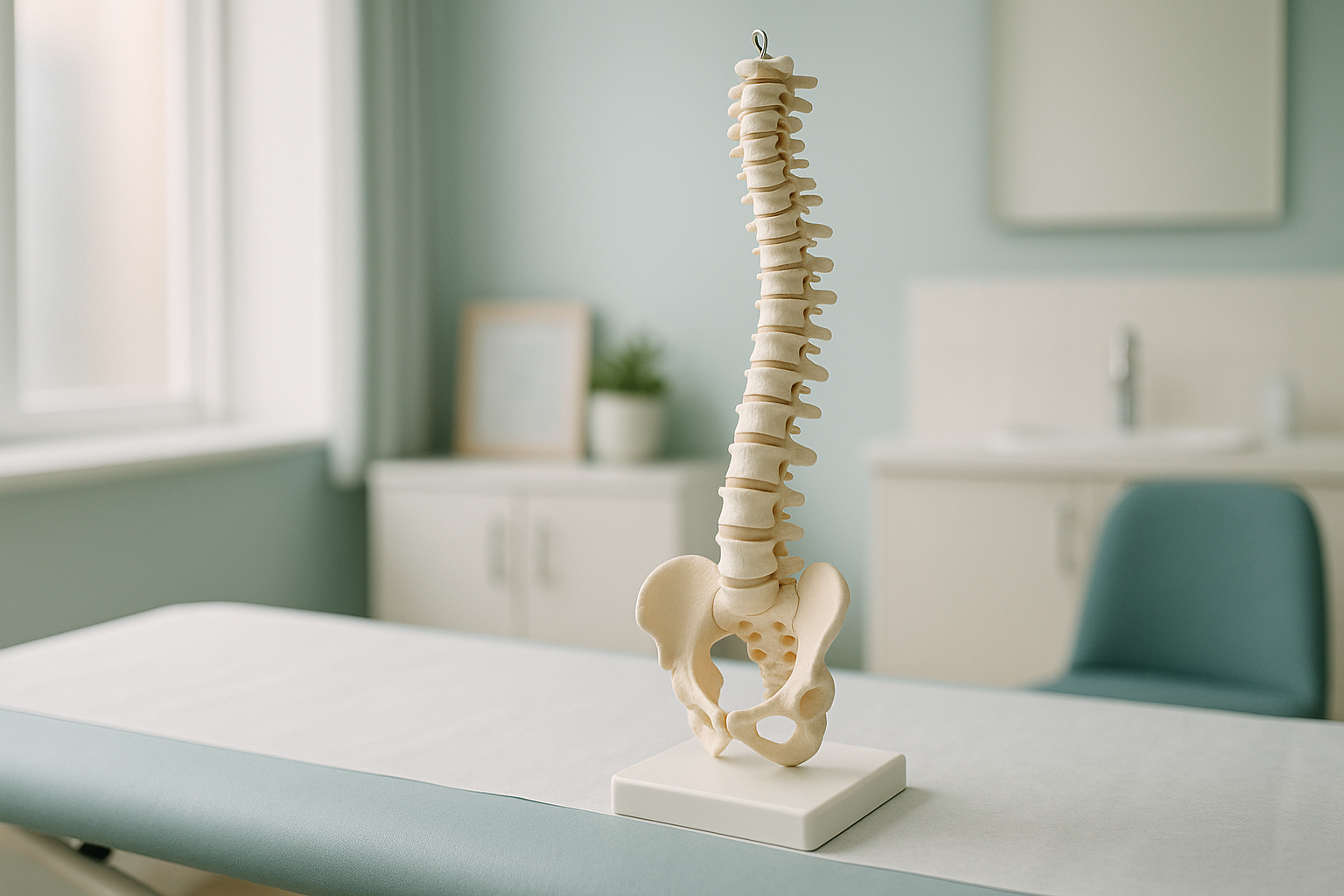
What Does an Osteopenia Diagnosis Actually Mean?
Osteopenia means your bones are thinner than those of an average healthy young adult. But they are not thin enough to be called osteoporosis. It is not a disease. It is a warning zone on a bone density scale. It tells you that your risk of a fracture is higher than normal, and that the right steps can help protect your bones from here on.
Key takeaways
- On the T score scale, osteopenia sits between normal bone density and osteoporosis.
- A DEXA scan (not an X-ray, CT or EOS) is the test used to measure bone mineral density.
- Weight-bearing exercise, enough calcium and vitamin D can slow or sometimes reverse bone loss.
- Poor posture and spinal alignment problems may increase fracture risk in weakened bone.
- Knowing early gives you time to act before osteoporosis develops.
What does your T score actually mean?
Your T score compares your bone mineral density with that of a healthy 30-year-old adult. It is measured by a DEXA scan. This uses a very low dose of X-ray aimed at areas such as the hip and spine. The result is a number. Where it falls on the scale decides your category.
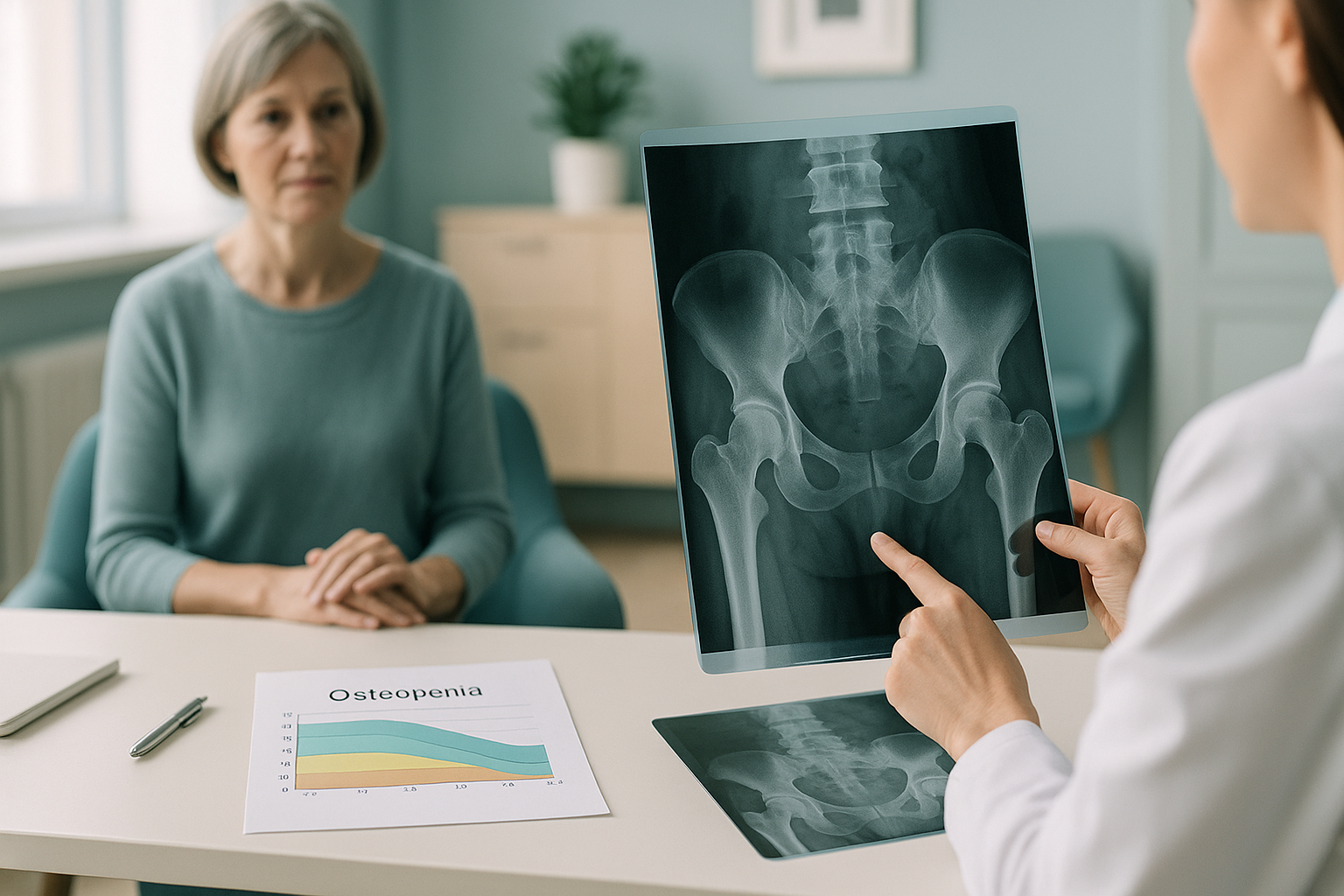
A T score between -1.1 and -2.4 is classified as osteopenia. The lower the number, the thinner the bone. Your doctor may also mention a Z score. This compares your density with other people of your age and sex. It helps show whether your bone loss is expected for your stage of life, or something worth looking into further.
DEXA (dual-energy X-ray absorptiometry) is the standard test for measuring bone density. It is different from a normal X-ray, a CT scan or an EOS standing scan. Those show bone structure and alignment, but they do not measure density itself.
What is the difference between osteopenia and osteoporosis?
Osteopenia and osteoporosis sit on the same range of bone thinning, but they are not the same thing. Osteopenia is the earlier, milder stage. Osteoporosis means bones have become so fragile that a minor bump or fall could cause a fracture.
- Bone density below normal but above the osteoporosis threshold
- Often no symptoms at all
- Lifestyle changes can slow or improve it
- Fracture risk is higher but still moderate
- Bone density well below normal
- Bones can fracture from everyday activity
- May cause loss of height or a rounded upper back known as dowager's hump
- Often needs medicine alongside lifestyle changes
Not everyone with osteopenia will go on to develop osteoporosis. That is why it is best to see the diagnosis as a signal, not a sentence. It gives you the chance to make changes while there is still time.
What causes osteopenia?
Bone naturally becomes thinner as you age. Peak bone mass is usually reached in your late twenties. After that, the balance slowly shifts, and more bone is broken down than rebuilt. Several factors can speed this up.
Bone loss speeds up after the menopause or, in men, from the mid-sixties onwards.
Low oestrogen or testosterone, thyroid disorders or early menopause all reduce bone density.
Low calcium or vitamin D intake over many years weakens the raw material bones need.
Bones grow stronger with load. An inactive lifestyle takes away the stimulus they need.
Other factors include long-term steroid use, smoking, heavy drinking and certain medical conditions such as coeliac disease or rheumatoid arthritis. If your bone loss seems greater than expected for your age, your doctor or rheumatologist will usually look for an underlying cause. It is also worth knowing about osteomalacia. This is a different condition where bones soften because of severe vitamin D deficiency, and it can exist alongside osteopenia.
Can osteopenia be reversed?
In some cases, yes. Bone is living tissue. It responds to how you use it, what you eat and how your hormones are balanced. Many people with osteopenia can stabilise or even improve their T score over time with the right mix of changes.
Weight-bearing and strength exercises load the skeleton and stimulate new bone growth. Walking, jogging, dancing and lifting weights all count.
Enough vitamin D (from sunlight, and supplements if needed) and calcium in your diet give your bones the building blocks they depend on.
For people at higher fracture risk, your doctor or specialist may prescribe bisphosphonates or other bone-protecting drugs.
Stopping smoking, cutting down on alcohol and reviewing long-term steroid use with your doctor all help slow bone loss.
Your doctor may use a tool called FRAX to estimate your chance of a fracture over the next ten years. It combines your T score with factors such as age, weight, smoking history and whether you have broken a bone before. This helps decide whether you need monitoring alone, lifestyle changes or medicine.
How does posture affect bone health in osteopenia?
When bones are thinner, they are more likely to fracture, especially in the spine. Poor alignment puts uneven stress on vertebrae that are already weaker than normal. Over time, this can lead to small compression fractures. These cause a slow rounding of the upper back, and sometimes need treatment such as kyphoplasty or vertebroplasty.
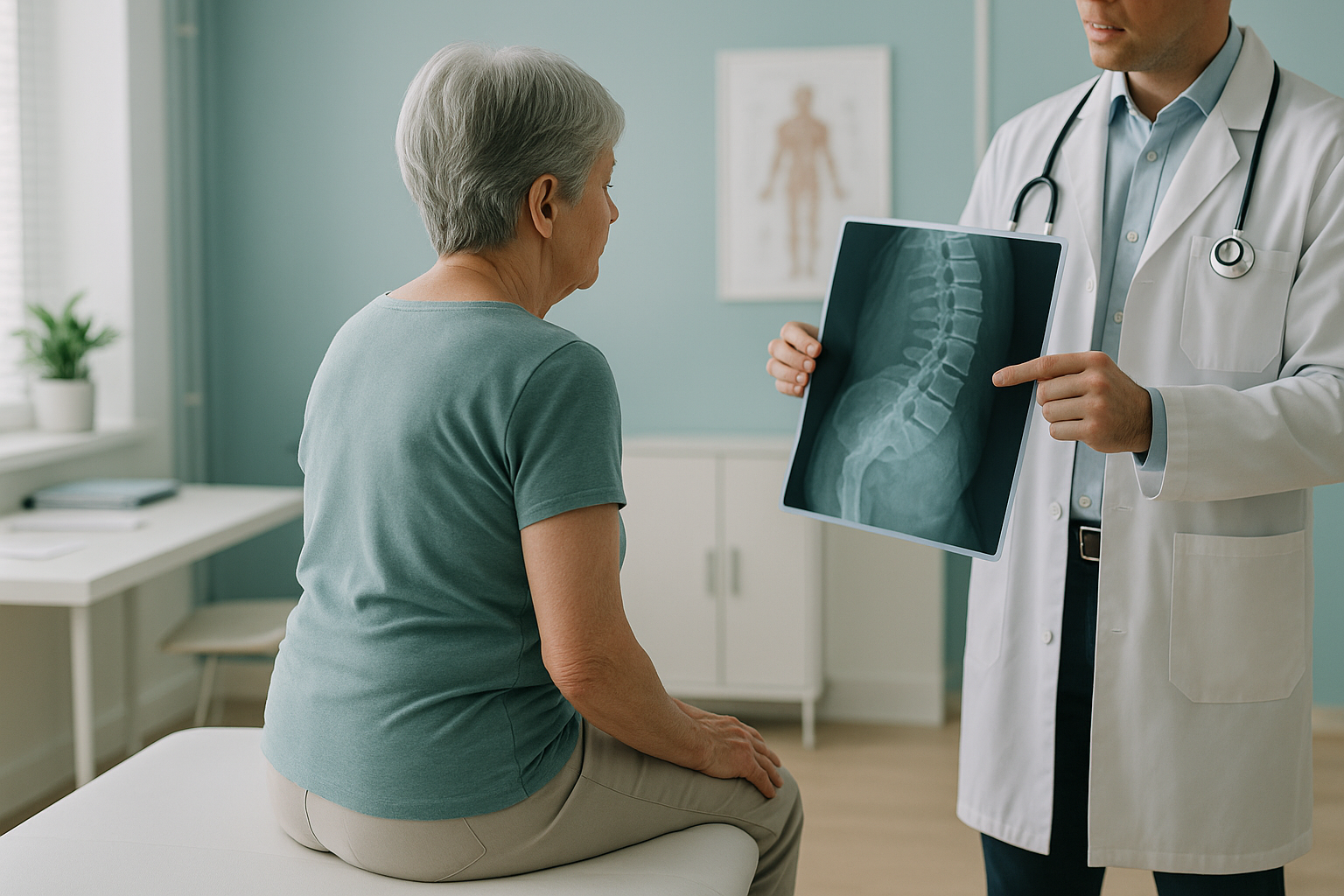
Your body is a connected chain from your feet to your head. If your pelvis tilts, your spine makes up for it. If your spine curves more than it should, certain vertebrae carry extra load. In someone with healthy, dense bone, this may only cause discomfort. In someone with osteopenia, the same misalignment can raise the risk of a fracture.
This is where standing imaging matters. A lying-down scan relaxes your muscles. It can hide alignment problems that only appear under the pull of gravity. ScanAlign standing EOS imaging captures your whole skeleton from head to feet while you stand. It shows your real-life posture and the way load travels through your bones and joints. It uses about 90% less radiation than a standard X-ray, around ten times less.
An EOS scan does not measure bone density. DEXA is the test for that. But once you know your density is lower than normal, understanding how your skeleton is aligned under load becomes an important next step. Your consultant, physiotherapist or rheumatologist can use the alignment data alongside your DEXA result to build a clearer, more complete picture.
Before you start treatment, or change the one you are on, it is worth getting a detailed diagnosis. Knowing whether the cause sits in your pelvis, your legs or your spine changes what will actually help.
When MRI is the better tool: EOS shows bones, joints and alignment. If your doctor suspects soft-tissue problems, disc herniations or nerve compression alongside your bone thinning, MRI is usually the better imaging choice for those specific questions.
Wondering whether your posture could be adding extra load to weakened bone? A short video call with our specialist radiographer, from wherever you are, can help you decide if a standing alignment scan in London would add value to your care.
Book a free video consultationFrequently asked questions about osteopenia
No. Osteopenia is not a disease. It is a classification for bone density that is lower than normal but not low enough to be osteoporosis. Think of it as a warning zone that tells you your bones would benefit from extra attention.
Osteopenia is diagnosed with a DEXA scan. This measures bone mineral density and gives a T score. A T score between -1.1 and -2.4 indicates osteopenia. Your doctor can refer you for a DEXA scan, or you can arrange one privately.
A T score of -1.0 or above is considered normal. Because some bone loss is expected with age, your doctor may also look at your Z score. This compares you with others of the same age and sex. It helps show whether your bone loss is typical or needs further tests.
It can, but it does not always. Many people with osteopenia stabilise or improve their bone density through exercise, diet and sometimes medicine. Without any treatment, bone density tends to decline slowly over time.
Weight-bearing activities such as walking, jogging, dancing and climbing stairs are helpful. Resistance training with weights or bands works especially well because it loads the bones directly. Balance exercises also help lower your risk of falling. Talk to your doctor or physiotherapist before starting a new programme.
Many people benefit from vitamin D supplements, especially in the UK, where sunlight is limited for much of the year. Your doctor may also recommend calcium supplements if you get too little from your diet. Always discuss supplements with your doctor, as the right dose depends on your own blood levels and diet.
No. An EOS scan shows bone structure, joint alignment and whole-body posture, but it does not measure bone mineral density. DEXA is the test used for that. However, once you have an osteopenia diagnosis, a standing EOS scan can reveal alignment problems that put extra stress on bones that are already weakened.
Yes. The EOS system uses about 90% less radiation than a standard X-ray, around ten times less. You simply stand still for the scan. There is no injection, no enclosed tube and no physical contact with the bones.
No. You can book yourself. The process starts with a free video consultation. Our specialist radiographer reviews your situation and confirms whether a standing alignment scan is right for you.
The price for patients travelling from abroad is confirmed during the free video consultation, which you can start from our book a standing posture scan page.
Understand how your skeleton carries load
If you have been told you have osteopenia and you are worried about posture, balance or spinal alignment, a short video call is a good first step before you plan a trip to London.
Book a free video consultationSources
- World Health Organization. Assessment of fracture risk and its application to screening for postmenopausal osteoporosis. WHO Technical Report Series 843. Geneva: WHO, 1994.
- National Institute for Health and Care Excellence (NICE). Osteoporosis: assessing the risk of fragility fracture. Clinical guideline CG146, updated 2017.
- Royal Osteoporosis Society. "Osteopenia." rос.org.uk (patient information resource).
Written by Abbas Dhami (Specialist Diagnostic Radiographer)
This page is general information and not a diagnosis.
ScanAlign is the trading name of CoreMed Solutions Ltd and operates under The Harley Street Hospital's CQC licence.