Used across Europe, USA, Japan and Australia. One of the very few clinics offering this privately in the UK.
Standing EOS Back ScanLooks beyond where it hurts to help uncover what may be driving your back pain
Used across Europe, USA, Japan and Australia. One of the very few clinics offering this privately in the UK.
Standing EOS Back ScanLooks beyond where it hurts to help uncover what may be driving your back pain
Free Video ConsultationYour back pain may be in one place. The reason may not be. EOS Scan helps reveal what lying-down scans miss.
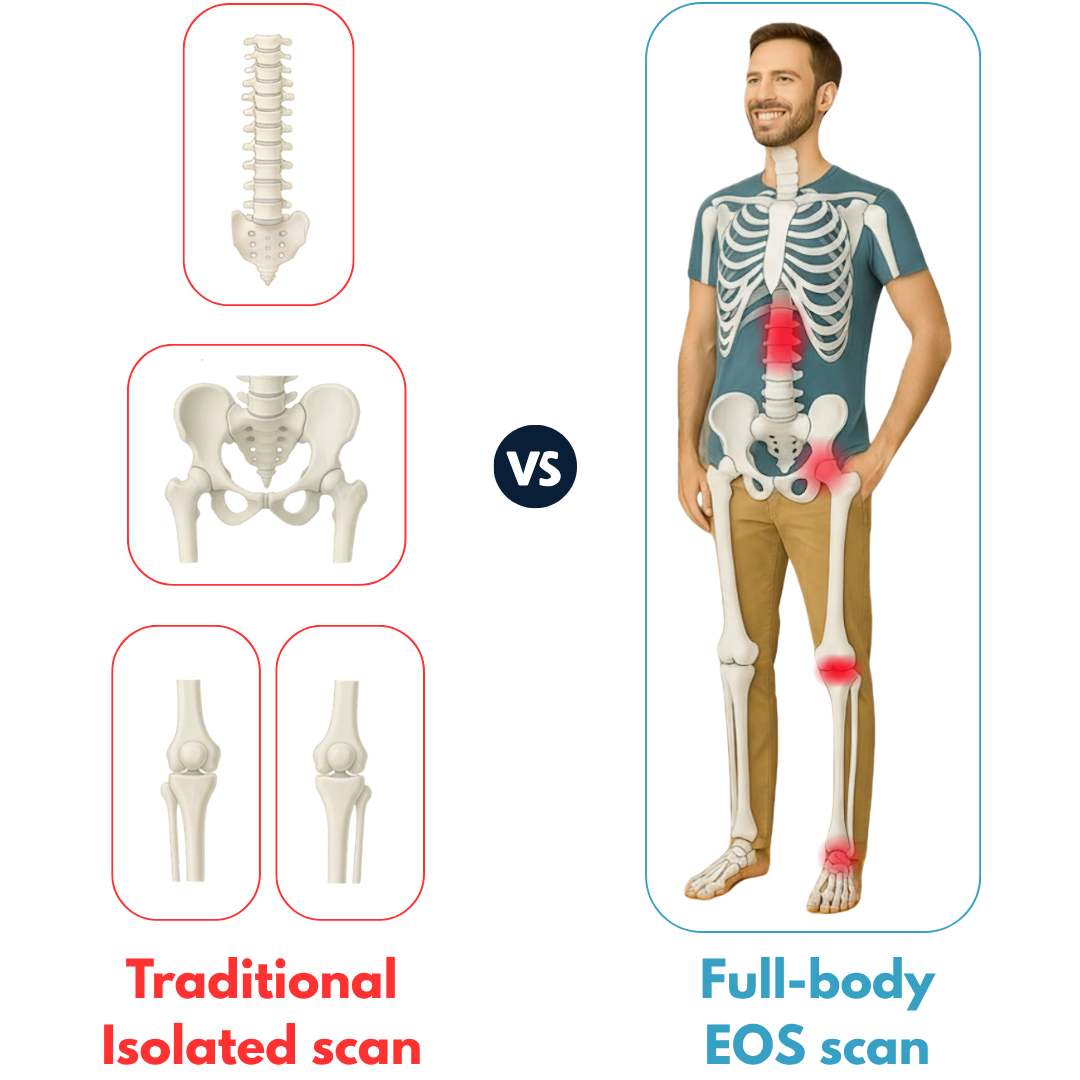
Your back pain may be in one place. The reason may not be. EOS Scan helps reveal what lying-down scans miss.
Why Lying Down Scans Miss the Cause of Real Issue
Lying down
Muscles are relaxed
Hiding the cause
Common scans like X-ray, MRI or CT are done lying down, without engaging
the muscles in order to reveal true alignment.
Standing
Muscles are engaged
Revealing the cause

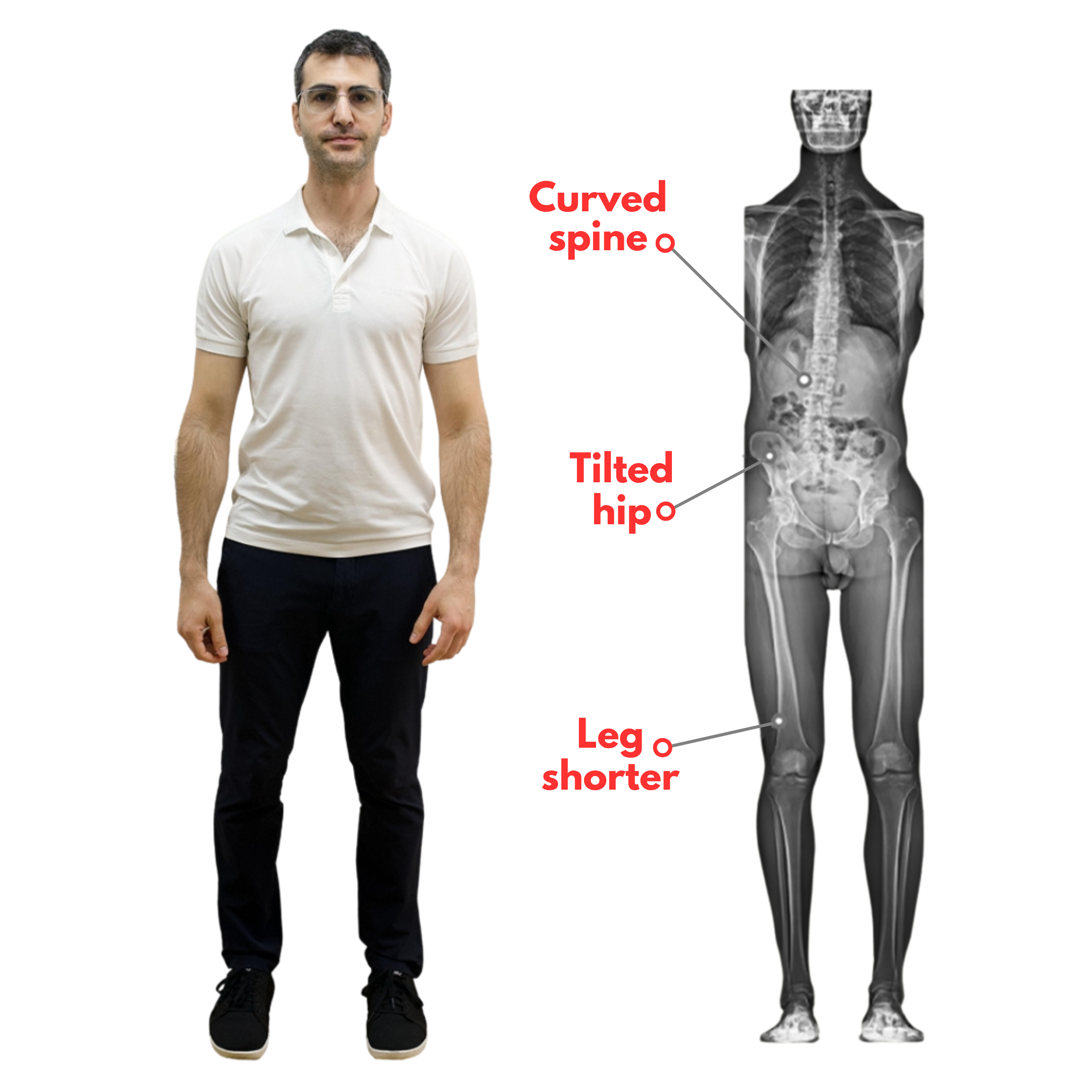
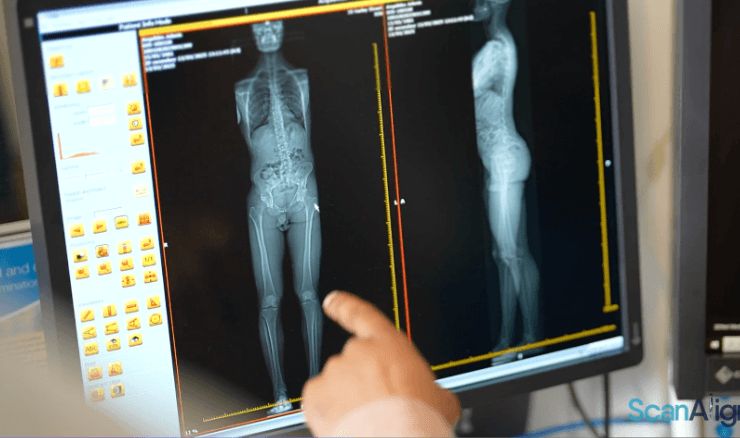
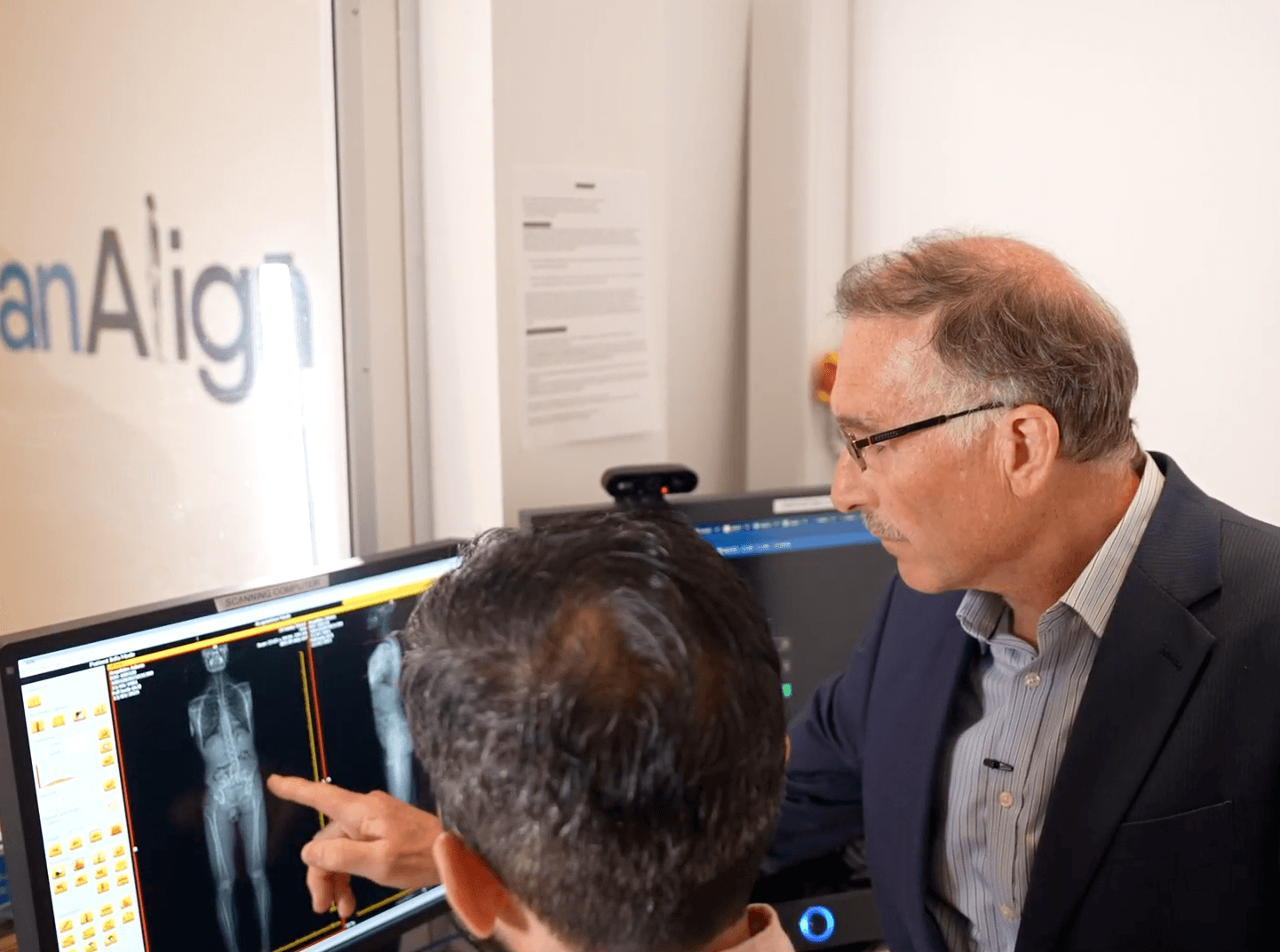
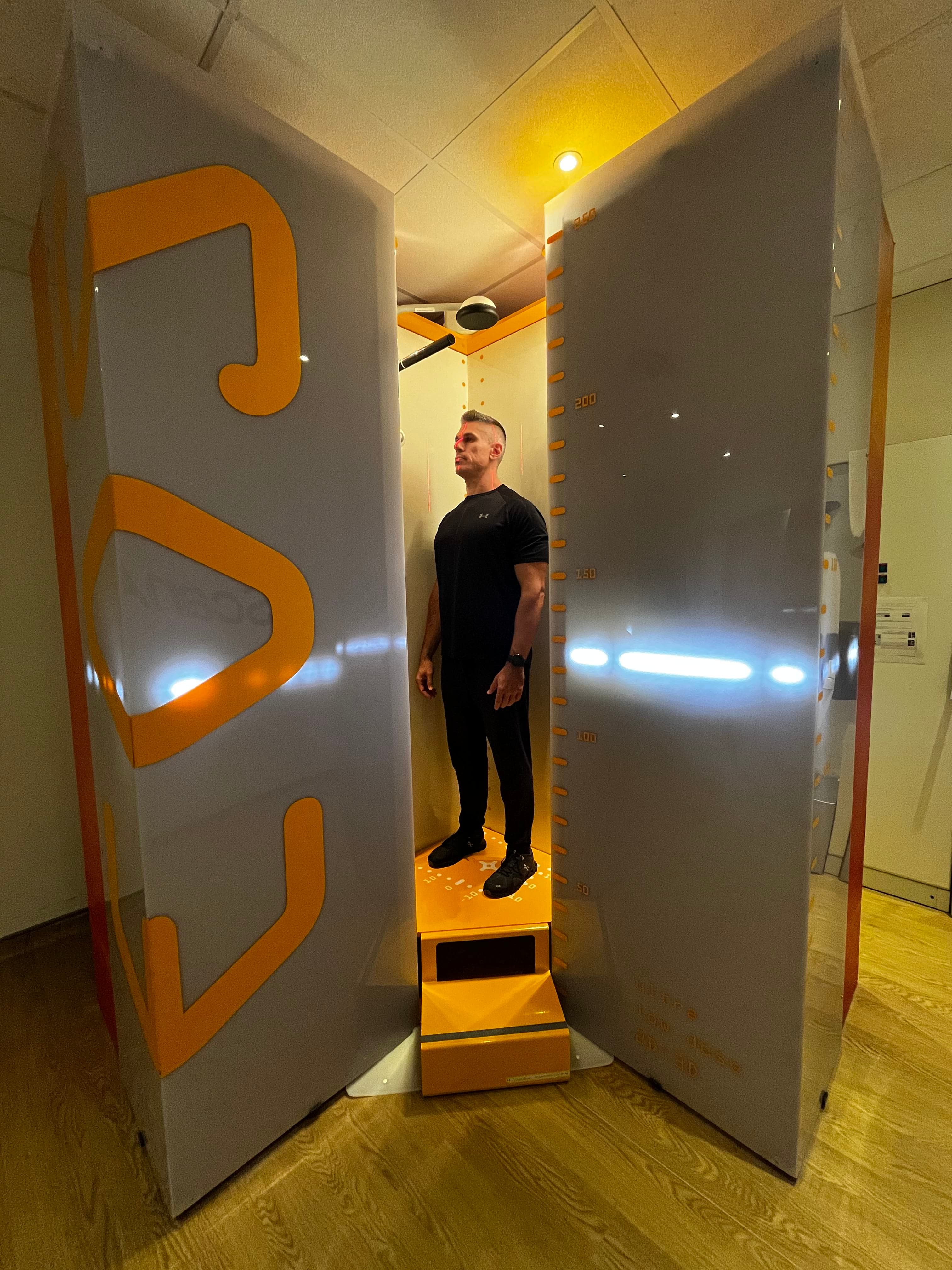
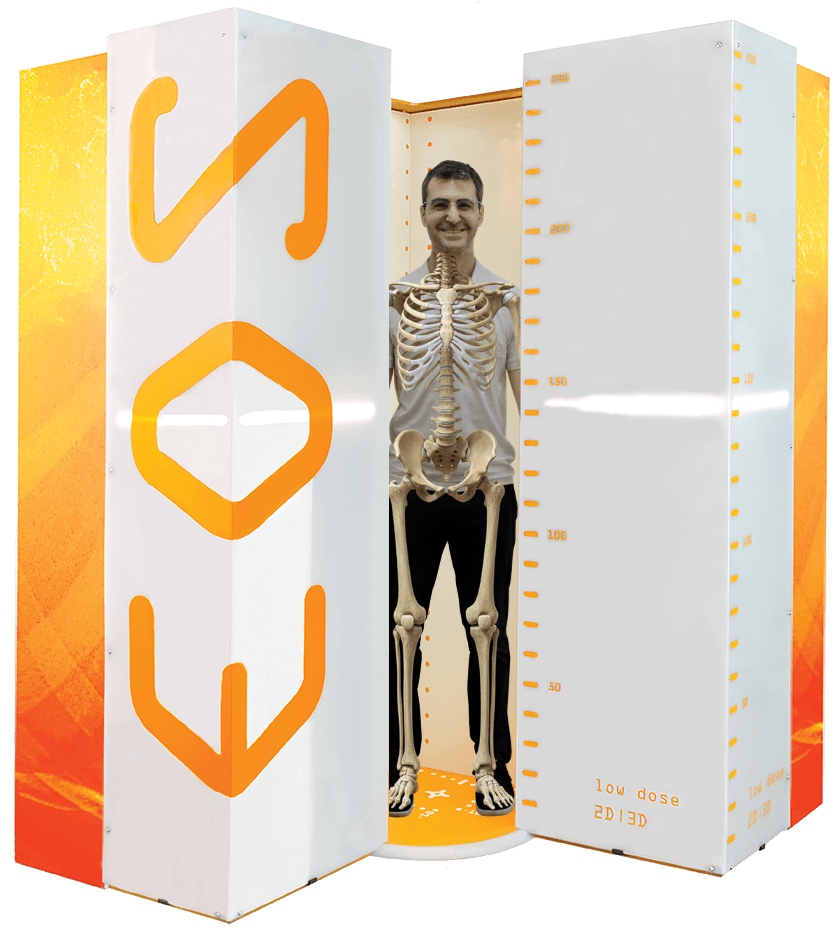
An EOS standing full-body scan shows posture with muscles engaged,
revealing true weight-bearing alignment.
Every Scan Tells a Story
Paul's Story
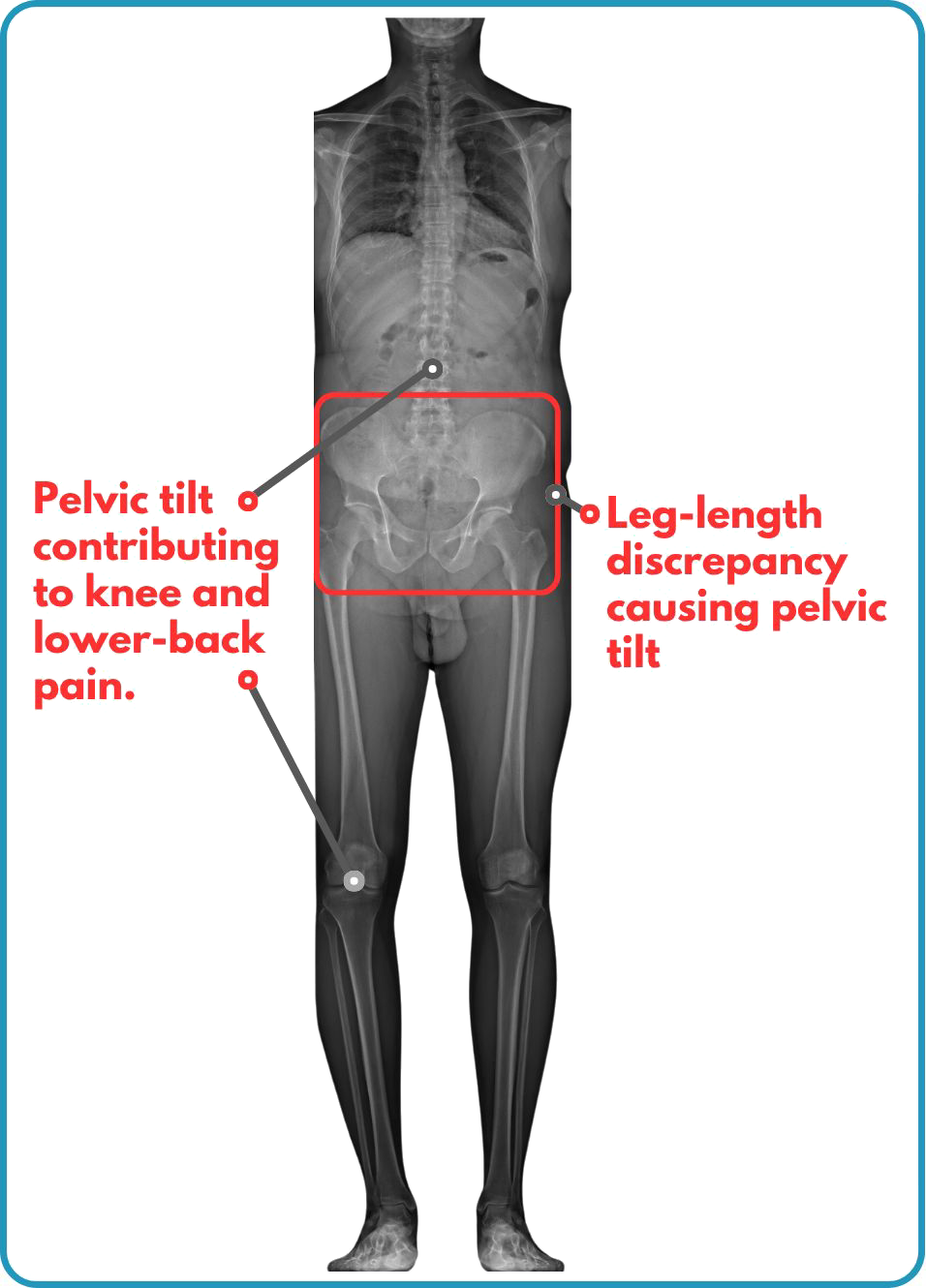
His pain:
Hip and knee pain
Discovered:
Leg length discrepancy causing pelvic tilt and compensatory strain across hips, knees, and spine.
Pathway shift:
From pain medication for presumed arthritis to correcting leg length discrepancy with insole and physiotherapy.
Sophie's Story
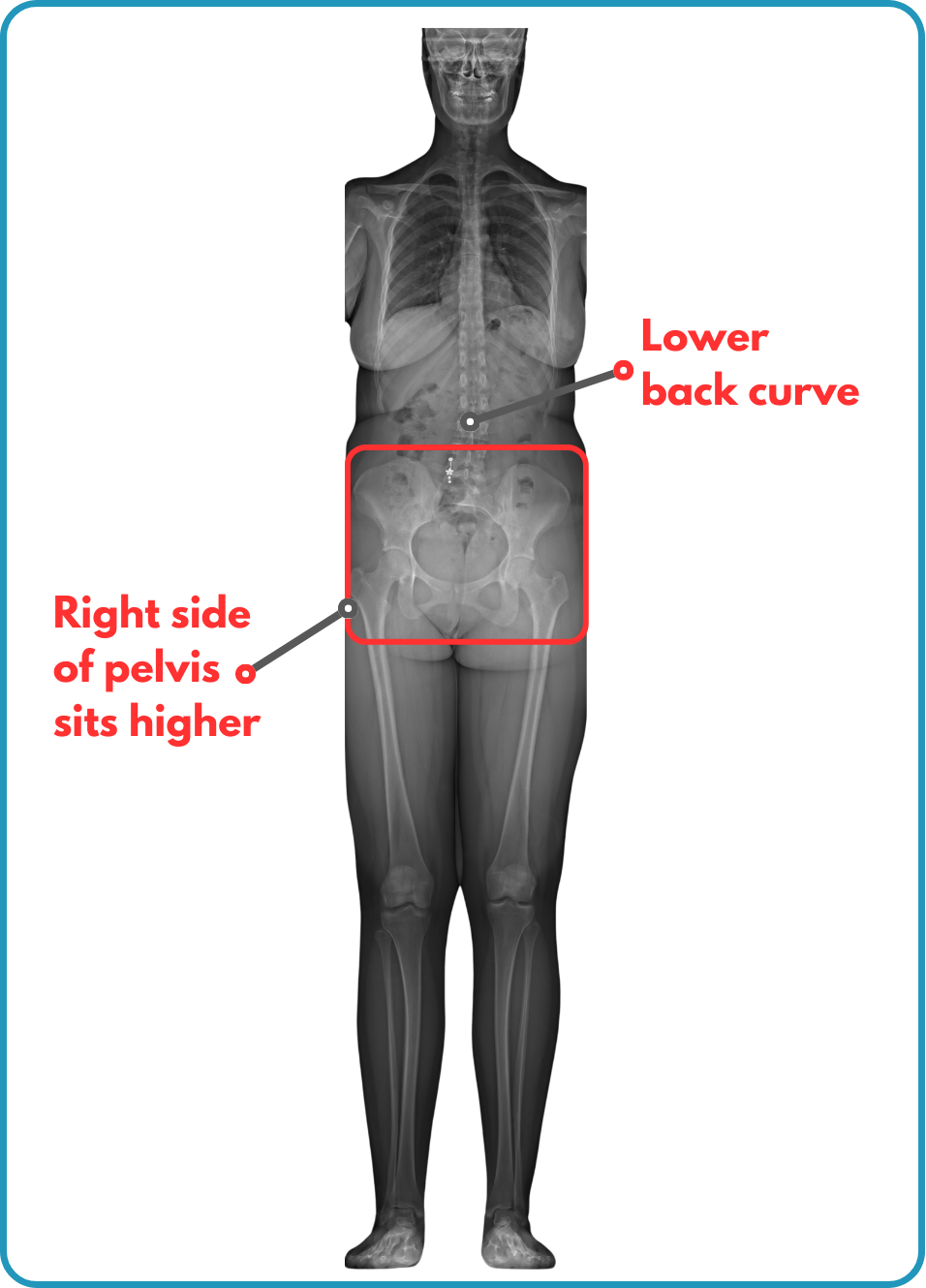
Her pain:
Multi-site pain (back, shoulder, neck)
Discovered:
Pelvic imbalance driving a compensatory spinal curve and linked overload across the body.
Pathway shift:
From treating isolated pain sites to addressing pelvic alignment and load transfer from the ground up with targeted support.
John's Story
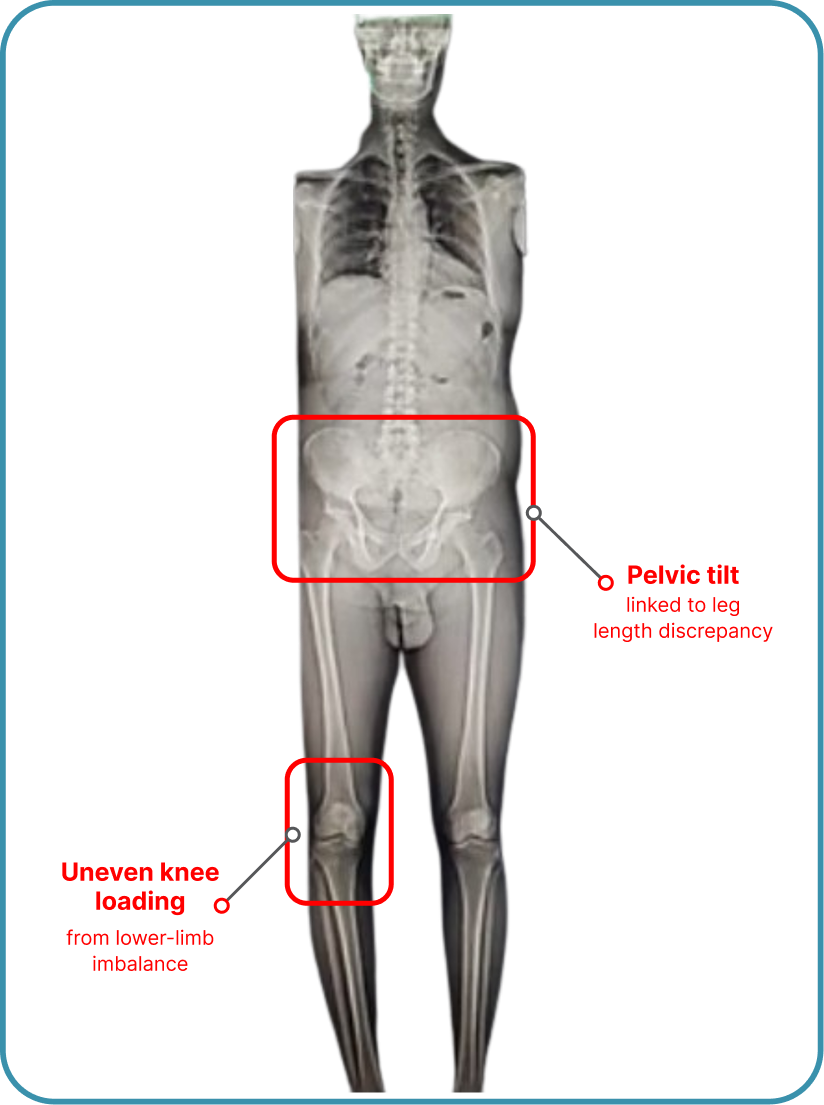
His pain:
Hip and knee pain
Discovered:
Leg length discrepancy causing pelvic tilt and compensatory strain across hips, knees and spine
Pathway shift:
From pain medication for presumed arthritis to correcting leg length discrepancy with insole and physiotherapy.
Gary's Story
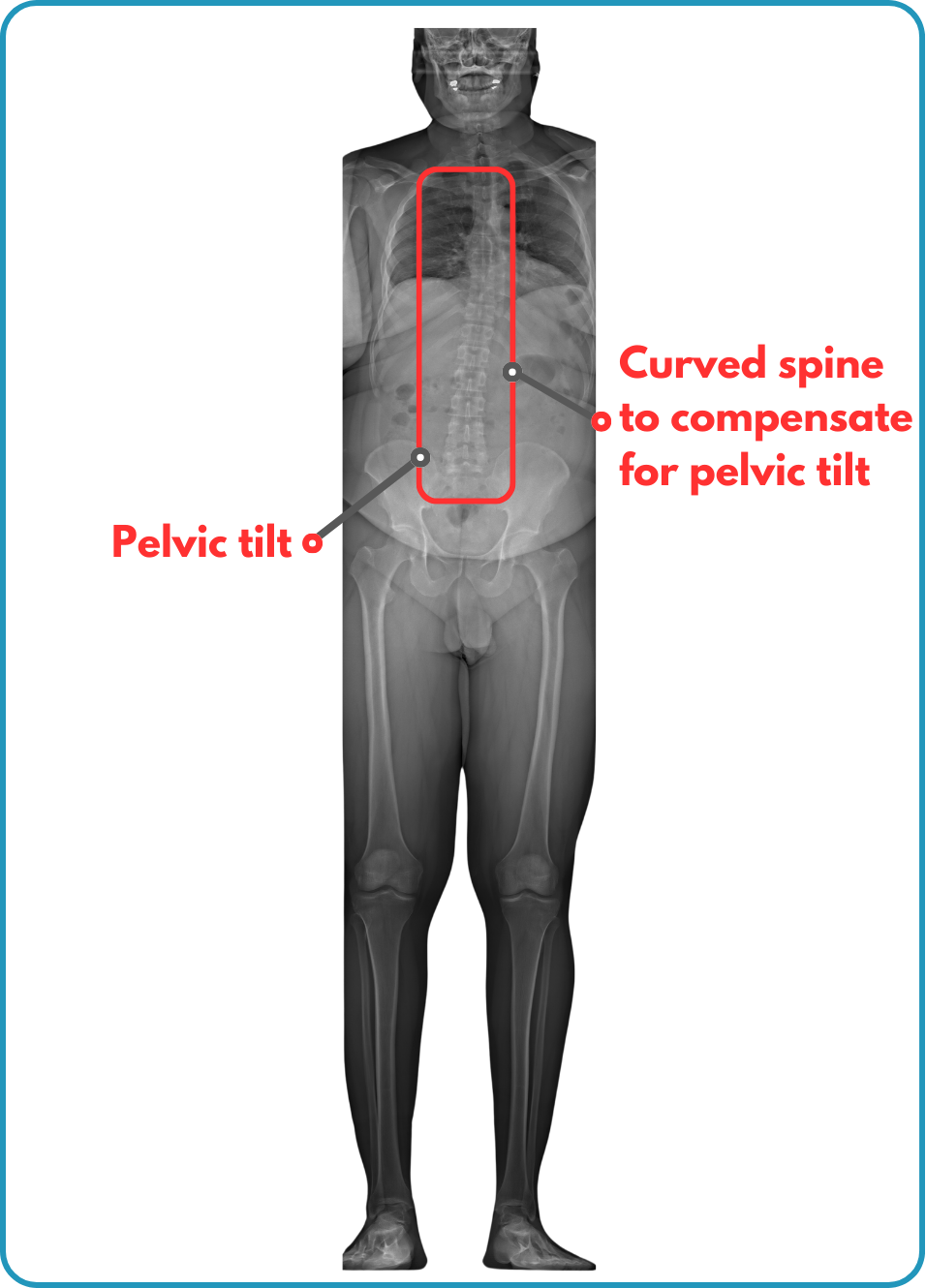
His pain:
Right-sided lower back pain
Discovered:
Pelvic tilt, forward posture, and flatter lower-back curve were linked and contributing to right-sided overload, explaining his sciatica and recurrent flare-ups.
Pathway shift:
Shifted from pain relief to correcting spinal mechanics, posture, and strength to prevent recurring nerve irritation.
Fiona's Story
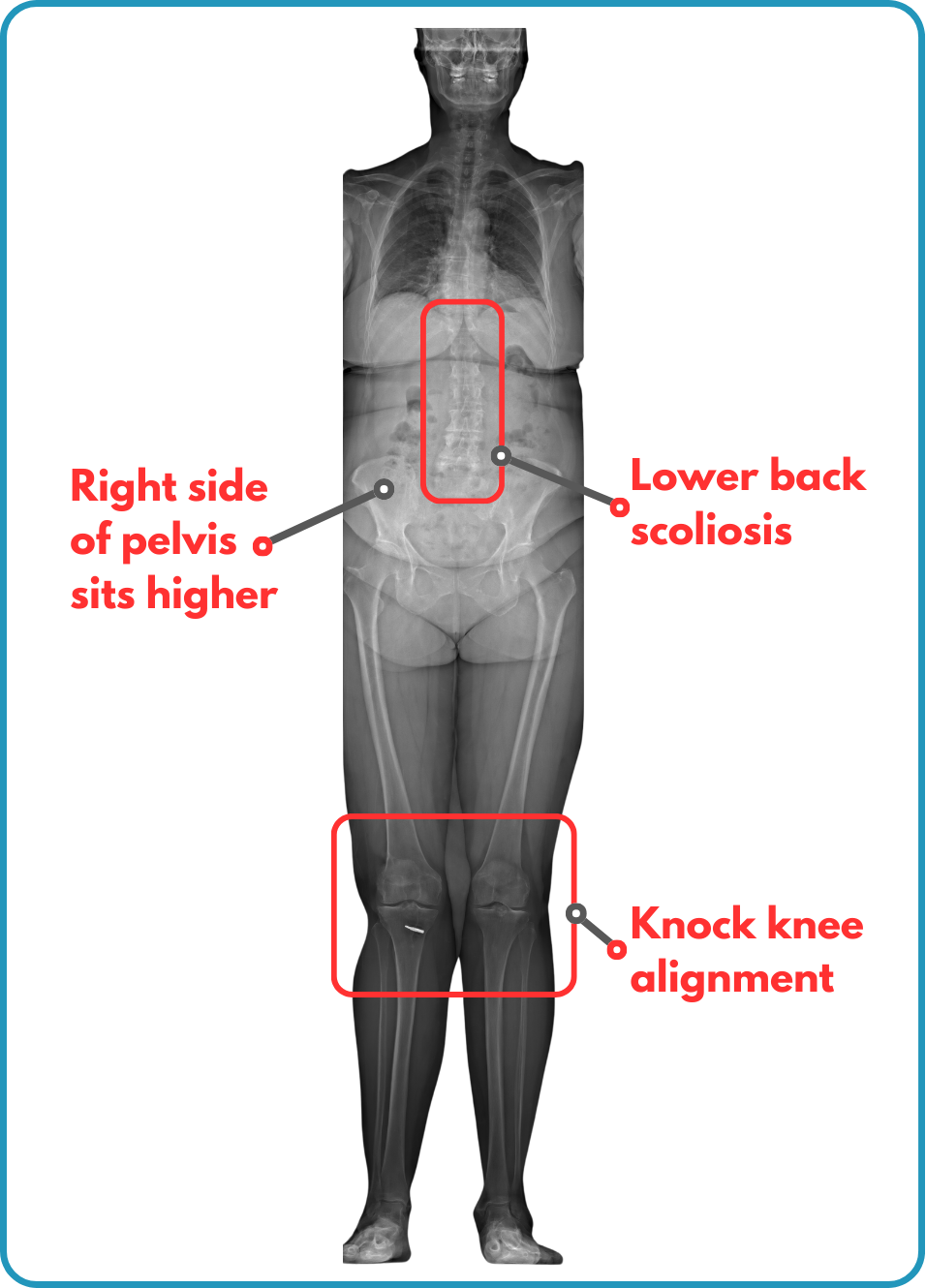
Her pain:
Back, shoulder & neck discomfort
Discovered:
EOS imaging system showed that her pelvic imbalance and compensatory spine curve were linked and contributing to overload.
Pathway shift:
Shifted from treating separate pains to restoring foot-to-pelvis load control with podiatry and physiotherapy to reduce compensations affecting the back, shoulder, and neck.
Modassir's Story
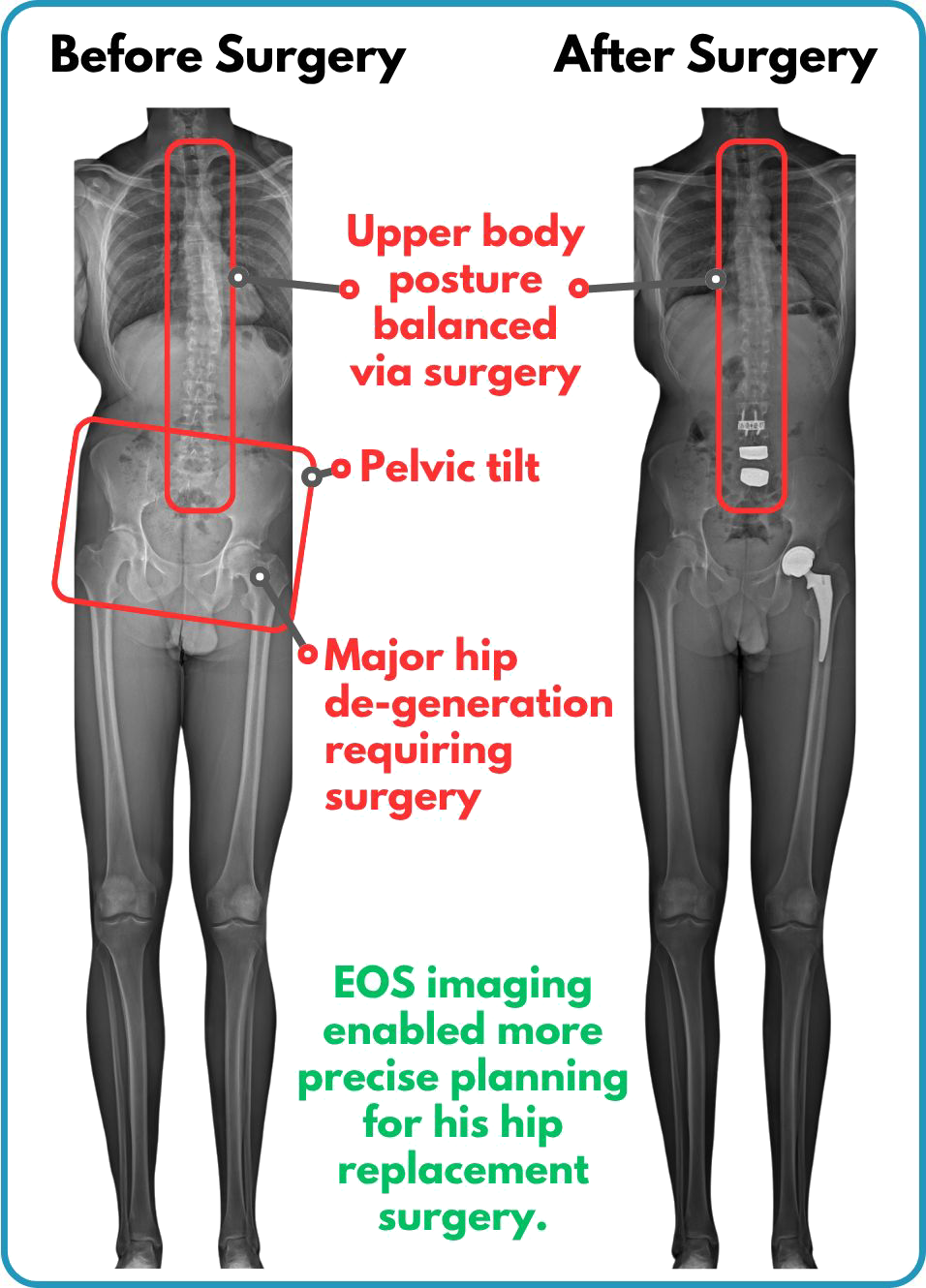
His pain:
Severe lower back and hip pain
Discovered:
An EOS scan revealed a broader mechanical issue linking hip degeneration, pelvic imbalance, and leg length discrepancy.
Pathway shift:
From an isolated hip diagnosis to a whole-body, alignment-focused treatment approach.
Paul's Story
His pain:
Hip and knee pain
Discovered:
Leg length discrepancy causing pelvic tilt and compensatory strain across hips, knees, and spine.
Pathway shift:
From pain medication for presumed arthritis to correcting leg length discrepancy with insole and physiotherapy.
Sophie's Story
Her pain:
Multi-site pain (back, shoulder, neck)
Discovered:
Pelvic imbalance driving a compensatory spinal curve and linked overload across the body.
Pathway shift:
From treating isolated pain sites to addressing pelvic alignment and load transfer from the ground up with targeted support.
John's Story
His pain:
Hip and knee pain
Discovered:
Leg length discrepancy causing pelvic tilt and compensatory strain across hips, knees and spine
Pathway shift:
From pain medication for presumed arthritis to correcting leg length discrepancy with insole and physiotherapy.
Gary's Story
His pain:
Right-sided lower back pain
Discovered:
Pelvic tilt, forward posture, and flatter lower-back curve were linked and contributing to right-sided overload, explaining his sciatica and recurrent flare-ups.
Pathway shift:
Shifted from pain relief to correcting spinal mechanics, posture, and strength to prevent recurring nerve irritation.
Fiona's Story
Her pain:
Back, shoulder & neck discomfort
Discovered:
EOS imaging system showed that her pelvic imbalance and compensatory spine curve were linked and contributing to overload.
Pathway shift:
Shifted from treating separate pains to restoring foot-to-pelvis load control with podiatry and physiotherapy to reduce compensations affecting the back, shoulder, and neck.
Modassir's Story
His pain:
Severe lower back and hip pain
Discovered:
An EOS scan revealed a broader mechanical issue linking hip degeneration, pelvic imbalance, and leg length discrepancy.
Pathway shift:
From an isolated hip diagnosis to a whole-body, alignment-focused treatment approach.
Hear it from the patients themselves
"People are often very surprised when they see the results of an EOS scan. They had no idea how much a postal malalignment can occur because it’s hidden by our normal body tissues."

Dr. Simon Blease
Senior Consultant Radiologist
The Harley Street Hospital, London
ScanAlign Specialist Editor
4 Detailed Assessments
Four detailed assessments from a single scan - giving you access to 30+ pages of unique results that cannot be gained by any other scanner in the world.
Postural Assessment
Key Insights: Spinal alignment | Pelvic positioning | Hip symmetry | Joint balance | Weight distribution
3D Spine Assessment
Key Insights: Spinal curvature | Rotation analysis | Scoliosis detection | Spinal alignment
3D Pelvic & Hip Assessment
Key Insights: Pelvic tilt | Hip rotation | Joint symmetry | Gait influence
3D Lower-Limb Assessments
Key Insights: Knee alignment | Foot posture | Leg length | Load distribution
How we compare
Why EOS is different
EOS imaging offers capabilities that no other standard diagnostic modality can match — particularly for musculoskeletal and spinal assessments.
| MRI | Standard X-Ray | EOS ScanOur service | |
|---|---|---|---|
| Taken standing | No | No | Yes |
| Full body in one image | No | No | Yes |
| 3D reconstruction | No | No | Yes |
| Radiation level | None | Moderate | Up to 90% less than X-ray |
| Captures weight-bearing alignment | No | No | Yes |