

What Is Fibromyalgia, and Why Do Scans Look Normal?
Fibromyalgia is a long-term condition that causes widespread pain, fatigue and heightened sensitivity throughout the body. Scans look normal because the problem is not in the bones, joints or soft tissues themselves. It is a disorder of pain processing in the nervous system, so X-rays, MRI and blood tests typically show no visible damage.
Key takeaways
- Fibromyalgia is real. It involves changes in how the brain and spinal cord process pain signals.
- No scan or blood test can confirm fibromyalgia. It is diagnosed clinically.
- Scans may still be useful to rule out other conditions that cause similar symptoms.
- Treatment usually combines graded activity, sleep support and pain management strategies.
- If you have sudden weakness, numbness or loss of bladder or bowel control, seek urgent medical attention.
If you have been living with pain that moves around your body, exhaustion that sleep does not fix, and scan results that come back "normal," you are not imagining it. Fibromyalgia affects how your nervous system interprets pain signals. The result is real, persistent pain, even though there is no structural damage for imaging to find.
This page explains what fibromyalgia is, why imaging looks normal, when scans might still be helpful, and what you can do next.
What are the main symptoms of fibromyalgia?
The hallmark symptom is widespread pain lasting three months or more, felt on both sides of the body and above and below the waist. But fibromyalgia rarely stops at pain alone.
Aching, burning or stabbing sensations that can shift from one area to another day by day.
Tiredness that persists even after a full night of sleep, often described as "bone-deep."
Difficulty falling asleep, frequent waking, or waking unrefreshed despite sleeping for hours.
Often called "fibro fog," this includes trouble concentrating, word-finding problems and forgetfulness.
Other common experiences include headaches, irritable bowel symptoms, heightened sensitivity to light, sound or temperature, and stiffness first thing in the morning. The combination of symptoms can vary enormously from person to person.
Why do scans and blood tests come back normal with fibromyalgia?
Because there is nothing structurally wrong. Fibromyalgia is not caused by damaged joints, inflamed tissue or broken bones. It is a disorder of central sensitisation, which means the brain and spinal cord amplify pain signals, turning sensations that should feel mild into something much more intense.
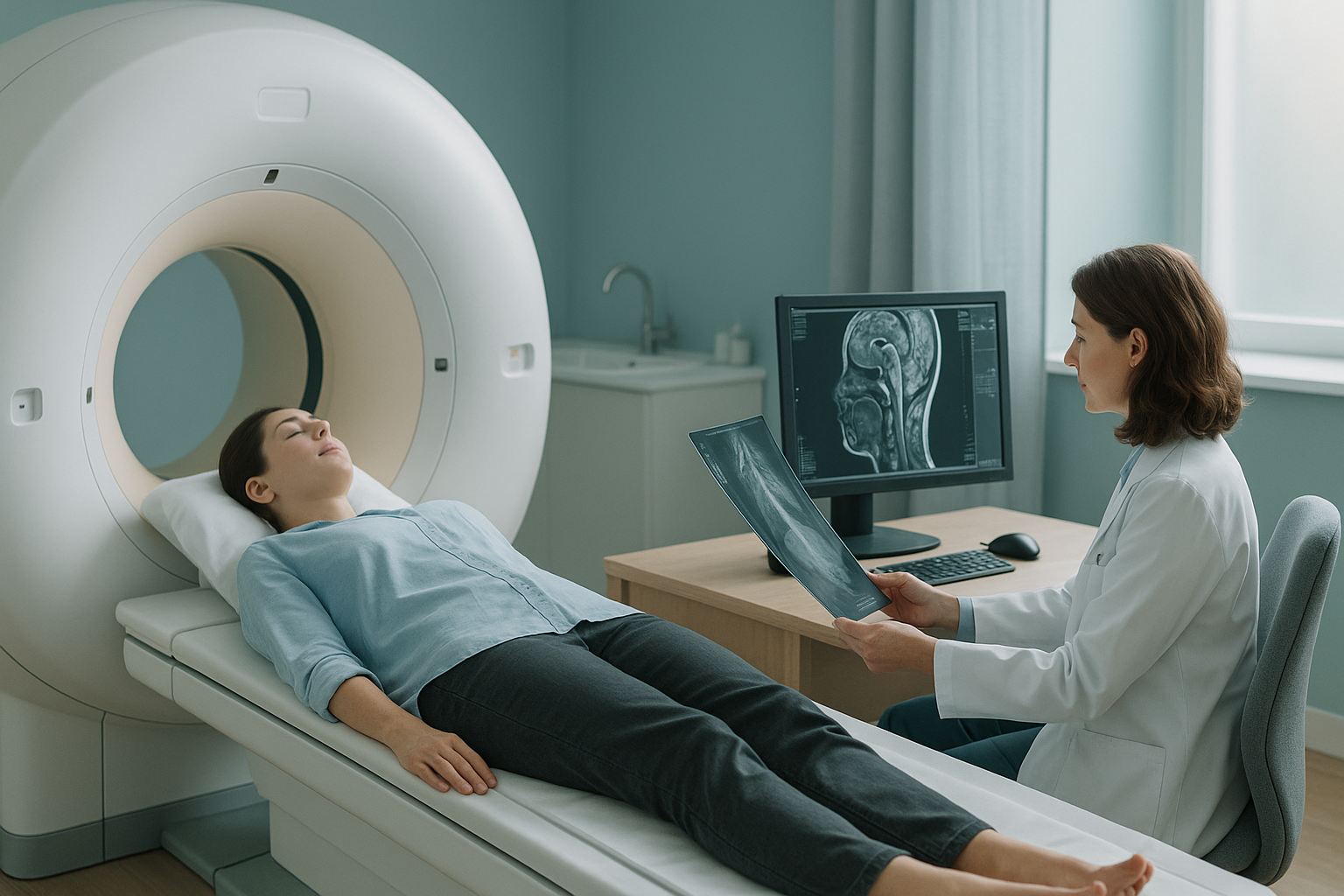
Think of it like a volume dial. In most people, a gentle touch registers as gentle. In fibromyalgia, the nervous system turns that dial up, so the same touch may register as painful. Because X-rays, CT and MRI are designed to photograph structures like bones, discs and ligaments, they simply cannot see this change in signal processing.
That does not mean scans are useless. They can be very important for ruling out other conditions that mimic fibromyalgia, such as inflammatory arthritis, spinal problems or thyroid disorders.
How is fibromyalgia diagnosed?
Fibromyalgia is diagnosed clinically, meaning a doctor reaches the diagnosis based on your symptoms, your history and by excluding other explanations. There is no single test that confirms it.
A GP or rheumatologist will typically:
- Ask about the pattern, duration and location of your pain.
- Discuss fatigue, sleep quality and cognitive difficulties.
- Run blood tests to rule out conditions like rheumatoid arthritis, lupus or an underactive thyroid.
- Possibly request imaging to check for joint or spinal problems that could explain your symptoms.
Fibromyalgia is sometimes described as a "diagnosis of exclusion." That can be frustrating, because it may mean months of tests before you get a clear answer. But validation matters. Knowing that your pain has a recognised medical explanation is an important first step. If you are unsure whether your symptoms warrant further investigation, read more about when to see a specialist.
Can fibromyalgia exist alongside other painful conditions?
Yes, and this is common. Fibromyalgia often coexists with conditions that do show up on imaging, such as osteoarthritis, disc problems, scoliosis or joint hypermobility. When these overlap, it can be difficult to know which condition is driving the pain.
This is one situation where imaging may play a useful supporting role. Not to diagnose fibromyalgia itself, but to identify or rule out a structural problem that could be treated separately. For example, if you have fibromyalgia and also experience localised back pain, imaging might reveal a disc issue or alignment concern that a physiotherapist or surgeon could address, even though the fibromyalgia itself requires a different approach. You can read more about this on our back pain clinic page.
A note on imaging. No scan diagnoses fibromyalgia. EOS imaging shows bones, joints and alignment. For soft tissue, discs or nerves, MRI is usually the better tool. If your doctor suspects a coexisting structural problem, they will recommend the most appropriate type of scan for your situation.
What helps with fibromyalgia symptoms?
There is no cure for fibromyalgia, but many people find their symptoms improve significantly with the right combination of strategies. Management is usually guided by a GP, rheumatologist or pain management specialist.
Gentle, gradually increasing movement. Physiotherapy, walking or swimming can reduce pain sensitivity over time.
Improving sleep quality can reduce fatigue and lower pain levels. Consistent routines and environment changes help.
This may include medication, cognitive behavioural therapy (CBT), mindfulness or a pain management programme.
The NHS, the British Society for Rheumatology and patient organisations like Fibromyalgia Action UK all recommend a multidisciplinary approach. This means combining physical activity, psychological support and medication where appropriate, rather than relying on any single treatment.
When should you seek urgent help?
If you experience sudden numbness or weakness in your arms or legs, loss of bladder or bowel control, or unexplained severe symptoms that come on rapidly, seek urgent medical attention. Contact your GP, call 111, or go to A&E. These symptoms are not typical of fibromyalgia and need to be assessed quickly to rule out other causes.
If you have fibromyalgia alongside back, hip or knee pain and you are wondering whether a structural problem could be contributing, you can speak to us about whether imaging would help. We will always be honest if a scan is not the right next step for you.
Frequently asked questions about fibromyalgia
Yes. Fibromyalgia is recognised by the NHS, the World Health Organisation and rheumatology bodies worldwide. Research shows measurable changes in how the nervous system processes pain signals, even though these changes do not appear on standard imaging.
MRI and X-ray are designed to photograph structures like bones, discs and soft tissues. Fibromyalgia involves abnormal pain processing in the nervous system, which these scans cannot visualise. Scans are still useful for ruling out other conditions.
There is no specific blood test for fibromyalgia. Doctors typically check inflammatory markers, thyroid function and autoimmune antibodies to rule out other conditions that cause similar symptoms.
Yes. Back pain is one of the most common complaints in people with fibromyalgia. It can also coexist with structural back problems, making it important to work with a clinician who can distinguish between the two.
Fibromyalgia is a long-term condition. Symptoms can fluctuate, with flare-ups and calmer periods. Many people find that with the right management, their symptoms become more manageable over time.
Your GP is usually the first point of contact. They may refer you to a rheumatologist for confirmation, or to a pain management specialist or physiotherapist for ongoing support.
It can feel that way at first, but graded, gentle exercise is one of the most effective strategies. Starting slowly and building up gradually helps recalibrate the nervous system's pain response over time.
Yes, and the overlap is common. When fibromyalgia coexists with a structural condition, both need to be addressed. Imaging can help identify the structural component, while fibromyalgia is managed with pain strategies and activity.
There is no cure at present. However, a combination of graded activity, good sleep habits, psychological support and, where appropriate, medication can significantly improve quality of life for many people.
An EOS scan cannot diagnose fibromyalgia. It may be helpful if your doctor suspects a coexisting structural or alignment problem contributing to your symptoms. If you are unsure, ScanAlign offers a free video consultation to discuss whether imaging is appropriate for you.
Not sure if imaging is right for you?
If you have fibromyalgia alongside joint or back pain, a short conversation can help you work out the best next step. There is no obligation and no pressure.
Book a free video consultationSources
- NHS. Fibromyalgia. nhs.uk/conditions/fibromyalgia (accessed 2024).
- Clauw DJ. Fibromyalgia: a clinical review. JAMA. 2014;311(15):1547-1555.
- Macfarlane GJ et al. EULAR revised recommendations for the management of fibromyalgia. Annals of the Rheumatic Diseases. 2017;76(2):318-328.
Written by Abbas Dhami (Specialist Diagnostic Radiographer).
This page is general information and not a diagnosis.
ScanAlign is the trading name of CoreMed Solutions Ltd and operates under The Harley Street Hospital's CQC licence.