
What Does a Full Body Scan in London Actually Include?
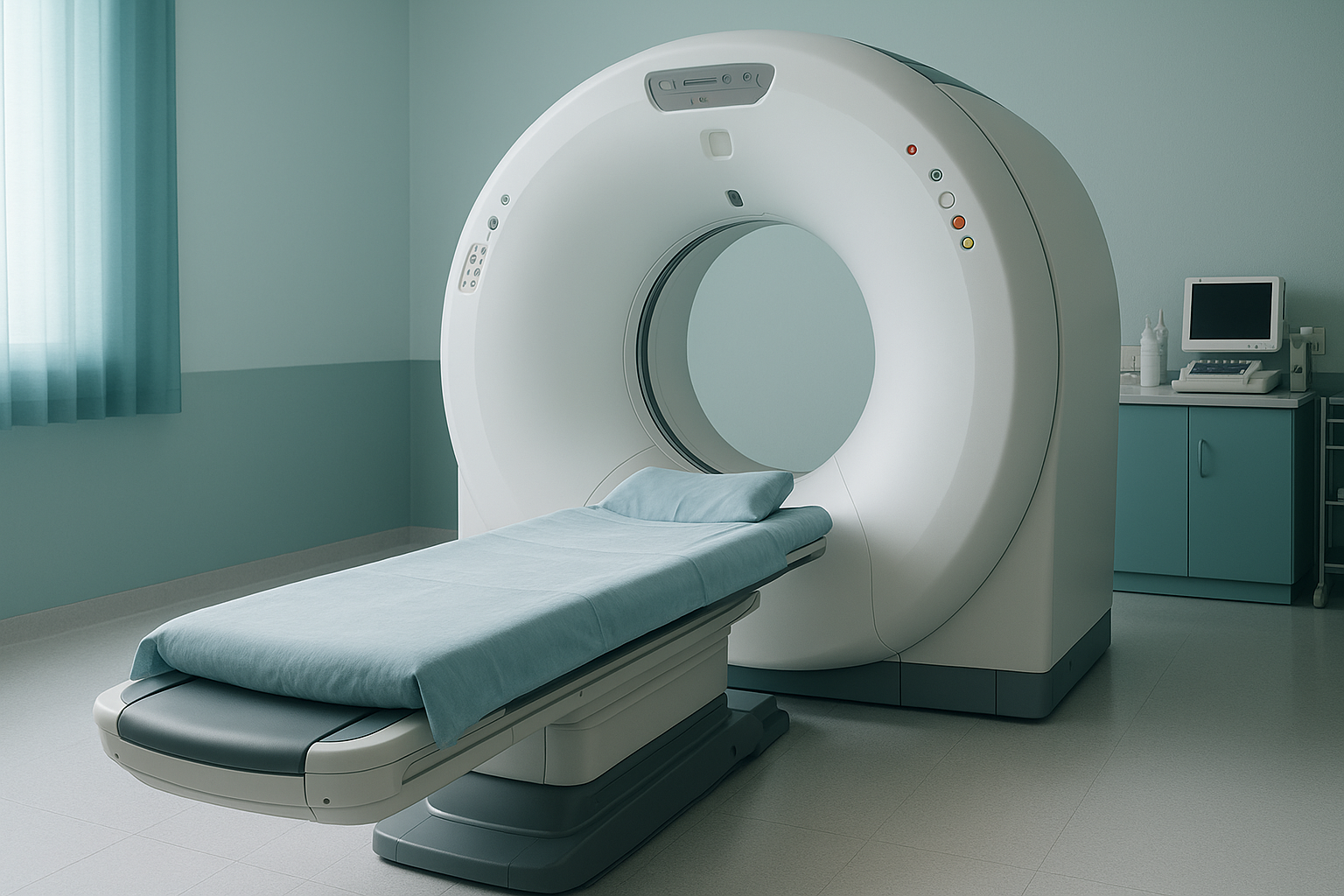
A "full body scan" in London can mean very different things. Whole-body MRI looks at organs and soft tissue. CT scanning produces cross-sections of the entire body. A standing EOS alignment scan images your skeleton from head to feet while you bear weight, showing how your bones, joints and posture work together in the real world. Each type answers a different clinical question.
Key takeaways
- "Full body scan" is a broad term. The right scan depends on your clinical question.
- Whole-body MRI and CT focus on organs and soft tissue. EOS focuses on skeletal alignment under weight.
- Standing imaging reveals postural and alignment problems that lying-down scans can miss.
- ScanAlign provides whole-body standing skeletal imaging, not general health screening.
- A free video consultation helps you check whether our scan suits you.
What are the different types of full body scan available in London?
London clinics offer several scans that use the label "full body," but they differ in what they image, how they do it, and what questions they answer. Here are the main types.
Uses magnetic fields to image organs, soft tissue, discs and nerves from head to toe. Often marketed as a "health MOT" or cancer screening tool. No radiation. Can take 45 to 90 minutes lying inside a tunnel.
Uses X-rays to produce detailed cross-sections of the body. Good at finding structural abnormalities in organs, blood vessels and bones. Involves a higher radiation dose. You lie down for the scan.
Images the entire skeleton from head to feet while you stand. Shows bone structure, joint angles and whole-body alignment under your real body weight. Uses about 90% less radiation than a standard X-ray, around ten times less.
Why does it matter whether a full body scan is done standing or lying down?
It matters because your body behaves differently in each position. When you lie down for an MRI or CT, gravity is no longer acting through your spine and joints. Your muscles relax. Your curves flatten slightly. Small misalignments can settle back into place and disappear from the image.
When you stand, gravity loads every joint from your ankles to your skull. Your skeleton takes on its true working shape. Problems that only appear under weight, like a leg-length difference, a pelvic tilt, or a subtle spinal curve, become visible.
Your body is a connected chain. A problem at the hip can make the spine compensate, and that compensation may show up as pain in the shoulder or neck. A single-area scan of the painful spot often misses the real cause. A standing whole-body image captures the full picture in one view.
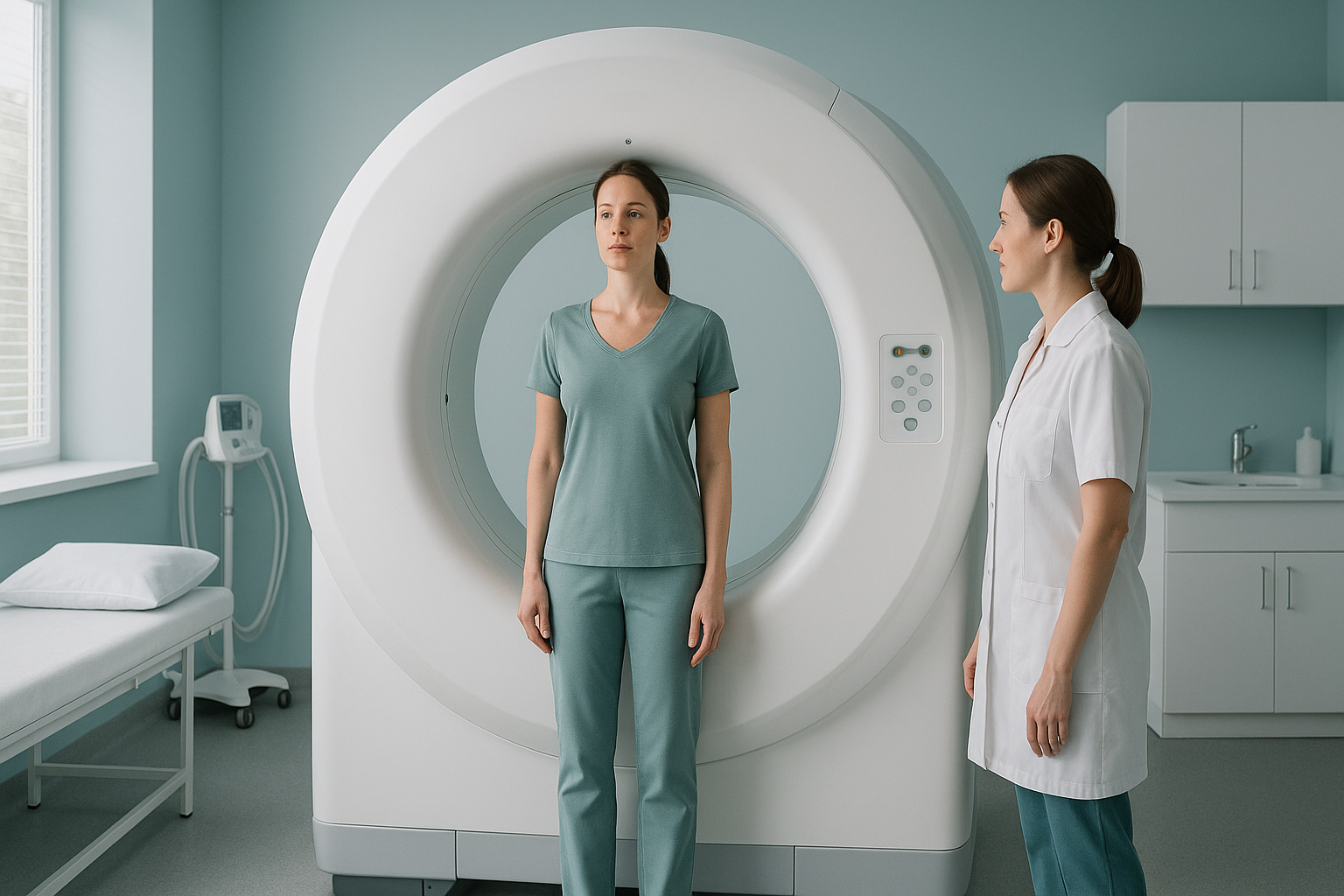
MRI and CT are performed while you lie flat. This is ideal for imaging organs, soft tissue, discs and nerves. But for musculoskeletal alignment, the lying position means gravity is not loading your joints. Subtle tilts, rotations and compensations can disappear.
An EOS scan captures your whole skeleton while you stand naturally. Every joint is loaded by your own body weight. The image shows your real-world alignment from head to feet in a single exposure. This is what orthopaedic and spinal specialists need to plan treatment accurately.
How do full body MRI, CT and EOS scans compare?
Each scan type answers a different question. The table below summarises the key differences so you can work out which is most relevant to your situation.
| Feature | Whole-body MRI | Whole-body CT | Standing EOS |
|---|---|---|---|
| Best for | Organs, soft tissue, discs, nerves | Organs, blood vessels, bone detail | Skeletal alignment, posture, joint angles |
| Position | Lying down | Lying down | Standing upright |
| Radiation | None | Higher dose | About 90% less than a standard X-ray |
| Shows weight-bearing alignment | No | No | Yes |
| Shows soft tissue and organs | Yes | Yes | No |
| Typical duration | 45 to 90 minutes | 10 to 20 minutes | Under one minute of scanning |
When MRI is the better choice: EOS shows bones, joints and alignment. For soft tissue, discs or nerves, MRI is usually the better tool. If your concern is organ health, a suspected disc problem or nerve compression, ask your doctor about MRI. If your concern is posture, alignment or an ongoing bone or joint problem, a standing EOS scan may be more informative.
Is a standing whole-body scan right for me?
A standing EOS scan is designed for people with musculoskeletal problems where alignment matters. It is not a general health screen. Here is a quick guide.
- Long-standing back, hip or knee pain not fully explained
- Suspected pelvic tilt or leg-length difference
- Scoliosis monitoring or assessment
- Pre-surgical alignment planning (spine, hip, knee)
- Posture problems affecting daily life
- General health check or cancer screening
- Disc or nerve problems (MRI is usually better)
- Organ imaging or blood work
- Acute injuries or fractures needing A&E
Not sure? You can see who our scan is suitable for, or book a free video consultation and we will tell you honestly if it is the right option.
What happens if I book a standing whole-body scan at ScanAlign?
The process is straightforward. You do not need a GP referral. Here is what to expect.
A short call to discuss your symptoms and confirm the scan is appropriate. If it is not, we will say so and suggest a better option.
You attend our clinic in central London. The EOS scan itself takes under a minute. You stand naturally while the system captures your full skeleton in one pass.
A specialist radiographer analyses your images and produces a detailed alignment report. Learn more about how EOS scan results are reported.
You take your report and images to your physiotherapist, osteopath, or consultant. The data helps them plan treatment with the full picture of your alignment.
Learn more about our EOS scan service and what it covers.
When should I seek urgent help instead of booking a scan?
If you are experiencing sudden severe pain, numbness or weakness in your legs, or any loss of bladder or bowel control, do not wait for an imaging appointment. Contact your GP, call 111, or go to A&E straight away. These symptoms may need urgent medical attention.
Frequently asked questions about full body scans in London
It depends on the type. A whole-body MRI shows organs, soft tissue and nerves. A CT shows cross-sections of organs and bones. A standing EOS scan shows your entire skeleton and how every joint aligns under your body weight.
No. ScanAlign provides standing skeletal alignment imaging only. We do not offer cancer screening, blood tests, organ imaging or "executive health checks." If you need those services, a clinic specialising in whole-body MRI screening would be more appropriate.
At ScanAlign, no. You can self-refer. We begin with a free video consultation to make sure the scan is clinically appropriate for you.
An EOS scan uses about 90% less radiation than a standard X-ray, around ten times less. This makes it one of the lowest-dose skeletal imaging options available.
They answer different questions. EOS shows bones, joints and alignment under weight. MRI is better for soft tissue, discs and nerves. In many cases people benefit from both, each giving different information.
The EOS scan itself takes under a minute. Your total appointment, including positioning, is a short visit.
ScanAlign is at 19 Harley Street, London, within The Harley Street Hospital. It is close to Oxford Circus and Regent's Park underground stations.
CT produces detailed cross-section images while you lie down, using a higher radiation dose. EOS captures your entire skeleton while you stand, with much less radiation, and focuses on how your bones and joints align under weight.
Costs vary widely depending on the type of scan and the clinic. ScanAlign is a private, self-pay service. For our current pricing, please see our FAQ page or book a free video consultation.
You receive a detailed alignment report covering your full skeleton. You can share this with your consultant, physiotherapist or osteopath to help guide treatment decisions.
Not sure which type of scan you need?
A free, no-obligation video consultation will help you understand whether a standing alignment scan is the right next step, or whether a different type of imaging would suit you better.
Book a free video consultationSources
- Deschênes, S. et al. (2010). "Diagnostic imaging of spinal deformities: Reducing patients' radiation dose with a new slot-scanning X-ray imager." Spine, 35(9), pp. 989-994. PubMed.
- NHS. "X-ray." NHS website. Available at: nhs.uk/conditions/x-ray.
- Melhem, E. et al. (2016). "EOS biplanar X-ray imaging: concept, developments, benefits, and limitations." Journal of Children's Orthopaedics, 10(1), pp. 1-14.
Written by Abbas Dhami (Specialist Diagnostic Radiographer)
This page is general information and not a diagnosis.
ScanAlign is the trading name of CoreMed Solutions Ltd and operates under The Harley Street Hospital's CQC licence.