
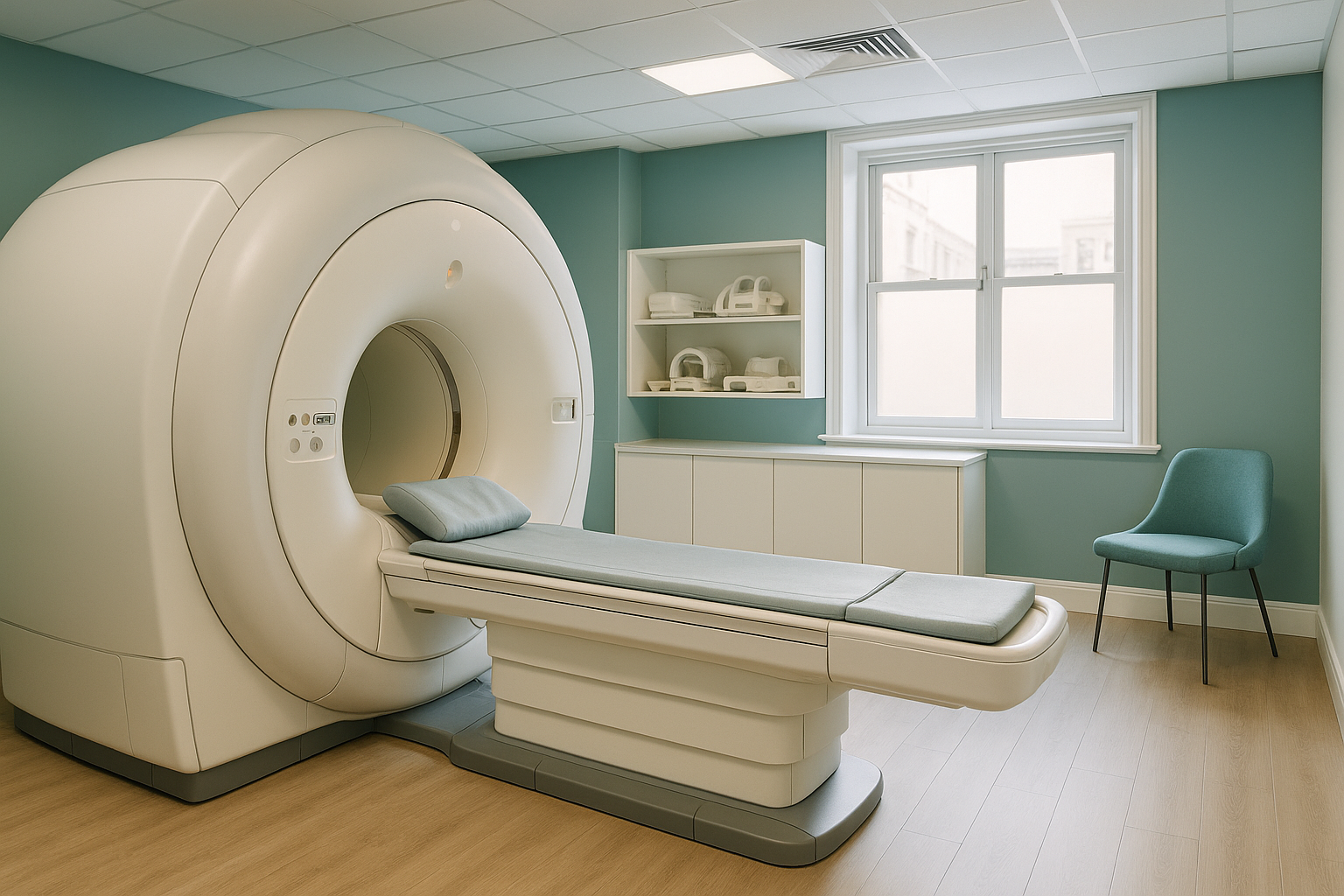
What Should You Expect From a Harley Street Imaging Clinic?
You should expect CQC-regulated clinical governance, specialist radiographers, clear reporting, and imaging technology suited to your problem. At ScanAlign at 19 Harley Street, that means standing whole-body EOS imaging that captures your skeleton under load, so alignment problems are visible rather than hidden.
Key Takeaways
- Harley Street imaging clinics should be CQC-registered and staffed by qualified specialists.
- ScanAlign operates under The Harley Street Hospital's CQC licence at 19 Harley Street.
- Standing EOS imaging reveals alignment issues that lying-down scans can miss.
- You can self-refer. No GP letter is needed.
- EOS uses about 90% less radiation than a standard X-ray, around ten times less.
London's Harley Street medical district is home to dozens of private imaging clinics. That choice is a good thing, but it also means standards vary. Some clinics offer fast general X-rays and ultrasound. Others focus on MRI. A few provide specialist imaging you will not easily find elsewhere.
This page explains what to look for in any private imaging clinic on Harley Street, and what makes a standing whole-body alignment scan different from the imaging you may have already had.
What clinical standards should a Harley Street imaging clinic meet?
Every legitimate imaging clinic in England must be registered with the Care Quality Commission (CQC), which inspects safety, staffing, and clinical governance. Harley Street is not exempt from this. Before booking anywhere, you can check a clinic's CQC status on the public register.
ScanAlign operates under The Harley Street Hospital's CQC licence. Your scan is performed by a specialist diagnostic radiographer and reported by a consultant radiologist. You can learn more about ScanAlign and the team behind the clinic.
Why does standing imaging matter for back, hip and knee problems?
Standing imaging matters because your skeleton behaves differently under your own body weight than it does when you are lying flat. Most imaging, including standard X-ray, CT and MRI, is done with you lying down. That position relaxes your muscles and lets your joints settle, which can mask the alignment problems that cause pain when you are upright.
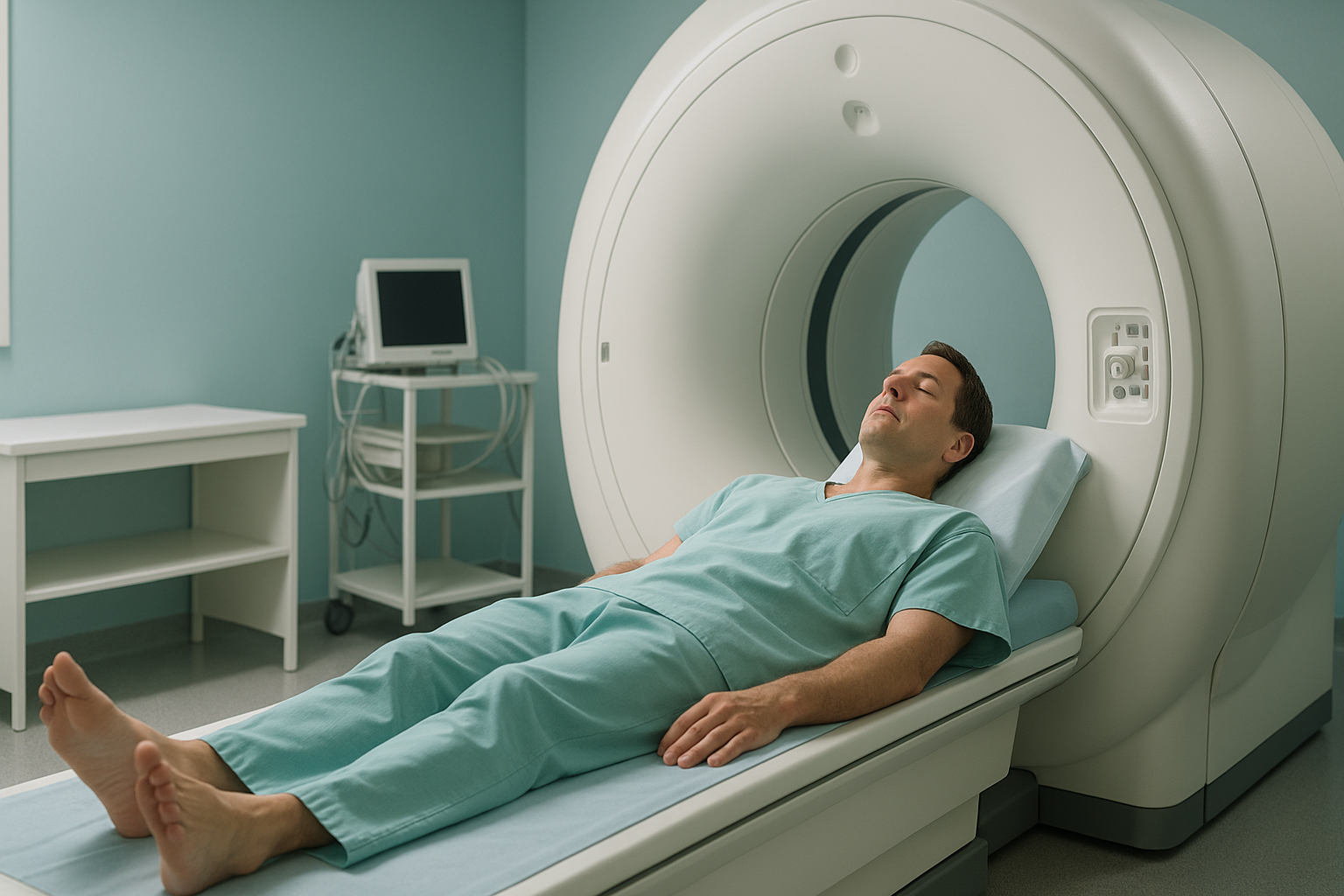
Your body is a connected chain from your feet to your head. A tilted pelvis can shift the way your spine curves. A leg-length difference can change how your knee tracks. Pain often shows up in a different area from the one causing the problem. That is why imaging one joint in isolation can miss the bigger picture.
EOS captures your full skeleton, from head to feet, in a single standing image with about 90% less radiation than a standard X-ray, around ten times less. This lets a specialist see how every joint lines up together, under load, in your natural posture. Find out what to expect at an alignment assessment.
A note on MRI. EOS shows bones, joints and alignment. For soft tissue, discs or nerves, MRI is usually the better tool. The right scan depends on the question being asked. A good clinic will be honest about which imaging best suits your situation.
What does a visit to 19 Harley Street look like?
A visit to ScanAlign starts before you arrive. Here is how the process works, step by step.
You speak with a specialist radiographer on video to explain your symptoms and history. This confirms whether a standing alignment scan is the right next step for you.
The clinic is in the W1 postcode, a short walk from Oxford Circus and Regent's Park stations. The building is step-free accessible.
You stand naturally inside the scanner. The scan takes under a minute. There is no tunnel, no loud noise, and no injection.
A consultant radiologist reviews your images and produces a detailed report. This is shared with you and, if you choose, with your treating clinician.
You do not need a GP referral. You can self-refer and book at our Harley Street clinic directly. Check who our scan is suitable for before your consultation.
Who benefits most from a standing alignment scan?
People who benefit most are those with long-standing or unexplained problems in the back, hip or knee, especially when previous scans have not provided clear answers. A whole-body standing image gives context that single-area imaging cannot.
- Chronic back, hip or knee pain without a clear diagnosis
- Persistent posture concerns or visible asymmetry
- Planning for or recovering from joint replacement surgery
- Multiple areas of pain that may be connected
- Previous imaging that showed "nothing wrong"
- Suspected soft tissue, disc or nerve injuries (MRI is better)
- Acute fractures or trauma (go to A&E)
- Screening for cancers or internal organs
- Under 18 (ScanAlign sees adults only)
Not sure whether a standing alignment scan is right for you? Start with a free, no-obligation video consultation.
Book a free video consultationFrequently asked questions about Harley Street imaging
No. ScanAlign accepts self-referrals. You can book a free video consultation directly without a GP letter. If you do have a referral, you are welcome to bring it along.
ScanAlign operates under The Harley Street Hospital's CQC licence. This means the clinic meets the same safety, governance and staffing standards required of any regulated healthcare provider in England.
ScanAlign is a self-pay clinic. For current pricing details, please visit the booking page.
The clinic is in the W1 postcode, within the Harley Street medical district. The nearest tube stations are Oxford Circus (Bakerloo, Central, Victoria lines) and Regent's Park (Bakerloo line), both a short walk away. The building is step-free accessible.
An EOS scan captures your entire skeleton from head to feet while you are standing. It uses about 90% less radiation than a standard X-ray, around ten times less. Unlike a normal X-ray, which images one area at a time while you lie down, EOS shows how all your joints and bones align together under your body weight.
Yes. EOS uses about 90% less radiation than a standard X-ray, around ten times less. It is one of the lowest-dose skeletal imaging methods available.
They answer different questions. EOS excels at showing bones, joints and whole-body alignment under weight. MRI is better for soft tissue, discs and nerves. The right scan depends on what your clinician needs to see.
The scan itself takes under a minute. Your total visit at 19 Harley Street, including any paperwork and positioning, is usually quite short.
Your scan is performed by a specialist diagnostic radiographer and reported by a consultant radiologist. The detailed report is shared with you and, if you wish, with your treating clinician or surgeon.
You can read real, unedited reviews from previous patients on our patient feedback page.
Ready to get a clearer picture?
Start with a free video consultation. A specialist radiographer will review your history and confirm whether a standing alignment scan is the right next step.
Book a free video consultationSources
- Care Quality Commission. "What we do and how we do it." cqc.org.uk. Accessed 2024.
- Deschênes S, et al. "Diagnostic imaging of spinal deformities: reducing patients' radiation dose with a new slot-scanning X-ray imager." Spine, 2010;35(9):989-994.
- NHS England. "Private healthcare: your rights." nhs.uk. Accessed 2024.
Written by Abbas Dhami (Specialist Diagnostic Radiographer)
This page is general information and not a diagnosis.
ScanAlign is the trading name of CoreMed Solutions Ltd and operates under The Harley Street Hospital's CQC licence.