
Why Are My Knees Stiff After Sitting Still?
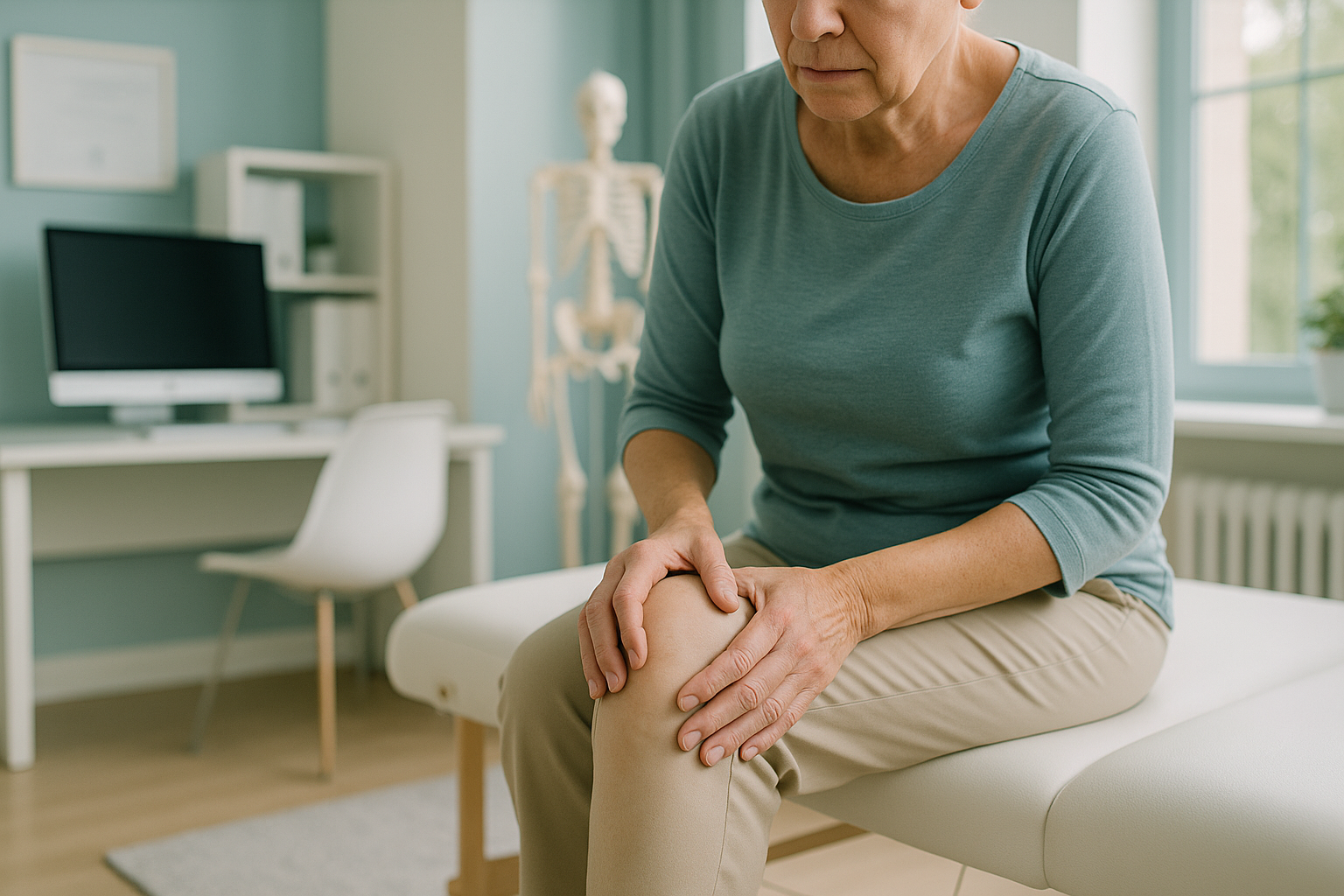
Stiff knees after sitting happen because the fluid inside your knee joint thickens when you stay still. Cartilage that has started to wear down cannot glide smoothly once you move again. This "gelling" sensation usually eases within a few steps, but if it keeps returning, it can point to early joint changes that are worth investigating with weight-bearing imaging.
Key takeaways
- Joint fluid thickens during prolonged sitting, causing temporary stiffness when you stand.
- The "theatre sign" is front-of-knee stiffness after sitting with bent knees for a long time.
- Stiffness that eases with movement is common, but worsening or lasting stiffness deserves investigation.
- Lying-down scans relax the joint and can miss alignment problems. Standing imaging shows how your knee works under load.
- No referral is needed. You can book a standing knee scan yourself.
You sit through a film, a long meeting, or a train journey. When you stand up, your knees feel locked and achy. After a few steps, the stiffness fades. Sound familiar? This is one of the most common knee complaints in adults, and it often goes uninvestigated because it seems too mild to mention.
But repeated stiffness after sitting is your body's early signal. Understanding why it happens, and when it matters, can help you act before the problem progresses.
What is the theatre sign for knees?
The theatre sign is front-of-knee pain or stiffness that comes on after sitting with your knees bent for a prolonged period, such as in a cinema seat. It is one of the hallmark signs of irritation at the patellofemoral joint, the place where your kneecap meets the thigh bone.
When your knee stays bent, the kneecap presses firmly against the groove in the thigh bone. If the cartilage on either surface is softening or roughened, a condition sometimes called chondromalacia patella, that prolonged pressure causes discomfort. Standing up becomes stiff and uncomfortable until the kneecap lifts away from the groove and the joint fluid starts circulating again.

The theatre sign is closely linked to patellofemoral pain syndrome, one of the most common causes of front-of-knee pain in adults. If you recognise this pattern, it is worth understanding what is happening inside the joint.
What causes stiff knees after sitting?
Knee stiffness after sitting is usually caused by a combination of fluid changes inside the joint, early cartilage wear, and reduced blood flow during stillness. Here are the main contributors.
Joint fluid (synovial fluid) becomes thicker and less slippery when the joint stays still. This is called gelling, and it is the main reason you feel stiff until you start moving.
Cartilage that is thinning or roughening does not glide as easily. Even mild osteoarthritis can produce noticeable stiffness after rest, well before pain becomes constant.
Sitting shortens the hamstrings and hip flexors. Tight muscles around the knee limit how freely the joint moves when you first stand, adding to the sense of stiffness.
Low-grade inflammation can produce a small amount of swelling you cannot see. This extra fluid pools when you sit, making the joint feel tight until movement pumps it away.
When should you worry about stiff knees?
Stiffness that eases within a minute or two of walking is common and often manageable. But certain patterns suggest something that needs proper assessment.
If you need more and more steps before the joint loosens up, the underlying cause may be progressing.
Swelling you can see, or a knee that feels warm to touch, can indicate inflammation that warrants investigation.
A grinding sensation or an audible crunch when you bend or straighten the knee can point to cartilage surface changes.
Stair pain, combined with stiffness after sitting, strongly suggests the kneecap joint is under strain.
Seek urgent medical help if your knee suddenly locks and will not straighten, gives way completely, or you develop numbness, weakness, or loss of bladder or bowel control. Contact your GP, call 111, or attend A&E.
How is knee stiffness assessed with standing imaging?
A standing, weight-bearing EOS scan shows your knee as it actually works, under your full body weight. Lying-down scans relax the muscles, allow the joint to open out, and can hide the alignment problems that cause stiffness in daily life.
What it shows: Your full leg alignment from hip to ankle, the kneecap position under load, joint space under real weight, and how your body compensates for stiffness elsewhere in the chain.
EOS uses about 90% less radiation than a standard X-ray, around ten times less. The scan takes seconds and captures the whole picture in one image.
What it may miss: When you lie down, your muscles relax and gravity no longer loads the joint. A joint space that looks normal on a lying-down image can narrow significantly when you stand. Kneecap tracking issues often disappear entirely without body weight pressing down.
This is why stiffness can be dismissed as "normal" when a standard X-ray looks fine.
Your body is a connected chain from feet to head. A subtle twist in your hip or a tilt in your pelvis can change how load passes through the knee, making the kneecap track unevenly and accelerating cartilage wear. A full standing image from ScanAlign standing EOS imaging captures these connections in a single scan.
When MRI is the better choice: EOS shows bones, joints and alignment under load. For soft-tissue problems such as meniscal tears, ligament damage, or disc issues, MRI is usually the better tool. Your clinician can advise which scan suits your situation.
Stiff knees that keep coming back? A free video consultation can help you understand whether standing imaging would add useful information for your clinician.
Book a free video consultationWhat helps reduce knee stiffness after sitting?
General strategies can ease day-to-day stiffness while you investigate the underlying cause. These are not treatments for a specific condition, but simple approaches recommended by physiotherapists and orthopaedic bodies.
- Frequent position changes. Set a reminder to stand and move every 20 to 30 minutes. Even a short walk to the kitchen can prevent gelling.
- Gentle range-of-movement exercises. Slowly straightening and bending the knee a few times before standing can ease the transition.
- Quadriceps strengthening. Strong thigh muscles support the kneecap and help it track properly. Simple exercises like straight-leg raises can make a noticeable difference over weeks.
- Avoid prolonged deep knee bending. If cinema-style seating triggers your symptoms, choose an aisle seat where you can stretch your legs.
- Get the full picture. If stiffness is worsening, a proper assessment of your alignment can help you and your clinician understand what is driving it.
Frequently asked questions about stiff knees
Joint fluid thickens while you sit still (a process called gelling), and cartilage surfaces settle against each other. When you stand, the joint needs a few movements to re-lubricate. If cartilage is starting to wear, this stiffness becomes more noticeable.
The theatre sign is front-of-knee pain or stiffness that develops after sitting with your knees bent for a long time, such as watching a film. It is a classic indicator of patellofemoral joint irritation, where the kneecap presses against the thigh bone during prolonged flexion.
It can be. Stiffness after rest that eases with movement is one of the early signs of osteoarthritis. However, it can also be caused by tight muscles, mild inflammation, or kneecap tracking problems. Imaging helps distinguish between these causes.
Brief stiffness that clears within a minute or two of walking is usually nothing to worry about. If stiffness lasts more than ten to fifteen minutes, worsens over weeks, or is accompanied by swelling, it is worth getting assessed.
Yes. A lying-down X-ray removes gravity and body weight, so joint spaces can appear wider than they really are. A standing EOS scan captures your knee under real load, showing narrowing, kneecap position, and overall leg alignment that a standard X-ray may not reveal.
EOS uses about 90% less radiation than a standard X-ray, around ten times less. It is a very low-dose imaging system designed for weight-bearing assessment.
No. ScanAlign is a private self-pay clinic. You can book directly without a referral. Your images and report can then be shared with any clinician you choose.
Pricing details are available on the ScanAlign FAQs and cost page. The free video consultation is a good first step to find out whether a scan is right for you.
Absolutely. Your body works as a connected chain. A pelvic tilt, hip rotation, or lower-back stiffness can change how weight travels through the knee. This is one reason whole-body standing imaging is valuable. It shows the whole alignment, not just the sore spot.
Gentle movement is usually better than staying still. Slowly straightening and bending the knee before standing helps the joint re-lubricate. Prolonged rest tends to increase stiffness rather than reduce it. If movement causes sharp pain, see a clinician for advice.
Understand what is behind your stiff knees
A free video consultation helps you find out whether standing imaging would give you and your clinician the answers you need.
Book a free video consultationWritten by Abbas Dhami (Specialist Diagnostic Radiographer)
Sources
- Arthritis Research UK (now Versus Arthritis). "Osteoarthritis of the knee." versusarthritis.org
- Crossley KM, Stefanik JJ, Selfe J, et al. "2016 Patellofemoral pain consensus statement." British Journal of Sports Medicine, 2016;50:839-843.
- NHS. "Knee pain." nhs.uk/conditions/knee-pain
This page is general information and not a diagnosis.
ScanAlign is the trading name of CoreMed Solutions Ltd and operates under The Harley Street Hospital's CQC licence.