
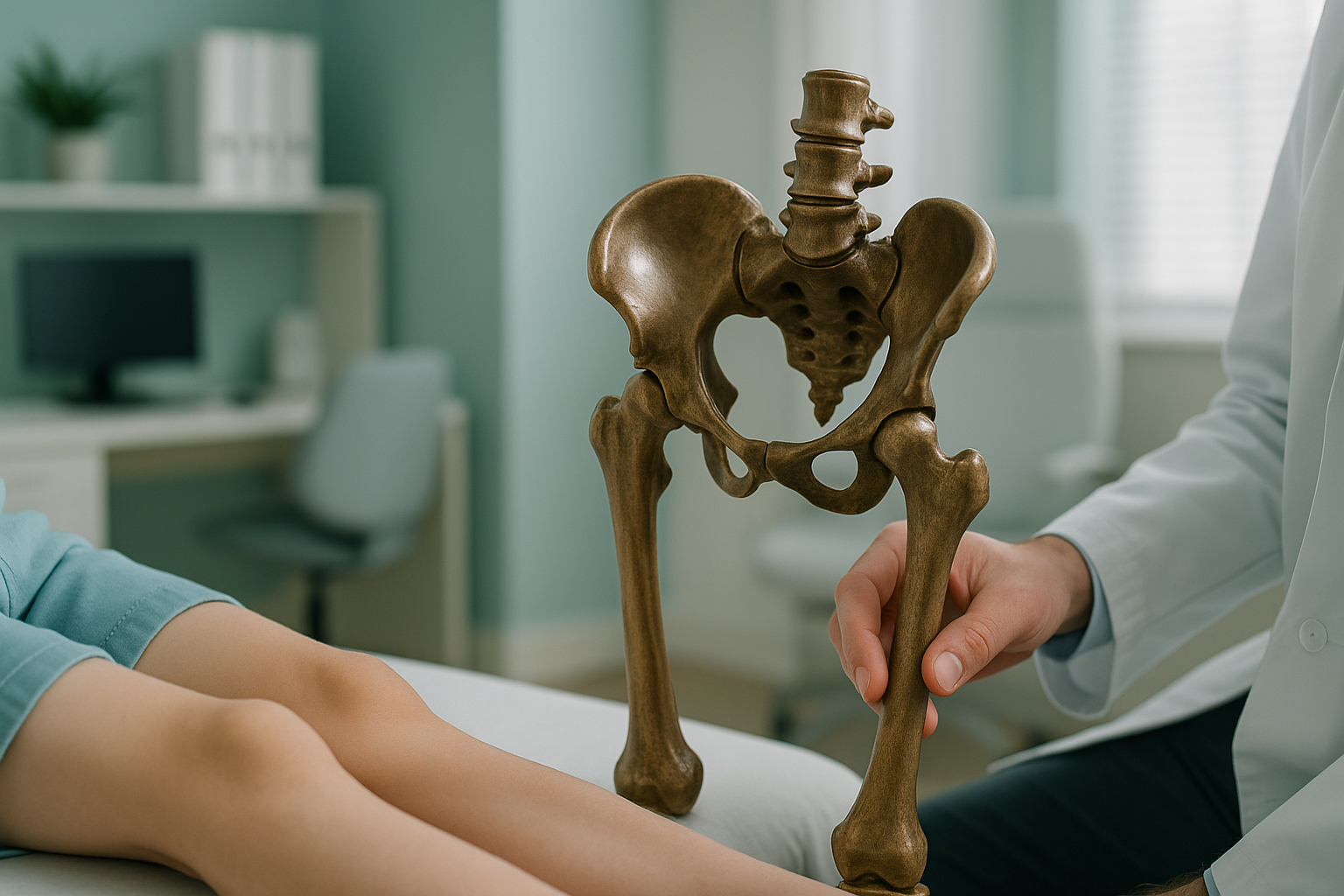
Transient Synovitis: Why Is Your Child Suddenly Limping or Refusing to Walk?
Transient synovitis (sometimes called irritable hip) is the most common cause of sudden hip pain and limping in young children. It is a temporary inflammation of the lining of the hip joint, often following a viral illness. It usually clears on its own within one to two weeks. However, a more serious infection called septic arthritis must always be ruled out first.
Key takeaways
- Transient synovitis is the most common cause of acute hip pain in children aged roughly 3 to 10.
- Septic arthritis (a joint infection) must be excluded first, as it requires emergency treatment.
- A high fever, severe pain, or a child who cannot bear any weight at all needs urgent medical attention.
- Most children recover fully with rest and simple pain relief within one to two weeks.
- If hip symptoms return or linger, further imaging can check for underlying structural issues.
When should you take your child to A&E with hip pain?
Immediately. If your child has any of the signs below, seek urgent medical attention at your nearest A&E department, or call 111 for advice. These signs can indicate septic arthritis, a serious joint infection that needs emergency treatment to prevent lasting damage.
- A high fever (above 38.5 °C)
- Severe pain that stops them bearing any weight at all
- A hip that looks red, hot, or very swollen
- Sudden unwillingness to move the leg, with the hip held still in a bent position
- Generally appearing unwell, irritable, or lethargic
Doctors use clinical criteria (including the Kocher criteria), blood tests, and sometimes ultrasound to distinguish transient synovitis from septic arthritis. This assessment must happen before any other imaging is considered. It is not something to diagnose at home.
What are the symptoms of transient synovitis?
The main symptom is sudden hip pain on one side, often appearing within a day or two. Your child may limp, refuse to walk, or crawl instead. In toddlers who cannot describe pain, refusing to put weight on one leg may be the first thing you notice.
Symptoms typically come on suddenly, sometimes overnight. Many parents report a cold or tummy bug in the week or two before the hip pain started.
What causes transient synovitis in children?
The exact cause is not fully understood, but it is strongly linked to a recent viral illness. The body's immune response to the virus is thought to trigger temporary inflammation of the synovial membrane, the thin lining that surrounds the hip joint.
Transient synovitis is not caused by injury and it is not contagious. It is a self-limiting condition, meaning it resolves on its own without specific treatment.
How is transient synovitis diagnosed?
It is largely a diagnosis of exclusion. Your doctor will first rule out more serious causes of hip pain, especially septic arthritis, before concluding that transient synovitis is the most likely explanation.

The typical assessment includes a clinical examination, blood tests to check for infection markers, and often a hip ultrasound to look for fluid around the joint. If there is any doubt, doctors may aspirate (draw out) fluid from the joint to test it directly.
If you are unsure whether your child's symptoms warrant an urgent visit, it is always safer to get checked. Your GP or 111 can advise you. Understanding when to see a specialist is important for any new hip pain in a child.
How long does transient synovitis take to recover?
Most children feel significantly better within a few days and are fully recovered within one to two weeks. Rest and simple over-the-counter pain relief (such as ibuprofen, with guidance from a pharmacist or doctor) are usually all that is needed.
Rest at home
Encourage your child to rest and avoid vigorous activity. They do not need to stay in bed, but should take it easy.
Pain relief
Age-appropriate anti-inflammatory medication helps reduce swelling and discomfort. Always check with your pharmacist or GP for the right dose.
Gradual return to activity
Once pain has settled, your child can slowly return to normal play and sport. There is no need to rush.
Follow-up if symptoms persist
If the limp or pain returns, or does not improve within two weeks, go back to your GP. Further investigation may be needed to check for other conditions.
Transient synovitis can recur in a small number of children. If hip symptoms keep coming back, your doctor may want to look more closely at the structure of the hip joint to rule out other causes, such as hip dysplasia in adults, which can sometimes begin with childhood hip issues that were not picked up early.
Does transient synovitis need imaging beyond ultrasound?
In most straightforward cases, no. A hip ultrasound and blood tests are enough to confirm the diagnosis and exclude septic arthritis. However, if symptoms persist, recur, or if there is concern about the shape or alignment of the hip, further imaging may be helpful.
Standard X-rays are often taken lying down. These can miss subtle alignment differences that only become apparent when the child is standing and bearing weight. ScanAlign, low dose standing imaging uses EOS technology that captures the full skeleton while standing, using about 90% less radiation than a standard X-ray, around ten times less. For children, this lower dose is an important consideration.
If your child's symptoms have settled but you or your consultant want a clearer picture of hip alignment or leg-length difference, paediatric imaging at ScanAlign can provide a detailed, weight-bearing view of the hips, pelvis, and lower limbs in a single scan.
A note on MRI and other imaging: EOS shows bones, joints, and alignment clearly. For soft tissue, such as the synovial lining itself, cartilage, or deeper joint structures, MRI is usually the better tool. Your doctor will advise which type of imaging is most appropriate for your child's situation.
If your child has had recurrent hip pain or a persistent limp after transient synovitis, a standing alignment scan can help check for underlying structural issues.
Book a free video consultationFrequently asked questions about transient synovitis
Yes. Irritable hip is a common informal name for transient synovitis. Both terms describe the same condition: a temporary inflammation of the hip joint lining that causes pain and limping in children.
Doctors use a combination of clinical examination, blood tests (looking at white blood cell count, CRP, and ESR), and the Kocher criteria. A hip ultrasound can detect fluid in the joint. If there is any doubt, fluid may be drawn from the joint and tested directly for infection.
Yes. Although it is most common between ages 3 and 10, toddlers can develop transient synovitis. In very young children, the main sign is often refusing to walk or crawl, or crying when the hip or leg is moved.
A limp appearing one to two weeks after a viral illness is a classic pattern for transient synovitis. However, you should still have your child assessed by a doctor to rule out other causes, especially if there is a fever or severe pain.
No. Transient synovitis is a self-limiting condition and does not cause lasting damage to the hip joint. The inflammation resolves completely in the vast majority of children.
It can. A small number of children experience more than one episode. If the condition keeps returning, your doctor may recommend further investigation to check for other hip conditions.
An X-ray is not always needed for a straightforward case. If symptoms persist or recur, or if the doctor wants to rule out other bony conditions, imaging may be requested. A standing EOS scan uses about 90% less radiation than a standard X-ray, around ten times less, which can be an important factor for children.
Seek urgent medical attention if your child has a high fever, cannot bear any weight, has a very swollen or red hip, or appears generally unwell. These signs could indicate septic arthritis or another serious condition.
Transient synovitis is primarily a childhood condition. Adults can develop reactive synovitis of the hip, but it is far less common and usually has different underlying causes. Persistent hip pain in adults warrants a separate assessment.
An EOS scan captures the full skeleton while standing, so it can reveal alignment issues, leg-length differences, and pelvic tilt that a standard lying-down X-ray may not show. This can be useful if a child continues to limp after transient synovitis has resolved, as it helps check whether an underlying structural issue is contributing.
Lingering limp after transient synovitis?
If your child's hip pain has not fully settled, a free video consultation can help you understand whether further imaging would be helpful.
Book a free video consultationSources
- Kocher MS, et al. "Differentiating between septic arthritis and transient synovitis of the hip in children." Journal of Bone and Joint Surgery (American), 1999; 81(12): 1662-1670.
- NHS. "Irritable hip." NHS.uk. Available at: nhs.uk/conditions/irritable-hip.
- Whitelaw CC, Varacallo M. "Transient Synovitis." StatPearls, National Library of Medicine, 2024.
Written by Abbas Dhami (Specialist Diagnostic Radiographer).
This page is general information and not a diagnosis.
ScanAlign is the trading name of CoreMed Solutions Ltd and operates under The Harley Street Hospital's CQC licence.