
What Does an Osteopath Do, and What Is the Evidence?
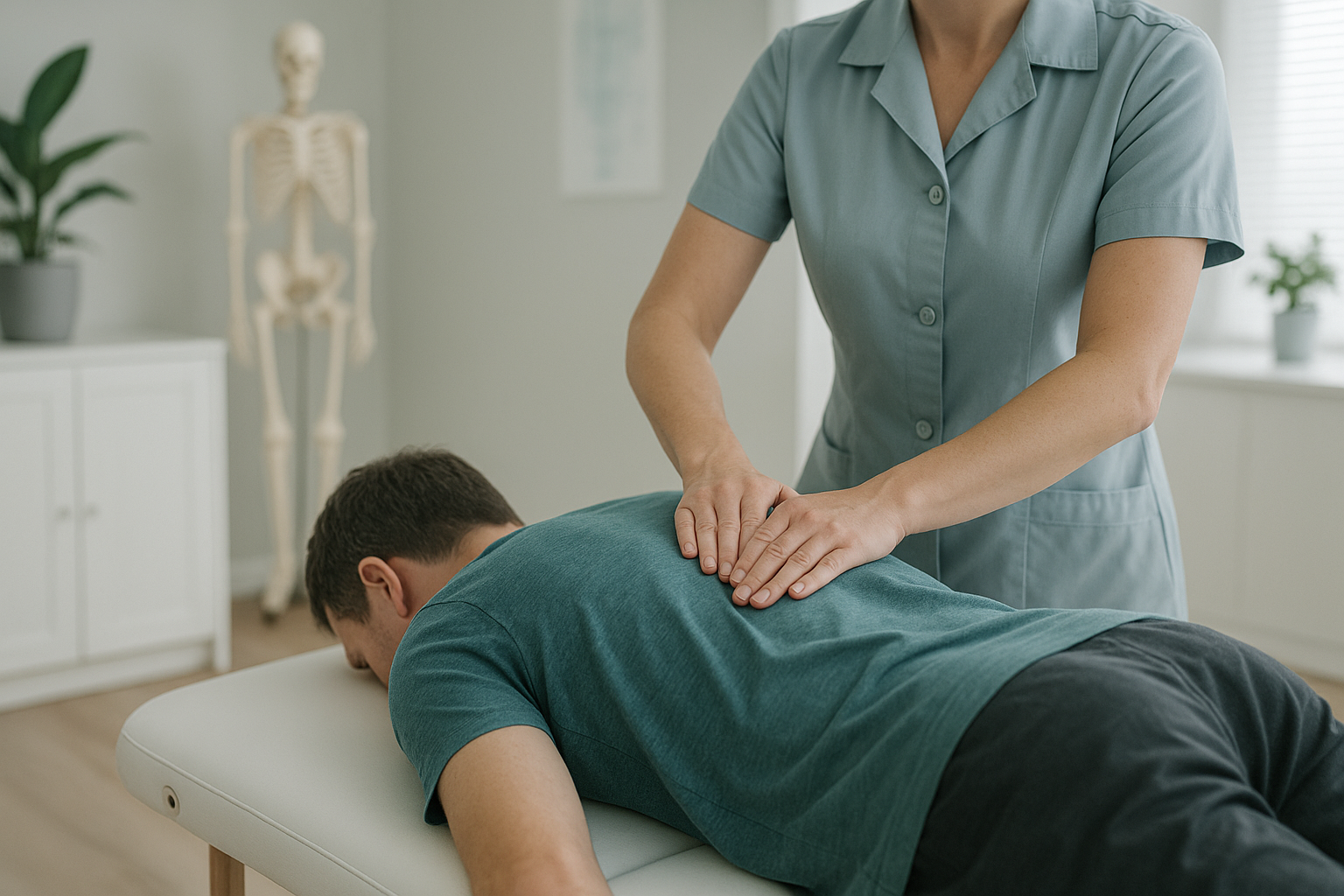
An osteopath is a regulated manual therapist who uses hands-on techniques to assess and treat musculoskeletal problems. They take a whole-body approach, looking at how your joints, muscles and posture interact. The best evidence supports osteopathy for low back pain, while research for other areas is still growing.
Key takeaways
- Osteopaths are registered with the General Osteopathic Council and complete at least four years of training.
- Sessions combine joint manipulation, soft tissue work and movement advice.
- The strongest evidence is for low back pain. Evidence for other conditions is more limited.
- You do not need a GP referral to see an osteopath privately.
- Standing whole-body imaging can give your osteopath a clearer picture of alignment under load.
What does an osteopath actually do?
An osteopath uses their hands to find areas of tension, restricted movement or weakness across your whole body. Rather than focusing only on where you feel pain, they look at how one area affects another. A stiff mid-back, for example, can change the way your lower back and hips move, eventually producing pain somewhere else entirely.
Osteopaths are trained to look at the body as a connected chain. That principle is central to their approach. Pain in one region can be driven by stiffness or imbalance elsewhere, and treatment often targets both the painful area and its cause.
What happens at an osteopath appointment?
A first appointment typically lasts 45 to 60 minutes. Your osteopath will ask about your symptoms, medical history and daily activities. They will then watch how you move, checking your posture, gait and range of motion before examining the relevant areas with their hands.
You describe your symptoms, when they started, what makes them better or worse, and any previous treatment.
The osteopath observes your posture and movement, then palpates joints and soft tissues to identify restrictions.
Hands-on techniques are applied. You may hear a click during joint manipulation, which is normal and generally painless.
Your osteopath explains their findings, gives exercises or advice, and discusses whether further sessions are needed.
Follow-up sessions are usually shorter, around 30 minutes. You do not need a GP referral to see an osteopath privately, though some people are referred by their doctor, physiotherapist or consultant.
Is osteopathy effective according to the evidence?
The strongest research supports osteopathy for low back pain. NICE guidelines include manual therapy, which covers osteopathic techniques, as one option for managing low back pain alongside exercise and self-management. A 2014 Cochrane-style review found that osteopathic manipulative treatment produced a small but statistically significant reduction in low back pain.
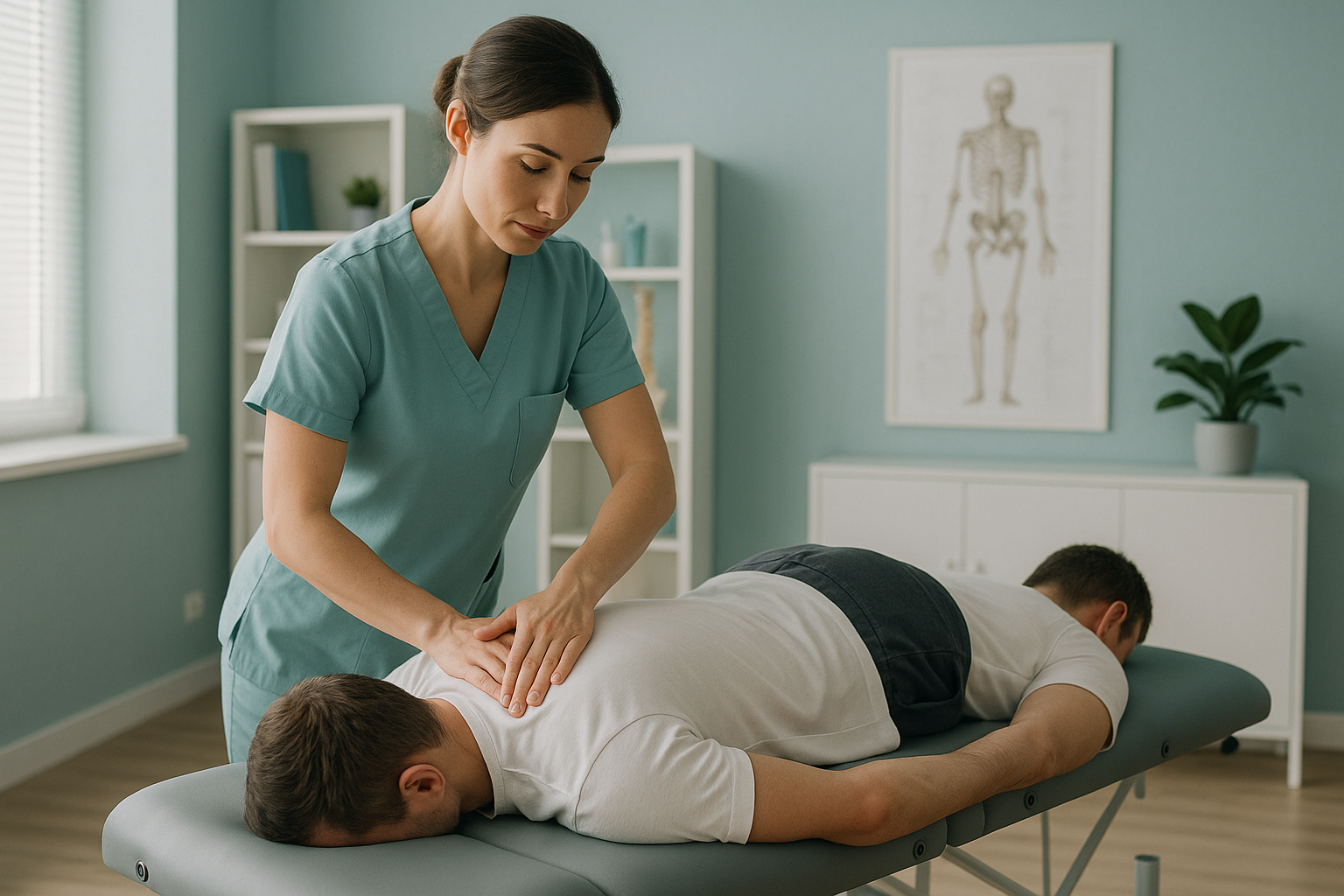
For neck pain, the evidence is moderate. Some trials show benefit, but the research is less consistent than for the lower back. For other conditions, such as hip, knee or shoulder problems, evidence is still limited. That does not mean osteopathy cannot help. It means more high-quality research is needed.
Osteopathy is generally considered safe. Serious adverse events are rare. Mild soreness for a day or two after treatment is common and usually settles on its own.
A note on imaging. EOS standing X-ray shows bones, joints and whole-body alignment under load. For soft tissue detail, such as discs, nerves or ligaments, MRI is usually the better tool. Your osteopath or consultant can advise which type of imaging is most useful for your situation.
What is the difference between an osteopath and a physiotherapist?
Both are regulated healthcare professionals trained to treat musculoskeletal problems, but their approaches differ in emphasis. Osteopaths tend to use more hands-on manipulation and take a whole-body structural view. Physiotherapists often place more emphasis on exercise-based rehabilitation and may specialise in areas like sports injury or neurological conditions.
Regulator: General Osteopathic Council (GOsC). Protected title by law.
Training: Four to five year degree, including over 1,000 hours of clinical practice.
Focus: Whole-body alignment and structure. Heavy use of joint manipulation and soft tissue techniques.
Typical patients: People with back pain, neck pain, joint stiffness, postural problems.
Regulator: Health and Care Professions Council (HCPC). Protected title by law.
Training: Three to four year degree, with clinical placements throughout.
Focus: Exercise prescription, movement rehabilitation, sometimes hands-on techniques too.
Typical patients: Post-surgical rehab, sports injuries, neurological conditions, chronic pain.
Neither profession is "better" across the board. The right choice depends on your specific problem, your preferences and what your body responds to. Many people benefit from both at different stages.
How can standing imaging help your osteopath?
Osteopaths assess posture and alignment by observation and palpation. Standing whole-body imaging adds an objective layer. It captures your skeleton in its natural, weight-bearing position, from your ankles up through your spine, revealing alignment patterns that hands alone cannot measure precisely.
Conventional imaging, such as a standard X-ray taken lying down, relaxes the muscles and can mask imbalances that only show up when gravity is doing its work. The body is a connected chain. A tilt at the pelvis, for instance, can create compensatory curves further up the spine. Standing imaging captures these relationships in a single exposure, with about 90% less radiation than a standard X-ray, around ten times less.
If your osteopath needs a clear picture of your alignment under load, ScanAlign standing EOS imaging can help. You can also explore our back pain clinic page to understand how imaging fits into a wider investigation.
Book a free video consultationWhen should you see an osteopath, and when should you not?
Osteopathy can be a useful option for many musculoskeletal complaints, but it is not right for every situation.
- Persistent back, neck or joint pain
- Postural problems or recurring stiffness
- Tension headaches linked to neck or shoulder tightness
- Hip, knee or shoulder pain with no clear diagnosis
- A desire for hands-on treatment alongside exercises
- Sudden numbness, weakness in limbs, or difficulty walking
- Loss of bladder or bowel control
- Severe, sudden pain after trauma or a fall
- Unexplained weight loss with back pain
- Symptoms of infection such as fever with spinal pain
If you have any of the symptoms on the right, contact your GP, call 111, or go to A&E. These can be signs of a serious underlying condition that needs prompt medical investigation, not manual therapy.
Frequently asked questions about osteopathy
They take a detailed case history, observe your posture and movement, examine you with their hands, and usually begin treatment in the same session. A first visit typically lasts 45 to 60 minutes.
No. You can book directly with a private osteopath without a referral. Some people are referred by their GP or consultant, but it is not required.
Osteopathy is generally considered safe when carried out by a registered practitioner. Mild soreness after treatment is common and usually settles within a day or two. Serious adverse events are rare.
This varies widely. Some people feel improvement after one or two sessions, while chronic problems may need a longer course. Your osteopath should review your progress regularly and adjust the plan.
They share some techniques, but osteopathy traditionally places more emphasis on soft tissue work and a whole-body assessment. Chiropractors tend to focus on spinal adjustments. Both are regulated professions in the UK.
Osteopaths lean more towards hands-on manipulation and a structural whole-body view. Physiotherapists often emphasise exercise-based rehabilitation. Both are effective, and the best choice depends on your condition and preferences.
Private osteopathy sessions in the UK typically range from around £45 to £95 depending on location and the practitioner's experience. A first consultation often costs more than follow-up visits.
Some people find osteopathic treatment helpful for hip and knee problems, especially when pain is linked to muscle tightness or joint restriction. However, the published evidence for these areas is more limited than for low back pain.
Osteopaths may suggest imaging if they suspect a structural issue or if your symptoms are not responding as expected. Standing whole-body imaging can be particularly useful because it shows alignment under natural load, which lying-down scans can miss.
EOS captures your full skeleton while you stand, using about 90% less radiation than a standard X-ray, around ten times less. It shows how your bones and joints line up under your own body weight, giving clinicians a more complete picture of alignment than a lying-down scan.
Want to understand your alignment before your next appointment?
A standing whole-body scan gives you and your treating clinician objective data about how your body lines up under load.
Book a free video consultationWritten by Abbas Dhami (Specialist Diagnostic Radiographer)
Sources
- NICE Guideline NG59: Low back pain and sciatica in over 16s: assessment and management. National Institute for Health and Care Excellence, 2016 (updated 2020).
- Franke H, Franke J-D, Fryer G. Osteopathic manipulative treatment for nonspecific low back pain: a systematic review and meta-analysis. BMC Musculoskeletal Disorders. 2014;15:286.
- General Osteopathic Council (GOsC). Standards of practice and what to expect from your osteopath. osteopathy.org.uk.
This page is general information and not a diagnosis.
ScanAlign is the trading name of CoreMed Solutions Ltd and operates under The Harley Street Hospital's CQC licence.