
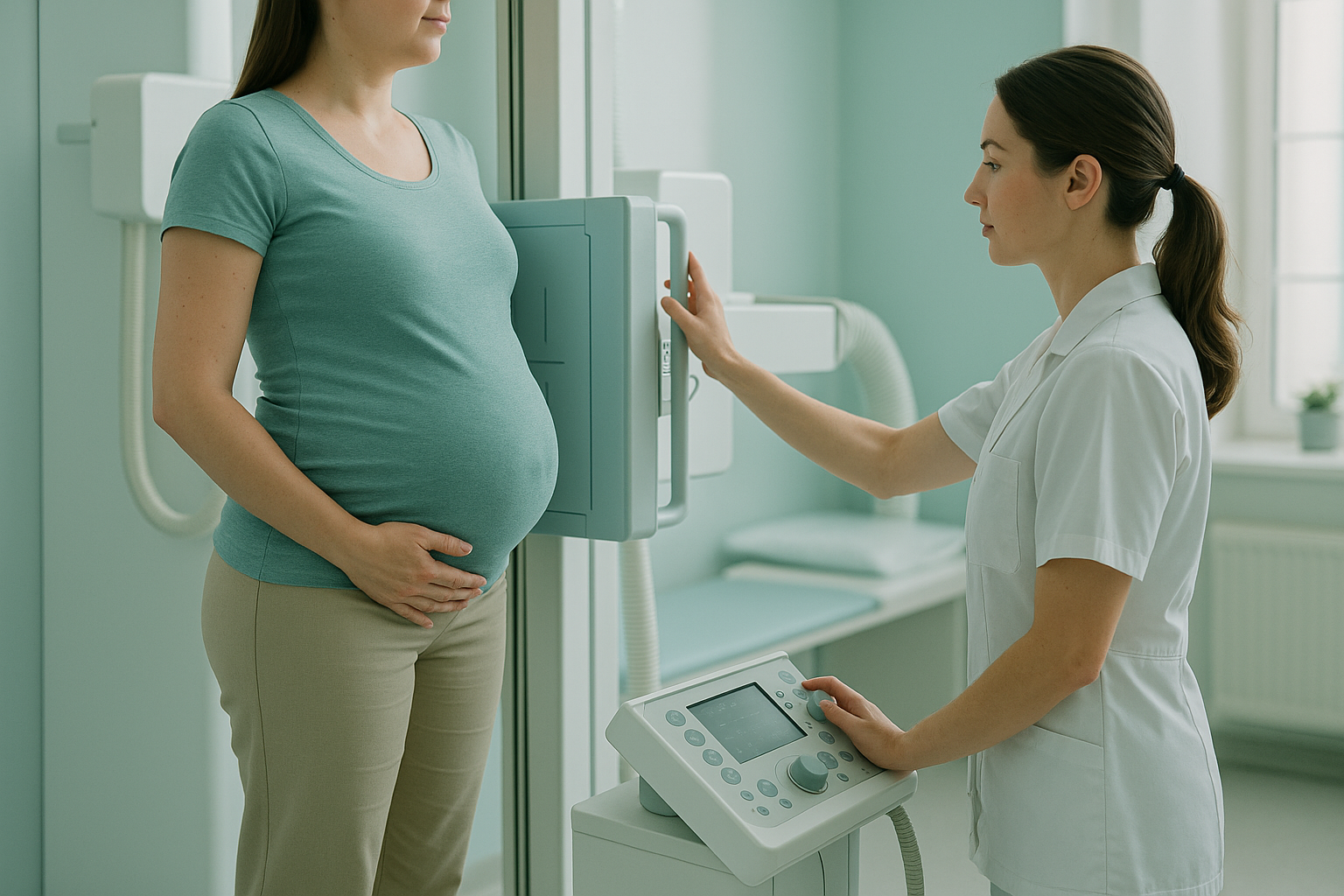
Can You Have an X-ray While Pregnant?
In most cases, a single diagnostic x-ray poses a very low risk during pregnancy because the radiation dose is small. However, UK guidelines say every x-ray in pregnancy must be clinically justified, meaning the benefit must clearly outweigh any potential risk. At ScanAlign, we do not scan anyone who is or may be pregnant. If you need urgent imaging while pregnant, speak to your GP, midwife or hospital team.
Key takeaways
- Most single x-rays use a very low radiation dose, well below levels linked to harm in pregnancy.
- UK IRMER regulations require that every x-ray in pregnancy is clinically justified by a qualified practitioner.
- Ultrasound and, when appropriate, MRI are the preferred imaging options during pregnancy because they use no ionising radiation.
- ScanAlign does not scan anyone who is pregnant or who may be pregnant. You will be asked to confirm your pregnancy status before any scan.
- If you had an accidental x-ray before knowing you were pregnant, the risk is almost always extremely low. Speak to your midwife or GP for reassurance.
What is the radiation risk to a baby from an x-ray?
The risk from a single diagnostic x-ray is very small. The doses involved in most common x-rays, such as a chest or limb x-ray, are a tiny fraction of the natural background radiation you receive over the course of a pregnancy. Studies consistently show that these low doses have not been linked to measurable increases in birth defects or miscarriage.
Higher-dose procedures, such as CT scans of the abdomen or pelvis, deliver more radiation to the area around the womb. Even then, the doses remain well below the thresholds associated with harm in published research. The key principle is that risk increases with dose, so clinicians always aim to keep exposure as low as reasonably practicable, a concept often shortened to ALARP.
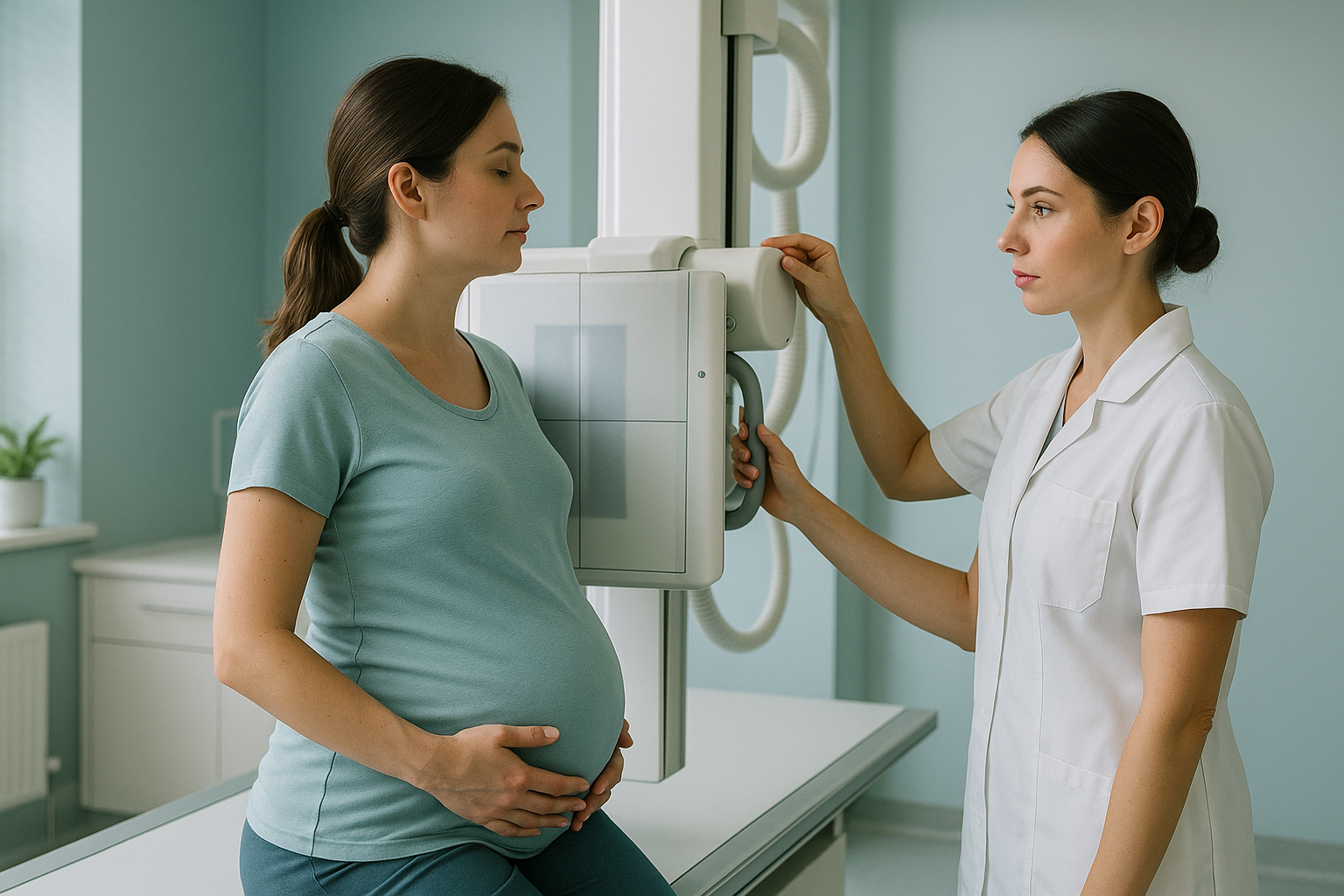
To put it simply, a chest x-ray gives you roughly the same amount of radiation as a day or two of natural background exposure. An x-ray of an arm or leg delivers even less, and the radiation beam is directed well away from the womb.
What do UK guidelines say about imaging in pregnancy?
UK imaging in pregnancy is governed by the Ionising Radiation (Medical Exposure) Regulations, known as IRMER. These regulations require that every x-ray exposure is justified by a qualified practitioner who weighs the clinical benefit against any potential risk. In pregnancy, the justification threshold is higher, meaning the scan must be clearly necessary and not just routine.
The 28-day rule is a practical safeguard used in many UK imaging departments. It means that for non-urgent x-rays of the abdomen or pelvis, the scan is ideally carried out within the first 28 days of the menstrual cycle, when pregnancy is least likely. This reduces the chance of an unintentional exposure.
What imaging is safe during pregnancy?
Ultrasound is the standard imaging tool in pregnancy. It uses sound waves, not ionising radiation, so there is no radiation dose to you or your baby. It is the first choice for checking the baby and is also used to assess many other conditions during pregnancy.
What about MRI? MRI does not use ionising radiation either, and is generally considered safe after the first trimester when clinically needed. It is excellent for soft tissue, discs and nerves. Your doctor or midwife can advise whether MRI is appropriate for your situation.
When an x-ray or CT scan is genuinely needed during pregnancy, for example to diagnose a fracture or investigate a serious chest condition, it can still go ahead. The referring clinician and radiographer will work together to ensure the benefit outweighs the small risk and that the dose is kept as low as possible.
Does ScanAlign scan pregnant patients?
No. ScanAlign does not scan anyone who is pregnant or who may be pregnant. This is a strict policy with no exceptions.
Before every scan, we ask you to confirm your pregnancy status. If you are of childbearing age, you will be asked whether there is any possibility you could be pregnant. If you are unsure, we will not proceed with the scan. This is part of our IRMER-compliant pregnancy declaration process and is in place to protect you.
Important. If you are pregnant and have a musculoskeletal problem that needs investigating, please speak to your GP, midwife or obstetric team. They can arrange the most appropriate imaging for your situation, such as ultrasound or MRI, and can refer you to a specialist if needed.
Our EOS system uses about 90% less radiation than a standard x-ray, around ten times less. You can read more about EOS scan safety and radiation. Even with this very low dose, we follow the same strict pregnancy policy as any responsible imaging service. The right time for a ScanAlign, low dose standing imaging assessment is after pregnancy, when standing alignment imaging can give you the full picture.
If you are not sure whether you are eligible, you can check who our scan is suitable for before getting in touch.
What if you had an accidental x-ray before knowing you were pregnant?
This is a common worry, but in almost all cases the risk is extremely low. Many people have an x-ray in early pregnancy before they know they are pregnant, and the doses involved in routine diagnostic x-rays are far below the levels that have been associated with any measurable harm in published research.
If this has happened to you, the most important step is to let your GP or midwife know. They can note the exposure in your records and, if needed, discuss it with a medical physicist or radiologist who can estimate the dose and provide reassurance. In the vast majority of cases, no further action is needed.
Dental x-rays are another common concern. A dental x-ray delivers a very small dose, and the beam is directed at the jaw, well away from the abdomen. If you had a dental x-ray before realising you were pregnant, the risk to your baby is considered negligible.
Frequently asked questions
The dose from a single diagnostic x-ray is very low and has not been linked to measurable harm in research. However, no x-ray should be done in pregnancy unless it is clinically justified.
Dental x-rays use a very small dose directed at the jaw, well away from the womb. Many dentists prefer to delay routine dental x-rays until after pregnancy, but if one is clinically necessary, the risk is considered negligible.
The 28-day rule is a UK guideline advising that non-urgent abdominal or pelvic x-rays on women of childbearing age should be scheduled within the first 28 days of the menstrual cycle, when pregnancy is least likely.
In most cases, the dose from a routine x-ray is far below the level associated with any measurable risk. Let your GP or midwife know so they can note it in your records. They can arrange further advice from a medical physicist if that would help reassure you.
MRI does not use ionising radiation and is generally considered safe when clinically needed, especially after the first trimester. Your doctor will decide whether it is appropriate for your situation.
No. ScanAlign does not scan anyone who is pregnant or who may be pregnant. You will be asked to confirm your pregnancy status before any scan. If there is any possibility of pregnancy, the scan will not go ahead.
EOS uses about 90% less radiation than a standard x-ray, around ten times less. Despite this very low dose, ScanAlign still follows its strict no-pregnancy scanning policy.
No. ScanAlign is a private self-pay service. You can self-refer by booking a free video consultation to discuss your symptoms and check suitability.
Ultrasound is the first choice because it uses no radiation. MRI may also be used when clinically indicated, particularly for soft tissue problems. Your obstetric or GP team will advise on the best option.
You can book a scan once you are no longer pregnant and have confirmed you are not breastfeeding exclusively as a contraceptive (which may affect pregnancy status certainty). If you are unsure, you can check your suitability before booking through a free video consultation.
Ready to understand your alignment?
If you are not pregnant and want to find out what is really behind your back, hip or knee pain, a standing whole-body assessment can reveal what lying-down scans miss.
Book a free video consultationSources
- Health Protection Agency (now UKHSA). "Protection of Pregnant Patients during Diagnostic Medical Exposures to Ionising Radiation." Documents of the HPA, RCE-9, 2009.
- The Royal College of Radiologists. "IRMER and the Pregnant Patient." RCR guidance on the Ionising Radiation (Medical Exposure) Regulations.
- NHS. "X-ray: Safety." nhs.uk overview of x-ray safety including advice on pregnancy and radiation exposure.
Written by Abbas Dhami (Specialist Diagnostic Radiographer)
This page is general information and not a diagnosis.
ScanAlign is the trading name of CoreMed Solutions Ltd and operates under The Harley Street Hospital's CQC licence.