
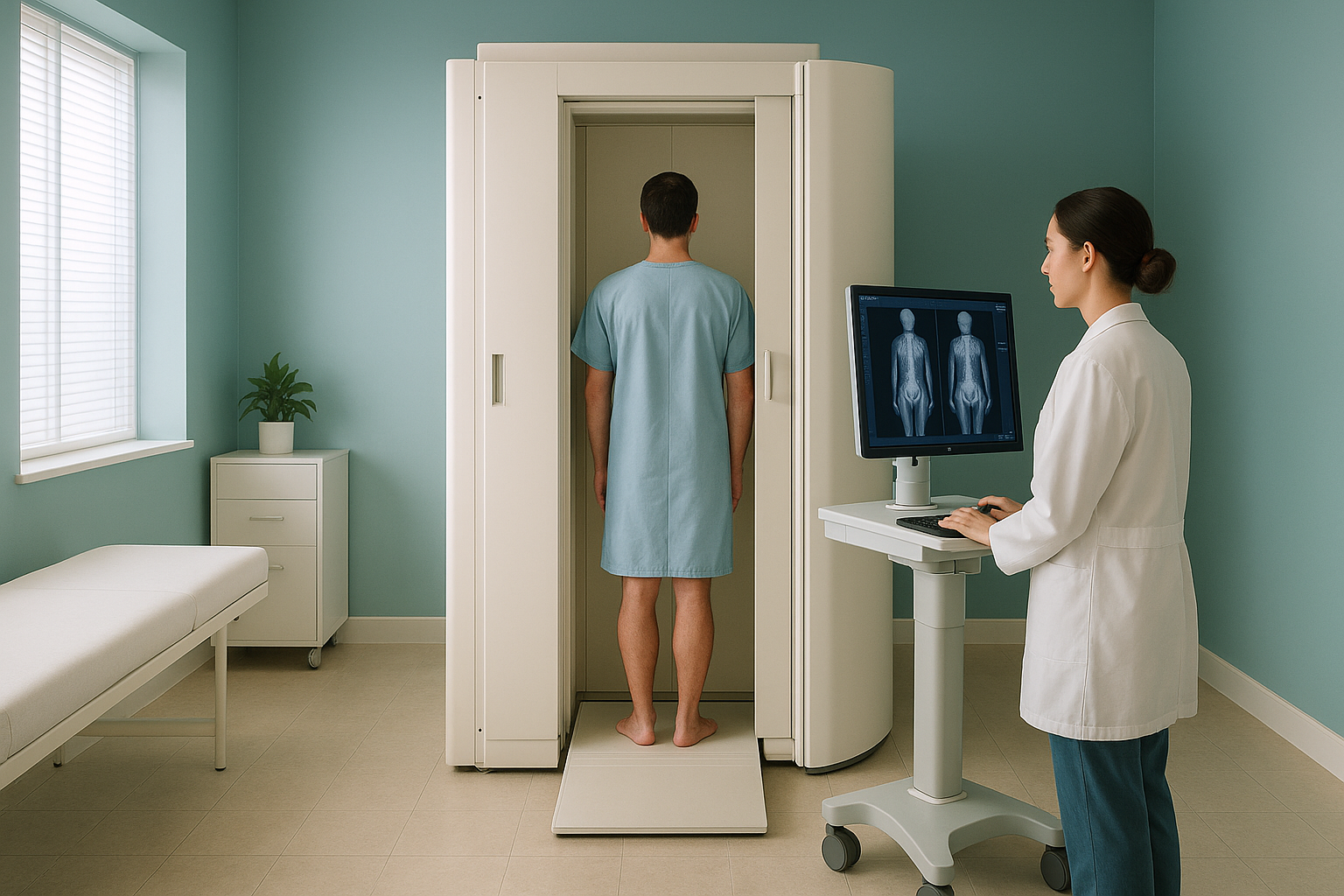
Is the EOS Scan Safe? Radiation Dose Explained
Yes, the EOS scan is safe for adults. It uses about 90% less radiation than a standard X-ray, around ten times less. That makes it one of the lowest-dose imaging options available for assessing bones, joints and full-body alignment while you stand in a natural, weight-bearing position.
Key takeaways
- The EOS scan delivers about 90% less radiation than a standard X-ray, around ten times less.
- There are no known side effects from a single EOS scan at this low dose level.
- You stand upright during the scan, so gravity and your muscles are at work, just like in real life.
- EOS shows bones, joints and alignment. For soft tissue, discs or nerves, MRI is usually the better tool.
- No referral is needed. ScanAlign is a private, self-pay clinic at 19 Harley Street, London.
If you have been told you need an EOS scan, or you are considering one for a long-standing back, hip or knee problem, your first question is probably about safety. That is a sensible thing to ask about any imaging that involves radiation. This page explains exactly how much radiation the EOS system uses, how that compares to other scans, and why the dose is so low.
What is radiation dose and why does it matter?
Radiation dose is the amount of energy your body absorbs during an imaging scan. A lower dose means less exposure and a smaller theoretical risk. All medical imaging that uses X-rays carries some radiation, but modern systems are designed to keep the dose as low as reasonably achievable. That principle is called ALARA, and it guides every scan at ScanAlign.
In everyday terms, we are all exposed to low levels of natural background radiation from the ground, the air and even the food we eat. A single EOS scan adds a fraction of what you would receive from background radiation over a few days.
How does EOS radiation compare to a standard X-ray?
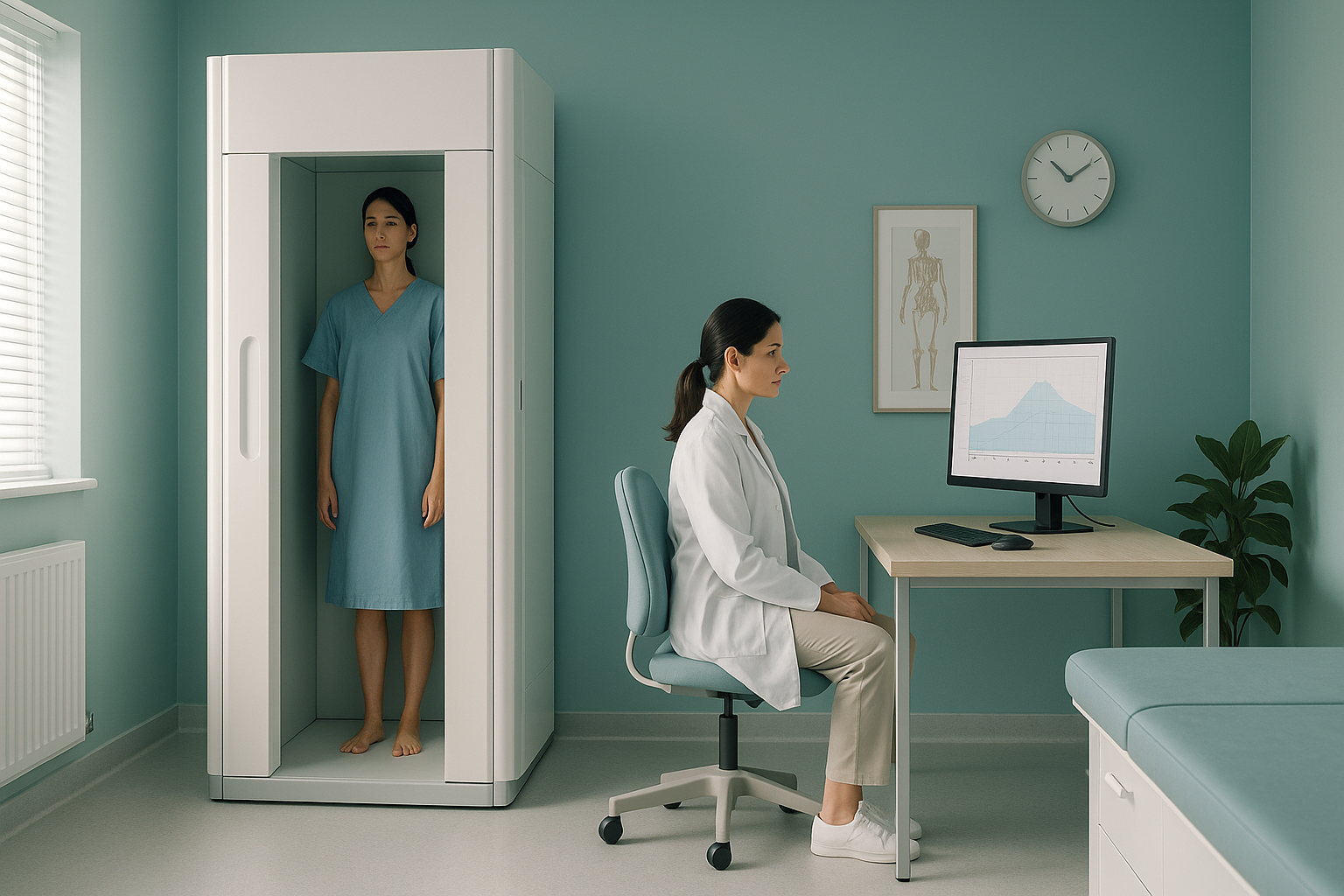
The EOS system uses about 90% less radiation than a standard X-ray, around ten times less. This is possible because of the technology behind it. The EOS detector was developed from Nobel Prize-winning particle physics research by Georges Charpak. It is extremely sensitive to X-ray photons, so it needs far less radiation to produce a clear, detailed image.
A standard set of spinal X-rays might require several separate exposures, each at a higher dose. The EOS system captures your entire body in one standing pass, so the total exposure stays very low.
Does an EOS scan have any side effects?
No. There are no known side effects from a single EOS scan. The radiation dose is so low that it falls well within the levels considered safe for diagnostic imaging by the UK Health Security Agency and international radiation protection bodies. You will not feel anything during the scan, and there is no recovery time afterwards.
The scan does not use contrast dye or injections, so there is no risk of an allergic reaction. You simply stand still inside the scanner for a few seconds while it captures your images.
Want to know what happens during the scan, including how to prepare and what to wear? Visit our frequently asked questions page for full details.
Why does standing up during the scan make a difference?
Standing up during the scan is just as important as the low radiation dose. When you lie down for a standard X-ray, CT or MRI, gravity is no longer pulling on your skeleton in the usual way. Your muscles relax, your spine settles, and alignment problems can flatten out or disappear entirely. This means lying-down images may miss the very issue causing your pain.
The EOS system images you upright, weight-bearing and in your natural posture. Your body is a connected chain from your feet to your head. If your pelvis tilts slightly, your spine adjusts above it, and your knees compensate below. A problem in one area can create symptoms somewhere else entirely. Standing, whole-body imaging reveals these compensations in a way that single-area, lying-down scans cannot.
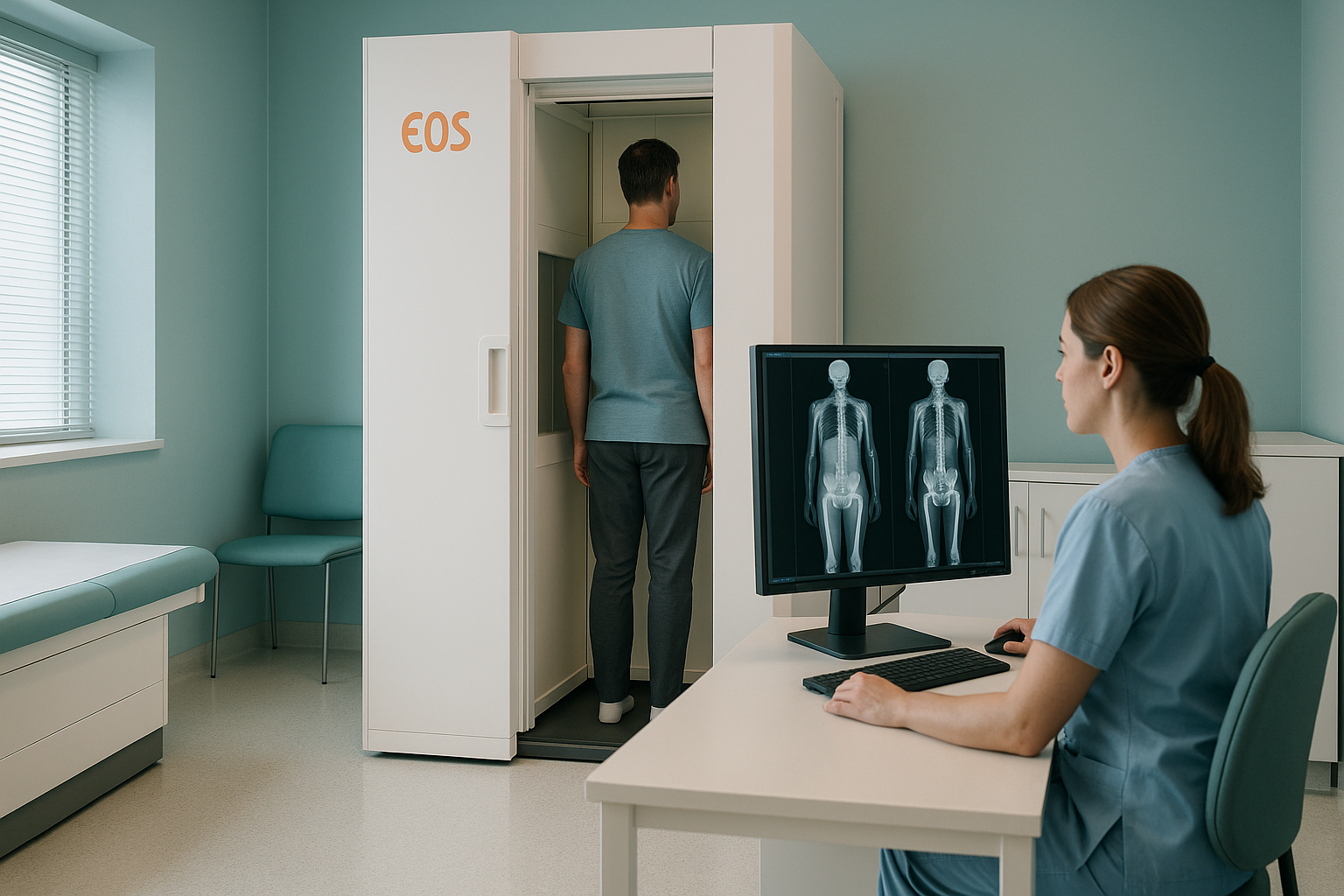
This is why a scan at ScanAlign captures your whole body while you stand. You get an accurate picture of how your skeleton actually behaves under load, with a radiation dose that is about 90% less than a standard X-ray.
When is MRI better than an EOS scan?
MRI is usually the better choice when your clinician needs to see soft tissue. EOS shows bones, joints and alignment with outstanding clarity. But it does not image discs, nerves, ligaments or cartilage in the same detail that MRI provides.
Good to know: EOS and MRI are complementary tools, not competitors. EOS excels at showing your skeletal alignment under real-world, standing conditions. MRI excels at revealing soft-tissue problems such as disc herniations or nerve compression. Many patients benefit from both, depending on their symptoms and what their clinician is looking for.
Frequently asked questions about EOS scan safety
Yes. The EOS scan uses about 90% less radiation than a standard X-ray, around ten times less. This is well within the safety levels set by UK and international radiation protection guidelines.
The EOS system delivers about 90% less radiation than a standard X-ray, around ten times less. The exact dose varies depending on the area scanned and your body size, but it is one of the lowest-dose X-ray systems available.
No. There are no known side effects from a single EOS scan. You will not feel anything during the procedure. No contrast dye or injections are used.
Any X-ray-based imaging is generally avoided during pregnancy as a precaution. If you are or might be pregnant, please let us know before booking. Your clinician can advise on the most appropriate imaging option for your situation.
The EOS detector technology was developed from Nobel Prize-winning particle physics research. Its sensors are extremely sensitive to X-ray photons, which means a clear image can be captured with far less radiation than conventional systems require.
No referral is needed. ScanAlign is a private, self-pay clinic. You can book directly through a free video consultation where we discuss whether the scan is right for your situation.
The scan itself takes around 15 to 20 seconds. Your full appointment, including positioning and any questions, typically lasts a bit longer. There is no recovery time, and you can carry on with your day immediately afterwards.
You can find pricing details on our FAQs and cost page.
EOS is designed to show bones, joints and skeletal alignment. For soft tissue detail such as discs, nerves or ligaments, MRI is usually the better tool. The two scans complement each other well.
When you lie down, gravity stops pulling on your skeleton and your muscles relax. Alignment problems can flatten out and disappear. Standing imaging captures how your body actually works under load, revealing compensations and misalignments that lying-down scans may miss.
Have a question about EOS scan safety?
Speak to our specialist radiographer in a free, no-obligation video consultation. We will explain what the scan involves and whether it is right for you.
Book a free video consultationWritten by Abbas Dhami (Specialist Diagnostic Radiographer)
Sources
- Deschênes S, Charron G, Beaudoin G, et al. "Diagnostic imaging of spinal deformities: reducing patients' radiation dose with a new slot-scanning X-ray imager." Spine, 2010; 35(9): 989-994.
- UK Health Security Agency (formerly Public Health England). "Guidance on diagnostic radiology: patient doses." GOV.UK.
- Melhem E, Assi A, El Rachkidi R, Ghanem I. "EOS biplanar X-ray imaging: concept, developments, benefits, and limitations." Journal of Children's Orthopaedics, 2016; 10(1): 1-14.
This page is general information and not a diagnosis.
ScanAlign is the trading name of CoreMed Solutions Ltd and operates under The Harley Street Hospital's CQC licence.