
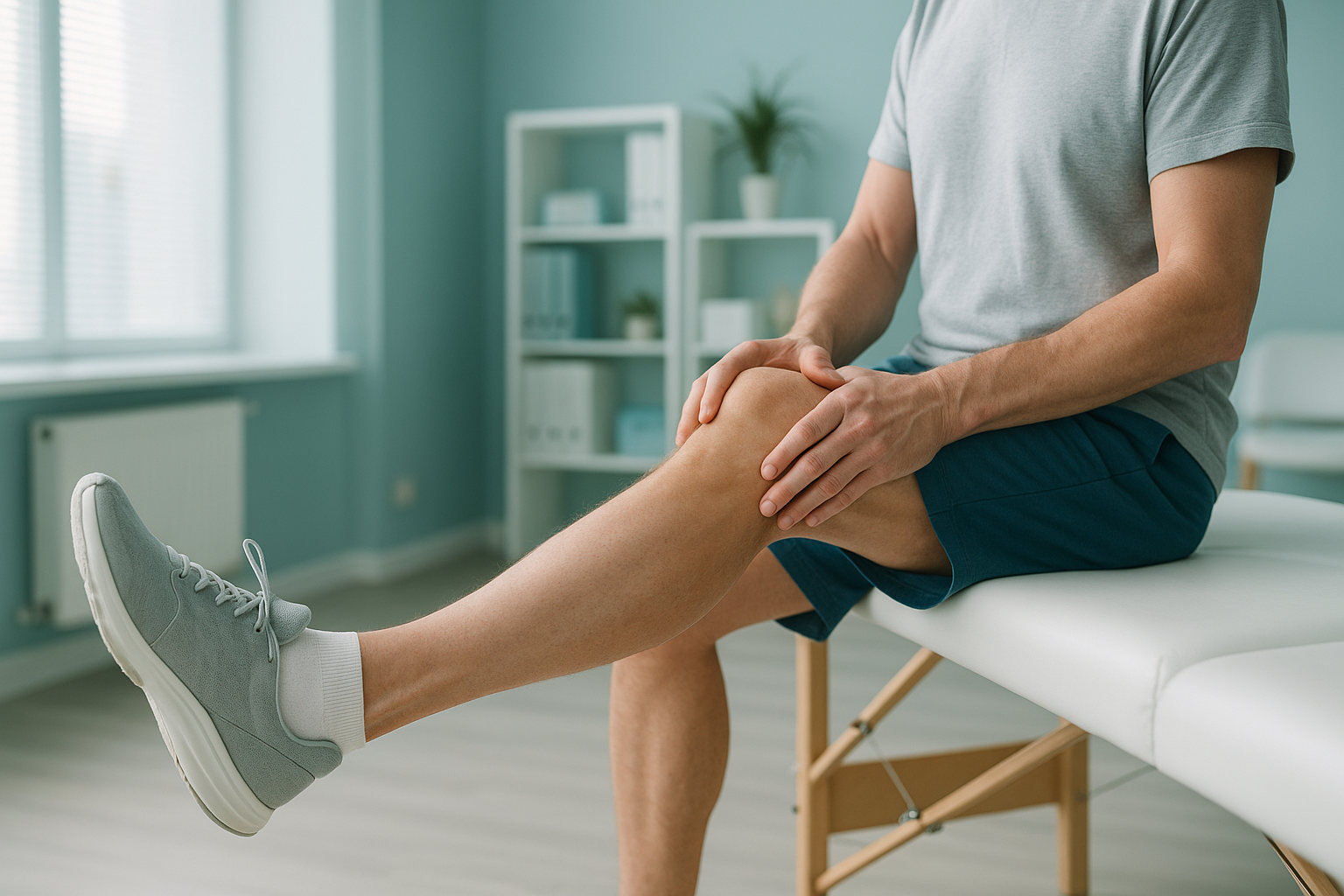
What Are the Best Exercises for Knee Pain?
The best knee strengthening exercises target the quadriceps, hamstrings and glutes to support and stabilise the joint. Gentle, low-impact movements such as isometric holds, partial squats and step-downs are widely recommended. However, the right programme depends on why your knee hurts, so understanding your alignment first helps you exercise safely.
Key takeaways
- Strong quads, hamstrings and glutes reduce load on the knee joint.
- Low-impact exercises like isometric holds and step-downs are a safe starting point.
- Pain during exercise is a signal to stop, not push through.
- A muscle imbalance or alignment issue elsewhere can change which exercises suit you.
- A standing alignment assessment can reveal problems that lying-down imaging misses.
Knee pain is one of the most common reasons people search for exercises they can do at home. Strengthening the muscles around the knee is a well-supported approach, and many people find real relief from a consistent routine. But not every exercise is right for every knee. Pain that keeps coming back, or that started without an obvious injury, may be linked to how your whole leg is aligned under load.
Why does alignment matter before starting knee exercises?
Alignment matters because the knee sits between two powerful levers, your hip and your ankle. If either one is slightly rotated, tilted or shifted, the knee takes uneven load every time you stand, walk or exercise. Strengthening a knee that is already misaligned can sometimes make pain worse rather than better.
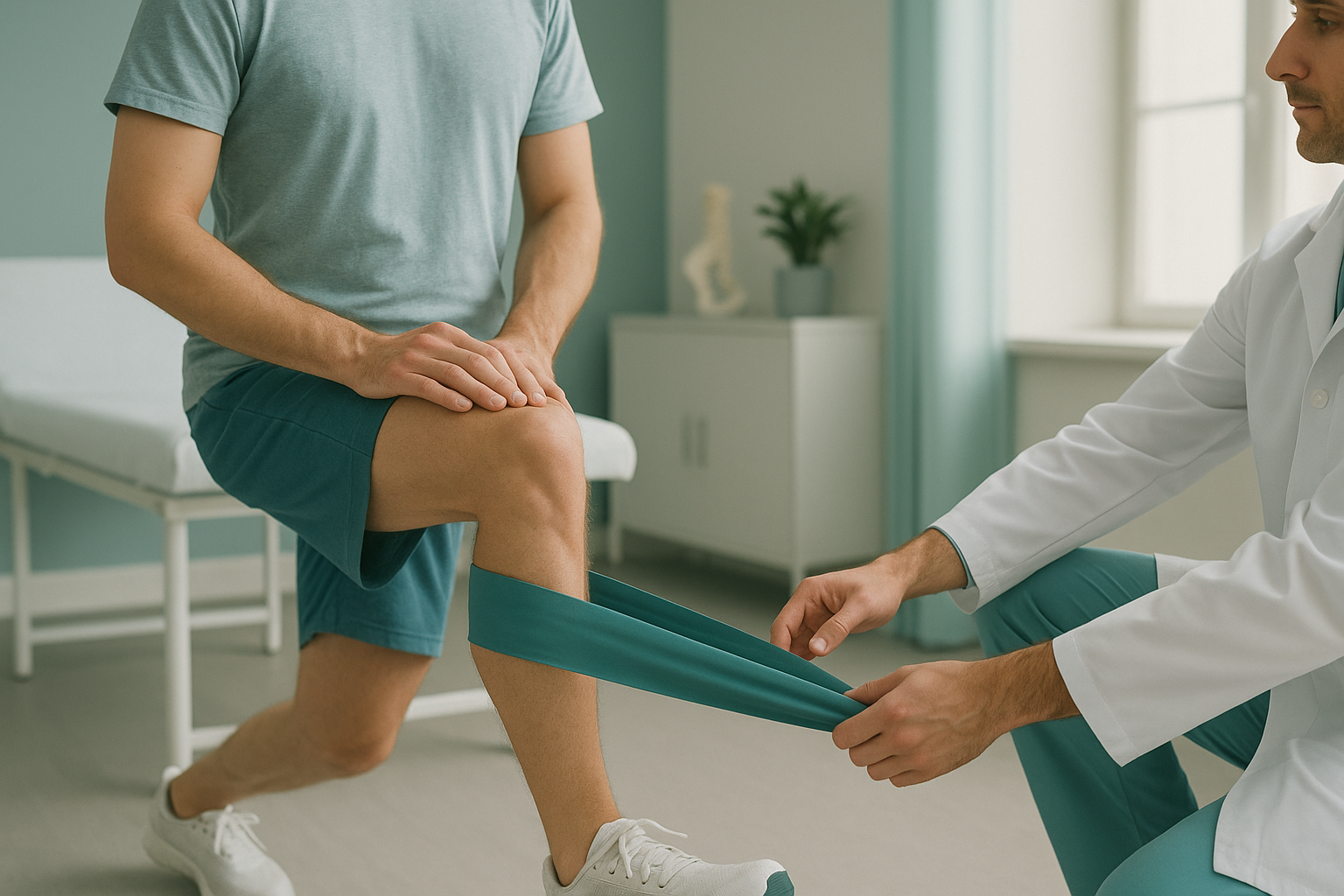
Your body is a connected chain from your feet to your head. A slight tilt at the hip, a rotated foot, or a leg-length difference can change the tracking of the kneecap and put extra stress on one side of the joint. This is why two people with the same diagnosis can respond very differently to the same exercise programme.
Conditions like chondromalacia patella or patellar tendonitis are often driven by how load travels through the leg. Exercises help, but knowing the underlying cause helps even more.
Which knee strengthening exercises are generally recommended?
Low-impact exercises that build strength without excessive joint stress are the most commonly recommended starting point. The following categories cover the muscle groups most important for knee support.
Tighten the front-of-thigh muscle without bending the knee. Hold for a few seconds, then relax. Builds quadriceps strength with minimal joint movement.
Lean against a wall and lower yourself a short way, keeping knees behind toes. Works quads, hamstrings and glutes together in a controlled range of motion.
Stand on a low step and slowly lower the opposite foot toward the ground. This trains the quad and glute medius under controlled load, improving kneecap tracking.
Lie on your back with knees bent, then lift your hips. Strengthens the glutes and hamstrings, which support knee stability from above.
Lie on your side and lift the upper leg. This targets the glute medius, a key muscle for controlling how the knee tracks during walking and stairs.
Standing or lying, gently bend the knee against light resistance. Balancing quad and hamstring strength is important for knee joint stability.
These exercises are general starting points. Your physiotherapist can adjust the range of motion, load progression and number of repetitions to suit your situation. The goal is always to build strength gradually without increasing pain.
Which knee exercises should you avoid?
Some exercises place high or sudden load on the knee joint and may not suit people with existing pain. As a general rule, approach the following with caution until you understand the cause of your pain.
- Deep squats or lunges that take the knee well past a right angle can overload the kneecap, especially if tracking is poor.
- Leg extensions with heavy weight isolate the quad in a way that can increase pressure behind the kneecap.
- High-impact plyometrics such as box jumps or burpees send sudden force through the joint.
- Running on hard surfaces may worsen symptoms if alignment or footwear has not been checked.
These are not permanently off-limits for everyone. Once you know the cause of your knee pain and have built a base of strength, your physiotherapist may reintroduce them at the right stage.
Not sure what is driving your knee pain? Understanding your alignment can help you and your physiotherapist choose the right exercises from the start.
Book a free video consultationHow does a standing alignment assessment help with knee rehab exercises?
A standing assessment shows how your bones and joints line up under your full body weight, which is exactly how they work during exercise. Standard imaging is usually done lying down. That relaxes your muscles and lets gravity flatten your posture, which can hide alignment problems that only appear when you are upright.
An EOS scan captures your whole leg, from hip to ankle, in a single standing image. It shows joint angles, rotation and weight distribution as they really are. This can reveal subtle shifts, like a slightly rotated hip or an uneven leg length, that explain why your knee tracks poorly and which muscles need the most attention.
ScanAlign standing EOS imaging uses about 90% less radiation than a standard X-ray, around ten times less.
A standard X-ray, CT or MRI is taken lying on a table. Without body weight pressing through the joints, subtle tilts and shifts can disappear. You get a clear picture of the bones, but not of how they behave when you are standing, walking or exercising.
When is MRI the better choice? EOS shows bones, joints and alignment clearly. For soft tissue problems such as ligament tears, cartilage damage or nerve issues, MRI is usually the better tool. Your clinician can advise which scan suits your situation.
When should you get help for knee pain instead of just exercising?
Exercise is valuable, but it is not always the right first step. You should seek professional advice before starting a knee rehab programme if your pain has lasted more than a few weeks, if it is getting worse, or if it came on without a clear cause. Persistent pain, swelling, or a knee that gives way deserves investigation.
- Knee pain keeps returning despite exercises
- Pain moves between your knee, hip and lower back
- You have been told your scans look normal but the pain continues
- You want to book an assessment before you start a rehab programme
- Your knee is hot, red and severely swollen
- You cannot put any weight on the leg
- You have numbness, weakness or loss of feeling in the leg
- Pain started after a significant injury or fall
If you experience sudden weakness, numbness, or loss of bladder or bowel control alongside leg or back pain, contact your GP, call 111, or go to A&E. These symptoms need urgent medical attention.
Frequently asked questions
Low-impact movements such as isometric quad holds, glute bridges and partial wall squats are widely recommended for sore knees. They strengthen the muscles that support the joint without placing excessive stress on it. Start gently and stop if pain increases.
Most physiotherapy guidelines suggest doing knee strengthening exercises three to five times per week. Consistency matters more than intensity. Your physiotherapist can tailor the frequency to your specific condition and load tolerance.
Mild discomfort during exercise can be normal, but sharp or worsening pain is a signal to stop. Pain during exercise often means the load is too high, the range of motion too deep, or the underlying cause has not been addressed. Seek professional guidance if pain persists.
A standard X-ray is taken lying down and usually focuses on the knee alone. It may miss alignment problems that only appear when you are standing and bearing weight. It also does not show the hip and ankle, which can both affect the knee. A full standing assessment can help explain pain that standard imaging does not.
Yes. The glute medius muscle helps control inward rotation of the thigh. When it is weak, the knee can drift inward under load, changing kneecap tracking and increasing stress on the joint. Glute strengthening is a key part of most knee rehab programmes.
Quad exercises strengthen the front of the thigh and help support the kneecap. Hamstring exercises strengthen the back of the thigh and help stabilise the joint from behind. Balance between both muscle groups is important. A muscle imbalance between them can contribute to pain.
No. ScanAlign is a self-referral clinic. You do not need a GP letter or consultant referral. You can book a free video consultation directly to discuss whether a standing alignment assessment is right for you.
An EOS scan uses about 90% less radiation than a standard X-ray, around ten times less. This makes it one of the lowest-dose skeletal imaging options available.
Pricing details are available on the ScanAlign FAQs and cost page. The free video consultation is at no charge and helps you understand whether the scan is right for your situation.
Exercises can strengthen the muscles around the knee and reduce symptoms significantly. However, if the underlying cause is a structural alignment issue, exercises alone may not fully resolve the problem. Understanding your alignment helps your physiotherapist design the most effective programme for you.
Understand your knee before you strengthen it
A free video consultation lets you discuss your knee pain and find out whether a standing alignment assessment could help guide your rehab.
Book a free video consultationAuthor: Abbas Dhami (Specialist Diagnostic Radiographer)
Sources
- Bennell KL, Hinman RS. A review of the clinical evidence for exercise in osteoarthritis of the hip and knee. Journal of Science and Medicine in Sport. 2011;14(1):4-9.
- National Institute for Health and Care Excellence (NICE). Osteoarthritis: care and management. Clinical guideline CG177. 2014 (updated 2022).
- Powers CM. The influence of abnormal hip mechanics on knee injury: a biomechanical perspective. Journal of Orthopaedic & Sports Physical Therapy. 2010;40(2):42-51.
This page is general information and not a diagnosis.
ScanAlign is the trading name of CoreMed Solutions Ltd and operates under The Harley Street Hospital's CQC licence.