
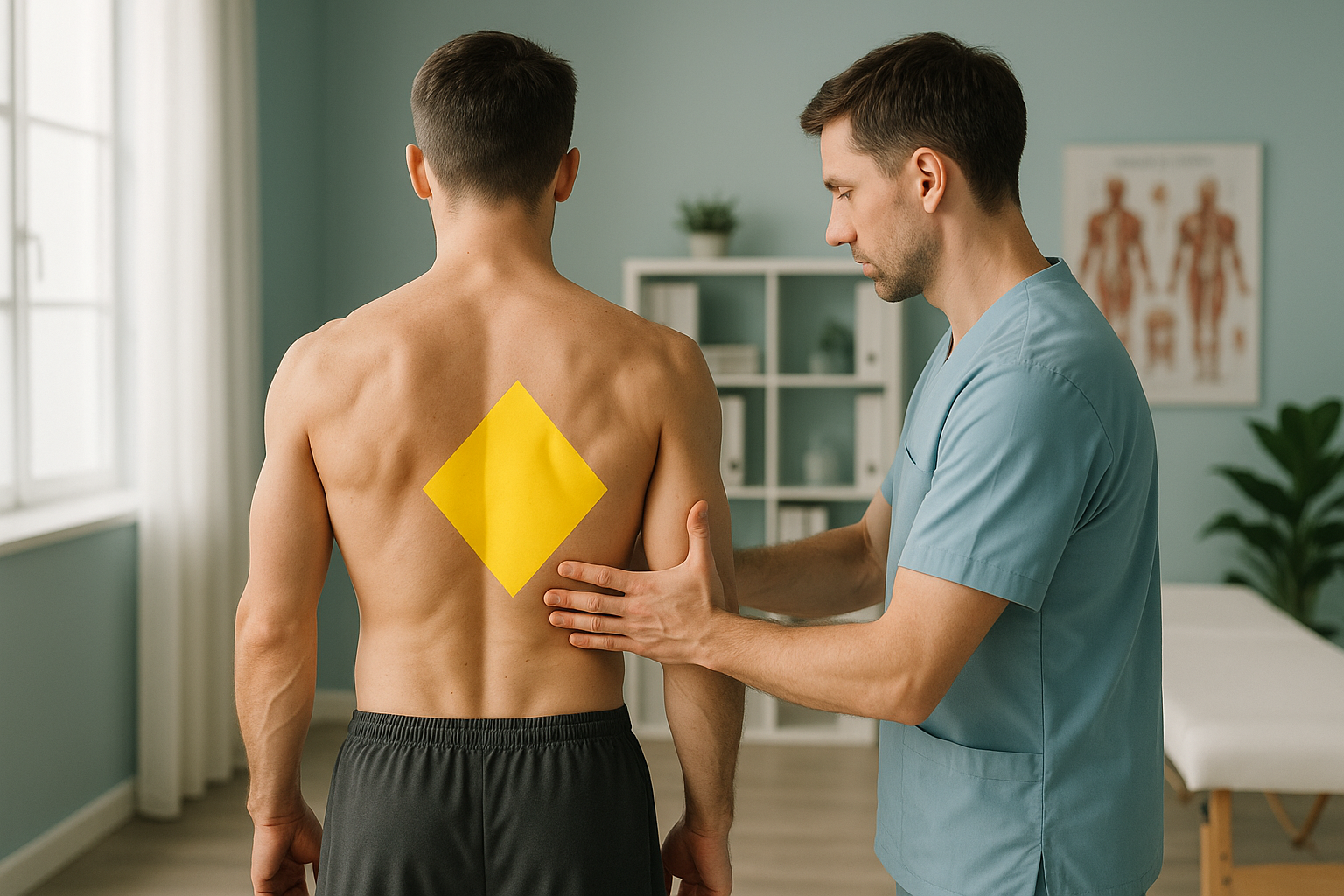
Muscle Imbalance: How It Affects Posture and Movement
A muscular imbalance happens when one muscle group is tighter or stronger than the opposing group. Over time this pulls your skeleton out of alignment, changes posture and shifts load onto joints that were never designed to carry it. The result is often pain, stiffness or reduced movement, sometimes far from the imbalance itself.
Key takeaways
- Muscle imbalance alters how your skeleton lines up under gravity, which can cause pain in areas away from the problem.
- Lying-down scans relax your muscles and can hide the misalignment that only appears when you stand.
- A standing whole-body EOS scan captures your full skeletal alignment under real weight-bearing conditions.
- EOS uses about 90% less radiation than a standard X-ray, around ten times less.
- ScanAlign provides diagnostic imaging only, not treatment.
What is a muscular imbalance?
A muscular imbalance is a difference in strength, length or activation between opposing muscle groups around a joint. Your muscles work in pairs. When one side becomes tight and overactive while the opposite side becomes weak and underactive, the joint between them is pulled out of its neutral position.
Think of a tent held up by guy ropes. If one rope is too tight and the one opposite is too slack, the whole structure leans. Your body works the same way. A tight hip flexor, for example, can tilt your pelvis forward and increase the curve in your lower back. That changes how your spine stacks, how your knees track and even how your feet hit the ground.
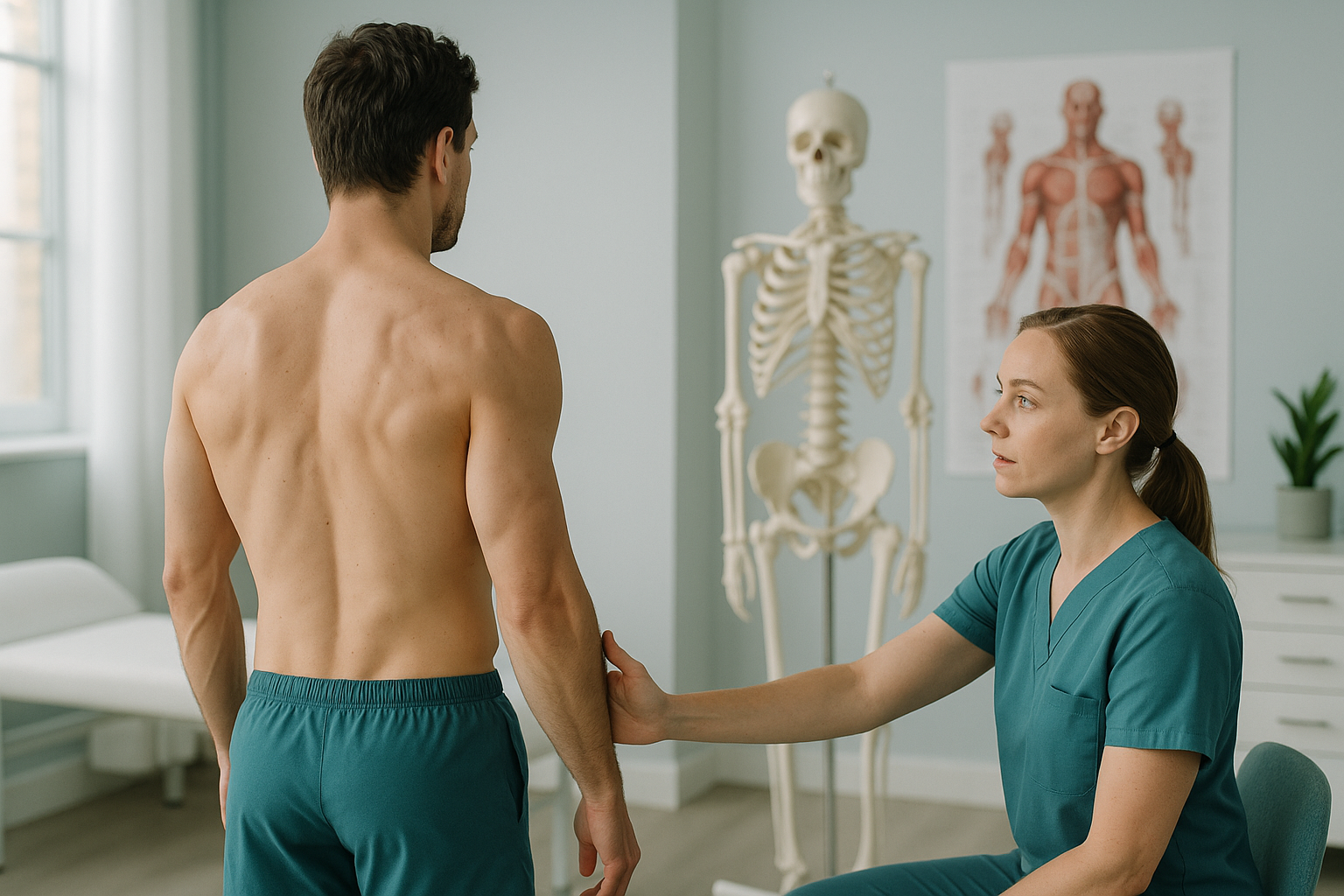
What are the signs of a muscle imbalance?
Signs of a muscle imbalance often appear gradually. You may notice stiffness, fatigue in certain positions, or recurring pain that does not match a clear injury. Common examples include the following.
One hip, shoulder or side of the back always feels tighter than the other.
Pain keeps returning in the same spot despite rest, stretching or treatment.
Shoulders at different heights, a head that sits forward, or a pelvis that tilts to one side.
One leg tires faster during walking or exercise, or you favour one side without thinking.
What causes muscle imbalances?
Muscle imbalances develop when certain muscles are repeatedly overloaded while others are underused. The most common reasons fall into a few broad groups.
Hours at a desk shorten hip flexors and weaken glutes, tilting the pelvis forward.
Always using one arm, leg or movement pattern overdevelops one side.
Guarding a painful area leads to compensatory patterns that persist long after healing.
A leg-length difference, scoliosis or joint shape variation forces muscles to compensate permanently.
Why does a muscle imbalance cause pain somewhere else?
Your body is a connected chain from your feet to the top of your head. When one link in that chain is pulled out of position, every link above and below has to adjust. This is called compensation.
A muscle imbalance in your back, for example, might tilt your pelvis. Your spine shifts to keep your head level. Your knees track differently to keep you upright. Over time the joints doing the extra work become sore, even though they are not the source of the problem. This is why treating the painful area alone often gives only temporary relief.
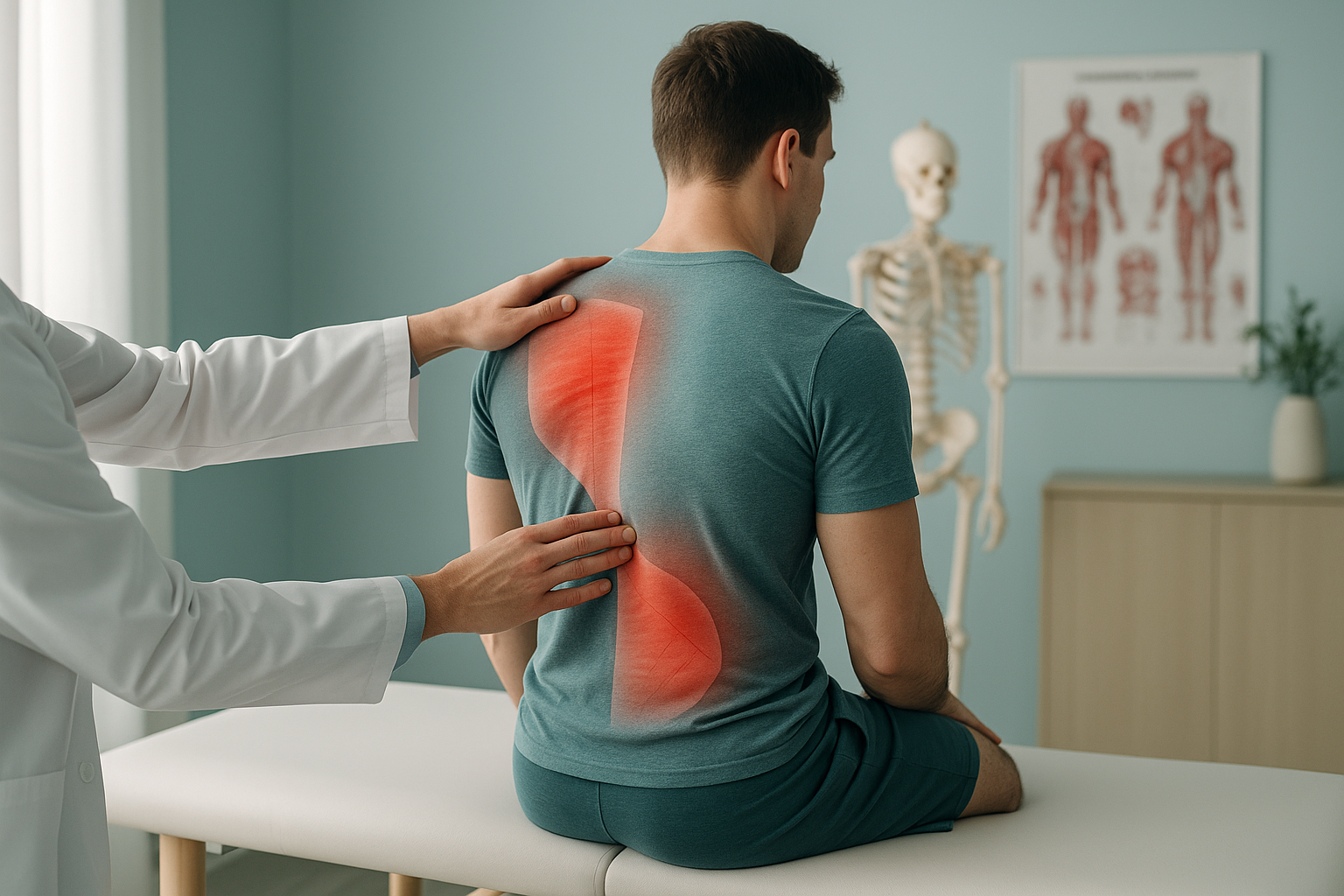
This is also why lying-down scans can miss the bigger picture. When you lie on a scanning table, gravity is removed and your muscles relax. The misalignment may flatten out and look normal. A standing scan captures how your skeleton actually lines up when your muscles and gravity are working together.
How does a standing EOS scan help with muscle imbalance?
An EOS scan images your entire skeleton from head to foot while you stand. Because you are upright and weight-bearing, the scan captures the skeletal misalignments that muscular imbalances create under real conditions.
Instead of looking at one joint in isolation, the clinician reviewing your images can see the full chain. They can identify where the skeleton has shifted, which joints are carrying extra load, and where compensation is happening. This gives any treating clinician a much clearer starting point than a single-area X-ray or MRI taken lying down.
The EOS system uses about 90% less radiation than a standard X-ray, around ten times less. It takes a full scan in seconds, standing in your everyday posture. No referral is needed at ScanAlign. You can read about what to expect and costs on our FAQ page.
When is MRI the better choice? EOS shows bones, joints and alignment clearly. For soft-tissue problems like disc bulges, nerve compression, ligament or tendon tears, MRI is usually the better tool. If your symptoms include numbness, tingling or weakness, your GP or specialist may recommend MRI first.
Seek urgent help. If you experience sudden severe weakness, loss of bladder or bowel control, or numbness spreading to both legs, contact your GP, call 111, or attend A&E immediately. These symptoms need urgent medical attention, not a scan booking.
How are muscle imbalances usually addressed?
Correcting muscle imbalances typically involves identifying the underlying cause, then working with the right professional. Common approaches include targeted strengthening of weak muscles, stretching or releasing overactive muscles, movement retraining and, where a skeletal asymmetry is involved, orthotics or other support.
The key is knowing exactly where the imbalance sits and what the skeleton is doing underneath. Without that information, treatment can end up chasing symptoms. A whole-body standing image gives physiotherapists, osteopaths and surgeons the objective data they need to plan effectively.
ScanAlign provides the diagnostic imaging. We do not offer treatment, physiotherapy or exercise programmes. Your imaging results and report can be shared with whichever clinician manages your care.
Not sure whether whole-body alignment imaging is right for your situation?
Book a free video consultationFrequently asked questions about muscle imbalance
Yes. A muscle imbalance in your back, hips or core can tilt your pelvis or increase spinal curves, placing extra stress on joints, discs and ligaments. This is one of the most common causes of persistent lower back pain that does not respond to rest alone.
Common signs include one-sided tightness, uneven shoulders or hips, recurring pain in the same spot, and favouring one leg or arm during movement. A clinician can assess you physically, and a standing whole-body scan can reveal the skeletal misalignment underneath.
When you lie down, gravity is removed and your muscles relax. This can hide the misalignment that causes your symptoms when you are upright. A standing EOS scan captures your skeleton under real weight-bearing conditions, showing how your body actually lines up during daily life.
EOS uses about 90% less radiation than a standard X-ray, around ten times less. It is one of the lowest-dose skeletal imaging systems available. You can find more details on our FAQ page.
No. ScanAlign is a private self-pay clinic. You can refer yourself directly without a GP letter. We offer a free video consultation first so a specialist radiographer can check the scan is appropriate for your situation.
Muscles themselves do not show on X-ray. However, the skeletal consequences of a muscular imbalance, such as a tilted pelvis, uneven leg alignment or increased spinal curves, are clearly visible on a standing whole-body image.
Pricing details are available on our FAQ and cost page. You are welcome to book a free video consultation first to discuss whether the scan is right for you, with no obligation.
EOS is designed for bones, joints and alignment. It does not image soft tissue in detail. For torn muscles, disc herniations or nerve issues, MRI is usually the better tool. Your clinician can advise which scan suits your symptoms.
Addressing muscle imbalances is often a central part of improving posture. However, the first step is understanding what the skeleton is doing underneath, because some postural changes are driven by bone structure rather than muscles alone. A standing whole-body scan helps clarify this.
ScanAlign is based at 19 Harley Street, London. You can learn more about what to expect on our homepage.
Related topics
See your whole alignment, standing
A free video consultation with a specialist radiographer. No referral needed, no obligation.
Book a free video consultationSources
- Page P, Frank CC, Lardner R. Assessment and Treatment of Muscle Imbalance: The Janda Approach. Human Kinetics, 2010.
- NHS. "Back pain: causes, treatment, and when to see a GP." nhs.uk/conditions/back-pain.
- Illés T, Somoskeöy S. "The EOS imaging system and its uses in daily orthopaedic practice." International Orthopaedics, 2012;36(7):1405-1411.
Written by Abbas Dhami (Specialist Diagnostic Radiographer)
This page is general information and not a diagnosis.
ScanAlign is the trading name of CoreMed Solutions Ltd and operates under The Harley Street Hospital's CQC licence.