
What Is the Best Sleeping Position for Your Spine?
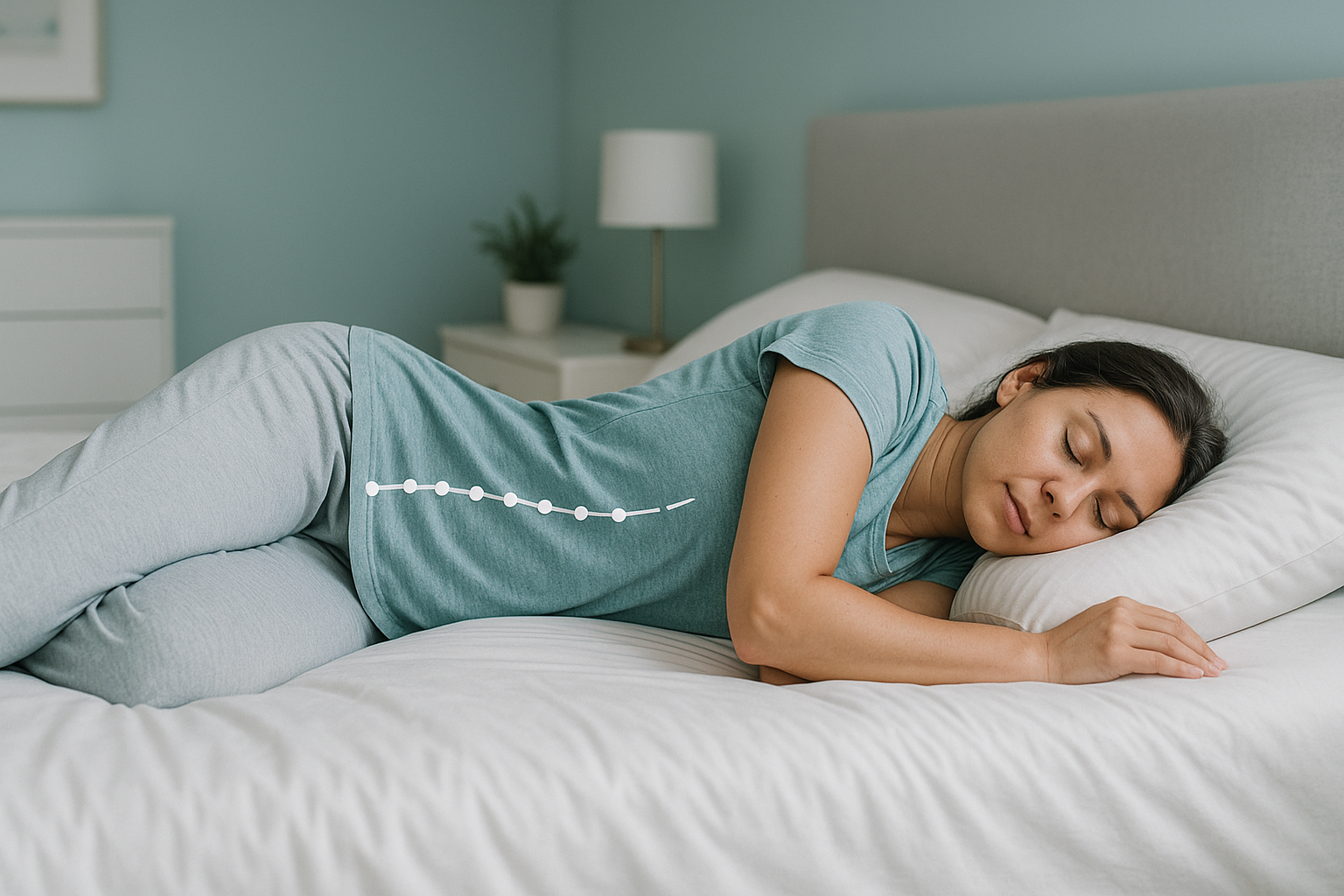
The best way to sleep with lower back pain is usually on your side with a pillow between your knees, or on your back with a pillow beneath them. Both positions keep your spine closer to its natural curve. If pain persists despite changing position, an underlying alignment issue may be the real cause.
Key takeaways
- Side sleeping and back sleeping are generally the kindest positions for a sore lower back.
- A pillow between or under your knees reduces pressure on your spine and hips.
- Sleeping on your stomach can increase strain on your neck and lower back.
- Morning stiffness that never improves may point to a structural alignment problem, not just a bad mattress.
- A standing whole-body scan can reveal alignment issues that lying-down imaging misses.
What is the best sleeping position for back pain?
Side sleeping with a pillow between your knees is the most commonly recommended position, because it keeps your pelvis, hips and spine in a more neutral line. Back sleeping (the supine position) with a small pillow under your knees is a close second, as it distributes your weight evenly and reduces pressure points.
No single position suits everyone. Your best option depends on where your pain is and what is causing it. The goal is always the same: keep your spine as close to its natural curves as possible while you rest.
Is sleeping on your stomach bad for your back?
Stomach sleeping is generally the least recommended position. It pushes your lower back into an exaggerated arch and forces your neck to turn to one side for hours at a time. Over many nights, this can contribute to morning stiffness, neck pain and increased pressure on the joints of your lower spine.
If you find it hard to break the habit, placing a thin pillow under your hips can reduce the arch. Using a very flat pillow, or none at all, for your head also helps keep your neck in a less twisted position. Over time, many people find they can gradually shift towards side sleeping. If you already have neck concerns such as cervical lordosis, stomach sleeping may make symptoms worse.
Does a pillow between your knees actually help?
Yes, for most side sleepers it makes a noticeable difference. A pillow between the knees stops the upper leg from dropping forward, which would rotate the pelvis and twist the lower spine. It also reduces hip pressure, something worth knowing if you experience hip bursitis and side sleeping discomfort.
Choosing the right head pillow
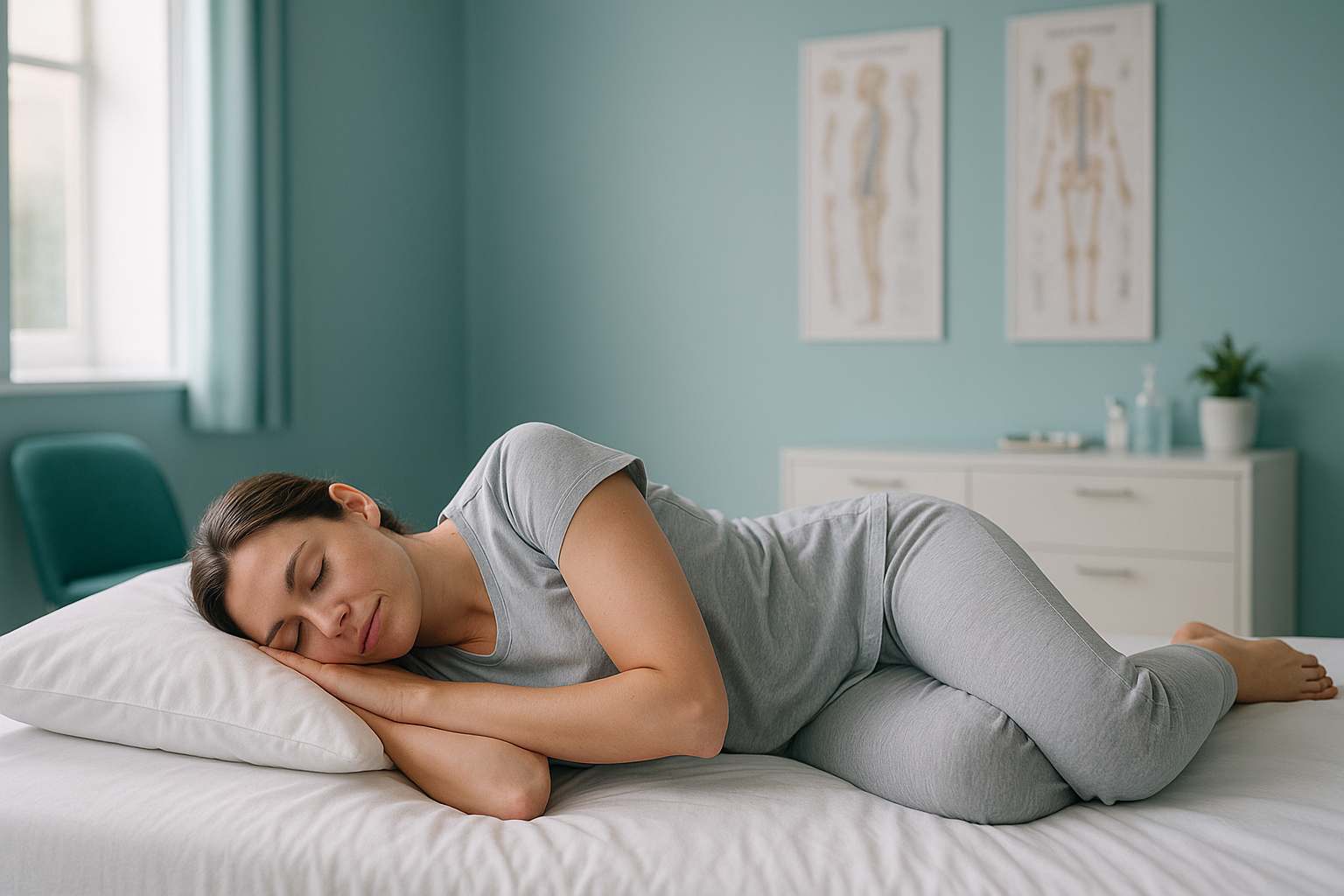
Your head pillow matters just as much. The aim is to keep your neck in line with the rest of your spine. Side sleepers generally need a thicker pillow than back sleepers. If you wake with a stiff neck or headache, your pillow height may be wrong for your sleeping position.
Does your mattress affect back pain?
It can, but probably less than you think. Research suggests a medium-firm mattress tends to suit most people with lower back pain. Too soft and your spine sags. Too firm and your hips and shoulders bear too much pressure.
However, a new mattress alone rarely fixes chronic pain. If you have tried different pillows, different positions and a better mattress and still wake up stiff every morning, the problem may not be your bed at all. It may be an alignment issue in your spine, pelvis or hips that persists throughout the day and simply becomes more noticeable after hours of stillness.
Why does standing imaging show what lying-down scans miss?
Standard imaging, whether X-ray, CT or MRI, is done while you lie down. In that position, gravity is removed, your muscles relax, and your joints settle differently than when you are upright and bearing weight. Alignment problems that cause real-world pain can appear much less significant, or disappear entirely, when you are lying flat.
An EOS scan captures your entire skeleton while you stand. It shows how your spine, pelvis, hips and legs actually line up under the load of gravity. Your body works as a connected chain. A tilt in the pelvis, for example, can shift how the lower back curves, which in turn affects the upper back and neck. Pain often appears away from its true cause because one area compensates for another.
This matters for sleep because if your daytime alignment is off, no pillow arrangement will fully resolve the discomfort. Understanding the root cause is the first step. ScanAlign standing EOS imaging uses about 90% less radiation than a standard X-ray, around ten times less, and takes a single standing image of your whole body in seconds.
Still waking up in pain? A standing whole-body scan could reveal what your bed is not the cause of.
Book a free video consultationWhat else helps with morning back stiffness?
Beyond your sleeping position, a few habits can ease morning stiffness and support your spine overnight.
- Gentle movement before bed. Light stretches for lower back pain can help loosen tight muscles before sleep.
- Avoid sitting for long periods in the evening. Prolonged sitting tightens the hip flexors, which can pull on your lower back when you lie down.
- Give yourself time in the morning. Roll to your side and push up slowly rather than jackknifing out of bed. A few gentle stretches before you stand can help your joints adjust.
- Stay consistent. Changing your sleeping position takes time. Use pillows to support the new position while your body adapts.
When MRI is the better choice: EOS imaging shows bones, joints and alignment beautifully. For soft tissue problems such as disc bulges, nerve compression or ligament injuries, MRI is usually the better tool. If your symptoms include numbness, tingling or weakness, discuss this with your GP or specialist first.
Red flag symptoms. If you experience sudden severe back pain alongside loss of bladder or bowel control, numbness in the saddle area, or progressive leg weakness, seek urgent medical attention. Contact your GP, call 111, or go to A&E. These symptoms need immediate assessment, not a scan booking.
Frequently asked questions
Side sleeping with a pillow between your knees, or back sleeping with a pillow under your knees. Both positions help your spine hold a more natural curve overnight.
Generally, yes. It arches the lower back and twists the neck to one side for hours. If you cannot stop, a thin pillow under your hips can reduce the strain.
Yes. It keeps the pelvis level and stops the top leg from pulling your spine out of alignment while you sleep on your side.
A medium-firm mattress suits most people with lower back pain. Too soft lets your spine sag; too firm increases pressure at your hips and shoulders.
Several things can cause it, from a worn mattress to a poor sleeping position. If the stiffness persists no matter what you try, an underlying alignment issue in your spine or pelvis may be the cause.
Back sleeping with a supportive pillow that follows the curve of your neck, or side sleeping with a pillow thick enough to keep your head level with your spine. Avoid stomach sleeping, which forces the neck into a rotated position.
A standing EOS scan reveals how your entire skeleton aligns under gravity. If a pelvic tilt, leg length difference or spinal curve is forcing your body to compensate, it will show on a standing image even when a lying-down scan looks normal.
EOS uses about 90% less radiation than a standard X-ray, around ten times less. It is one of the lowest-dose skeletal imaging systems available.
No. ScanAlign is a private, self-pay clinic. You can book a spine assessment directly without a referral.
Pricing details are on our frequently asked questions page. The first step is a free video consultation to check whether a scan is appropriate for you.
Still waking up in pain?
A free video consultation can help determine whether a standing alignment assessment is the right next step for you.
Book a free video consultationWritten by Abbas Dhami (Specialist Diagnostic Radiographer)
Sources
- Jacobson BH et al. "Effect of prescribed sleep surfaces on back pain and sleep quality in patients diagnosed with low back and shoulder pain." Applied Ergonomics, 2010;41(1):91-97.
- NHS. "Back pain: How to sleep better." nhs.uk, accessed 2024.
- Desouzart G et al. "Effects of sleeping position on back pain in physically active seniors." Work, 2016;53(4):707-712.
This page is general information and not a diagnosis.
ScanAlign is the trading name of CoreMed Solutions Ltd and operates under The Harley Street Hospital's CQC licence.