
Stretches for Lower Back Pain: What Actually Helps and When Should You Investigate Further?
Gentle, regular stretching for lower back pain can ease stiffness and improve mobility. The best stretches target the muscles around the lower spine, hips and pelvis. But if your pain keeps returning or gets worse, the cause may be a structural alignment issue that stretching alone cannot fix.
Key takeaways
- Stretching can relieve muscular lower back pain, but it does not fix structural problems.
- A simple daily routine targeting the hips, hamstrings and lower spine takes under ten minutes.
- Pain that keeps returning may point to a whole-body alignment issue, not just tight muscles.
- Standing imaging shows how your bones and joints line up under your full body weight.
- Stop any stretch that causes sharp, shooting or worsening pain and seek advice.
Lower back pain affects most adults at some point. Stretching is often the first thing people try, and for good reason. It can reduce muscle tension, improve blood flow and help you move more freely. But stretching is not always the full answer. If pain keeps coming back, it may mean something else is going on with the way your body is aligned.
What are the best stretches for lower back pain?
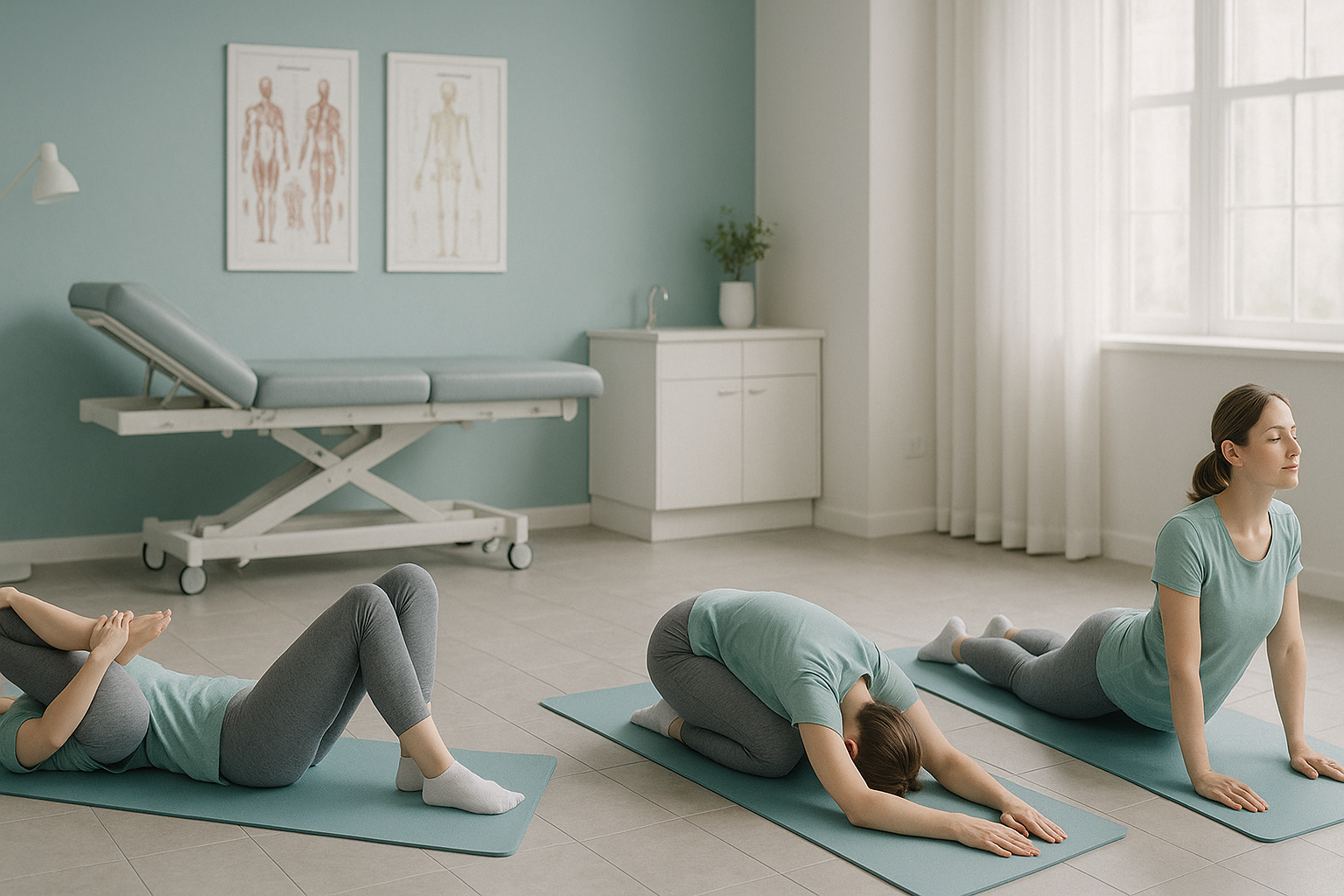
The most effective lower back stretches target the muscles that attach to or support the lumbar spine. That includes the hamstrings, hip flexors, glutes and the muscles running along either side of the spine. Here is a simple routine you can do each morning or before bed. Hold each stretch gently for 20 to 30 seconds and repeat on each side where relevant.
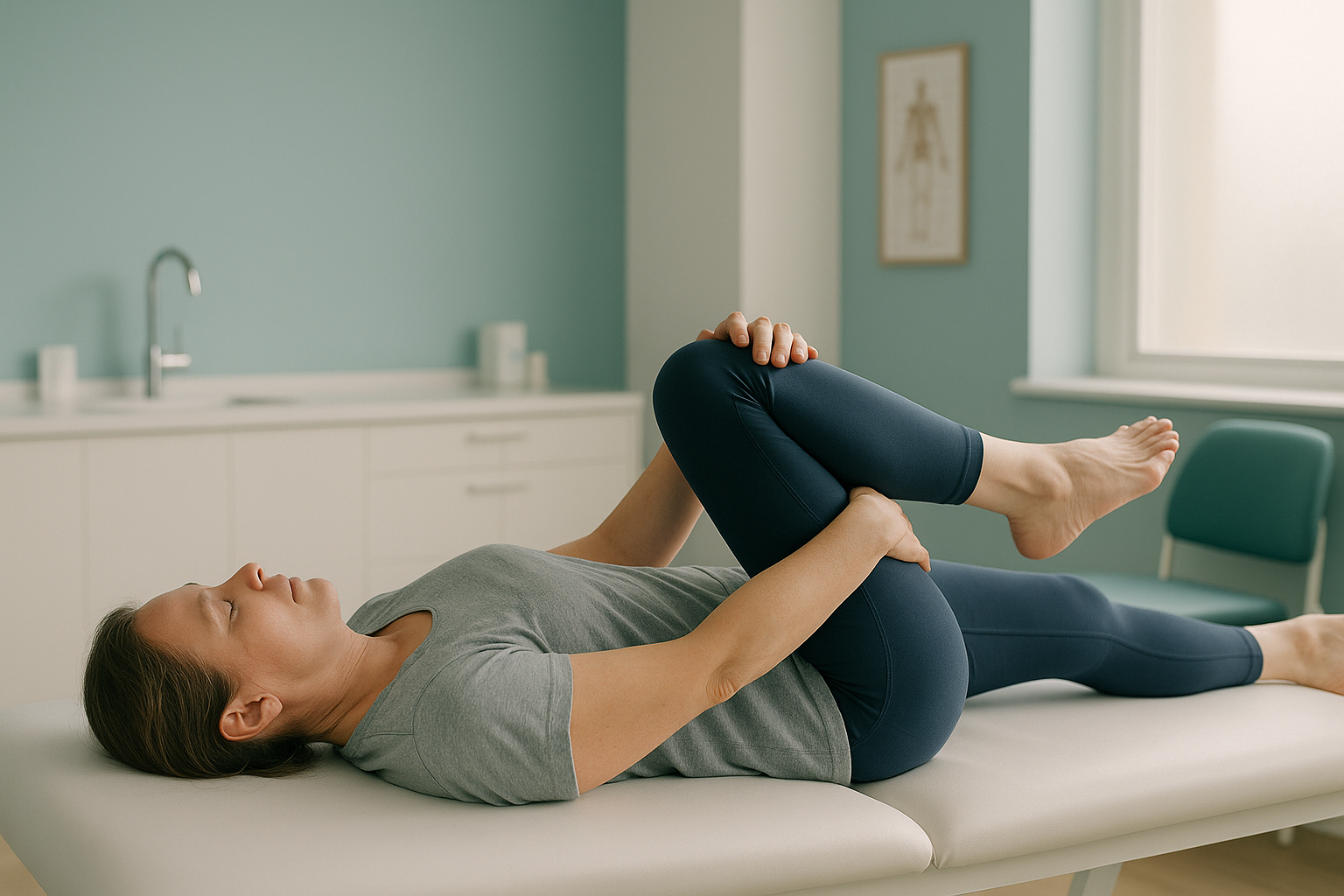
Knee to chest
Lie on your back. Pull one knee gently towards your chest and hold. You should feel a gentle stretch across your lower back and glute. Swap sides.
Cat-cow
On all fours, slowly arch your back upwards (like a cat), then let it dip gently downwards. Move between the two positions with your breath. This mobilises the whole spine.
Child's pose
From all fours, sit your hips back towards your heels and stretch your arms forward on the floor. A classic yoga position that gently opens the lower back.
Figure-four stretch
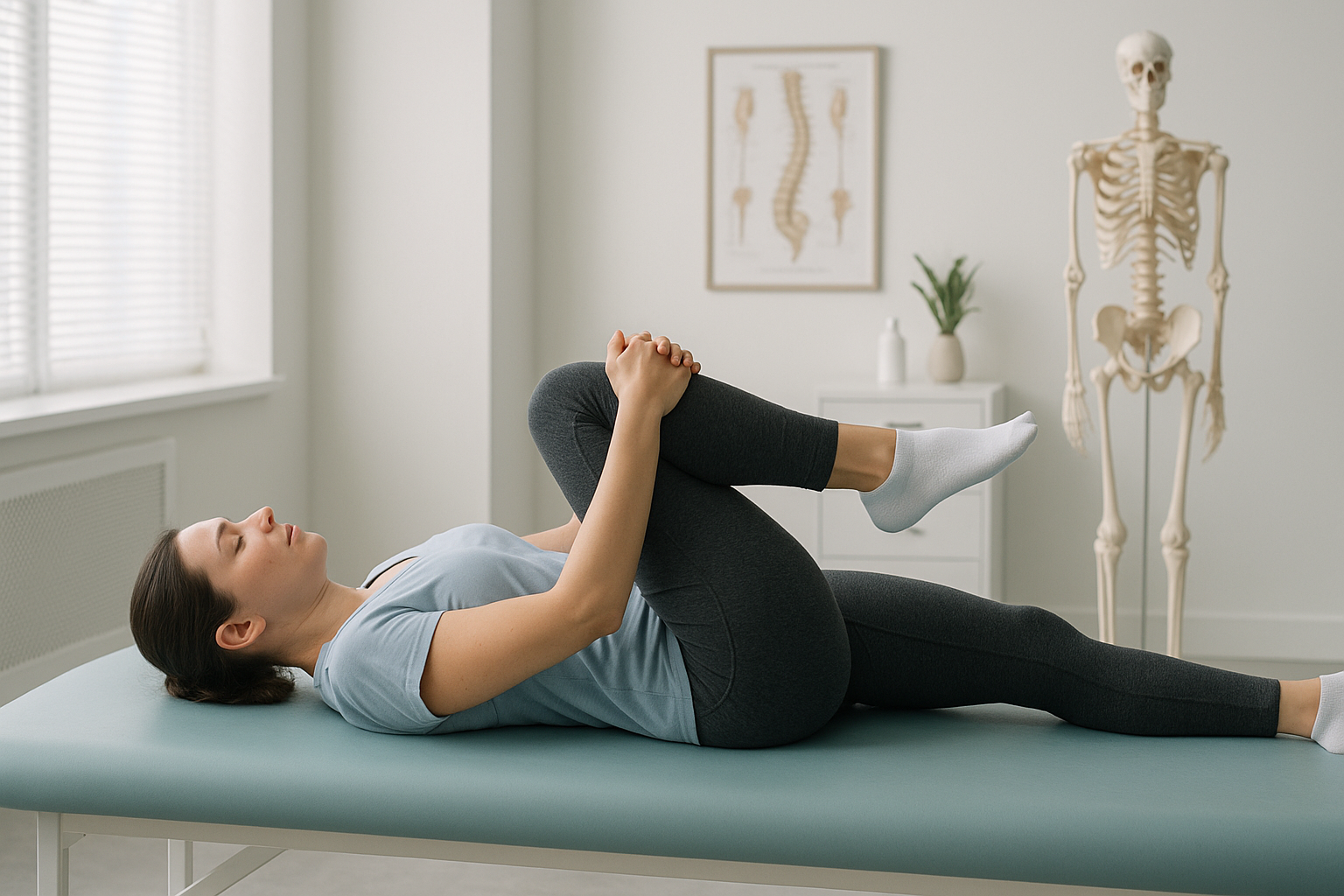
Lie on your back. Cross one ankle over the opposite knee, then pull the bottom leg towards you. This targets the piriformis and deep glute muscles that often contribute to lower back and sciatic-type pain.
Cobra press-up
Lie face down. Place your hands under your shoulders and gently press your upper body up, keeping your hips on the floor. This extends the lumbar spine and can relieve stiffness from prolonged sitting.
Seated spinal twist
Sit with your legs straight. Bend one knee and cross it over the other leg. Twist your upper body gently towards the bent knee. This stretches the lower back and outer hip.
You can do most of these stretches in bed if getting onto the floor is difficult. The key is consistency. A few minutes each morning is more helpful than one long session once a week.
Why does stretching help lower back pain?
Stretching helps because most lower back pain involves tight, overworked muscles. When muscles around the spine, pelvis and hips become stiff, they pull on the joints and restrict normal movement. Gentle stretching reduces that tension, improves blood flow to the area and allows the joints to move more freely.
Loosens tight hamstrings, hip flexors and spinal muscles that stiffen from sitting or inactivity.
Helps restore range of motion in the lower spine, hips and pelvis so everyday movement feels easier.
Regular, gentle movement encourages healing and can reduce the chance of pain returning.
However, stretching works best when the underlying cause of pain is muscular. If the pain is coming from a joint, a disc or a problem with how your whole body is lined up, stretching may offer temporary relief but the pain keeps returning.
When should you stop stretching and get your back checked?
You should stop stretching and seek advice if the pain is getting worse, not better. A stretch should feel like a gentle pull, never sharp or electric. If pain shoots down your leg, does not improve after several weeks of regular stretching, or keeps coming back after it settles, there may be a structural cause that needs investigating.
- Pain started after a specific activity or period of inactivity
- Stiffness eases with gentle movement
- You feel better within a few weeks of daily stretching
- Pain stays in the lower back and does not spread
- Pain keeps coming back despite regular stretching
- Discomfort radiates into the hip, buttock or leg
- You feel stiff or crooked when you stand
- One leg feels longer than the other
- Pain has lasted more than six weeks
A note on soft-tissue problems. EOS imaging shows bones, joints and overall alignment clearly. For soft-tissue concerns such as discs, nerves or ligaments, MRI is usually the better tool. Your clinician can advise which type of imaging is right for you.
Seek urgent medical attention if you have numbness or weakness in your legs, loss of bladder or bowel control, or sudden severe symptoms. Contact your GP, call 111, or go to A&E.
Could your lower back pain be an alignment problem?
Yes, and this is often missed. Your body is a connected chain from your feet to your head. If one area is slightly out of line, perhaps a tilted pelvis, uneven hips, or a subtle difference in leg length, the muscles around your lower back may be working harder to compensate. That compensation creates tension, and tension creates pain.
Standard imaging such as X-rays, CT or MRI is usually done while you are lying down. When you lie down, your muscles relax and gravity no longer pulls on your joints. This can hide alignment problems that only show up when you are standing and weight-bearing, which is how you actually live your life.
An EOS scan captures your entire skeleton from head to foot while you stand naturally. It uses about 90% less radiation than a standard X-ray, around ten times less. The image shows exactly how every part of your skeleton relates to the rest, revealing the compensations that may be driving your lower back pain. This information helps your clinician plan the right approach, whether that is targeted physiotherapy, orthotics, or something else entirely.
If your lower back pain keeps returning despite stretching, a standing whole-body assessment can show whether alignment is the missing piece.
Book a free video consultationYou can learn more about how whole-body standing imaging works on the EOS scan overview page. For questions about the spine and lower back, there is a dedicated page covering common spinal conditions in more detail.
Frequently asked questions
Daily stretching is ideal. Even five to ten minutes each morning or evening can make a noticeable difference to stiffness and discomfort over a few weeks.
Yes. Knee-to-chest, figure-four and gentle spinal twists all work well on a firm mattress. This can be especially helpful first thing in the morning when your back feels stiffest.
Yoga can be very helpful because it combines stretching with controlled breathing and gentle strengthening. Poses like cat-cow, child's pose and downward dog are commonly recommended. Start gently and avoid any position that causes sharp pain.
If your pain is severe, avoid forcing any stretch. Very gentle movement is usually fine, but if pain is intense, radiates down your leg, or comes with numbness or weakness, speak to your GP or seek urgent care before continuing any exercise.
Recurring pain often means the muscles are compensating for something else, such as a pelvic tilt, uneven hips, or a subtle alignment imbalance. Stretching eases the symptom but does not address the structural cause. Standing whole-body imaging can help identify what is driving the pattern.
Some stretches, particularly the figure-four and gentle hamstring stretches, can ease sciatic-type symptoms by reducing tension on the piriformis and surrounding muscles. However, if pain runs down your leg consistently, it is worth getting the cause properly assessed.
An EOS scan takes a full-length image of your skeleton while you stand. Unlike a standard X-ray or MRI, it captures how your bones and joints line up under your full body weight. This reveals alignment issues that may be causing or contributing to your back pain.
Yes. EOS uses about 90% less radiation than a standard X-ray, around ten times less. You can find more details about safety, cost and what to expect on the FAQs page.
No. ScanAlign is a private, self-pay clinic and you can refer yourself. The first step is a free video consultation to discuss whether imaging is appropriate for you.
Pricing details are available on the FAQs and cost page. The free video consultation is a good chance to ask any questions before committing.
Still stretching with no lasting relief?
A free video consultation can help you understand whether a whole-body alignment assessment is the right next step.
Book a free video consultationSources
- NHS. "Back pain: exercises and stretches." nhs.uk, 2023.
- Gordon R, Bloxham S. "A Systematic Review of the Effects of Exercise and Physical Activity on Non-Specific Chronic Low Back Pain." Healthcare (Basel), 2016; 4(2): 22.
- Illés T, Somoskeöy S. "The EOS imaging system and its uses in daily orthopaedic practice." International Orthopaedics, 2012; 36(7): 1405–1411.
Written by Abbas Dhami (Specialist Diagnostic Radiographer)
This page is general information and not a diagnosis.
ScanAlign is the trading name of CoreMed Solutions Ltd and operates under The Harley Street Hospital's CQC licence.