

What Causes a Burning Sensation in Your Lower Back?
A burning feeling in your lower back usually comes from an irritated or compressed nerve, overworked muscles, or an inflammatory condition. It can also follow a skin-related cause such as shingles. Because the spine is a connected chain, a problem at one level often refers burning pain elsewhere. Standing imaging can reveal alignment issues that lying-down scans miss.
Key takeaways
- Nerve irritation is the most common reason for a burning sensation in your back.
- Muscle fatigue, joint inflammation and skin conditions like shingles can also cause it.
- Pain often shows up away from its true source because of how the body compensates.
- A standing scan shows your spine under real load, catching problems a lying-down scan may hide.
- Sudden numbness, weakness or loss of bladder or bowel control needs urgent medical attention.
A burning in your lower back is not the same as a standard ache. People describe it as a hot, stinging or tingling sensation, sometimes spreading into the buttock or leg. It can be constant or it can flare with certain positions. Understanding why the burning happens is the first step towards getting the right imaging and, eventually, the right care.
What causes burning back pain?
Burning back pain most often results from nerve irritation, but muscles, joints and even the skin can produce a similar sensation. Below are the main categories.
A pinched nerve or lumbar radiculopathy sends burning signals along the nerve path.
Overworked or strained muscles build up metabolic waste that triggers a burning, cramping sensation.
Facet joints in the spine can become inflamed, producing a deep, hot ache across the lower back.
The varicella-zoster virus can reactivate along a nerve, causing a one-sided band of burning pain and a rash. This is often missed.
Nerve-related burning explained
When a nerve root in the lower spine is compressed or irritated, the brain can interpret the signal as burning, tingling or an electrical feeling. This is sometimes called neuropathic pain. A disc bulge, bony narrowing or swelling around the nerve exit point can all be responsible. The burning often follows a specific path down the leg because each nerve supplies a particular area of skin.
Muscle-related burning
If your postural muscles are working harder than they should, perhaps because of a pelvic tilt or an alignment shift, they can fatigue and produce a burning ache. This type of burning tends to ease when you change position or rest, unlike nerve burning which can persist regardless.
Shingles and skin-level causes
Shingles deserves a special mention. The burning is often the first symptom, appearing days before any rash. It usually follows a band around one side of the body. If you notice burning pain with skin sensitivity or blistering, see your GP promptly, as early antiviral treatment is most effective within 72 hours.
How do you know if burning in your lower back is serious?
Most burning sensations in the back are uncomfortable but not dangerous. However, certain signs suggest you need urgent medical attention.
Spreading numbness or sudden leg weakness alongside burning can indicate significant nerve compression.
This is a medical emergency. Go to A&E immediately.
A sudden severe escalation, especially with fever, warrants urgent assessment via your GP, 111 or A&E.
A band-like rash with burning often points to shingles. See your GP within 72 hours for antiviral treatment.
Important: If you develop sudden numbness, weakness in both legs, or loss of bladder or bowel control alongside back pain, seek urgent medical attention immediately. Contact your GP, call 111 or go to A&E. Do not wait to book a scan.
For burning that has lasted weeks or months without red-flag symptoms, the question becomes: where exactly is the irritation, and why? That is where the right imaging matters.
Why does a standing scan matter for burning back pain?
A standing scan captures your spine under its normal load, the way it works when you are upright. This is important because many alignment shifts and nerve compressions only appear when gravity is acting on your body.
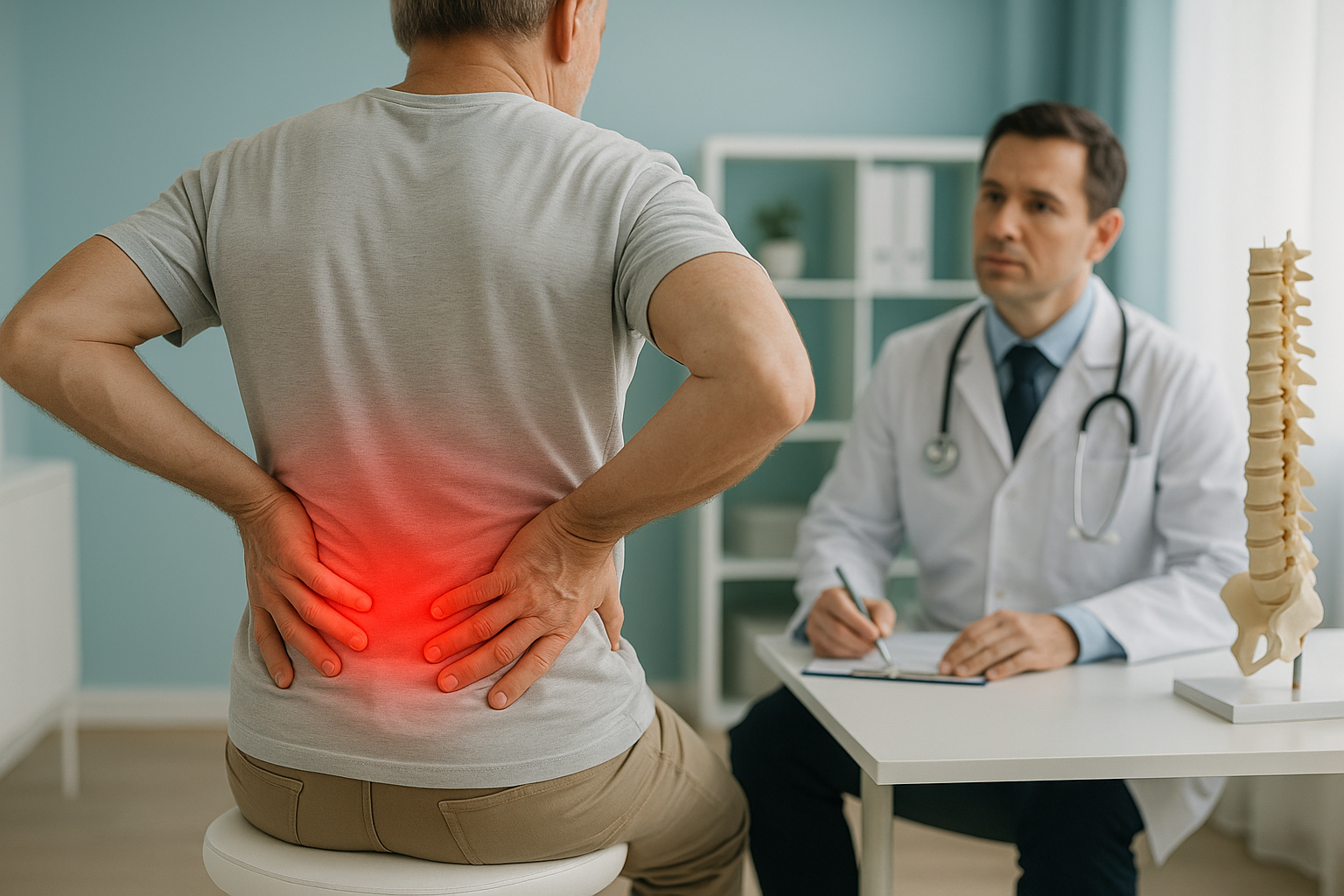
When you lie down for a standard X-ray, CT or MRI, your muscles relax and gravity no longer compresses the spine. A tilt, a curve or a narrowed nerve exit that causes burning while you are on your feet can look perfectly normal on a lying-down image. This is why some people are told their scan is fine despite ongoing symptoms.
ScanAlign standing EOS imaging captures your full spine and pelvis in a single upright exposure, using about 90% less radiation than a standard X-ray, around ten times less. It shows exactly how your vertebrae, pelvis and legs line up under real-world conditions, helping to identify the mechanical cause behind your burning sensation.
A note on MRI: EOS shows bones, joints and alignment in a standing position. For soft tissue detail such as discs, nerves or the spinal cord itself, MRI is usually the better tool. In many cases, an EOS standing scan and an MRI complement each other, giving a more complete picture than either alone.
What can help with burning lower back pain?
The right next step depends entirely on what is causing the burning. An accurate diagnosis is the foundation. Without it, treatment is guesswork.
If you have had lower back pain or a burning sensation for more than a few weeks, and standard scans have not given clear answers, a standing alignment assessment can show what has been missed. Your body is a connected chain from your feet to your skull. A shift in the pelvis, for example, can overload muscles higher up or compress a nerve root lower down, causing burning in a spot far from the original problem.
ScanAlign is a diagnostic imaging clinic. We do not provide treatment. We provide the detailed standing images that help your clinician, whether a physiotherapist, osteopath or surgeon, plan the right next step for you.
Book a free video consultationFrequently asked questions
The most common reason is nerve irritation or compression in the lumbar spine. Muscle fatigue, joint inflammation and skin conditions such as shingles can also produce a burning feeling.
It can be. A pinched nerve often sends burning or tingling sensations along the nerve path, sometimes into the buttock or leg. Standing imaging can help identify where the compression is occurring.
Yes. The burning pain of shingles can appear several days before any visible rash. It typically follows a band-like pattern on one side of the body. If you suspect shingles, see your GP early.
Seek urgent medical attention if the burning is accompanied by numbness or weakness in both legs, loss of bladder or bowel control, or sudden severe symptoms. Contact your GP, call 111 or go to A&E.
A standing scan captures your spine under gravity and body weight. Alignment shifts, pelvic tilts and nerve compressions that appear when you are upright can relax and disappear when you lie flat. This is why some people have normal lying-down scans despite ongoing symptoms.
Yes. EOS uses about 90% less radiation than a standard X-ray, around ten times less. It captures the full spine and legs in a single low-dose exposure.
No. ScanAlign is a private, self-pay clinic and you can self-refer. You start with a free video consultation to discuss whether a standing scan is appropriate for you.
You can find current pricing details on the book a standing spine scan page or speak with the team during your free video consultation.
Yes. Nerve irritation, muscle overload and alignment problems can produce burning pain between the shoulder blades as well as in the lower back. A full standing image of the spine can reveal whether a postural imbalance lower down is contributing to pain higher up.
EOS excels at showing bone alignment and joint spacing. It can suggest disc narrowing. However, for detailed soft tissue assessment of the disc itself, nerves or the spinal cord, MRI is usually the better tool. The two scans often complement each other well.
Still unsure what is causing that burning feeling?
A free video consultation lets you discuss your symptoms and find out whether a standing spine scan could provide the answers you have been looking for.
Book a free video consultationWritten by Abbas Dhami (Specialist Diagnostic Radiographer)
Sources
- NHS. Back pain: causes, symptoms and treatment. nhs.uk/conditions/back-pain
- National Institute for Health and Care Excellence (NICE). Low back pain and sciatica in over 16s: assessment and management (NG59). nice.org.uk/guidance/ng59
- NHS. Shingles: symptoms, treatment and vaccination. nhs.uk/conditions/shingles
This page is general information and not a diagnosis.
ScanAlign is the trading name of CoreMed Solutions Ltd and operates under The Harley Street Hospital's CQC licence.