
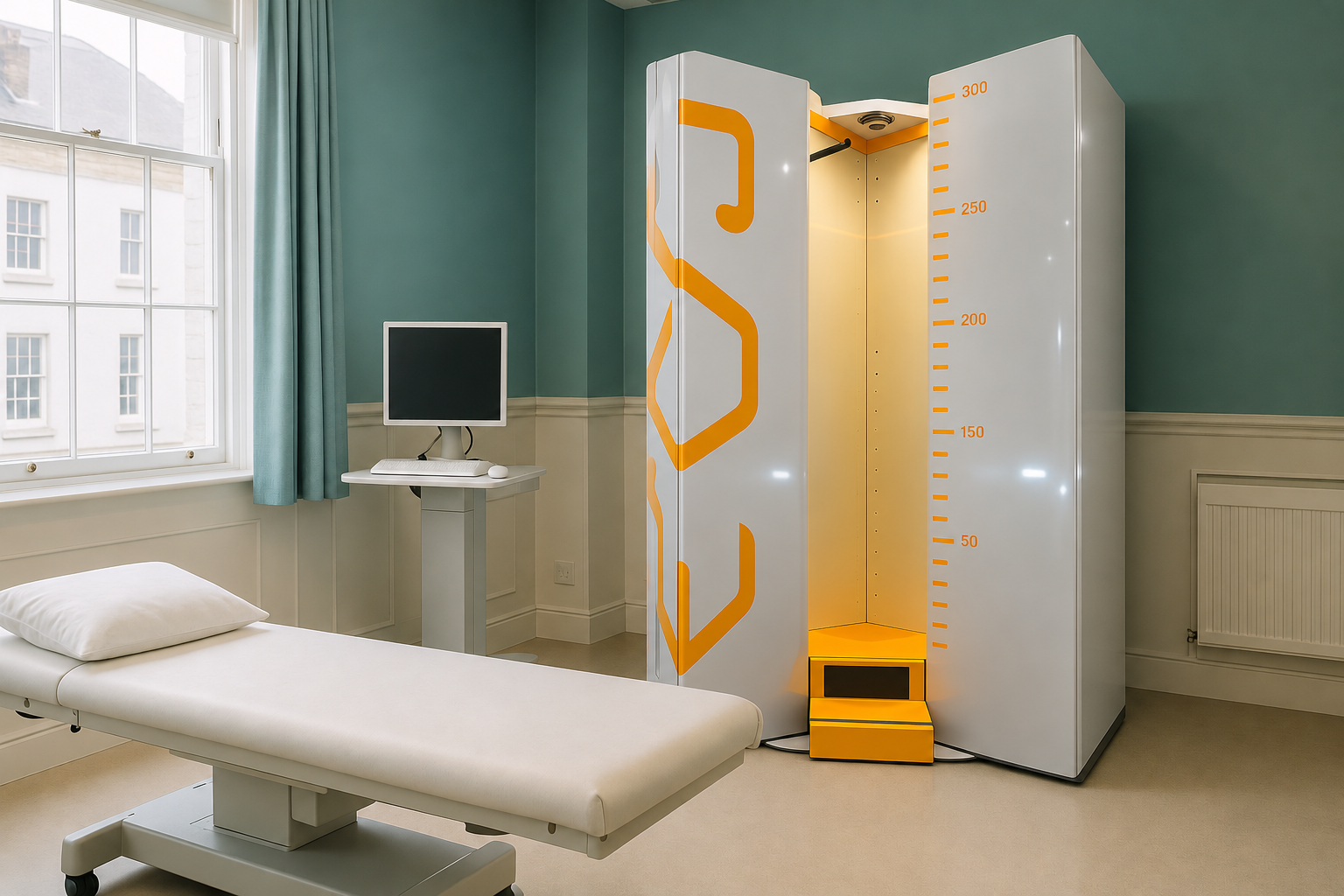
Where Are the EOS Scanners in the UK?
EOS scanners are uncommon in the UK. A small number are installed across NHS hospitals and private clinics, mostly in major cities. Access through the NHS usually requires a consultant referral, and waiting lists apply. Private clinics, including ScanAlign, private standing EOS imaging at 19 Harley Street in London, let you self-refer for a standing whole-body scan.
Key takeaways
- EOS machines are not widely available in the UK, with only a handful of sites nationally.
- NHS access typically requires a specialist referral and may involve a wait.
- Private self-referral options exist, letting you book without a GP letter.
- EOS uses about 90% less radiation than a standard X-ray, around ten times less.
- Standing imaging captures your body under real weight-bearing conditions, which lying-down scans cannot replicate.
How many EOS scanners are there in the UK?
There are relatively few EOS scanners installed across the whole of the United Kingdom. Most are found in larger teaching hospitals or specialist orthopaedic centres, mainly in England. A small number of private clinics also operate EOS systems.
Because the installed base is small, regional availability is limited. If you live outside a major city, the nearest EOS machine could be a significant journey away. London has the highest concentration of both NHS and private EOS sites.
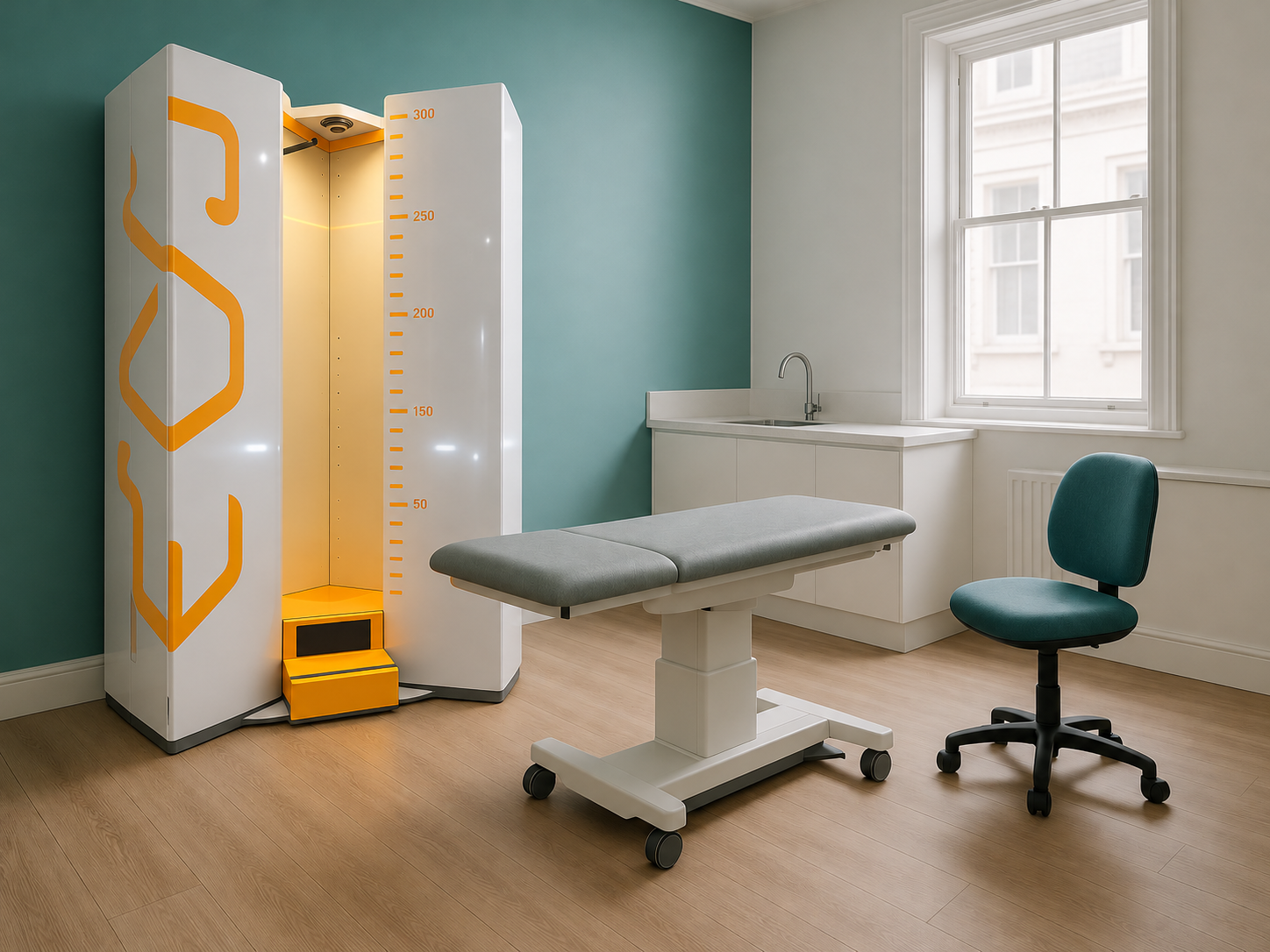
The map above is illustrative. The exact number of installed systems changes as hospitals upgrade or decommission equipment. The key point is that EOS remains uncommon in the UK compared with standard X-ray or MRI machines.
Can I get an EOS scan on the NHS?
Yes, some NHS hospitals do have EOS scanners. However, access is usually limited to patients who already have a consultant referral, often for a specific orthopaedic or spinal condition. Your GP cannot typically send you for an EOS scan directly. You would first need to be seen by a specialist, who may then request EOS imaging if they consider it clinically appropriate.
NHS waiting times for specialist appointments vary widely by region and by trust. Even once you have a referral, the scan itself may take additional time to schedule.
Referral required: You need a GP appointment, then a consultant referral, before EOS imaging is considered.
Location: Only available at the handful of NHS hospitals that have an EOS machine installed.
Waiting: Subject to NHS waiting lists at each stage.
Cost: Free at the point of care.
No referral needed: You can self-refer. No GP letter or consultant appointment required first.
Location: ScanAlign is based at 19 Harley Street, London, with step-free access.
Booking: Start with a free video consultation to check the scan is right for you. You can then book a scan in London at a time that suits you.
Cost: Self-pay. A fee applies.
Why does it matter that an EOS scan is taken standing up?
It matters because your skeleton behaves differently when it is bearing your full body weight. A conventional X-ray, CT or MRI is usually taken lying down. In that position, gravity is removed from the equation. Your muscles relax, your pelvis settles, and your spine can shift into a shape that does not reflect how you actually stand and move.
An EOS standing x-ray captures your entire alignment from head to feet in a single upright image. This reveals tilt, rotation and compensation patterns that lying-down imaging can miss entirely. Your body is a connected chain. A slight tilt at the pelvis can force your spine to curve in response, and that curve might shift load onto one knee more than the other. Pain often appears far from the area causing the problem.
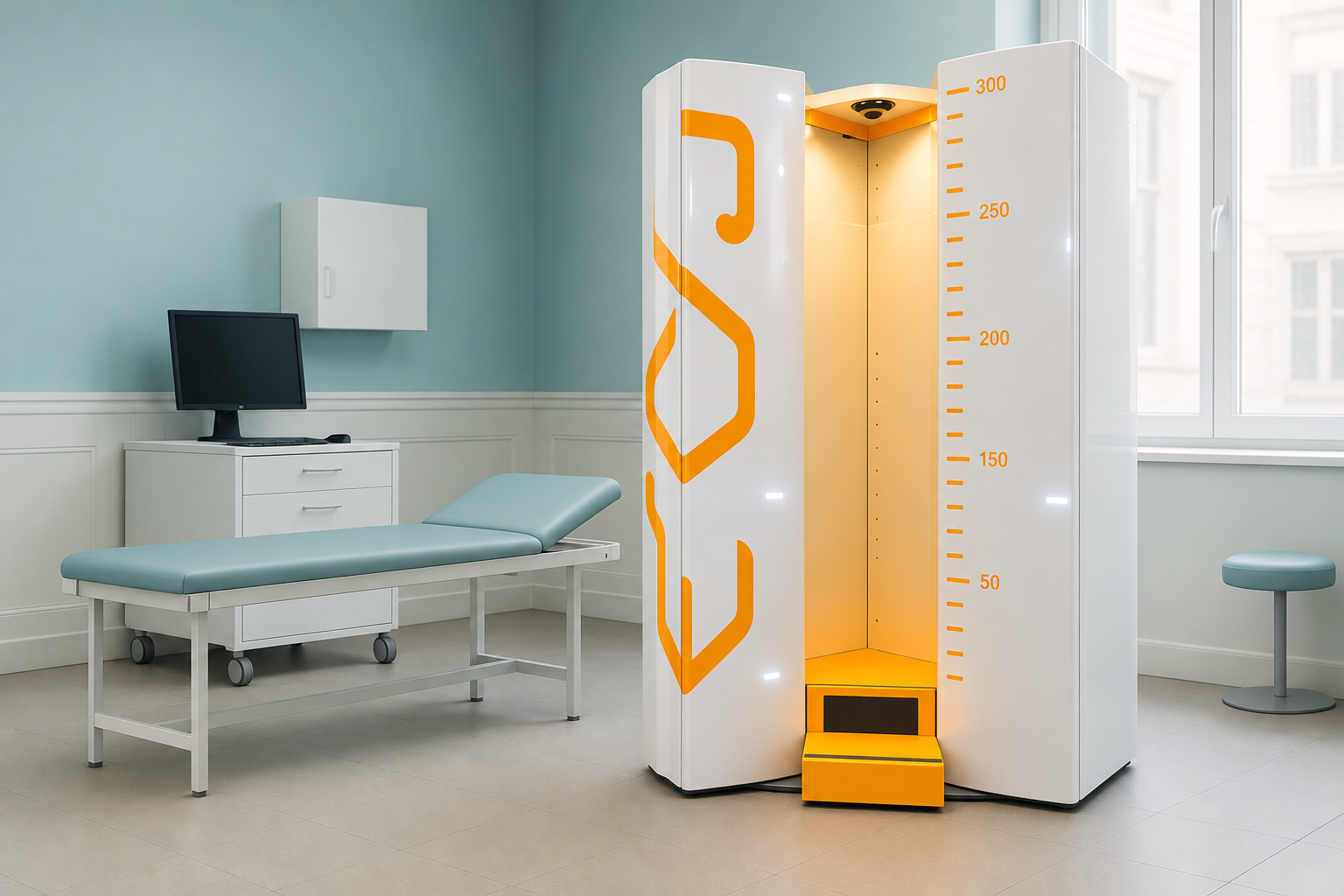
This is why an EOS compared with x-ray, CT and MRI can reveal the bigger picture. Understanding your whole-body alignment often changes the diagnosis, and the treatment plan that follows.
A note on MRI. EOS excels at showing bones, joints and overall alignment under load. For soft-tissue problems such as disc bulges, nerve compression or ligament tears, MRI is usually the better tool. The two are complementary, not competing.
How do I book an EOS scan at ScanAlign?
Booking is straightforward. You do not need a GP referral or a consultant letter. The process starts with a free video consultation to make sure the scan is appropriate for your situation. Find out who our scan is suitable for.
A short call with our team to discuss your symptoms, history and what you hope to learn. No charge, no obligation.
If the scan is right for you, choose a date that works. The clinic is at 19 Harley Street, central London, with easy transport links.
You stand naturally in the EOS scanner while it takes a full-length image. The scan uses about 90% less radiation than a standard X-ray, around ten times less. It is quick and painless.
Your images are reviewed by a specialist. You receive a detailed report covering your alignment from head to feet, which you can share with your treating clinician.
Ready to find out if an EOS alignment scan could help? Start with a quick, no-cost video call.
Book a free video consultationCan I travel from outside London for an EOS scan?
Yes. Many of our patients travel from other parts of the UK specifically because EOS availability is limited in their region. The clinic at 19 Harley Street is a short walk from several Underground stations, including Oxford Circus, Regent's Park and Great Portland Street. London is also well served by mainline rail from across the country.
Because the scan itself is quick, most people are able to combine the appointment with a day trip to London rather than needing an overnight stay. Learn more about ScanAlign and the clinic location.
19 Harley Street, W1G 9QJ. Step-free access available.
Oxford Circus, Regent's Park, Great Portland Street.
The scan is fast, so most people manage a same-day return trip.
Frequently asked questions
EOS scanners are installed in a small number of NHS hospitals and private clinics, mostly in major English cities. London has the widest choice. ScanAlign at 19 Harley Street is one private option that allows self-referral.
On the NHS, yes. You typically need a consultant referral. At ScanAlign, no referral is needed. You self-refer and start with a free video consultation to check the scan is appropriate for you.
Some NHS hospitals have EOS machines, but access depends on your trust, your condition and whether a specialist requests it. It is not something you can usually ask your GP to arrange directly.
Pricing varies between clinics. ScanAlign publishes its fees on the FAQ page. Start with a free video consultation and we will confirm the cost before you commit to anything.
EOS uses about 90% less radiation than a standard X-ray, around ten times less. It is one of the lowest-dose skeletal imaging systems available. The scan is quick, non-invasive and painless.
EOS captures your full skeleton in one standing image, from your head to your feet, under real weight-bearing conditions. A standard X-ray shows a single region, often lying down, and misses how your whole body compensates and aligns.
No. EOS is best for bones, joints and alignment under load. MRI is the better tool for soft tissue such as discs, nerves and ligaments. The two often work well together to give a complete clinical picture.
The scan itself is very quick. Your overall appointment will be slightly longer to allow for positioning and a brief explanation, but it is comfortably manageable within a day trip to London for most people.
Yes. The clinic is in central London with excellent transport links. Many patients travel from elsewhere in the UK. The appointment is short enough that a same-day return is usually possible.
Your images are reviewed by a specialist and you receive a detailed alignment report. You can share this with your GP, physiotherapist, osteopath or surgeon to inform your treatment plan. ScanAlign is a diagnostic clinic and does not provide treatment directly.
Find out what whole-body alignment imaging can show you
Start with a free, no-obligation video consultation. No referral needed.
Book a free video consultationAuthor: Abbas Dhami (Specialist Diagnostic Radiographer)
Sources
- Deschênes S, Charron G, Beaudoin G, et al. "Diagnostic imaging of spinal deformities: reducing patients' radiation dose with a new slot-scanning X-ray imager." Spine, 2010;35(9):989-994.
- NHS England. "Diagnostic imaging dataset." Available at: england.nhs.uk (national register of imaging modalities and utilisation).
- Melhem E, Assi A, El Rachkidi R, Ghanem I. "EOS biplanar X-ray imaging: concept, developments, benefits, and limitations." Journal of Children's Orthopaedics, 2016;10(1):1-14.
This page is general information and not a diagnosis.
ScanAlign is the trading name of CoreMed Solutions Ltd and operates under The Harley Street Hospital's CQC licence.