
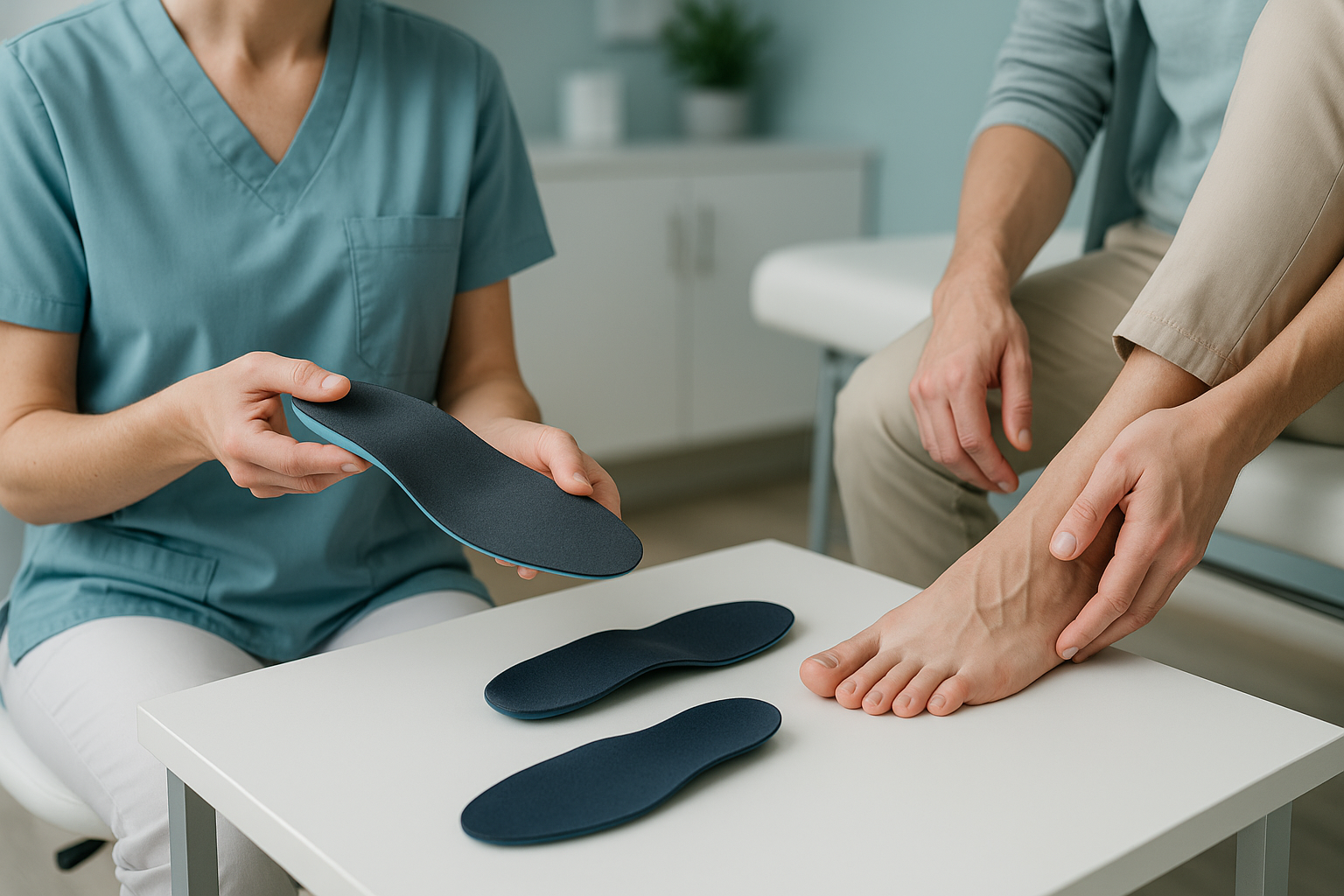
Do You Need Custom Orthotics, or Will Shop-Bought Flat Foot Insoles Do?
For many people with flat feet, shop-bought arch support insoles provide enough comfort for everyday use. Custom orthotics become worthwhile when off-the-shelf insoles have not helped, or when a podiatrist identifies a structural issue such as significant overpronation that needs precise correction. A standing whole-body assessment can show whether the problem starts at the foot or higher up the chain.
Key takeaways
- Shop-bought insoles for flat feet work well for mild discomfort and general arch support.
- Custom orthotics are shaped to your foot and can address specific structural problems a generic insole cannot.
- Foot pain sometimes originates from misalignment at the knee, hip or pelvis, not the foot alone.
- A weight-bearing image of the whole body can reveal whether custom orthotics will target the real cause.
- Getting the right information first can save you spending money on orthotics you may not need.
What is the difference between custom orthotics and shop-bought insoles?
Shop-bought insoles are pre-made arch support insoles designed to fit a range of foot shapes. You choose a size, slip them into your shoes, and they cushion or support your arch immediately. They suit many people with mild flat feet or general foot fatigue.
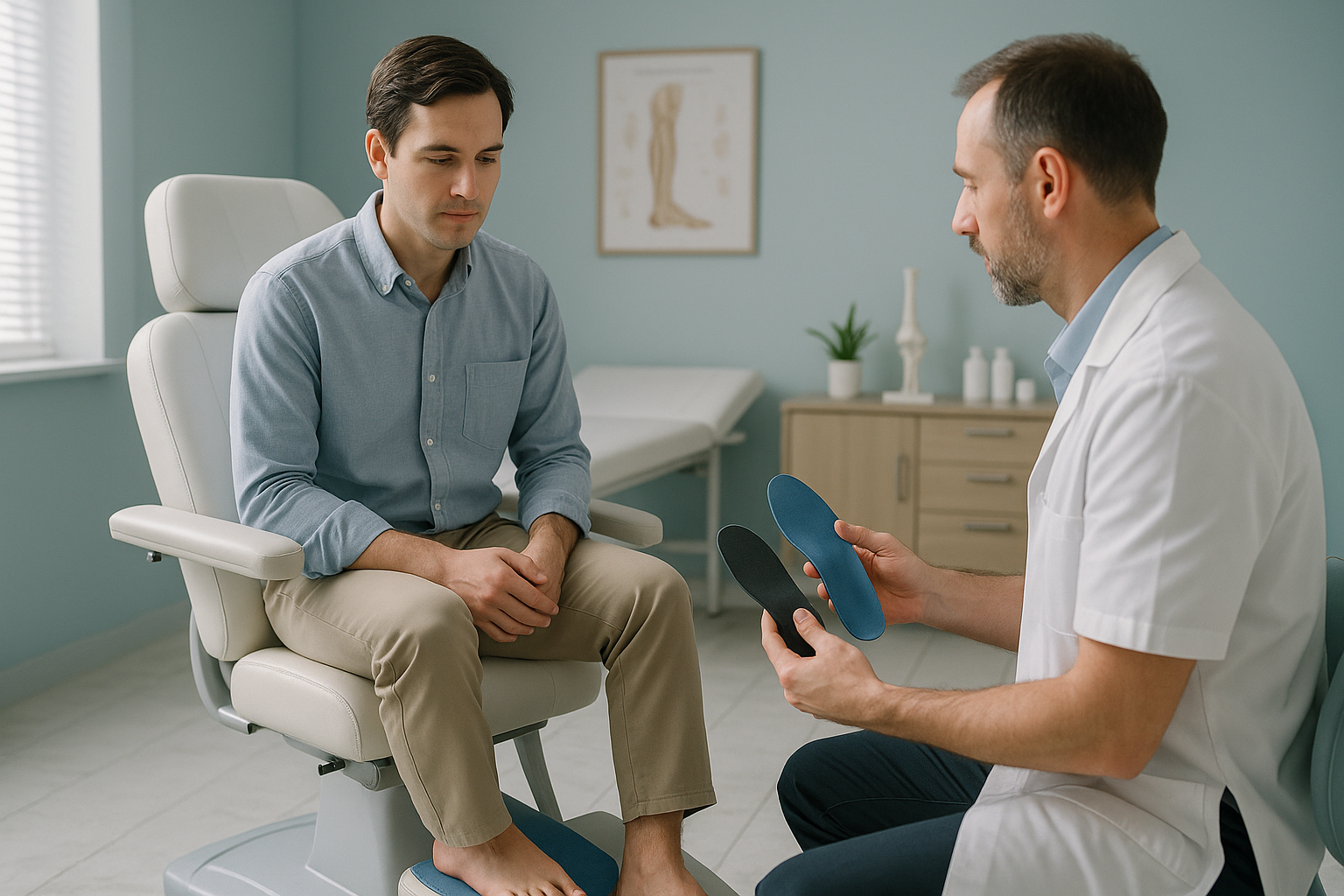
Custom orthotics, sometimes called prescription orthotics, are made from a mould or 3D foot scan of your individual foot. A podiatrist assesses your gait, arch height, and the way your foot loads weight, then designs an orthotic shaped to correct your specific biomechanics. The device typically includes features like a heel post or targeted pronation control that a generic insole does not offer.
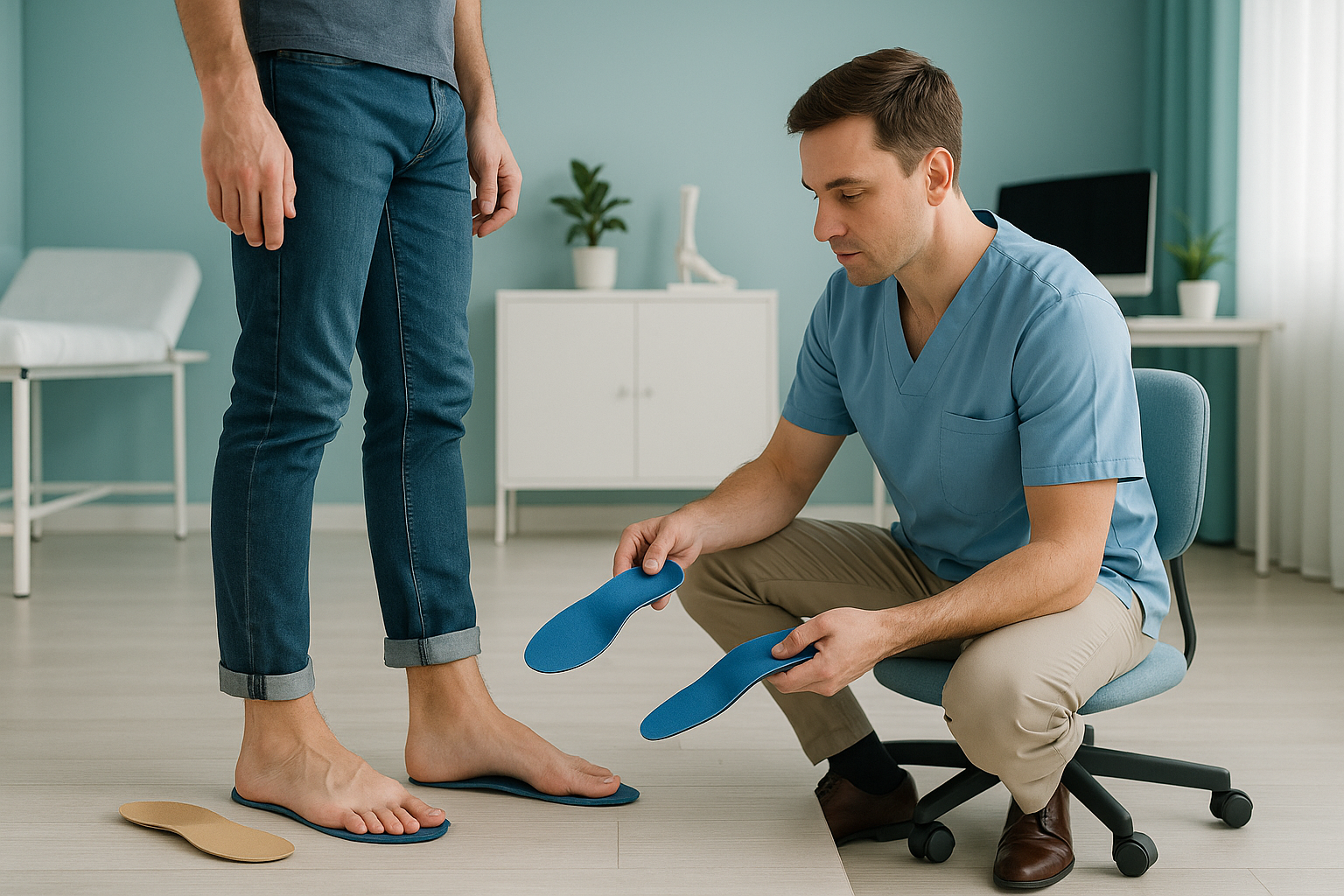
The cost of custom orthotics is considerably higher than off-the-shelf options. That investment makes sense when your foot mechanics genuinely need it, but for many people a well-chosen pair of shop-bought insoles does the job perfectly well.
How do you know if shop-bought insoles are not enough?
A shop-bought insole stops being enough when your symptoms persist despite wearing good arch support insoles consistently. Here are the common signs that you may need a more tailored approach.
Pain that returns day after day even with insoles in place suggests the support does not match your foot.
If the sole of one shoe wears down much faster on the inner edge, your foot may be rolling inwards more than the insole can control.
Pain above the foot can signal that a foot alignment issue is affecting the whole chain. Read more about knock knees and lower limb load.
If you have tried several brands of orthotic insoles from the shop without improvement, the issue likely needs individual assessment.
Are custom orthotics worth it compared to off-the-shelf insoles?
Custom orthotics are worth the investment when there is a clear structural reason for them, confirmed by a professional assessment. Without that confirmation, you could spend hundreds of pounds on a device that addresses the wrong problem.
Best for: mild flat feet, general comfort, standing for long periods at work, or as a first step before investing more.
How they work: a pre-formed arch shape redistributes plantar pressure across the foot. Good options use firm foam or semi-rigid material rather than soft gel alone.
Limitations: they cannot correct significant overpronation or accommodate unusual arch shapes. One size does not fit every foot.
Best for: persistent symptoms that have not responded to off-the-shelf insoles, confirmed structural issues like severe flat foot or rigid high arches, and specific gait abnormalities identified by a podiatrist.
How they work: cast or 3D-scanned to your foot, often with a heel post or wedge to correct specific angles. The prescription is based on your individual biomechanics. Learn more about orthotics for overpronation.
Limitations: higher cost, longer process, and they only solve the problem if the foot is truly where the issue starts.
Here is the key question most people miss. If your pain is actually caused by a pelvic tilt, a hip alignment issue, or an imbalance further up the body, even the most perfectly shaped custom orthotic will not fix the root cause. The foot may be compensating for a problem above it.
How does standing imaging help decide between insoles and custom orthotics?
A standing, weight-bearing image captures your skeleton under real load, from your feet to your head, in the position where symptoms actually occur. This matters because lying-down imaging (standard X-ray, CT, MRI) relaxes the muscles and can hide alignment problems that only appear when you are upright and gravity is acting on your joints.
Your body is a connected chain. A flat foot can roll the ankle inward, which tilts the knee, which shifts the pelvis, which curves the spine. Pain often shows up far away from its true cause. ScanAlign standing imaging captures this entire chain in a single low-dose scan, using about 90% less radiation than a standard X-ray, around ten times less.
With this full picture, you and your podiatrist can see exactly where the misalignment starts and whether custom orthotics will target the right level. Without it, you might correct the foot while the real driver sits at the hip.
Want to find out what is really driving your foot or leg pain before you invest in orthotics?
Book a free video consultationWhen should you try shop-bought insoles and when should you go custom?
The decision is simpler than it seems. Start with what your symptoms and history tell you.
- Mild flat feet with occasional aching
- Foot fatigue from standing or walking
- No pain above the ankle
- You have not tried quality arch support insoles yet
- Persistent pain despite wearing insoles
- Significant overpronation identified by a professional
- Knee, hip or back pain alongside flat feet
- Previous injury affecting foot mechanics
- Multiple pairs of insoles tried without relief
A note on soft tissue. EOS standing imaging shows bones, joints and alignment beautifully. For soft tissue problems like plantar fascia tears, tendon damage or nerve issues, MRI is usually the better tool. Your clinician can advise which is right for you.
If you are a podiatrist or physiotherapist who would like to refer a patient for standing alignment imaging before prescribing orthotics, see our information for referring podiatrists.
Frequently asked questions about flat foot insoles and custom orthotics
They can be, but only when a professional has confirmed a structural problem that off-the-shelf insoles cannot address. If your flat feet cause only mild discomfort, quality shop-bought arch support insoles are a sensible first step.
Most good-quality insoles last around six to twelve months with daily wear. Replace them when the arch support feels compressed or the material has worn thin under the heel.
Sometimes. If flat feet are causing the knee to rotate inward, correcting foot position can reduce load on the knee. However, knee pain can also come from alignment issues at the hip or pelvis, so it is worth checking the whole chain.
No referral is needed. ScanAlign is a private, self-pay clinic and you can book directly. If you have a podiatrist or GP, they are welcome to refer you, but it is not a requirement.
Arch support lifts the arch to redistribute pressure. Pronation control goes further by adding a structured heel post or wedge that limits how far the ankle rolls inward. Custom orthotics typically offer both, while most shop-bought insoles provide arch support only.
Yes. The EOS system uses about 90% less radiation than a standard X-ray, around ten times less. You stand naturally inside the machine and the scan takes only a few seconds.
Pricing details are available on our FAQs page. The initial video consultation is free and has no obligation.
Most custom orthotics fit into lace-up shoes and trainers with a removable insole. Very flat or narrow shoes may not have enough room. Your podiatrist will advise on shoe fit when prescribing.
A standing alignment scan can help you and your clinician understand whether custom orthotics will address the true source of your problem. It is particularly useful if you have pain in the knee, hip or back as well as the foot.
When you lie down, gravity is removed and your muscles relax. Alignment shifts that cause pain when you stand and walk simply disappear on a lying-down image. A standing scan captures the skeleton under real load, revealing the true picture.
Not sure what your feet really need?
A free video consultation with our specialist radiographer can help you understand whether a standing alignment scan would add useful information before you invest in orthotics.
Book a free video consultationWritten by Abbas Dhami (Specialist Diagnostic Radiographer)
Sources
- NHS. "Flat feet." nhs.uk. Accessed 2025.
- Banwell HA, Mackintosh S, Thewlis D. "Foot orthoses for adults with flexible pes planus: a systematic review." Journal of Foot and Ankle Research, 2014;7:23.
- The College of Podiatry. "Foot orthoses: guidance for patients." cop.org.uk. Accessed 2025.
This page is general information and not a diagnosis.
ScanAlign is the trading name of CoreMed Solutions Ltd and operates under The Harley Street Hospital's CQC licence.