
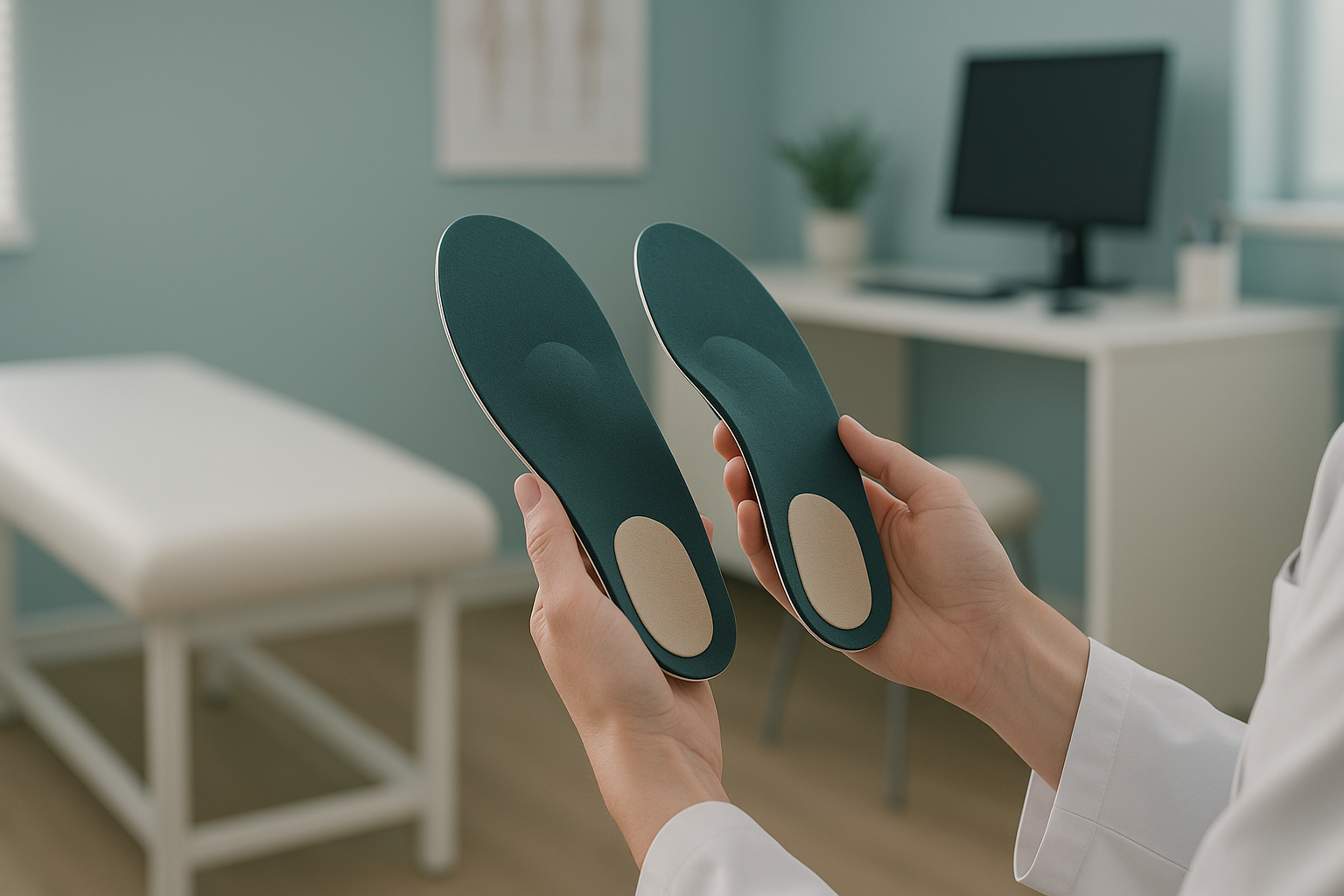
Orthotic Insoles for Overpronation: Do They Help?
Orthotic insoles can reduce overpronation symptoms by supporting the arch and improving foot position. However, they work best when the underlying cause is properly understood. Overpronation is often part of a wider alignment issue involving the knees, hips or pelvis, so imaging the whole body while standing gives the clearest picture.
Key takeaways
- Orthotic insoles support the arch and can ease overpronation discomfort, but they do not fix the root cause on their own.
- Overpronation may be driven by problems higher up the body, such as hip rotation or pelvic tilt.
- Standing, weight-bearing imaging shows alignment problems that lying-down scans can miss.
- Custom orthotics are generally more effective than off-the-shelf insoles, but both should be guided by proper assessment.
- An EOS scan captures the full skeleton from head to feet in one standing image, helping clinicians see the bigger picture.
What is overpronation and why does it matter?
Overpronation is when your foot rolls inward too far as it hits the ground during walking or running. A small amount of inward roll is normal. It is part of your body's natural shock-absorption system. But when it goes beyond a healthy range, extra stress travels up through your ankles, shins, knees and hips.
This is why overpronation is not just a "foot problem." Your body is a connected chain from your feet to your head. If your foot collapses inward, your shin rotates, your knee drops, and your hip and pelvis adjust to compensate. Pain can show up in your knee, hip or lower back, far away from the foot itself.
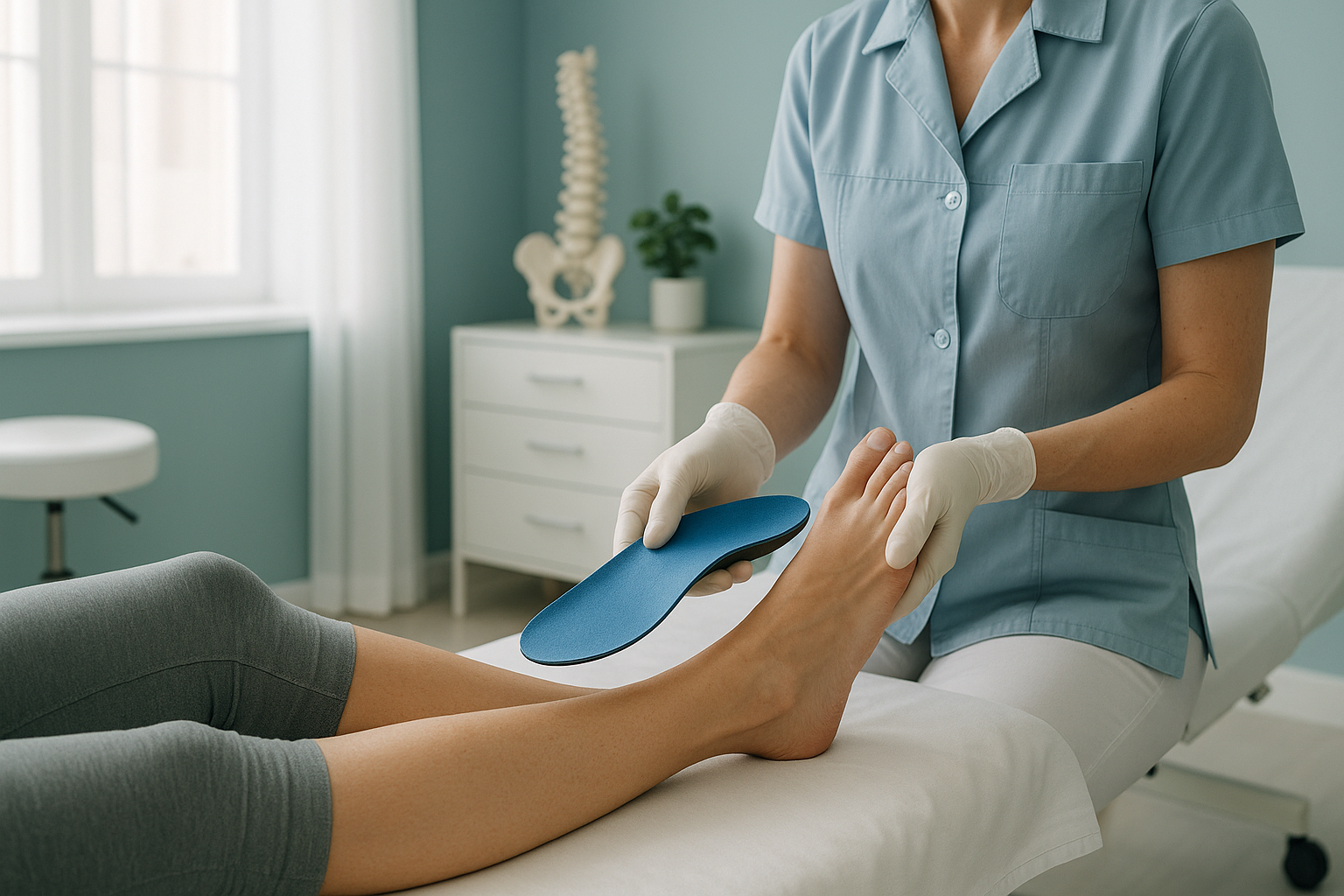
How do you know if you overpronate?
You may notice wear patterns on your shoes, discomfort in your feet, or pain in places that seem unrelated. Here are the most common signs.
The inside heel and sole of your shoes wear down much faster than the outside.
Flat or collapsing arches can cause aching along the inside of the foot or under the heel.
Overpronation changes how force travels up the leg, often resulting in knee or hip pain.
Repeated inward rolling strains the muscles and tendons in the lower leg.
Do orthotics actually help overpronation?
Yes, orthotic insoles can help. They work by supporting your arch and limiting how far your foot rolls inward. Research published in the British Journal of Sports Medicine shows that foot orthoses can reduce injury risk in runners and military populations. For many people, the right insole eases discomfort and improves how the foot loads during movement.
But there is an important caveat. Orthotics address what is happening at the foot. If the overpronation is being driven by something higher up, such as a rotated hip or a tilted pelvis, the insole is managing a symptom rather than correcting the source. That is why understanding your full alignment matters before committing to a solution.
Custom orthotics vs off-the-shelf insoles
Off-the-shelf insoles are affordable and can provide basic arch support. They suit mild cases. Custom orthotics are moulded to the exact shape of your foot and prescribed after a clinical assessment. They offer more precise correction and tend to last longer. Neither type is guaranteed to work unless the prescriber understands your whole alignment picture, not just the shape of your foot in isolation.
Wondering whether your overpronation is part of a bigger alignment problem? A standing whole-body scan can show you.
Book a free video consultationWhy does standing imaging show more than a standard scan?
Standard X-rays, CT scans and MRI are usually taken while you lie down. When you lie flat, gravity is removed. Your muscles relax, your joints decompress, and alignment problems that only appear under load can be hidden. This is a significant gap when it comes to overpronation, because overpronation only happens while you are upright and bearing weight.
An EOS scan takes a full-length image of your skeleton while you stand naturally. It captures everything from your feet through your ankles, knees, hips, pelvis and spine in a single exposure. This means the clinician reviewing your results can see exactly how your foot position connects to your knee angle, your hip rotation and your spinal curves, all under real-world loading.
EOS also uses about 90% less radiation than a standard X-ray, around ten times less. You stand still for a few seconds and the image is done.
For the full picture of how EOS works and what to expect during a scan, visit our EOS scan overview.
What helps with overpronation besides insoles?
Several approaches can support foot alignment alongside, or instead of, orthotic insoles. The right combination depends on what is driving your overpronation.
- Footwear. Overpronation running shoes with structured support can reduce inward roll. They are a good option for mild cases, especially during exercise. Some people find the right shoe is enough on its own.
- Strengthening exercises. Targeted exercises for the foot, ankle, and hip muscles can improve control and reduce the amount your foot collapses inward.
- Alignment assessment. Understanding how your whole body is aligned, from your feet to your spine, helps clinicians identify whether orthotics alone will help or whether the problem is being driven from elsewhere.
ScanAlign is a diagnostic imaging clinic. We do not prescribe orthotics or deliver treatment. What we can do is give you and your clinician a clear, detailed picture of your whole-body alignment while standing, so that any treatment plan is based on what is actually happening under load.
When MRI is the better tool: EOS shows bones, joints and alignment brilliantly. If your clinician suspects soft-tissue damage, such as a torn tendon, inflamed ligament or nerve compression, MRI is usually the better choice. The two scans complement each other well.
Frequently asked questions about orthotics and overpronation
No. Orthotics support your arch and control foot position while you wear them, but they do not permanently change your foot structure. If the underlying cause is addressed, some people find they need less support over time.
Custom orthotics are moulded to your specific foot shape and biomechanics, so they generally offer more precise correction. Off-the-shelf insoles can help in mild cases but may not address your individual alignment needs.
Most people need a few days to a couple of weeks to adjust. It is common to feel slight pressure or muscle fatigue at first. Building up wear time gradually helps your body adapt.
Yes. When your foot rolls inward excessively, it changes how forces travel up through your leg. This can place extra stress on the knee joint, rotate the hip, and even affect your lower back. Pain often appears away from the foot itself.
It depends on the severity. Mild overpronation may be managed with structured running shoes alone. More significant cases often benefit from insoles inside a supportive shoe. A proper alignment assessment helps clarify which approach suits you best.
An EOS scan is a standing, weight-bearing X-ray that captures your full skeleton from head to feet in one image. It shows how your foot position relates to your knees, hips, pelvis and spine under real-world loading. This gives a much fuller picture than a standard lying-down scan.
Yes. EOS uses about 90% less radiation than a standard X-ray, around ten times less. You can find more detail on our FAQs page.
No. ScanAlign is a private, self-pay clinic. You can refer yourself directly without needing a letter from your GP or consultant.
Pricing details are available on our FAQs and cost page.
They overlap but are not identical. Flat feet (low or absent arches) often lead to overpronation, but you can overpronate with a normal arch height. Both conditions benefit from understanding the full alignment chain rather than looking at the foot alone.
See the full picture before choosing orthotics
A free video consultation lets you discuss your symptoms, ask questions and find out whether a standing whole-body scan is the right next step for you.
Book a free video consultationAuthor: Abbas Dhami (Specialist Diagnostic Radiographer)
Sources
- Nigg, B.M. et al. "Foot orthoses and insoles for lower limb overuse injuries." British Journal of Sports Medicine, 2015; 49(21): 1405-1412.
- NHS. "Flat feet." NHS website, 2023. nhs.uk/conditions/flat-feet
- Illés, T. & Somoskeöy, S. "The EOS imaging system and its uses in daily orthopaedic practice." International Orthopaedics, 2012; 36(7): 1405-1411.
This page is general information and not a diagnosis.
ScanAlign is the trading name of CoreMed Solutions Ltd and operates under The Harley Street Hospital's CQC licence.