
Does Kinesiology Tape Do Anything for Knee, Back or Shoulder Pain?
Kinesiology tape may offer modest, short-term comfort for some people, but the overall scientific evidence is weak. Most reviews conclude it performs little better than a placebo. It does not fix the structural or alignment problems that often drive long-standing knee, back or shoulder pain.
Key takeaways
- Research suggests kinesiology tape has, at best, a small short-term effect on pain.
- It does not provide meaningful mechanical support to joints or muscles.
- Any benefit may come from proprioceptive feedback or a placebo effect.
- Tape cannot reveal or correct underlying alignment issues that cause pain.
- Standing imaging can show what lying-down scans and surface tape cannot.
What is kinesiology tape and how is it supposed to work?
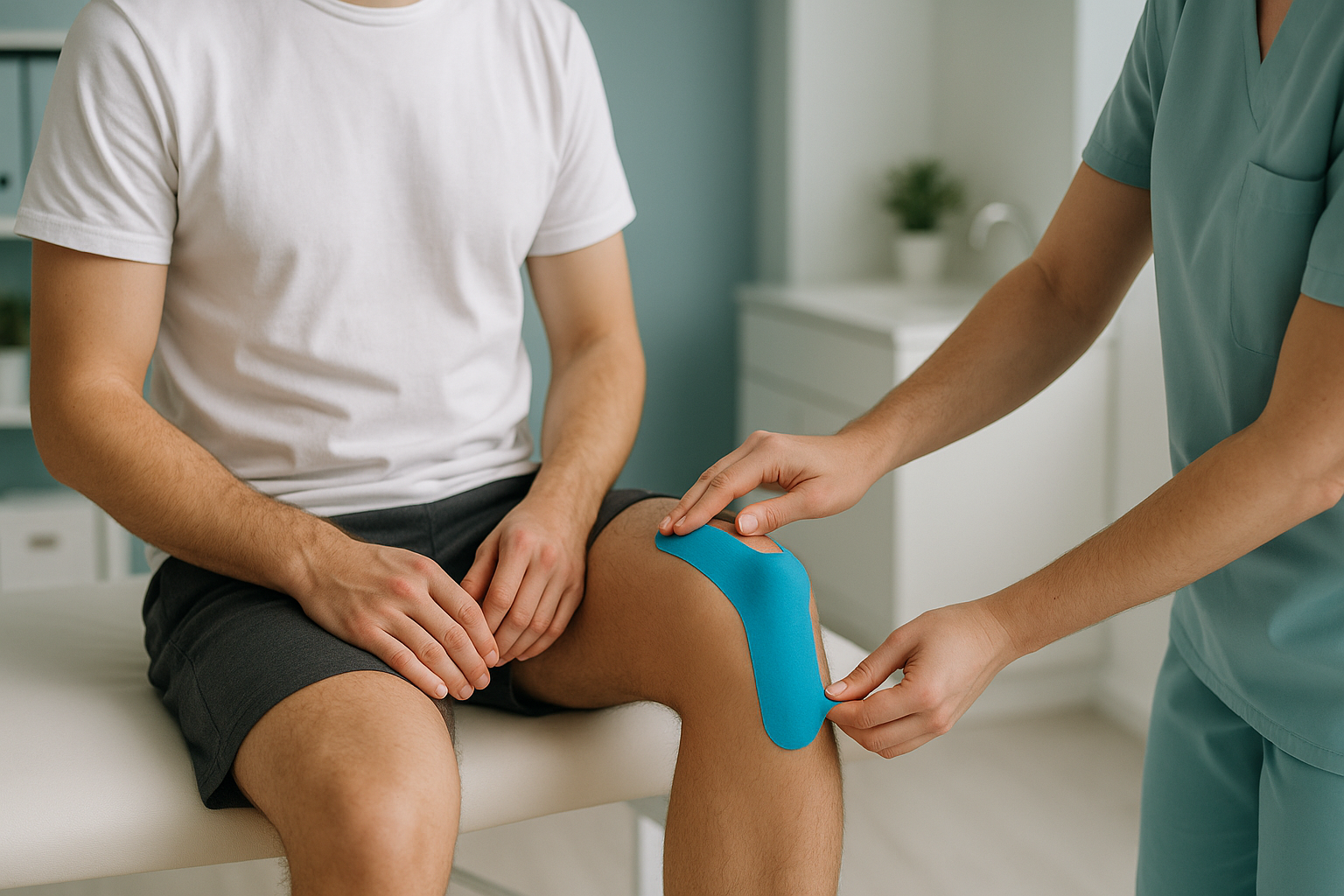
Kinesiology tape is a stretchy, elastic therapeutic tape applied directly to the skin over a painful area. It was developed in the 1970s and became widely popular after athletes were seen wearing it at the Olympics. The tape is designed to lift the skin slightly, which is said to improve blood flow, reduce swelling and provide proprioceptive feedback, a gentle sensory signal that may help your brain "feel" the joint better.
People commonly apply KT tape to the knee, back and shoulder. Application techniques vary, with strips placed in specific patterns depending on the area and the claimed purpose. You can find instructions for how to apply kinesiology tape in many online guides, though the technique does matter for getting even a short-term effect.
Does KT tape actually work according to the research?
The honest answer is: not convincingly. Multiple systematic reviews have looked at kinesiology tape for musculoskeletal pain, and the consensus is that any benefit is small and short-lived. A 2014 review in the journal Sports Medicine found that kinesiology tape offered only trivial benefits over sham tape or no tape. A Cochrane-quality review reached similar conclusions.
There are a few important points the research highlights:
- Short-term comfort. Some studies show a modest reduction in pain immediately after application. This tends to fade within days.
- No mechanical support. Unlike a rigid brace, elastic tape stretches with the skin. It does not meaningfully stabilise a joint or hold a bone in place.
- Placebo effect is significant. Several trials found that people who received sham tape, applied randomly without any therapeutic pattern, reported similar levels of relief. The sensation of something on the skin can be reassuring, and that itself modulates pain.
- Low evidence quality. Many studies are small, poorly blinded, or funded by tape manufacturers, which makes the overall evidence quality low.
None of this means tape is harmful. For most people it is safe. But the evidence does not support using it as a primary approach for persistent knee, back or shoulder problems.
What are people using KT tape for on knees, backs and shoulders?
People use kinesiology tape for a wide range of complaints. Here are some of the most common.
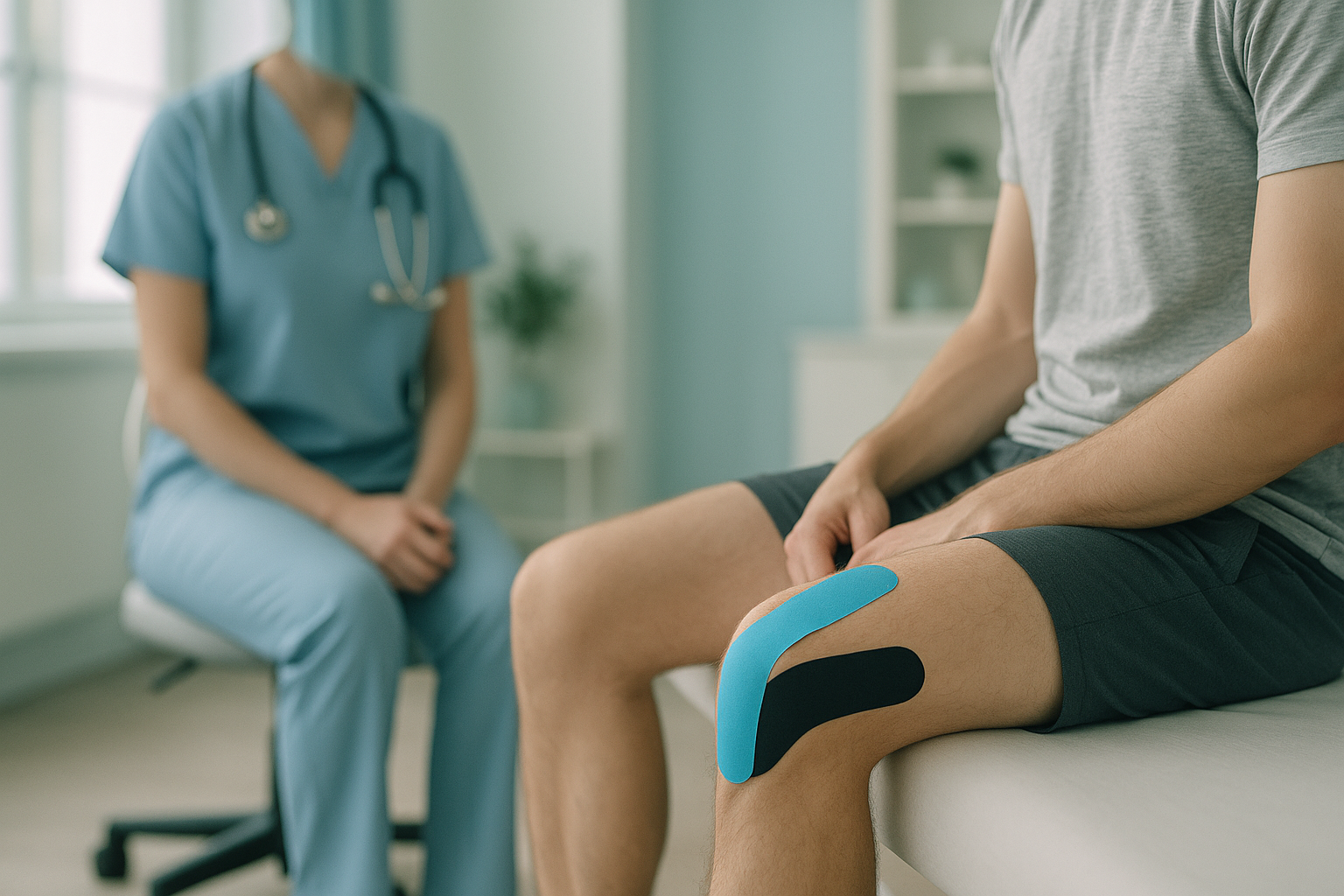
Often used for runner's knee, patellofemoral pain syndrome, or general anterior knee pain. The tape is applied around the kneecap to "guide" tracking.
Applied along the lower back muscles to reduce tension or discomfort. Sometimes used for postural reminders during long sitting.
Used for rotator cuff discomfort, shoulder impingement, or instability. Strips are placed to encourage the shoulder blade into a "better" position.
Runners sometimes tape the outer thigh and knee for IT band syndrome treatment. The tape is thought to reduce friction, though evidence is limited.
In each case, tape is applied to the surface. It cannot change what is happening deeper inside the joint, and it cannot address the alignment of the bones underneath.
Why does kinesiology tape not fix the underlying problem?
Because it sits on the skin. Kinesiology tape cannot reposition a bone, correct a leg length difference, or change the angle at which your knee tracks when you walk. It may give you a temporary sense of support through proprioceptive feedback, but it does not alter the mechanical reality underneath.
Many persistent knee, back and shoulder problems are driven by alignment issues elsewhere in the body. Your body is a connected chain from your feet to your head. If your pelvis tilts, your spine compensates. If one leg bears more load, your knee on the other side may take the strain. Pain often appears away from its true cause. Tape on the painful spot cannot reveal or address that chain.
- Short-term comfort alongside rehabilitation
- A sensory reminder to use muscles differently
- When combined with a proper exercise programme
- As a low-risk option while waiting for assessment
- Pain that keeps returning after weeks or months
- Pain that moves between knee, hip and back
- Problems that worsen when standing or walking
- When you have never had imaging of your alignment
A note on imaging. EOS standing imaging shows bones, joints and alignment under real weight-bearing conditions. For soft tissue, discs or nerves, MRI is usually the better tool. The right scan depends on the question being asked.
How can standing imaging reveal what tape and lying-down scans cannot?
Standard X-rays, CT scans and MRIs are usually taken while you are lying down. In that position, your muscles relax and gravity no longer loads your joints. Alignment problems that cause pain when you stand and walk can disappear on a lying-down image. That is one reason persistent problems go undiagnosed.
ScanAlign standing EOS imaging captures your full skeleton from head to feet while you are upright and weight-bearing, with about 90% less radiation than a standard X-ray, around ten times less. It shows how your spine, pelvis, hips, knees and ankles relate to each other under the same forces you experience every day. If your knee pain is being driven by a pelvic shift or a subtle leg length difference, a standing whole-body image will show that.
If tape, exercises or treatment have not resolved your pain, understanding your alignment may be the missing step.
Book a free video consultationFrequently asked questions about kinesiology tape
Research suggests it may offer a small, short-term reduction in pain for some people. However, systematic reviews consistently find the effect is modest and often no better than sham tape. It is not a substitute for understanding why your knee hurts.
Some people feel temporary relief when tape is applied to the lower back, possibly through proprioceptive feedback. The evidence for a meaningful clinical benefit beyond placebo is weak. Persistent back pain usually needs investigation, not tape.
Quite possibly, at least in part. Trials comparing real kinesiology tape with randomly applied sham tape often find similar results. The sensation on the skin may modulate pain perception, which is a real effect, but it is not a structural fix.
Most brands say you can wear it for three to five days. In practice, it starts peeling sooner, especially with sweating or showering. Any comfort people report tends to fade within the first day or two.
For most people it is safe. The main risk is a skin reaction, especially if you have sensitive skin or a latex allergy. A bigger concern is relying on tape instead of investigating a persistent problem properly.
Some physiotherapists use it as part of a rehabilitation programme to encourage better shoulder blade positioning. On its own, the evidence for tape fixing shoulder impingement is not strong. Thoracic spine and shoulder alignment are important contributors that tape cannot address.
Traditional strapping tape is rigid and restricts movement to protect an injured joint. Kinesiology tape is elastic and moves with the skin. It does not provide the same mechanical support, which is why it cannot stabilise a joint the way strapping does.
Because the cause may be elsewhere. Your body compensates across its full length. A knee problem could be driven by a hip or pelvic alignment issue. Treating the painful area alone, whether with tape, exercises or injections, may not resolve the root cause if the alignment chain has not been assessed.
A standard X-ray typically images one area at a time, often while lying down. A standing EOS scan captures your entire skeleton from head to feet in the upright position, showing how every joint loads and aligns under gravity, with about 90% less radiation than a standard X-ray.
No. ScanAlign is a private, self-pay clinic. You can book an assessment directly with a free video consultation to discuss whether a standing scan is right for your situation.
Still taping the same problem?
If kinesiology tape has not given you lasting answers, a full standing alignment assessment might. Find out what is actually going on.
Book a free video consultationWritten by Abbas Dhami (Specialist Diagnostic Radiographer)
Sources
- Williams S, Whatman C, Hume PA, Sheerin K. Kinesio taping in treatment and prevention of sports injuries: a meta-analysis of the evidence. Sports Medicine. 2012;42(2):153-164.
- Parreira PCS, Costa LCM, Hespanhol LC Jr, Lopes AD, Costa LOP. Current evidence does not support the use of Kinesio Taping in clinical practice: a systematic review. Journal of Physiotherapy. 2014;60(1):31-39.
- NHS. Sprains and strains: treatment and self-care guidance. nhs.uk.
This page is general information and not a diagnosis.
ScanAlign is the trading name of CoreMed Solutions Ltd and operates under The Harley Street Hospital's CQC licence.