

Should You Rest or Keep Moving With Back Pain?
For most lower back pain, gentle movement is better than bed rest. Current guidelines recommend staying as active as you comfortably can. Prolonged bed rest can stiffen joints and weaken muscles, making recovery slower. Short rest periods are fine during a flare-up, but returning to normal activity gradually is the most effective approach.
Key takeaways
- Bed rest for more than a day or two usually slows recovery, not speeds it up.
- Walking, gentle stretching and normal daily activities are safe for most back pain.
- Pacing means balancing activity with short rest breaks, not pushing through severe pain.
- If pain lasts beyond a few weeks, standing imaging can reveal alignment issues that lying-down scans miss.
- Sudden numbness, weakness or bladder changes need urgent medical attention, not rest at home.
Is bed rest good for back pain?
No. Research consistently shows that bed rest beyond one or two days does not help most back pain and can make it worse. When you stay in bed, the muscles that support your spine begin to weaken. Your joints stiffen. Blood flow to the healing tissues slows. What starts as a protective instinct quickly becomes counterproductive.
The NHS, NICE and most international guidelines now advise against prolonged bed rest for back pain. A short lie-down during a severe flare-up is perfectly reasonable. But the goal should always be to get moving again as soon as you can, even if that movement is small.
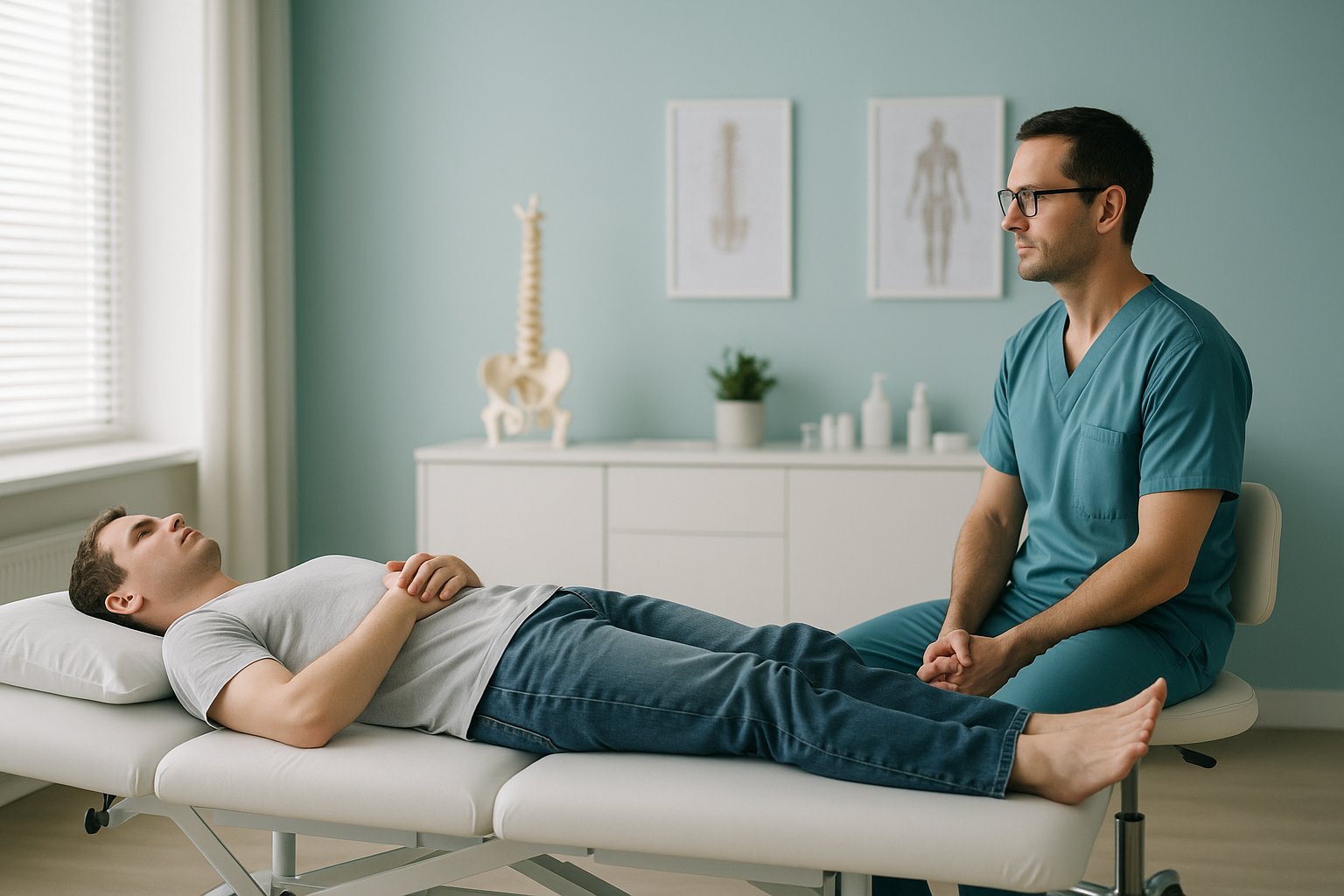
What kind of movement helps back pain?
Gentle, everyday movement is the best starting point. You do not need a gym membership or a complicated exercise plan. Walking at a comfortable pace, light household tasks and simple stretches for lower back pain are often enough to keep things moving in the right direction.
Start with five or ten minutes. Gradually increase as comfort allows. Walking is one of the safest activities for a sore back.
Slow, controlled stretches help ease stiffness. Avoid bouncing or forcing into painful positions.
Light cooking, tidying and getting dressed all count as movement. Stay as close to your normal routine as you can.
The important thing is to move within your comfort zone. Some discomfort is normal and does not necessarily mean you are causing damage. Pain during movement does not always equal harm. But if an activity significantly increases your pain, ease off and try something gentler.
How do you pace activity when your back hurts?
Pacing means breaking activity into manageable chunks rather than pushing through until pain forces you to stop. It is a simple but effective strategy.
For example, instead of cleaning the whole house in one go, do one room, rest for ten minutes, then do another. Instead of sitting at your desk for hours, stand up and move every twenty to thirty minutes. The goal is to gradually increase what you can do each day without triggering a major flare-up.
Over time, pacing helps you build confidence in your back. You learn that movement is safe, and your body adapts. Most people find they can return to their normal activities within a few weeks if they pace sensibly.
If your back pain has lasted more than a few weeks and is not improving, it may be worth looking at whether an alignment issue is involved. You can book an assessment if it is not settling.
When should you stop and seek urgent help?
Most back pain is not dangerous, but some symptoms need urgent medical attention. Contact your GP, call 111, or go to A&E if you experience any of the following:
- Numbness or tingling in your groin or between your legs
- Loss of bladder or bowel control
- Sudden weakness in one or both legs
- Severe pain that gets worse rather than better over several days
- Pain after a significant fall or injury
These symptoms are rare, but they require prompt assessment. Do not wait to book a scan. See a doctor straight away.
Why does back pain sometimes not improve with rest or exercise?
Sometimes back pain lingers because an underlying alignment issue has not been identified. Your body is a connected chain from your feet to your head. If one area is out of balance, another area compensates. You might feel pain in your lower back, but the root cause could be a tilt in your pelvis or an imbalance further down.
Standard imaging is usually done lying down. When you lie flat, gravity is removed and your muscles relax. This can hide the very alignment shifts that cause problems when you are upright and weight-bearing. That is why some people are told their scans look normal, yet the pain continues.
ScanAlign standing EOS imaging captures your entire skeleton while you stand naturally. It uses about 90% less radiation than a standard X-ray, around ten times less. Because the image is taken in your weight-bearing position, it shows how your joints, spine and pelvis actually line up under the loads of daily life.
A note on MRI. EOS shows bones, joints and overall alignment. For soft tissue problems such as discs, nerves or ligaments, MRI is usually the better tool. Your clinician can advise which scan is most appropriate for your situation.
Frequently asked questions
Gentle exercise is better than rest for most back pain. Guidelines recommend staying as active as you comfortably can. Short rest periods during a flare-up are fine, but aim to get moving again as soon as possible.
One to two days of reduced activity is reasonable during a severe flare-up. Beyond that, prolonged bed rest tends to slow recovery. Aim to return to light movement as quickly as you can.
Yes. Walking is one of the safest and most recommended activities for back pain. Start with short distances at a comfortable pace and gradually build up.
Not necessarily. Some discomfort during movement is normal with back pain and does not usually mean you are causing harm. However, if an activity significantly worsens your pain, ease off and try something gentler.
Gentle, controlled stretches like knee-to-chest, cat-cow and pelvic tilts can help ease stiffness. Avoid bouncing or forcing into painful ranges. See our guide to stretches for lower back pain for more detail.
Recurring back pain can be a sign that an underlying cause has not been addressed. Alignment issues in your pelvis, hips or spine can create ongoing strain that flares up repeatedly, even after you feel better.
Yes. When you lie down for a standard scan, gravity is removed and muscles relax. Alignment shifts that occur under your body weight may not be visible. A standing EOS scan captures your skeleton in its natural, weight-bearing position.
EOS uses about 90% less radiation than a standard X-ray, around ten times less. It is a very low-dose imaging system.
No. ScanAlign is a private, self-pay service. You can book directly without a referral. The process starts with a free video consultation.
Pricing details are available on our FAQs page. The initial video consultation is free and there is no obligation to proceed.
Back pain not settling?
A free video consultation can help you understand whether a standing alignment assessment is the right next step for you.
Book a free video consultationWritten by Abbas Dhami (Specialist Diagnostic Radiographer)
Sources
- NICE guideline NG59: Low back pain and sciatica in over 16s: assessment and management. National Institute for Health and Care Excellence, 2016 (updated 2020).
- NHS: Back pain. nhs.uk/conditions/back-pain. Accessed 2024.
- Dahm KT et al. Advice to rest in bed versus advice to stay active for acute low-back pain and sciatica. Cochrane Database of Systematic Reviews, 2010; (6): CD007612.
This page is general information and not a diagnosis.
ScanAlign is the trading name of CoreMed Solutions Ltd and operates under The Harley Street Hospital's CQC licence.