
Can You Play Sport With Scoliosis?
Yes. For the vast majority of people with scoliosis, sport is safe and encouraged. There is little evidence that physical activity worsens a spinal curve. Staying active strengthens the muscles that support your spine, improves confidence, and benefits overall health. The key is understanding your own curve so you can train with awareness rather than anxiety.
Key takeaways
- Most people with scoliosis can play sport without restrictions.
- There is no good evidence that sport makes a curve worse.
- Strength training, swimming, running and team sports are generally fine.
- Knowing your alignment helps you and your coach adapt training sensibly.
- A standing, weight-bearing scan shows your spine under real-world load, not just lying down.
What is scoliosis and how does it affect movement?
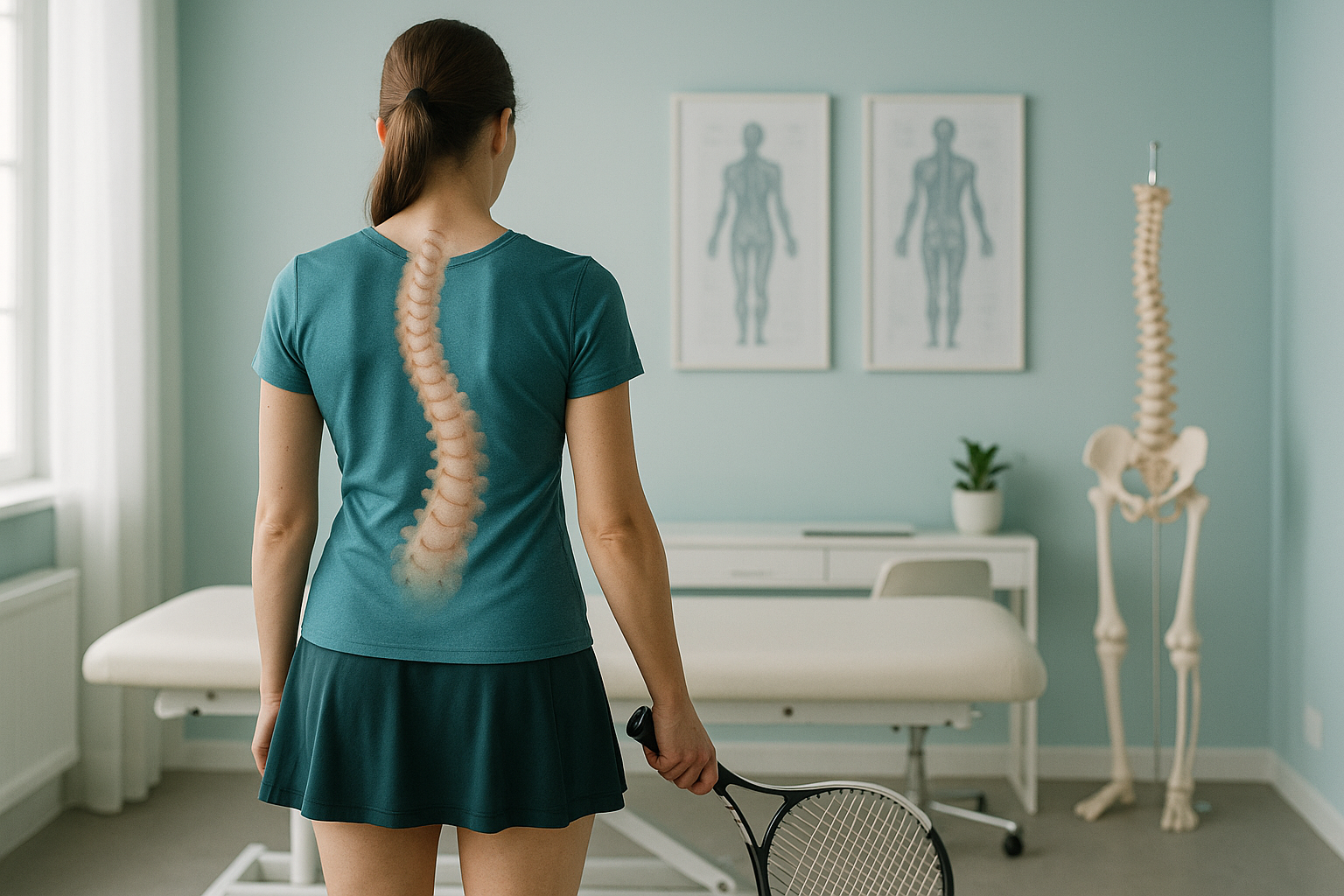
Scoliosis is a sideways curve of the spine. It may also involve a slight twist of the vertebrae. Most cases are mild and cause no pain at all. Others involve a more noticeable curve that can affect posture, rib symmetry, or how your shoulders sit.
Because your body is a connected chain from your feet to your head, a curve in the spine can change the way you load your hips, knees, and shoulders during movement. That does not mean the curve is dangerous. It means the body adapts, and understanding those adaptations can help you train smarter.
Is it safe to exercise with scoliosis?
Yes. Current evidence consistently shows that exercise is safe for people with scoliosis. No well-designed study has found that sport causes a curve to progress. In fact, most specialists encourage activity because strong, balanced muscles support the spine and may reduce discomfort.
There was a time when some people were told to avoid PE or competitive sport. That advice is now considered outdated. The British Scoliosis Society and the Scoliosis Research Society both support participation in physical activity.
- Swimming, cycling, walking
- Running and jogging
- Team sports (football, netball, basketball)
- Yoga, Pilates, dance
- Supervised strength training
- Heavy competitive powerlifting (very high loads)
- High-impact, repetitive spinal loading without guidance
- Any sport soon after spinal surgery (recovery varies)
- New pain, weakness, or numbness during activity
If you experience sudden weakness, numbness in your legs, or loss of bladder or bowel control during exercise, stop immediately and seek urgent medical attention through your GP, 111, or A&E.
What are the best sports and exercises for scoliosis?
There is no single "best" sport for scoliosis. The best activity is one you enjoy and will do regularly. That said, some types of exercise offer particular benefits.
Team sports such as football, rugby, hockey and netball are also fine for most people with scoliosis. The benefits of participation, fitness, teamwork and confidence, far outweigh any theoretical risk. Read more about sports injury prevention and how alignment plays a role.
Can you lift weights with scoliosis?
Yes. Supervised weight training is one of the most beneficial things you can do. Strengthening the muscles around your spine gives it extra support and can reduce the aches that sometimes come with asymmetric posture.
The important thing is technique, not avoidance. If your curve shifts your loading pattern to one side, a knowledgeable coach or physiotherapist can adjust exercises so you work both sides evenly. Most people with scoliosis find they can squat, deadlift, bench press and row without problems once they learn proper form.
If you are planning to compete in powerlifting or Olympic lifting at high loads, it is sensible to get a clear picture of your spinal alignment first. A standing scan shows exactly how your spine sits under gravity, so you and your coach can plan around it.
Want to see your alignment before you step up the weight? A standing scan gives you and your coach a clear picture of your spine under load.
Book a free video consultationHow does standing imaging help if you play sport with scoliosis?
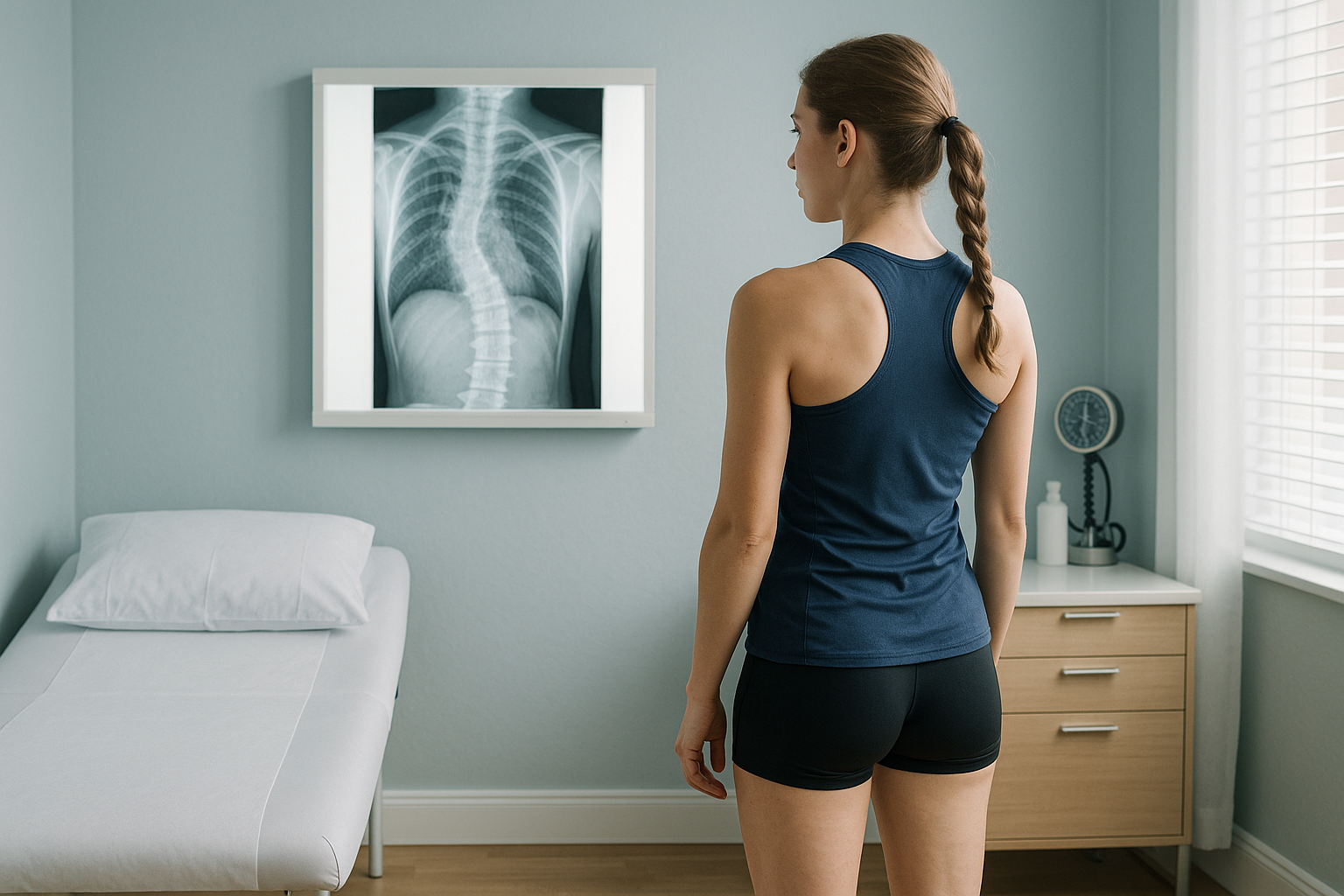
Standard imaging, such as a lying-down X-ray or MRI, captures your spine with your muscles relaxed. That can hide the alignment shifts that only appear when you are upright and weight-bearing, exactly the position you are in when you train or compete.
EOS imaging at ScanAlign, low dose standing imaging, captures your full skeleton while you stand naturally. It uses about 90% less radiation than a standard X-ray, around ten times less. This means it is practical for periodic monitoring scans without building up unnecessary exposure over time.
For active adults with scoliosis, a standing whole-body image does several useful things.
- Shows how your curve behaves under real-world gravity and muscle tension.
- Reveals any compensations in your hips, knees or shoulders that lying-down scans miss.
- Gives your coach or physiotherapist objective information to tailor your programme.
- Provides a baseline you can compare against future scans to check curve stability.
If you want to book a monitoring scan, you do not need a GP referral. You can self-refer directly.
When is MRI more appropriate? EOS shows bones, joints and alignment beautifully. For soft tissue, discs or nerves, MRI is usually the better tool. If your specialist suspects a disc issue or nerve compression alongside your scoliosis, they may recommend MRI as well.
For younger athletes still growing, paediatric imaging at ScanAlign uses the same low-dose standing technology, making monitoring safer and more practical during the growth years when curves can change.
Frequently asked questions about scoliosis and sport
There is no good evidence that sport causes a scoliotic curve to worsen. Most research supports the opposite view: staying active helps maintain flexibility and muscle strength around the spine.
For most people, no sports need to be avoided entirely. If you have a more significant curve or have had spinal surgery, it is sensible to discuss high-impact or heavy-load activities with your specialist before jumping in. But routine sport, including contact sport, is generally fine.
Swimming is often recommended because it strengthens back and core muscles without putting heavy load through the spine. It works both sides of the body and improves cardiovascular fitness. It will not straighten a curve, but it supports overall spinal health.
Yes. Running is safe for the vast majority of people with scoliosis. Good footwear, a gradual training plan, and attention to any niggles are sensible precautions for any runner, scoliosis or not.
Yes. Strength training is beneficial. Focus on learning correct form, ideally with a coach who understands your curve. Balanced programmes that work both sides of the body help stabilise the spine and reduce asymmetric muscle tension.
Many people who wear a brace can still take part in sport, sometimes removing the brace for the activity with their specialist's agreement. Your treating clinician can advise you on brace-wearing schedules around training.
An EOS scan captures your whole skeleton while you stand upright, using about 90% less radiation than a standard X-ray, around ten times less. This means it shows your spine, hips and legs under real-world gravity, revealing compensations that lying-down imaging can miss.
No. You can self-refer directly. The process starts with a free video consultation where a specialist radiographer reviews your history and confirms whether a standing scan is appropriate for you.
Pricing details are available on the ScanAlign website. The initial video consultation is free and there is no obligation to proceed.
If you have had a break from sport, have new symptoms, or are stepping up to a higher level of training, a standing alignment scan can give you and your coach a clear baseline. It is also useful after spinal surgery once your surgeon gives the all-clear to resume activity.
See your spine the way it really stands
A free video consultation with a specialist radiographer will help you understand whether a standing scan is right for you.
Book a free video consultationWritten by Abbas Dhami (Specialist Diagnostic Radiographer)
Sources
- Scoliosis Research Society. Patient information: exercise and activity recommendations for scoliosis. srs.org
- NHS. Scoliosis: overview, symptoms and treatment. nhs.uk/conditions/scoliosis
- Negrini S, et al. 2016 SOSORT guidelines: orthopaedic and rehabilitation treatment of idiopathic scoliosis during growth. Scoliosis and Spinal Disorders. 2018;13:3.
This page is general information and not a diagnosis.
ScanAlign is the trading name of CoreMed Solutions Ltd and operates under The Harley Street Hospital's CQC licence.