
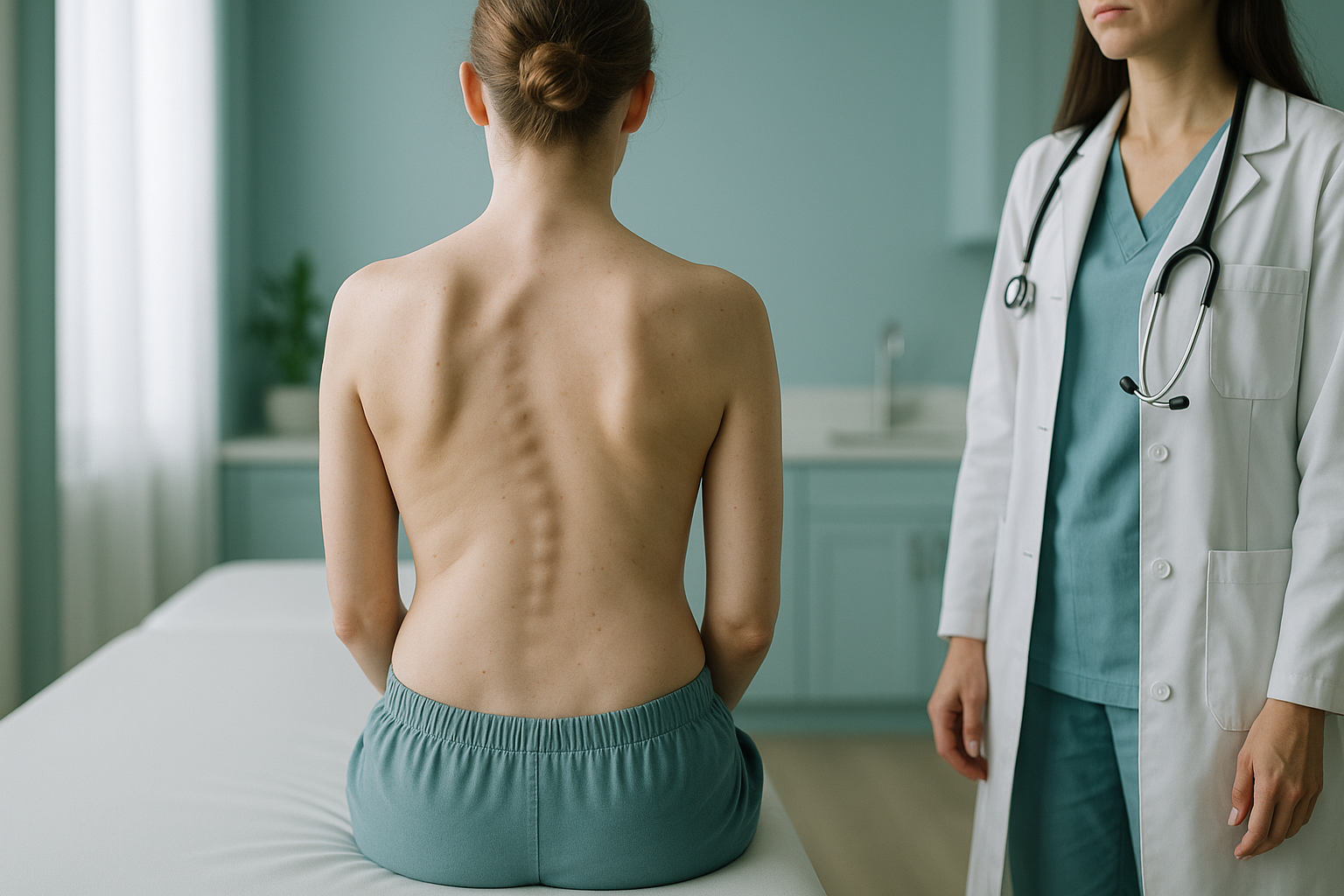
Scoliosis: What Causes a Sideways Curve in Your Spine and How Is It Found?
Scoliosis is a sideways curvature of the spine that can affect posture, comfort and movement. In most adults the cause is unknown. Because the curve changes under gravity, it is best assessed while you are standing and weight-bearing, not lying down. A whole-body standing image can show the full picture in a single scan.
Key takeaways
- Scoliosis means the spine curves to one side rather than running straight.
- Most cases in adults have no single identifiable cause.
- The curve often looks different when you stand up compared to when you lie down.
- Pain frequently appears away from the curve itself, because other areas compensate.
- Standing whole-body imaging captures the spine under real weight-bearing conditions.
What is scoliosis?
Scoliosis is a condition where the spine curves sideways when viewed from behind. A healthy spine has gentle front-to-back curves, but it should look roughly straight from behind. In scoliosis, part of the spine bends to the left or right, sometimes twisting at the same time.
It can develop during adolescence and persist into adulthood, or it can appear later in life as joints and discs wear down. Some people live with a mild curve and never notice it. Others experience stiffness, aching or visible changes in posture that get worse over time.
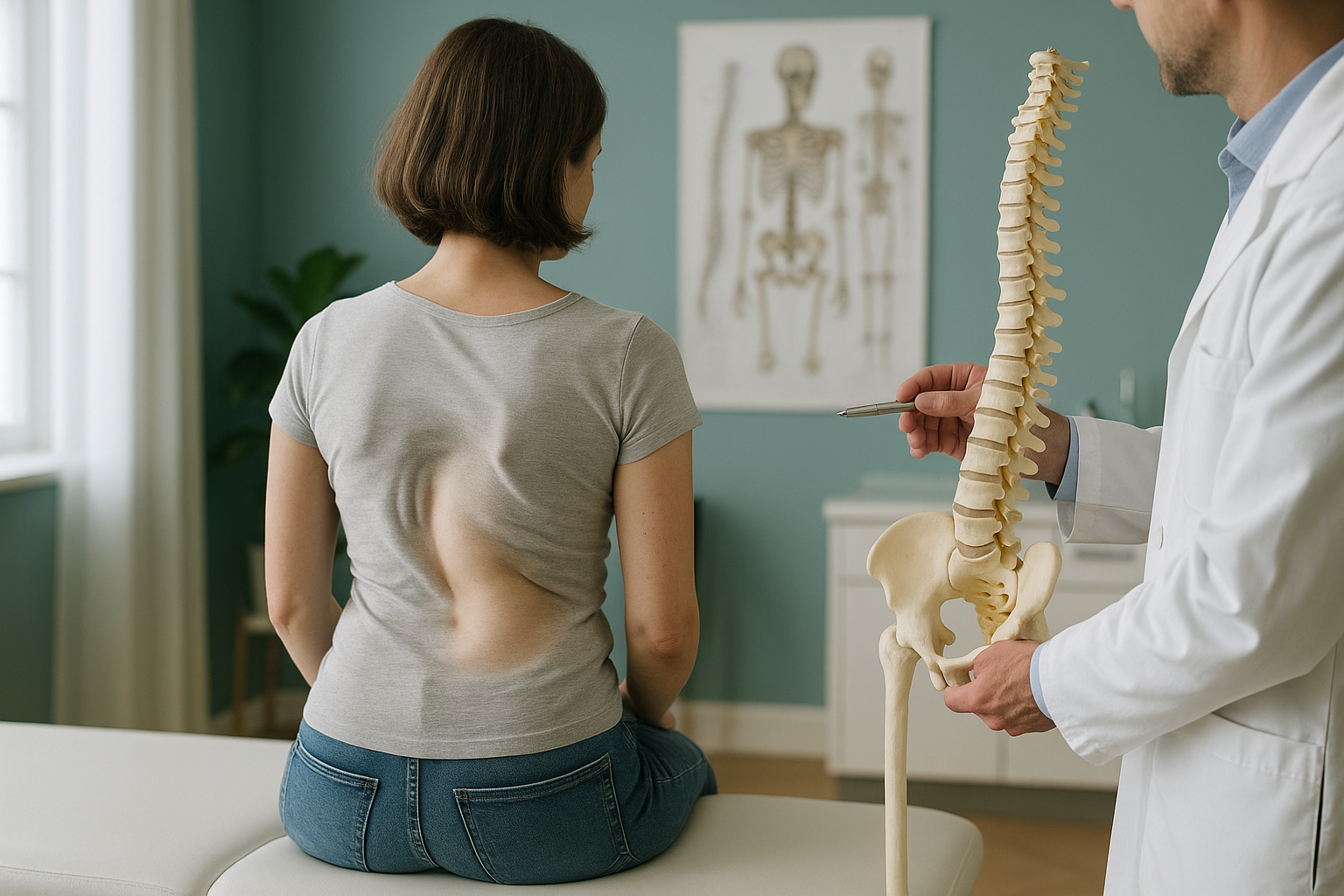
What are the symptoms of scoliosis in adults?
The most common symptoms include visible postural changes and aching in the back, hip or shoulders. Many people also notice that one side of their body feels tighter than the other. Pain does not always sit where the curve is. Because the body works as a connected chain from your feet to your head, a curve in your mid-back can create strain in your lower back, hip or even your knee.
One shoulder sitting higher than the other, noticeable in a mirror or photographs.
Persistent tightness or dull aching, often worse after long periods of standing or sitting.
One hip may appear higher, or clothes may hang unevenly around the waist.
Your body may lean slightly when you stand, even though it feels straight to you.
Important: If you develop sudden numbness, weakness in your legs, or any loss of bladder or bowel control, this could signal a more serious problem. Please seek urgent medical attention from your GP, call 111, or go to A&E.
What causes scoliosis?
In most cases, there is no single known cause. This type is called idiopathic scoliosis and it accounts for the majority of diagnoses. Other forms can develop because of degenerative changes in the spine as you age, previous injuries, or underlying conditions that affect the bones or muscles.
The most common type. No identifiable cause. Often begins during growth and continues into adulthood.
Develops later in life as spinal joints and discs wear down, sometimes called adult-onset scoliosis.
Linked to conditions affecting the nerves or muscles, such as cerebral palsy or muscular dystrophy.
How is scoliosis diagnosed?
Scoliosis is usually diagnosed with a physical examination followed by imaging. A clinician will look at your posture from behind and may ask you to bend forward to check for rib or back prominence. Imaging then confirms the curve and helps measure its extent.
Standard X-rays are the traditional approach. However, most conventional X-rays are taken lying down or focus on just one section of the spine. This can be misleading, because the curve changes when gravity is removed. A lying-down scan may make a curve look milder than it actually is when you stand.
Why does scoliosis need to be assessed while standing?
A scoliotic curve is affected by gravity, muscle tone and posture. When you lie down for a conventional scan, your muscles relax and the curve may partially straighten. This means the image does not reflect how your spine actually sits during daily life, when you are standing, walking or carrying weight.
Standing whole-body imaging captures the full spine and lower limbs in a single upright scan. This reveals how the curve behaves under real conditions and, just as importantly, how the rest of your body compensates. For example, a thoracic curve may cause your pelvis to tilt, which in turn shifts the load through your hips and knees. Seeing all of this in one image gives your clinician a much clearer picture.
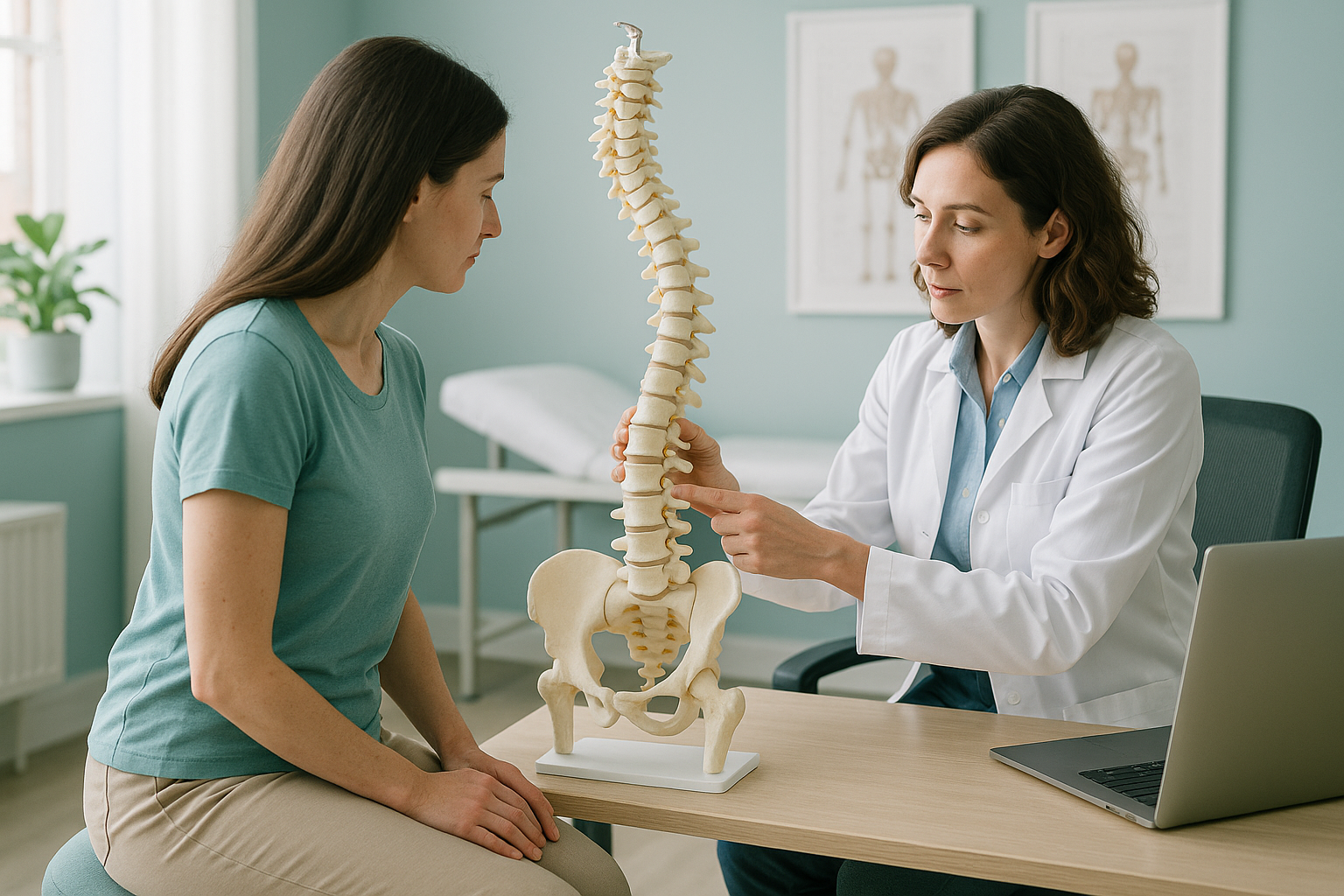
EOS is a low-dose standing X-ray system that captures your full skeleton from head to feet in one pass. It uses about 90% less radiation than a standard X-ray, around ten times less. This makes it well suited for monitoring scoliosis over time, where repeated imaging may be needed.
Want to understand how your scoliosis looks when you are standing and weight-bearing? A whole-body EOS scan shows your full alignment in a single image.
Book a free video consultationWhat helps manage scoliosis in adults?
Management depends on the severity of the curve, your symptoms and how the curve is affecting the rest of your body. Common approaches include physiotherapy, targeted exercise programmes, pain management and, in some cases, surgical consultation. The right plan starts with accurate diagnostic imaging that shows your full alignment, not just the curve in isolation.
ScanAlign is a diagnostic imaging clinic. We do not provide treatment. What we do is give you and your treating clinician a detailed, weight-bearing picture of your whole skeleton, so any decisions about management are based on what your body actually looks like when upright.
When MRI is the better choice: EOS shows bones, joints and alignment clearly. If your clinician suspects disc problems, nerve compression or soft-tissue issues, MRI is usually the better tool for those specific questions. The two types of imaging often work well together.
Frequently asked questions about scoliosis
Yes. Some curves remain stable for decades, but others progress gradually, especially degenerative scoliosis. Regular monitoring with standing imaging helps track any changes over time.
Not always. Many people with mild curves have no pain at all. When pain does occur, it often appears in the lower back, hip or shoulders, sometimes away from where the curve is, because other areas compensate for the imbalance.
When you lie down, gravity is removed and your muscles relax. This can make the curve appear milder than it really is. A standing scan captures your spine under real weight-bearing conditions, giving a more accurate picture of daily posture and alignment.
EOS is a low-dose X-ray system that images your full skeleton while you stand. It captures everything from your head to your feet in a single pass, using about 90% less radiation than a standard X-ray, around ten times less. Learn more on the ScanAlign homepage.
No. ScanAlign is a private, self-pay clinic. You can book directly without a GP or consultant referral. We start with a free video consultation to make sure the scan is right for you.
For current pricing and what is included, please see the ScanAlign FAQs and cost page.
It can contribute. A spinal curve may tilt the pelvis, which shifts the load through the hips and knees unevenly. Over time, this compensation can lead to discomfort in areas well away from the spine. Whole-body imaging helps identify these linked problems.
Yes. EOS uses about 90% less radiation than a standard X-ray, around ten times less. More details on safety and preparation can be found on the FAQs page.
Targeted exercise and physiotherapy can help manage symptoms, improve strength and reduce discomfort. They do not typically reverse a structural curve, but they can make a meaningful difference to how you feel. Accurate imaging helps a physiotherapist design the right programme for your body.
You speak with a specialist diagnostic radiographer who will ask about your symptoms and history. They will explain what the scan involves and confirm whether it is the right next step for you. There is no pressure to book.
See how your scoliosis looks when you are standing
A whole-body EOS scan captures your full alignment under real weight-bearing conditions. Start with a free, no-pressure video consultation.
Book a free video consultationWritten by Abbas Dhami (Specialist Diagnostic Radiographer)
Sources
- NHS. "Scoliosis." nhs.uk. Available at: https://www.nhs.uk/conditions/scoliosis/
- Scoliosis Research Society. "Scoliosis in Adults." srs.org. Available at: https://www.srs.org/patients-and-families/conditions-and-treatments/adults/scoliosis
- Illés, T. et al. "The EOS imaging system and its uses in daily orthopaedic practice." International Orthopaedics, 2012; 36(7): 1405–1411.
This page is general information and not a diagnosis.
ScanAlign is the trading name of CoreMed Solutions Ltd and operates under The Harley Street Hospital's CQC licence.