
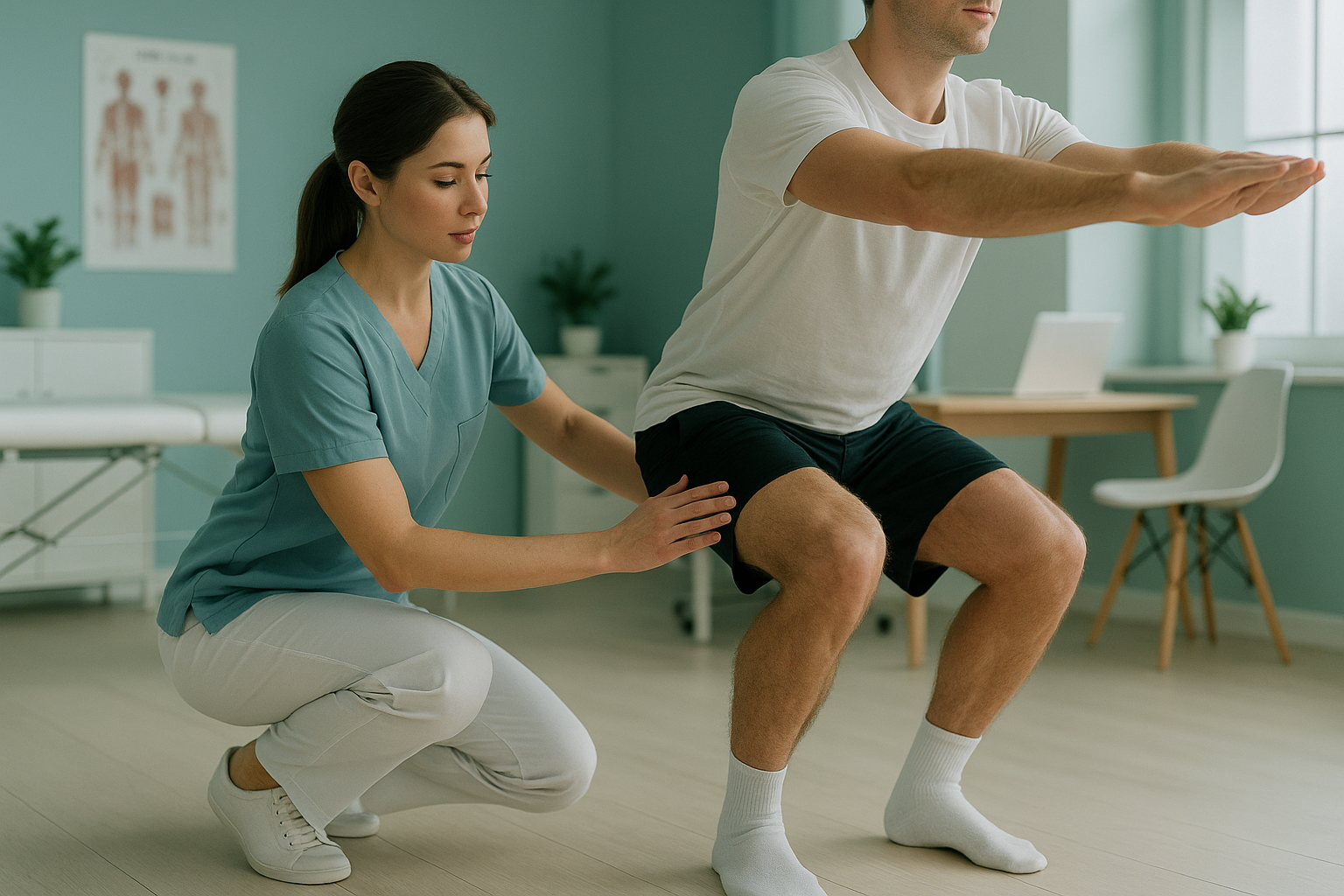
Sports Injury Prevention: Could a Hidden Alignment Problem Be Putting You at Risk?
Many sports injuries are not random bad luck. They happen because of small alignment imbalances that put extra stress on certain joints, muscles and tendons. A standing whole-body scan can reveal these imbalances before they cause an injury, giving you and your coach or physiotherapist clear information to work with.
Key takeaways
- Alignment problems often cause injury away from their source, because the body compensates along a connected chain.
- Standard scans taken lying down can miss imbalances that only appear under your own body weight.
- A standing EOS scan uses about 90% less radiation than a standard X-ray, around ten times less.
- Injury prevention screening gives you a clear picture to share with your trainer, physio or sports medicine specialist.
- ScanAlign provides diagnostic imaging only, not treatment.
What is injury prevention screening?
Injury prevention screening is a way of checking your body's alignment and mechanics before a problem becomes a full-blown injury. Instead of waiting until something tears, strains or breaks down, you get a clear picture of how your skeleton is balanced when you are standing and weight-bearing.
Your body works as a connected chain from your feet up through your knees, hips, spine and head. If one link in that chain is slightly off, say a subtle leg-length difference or a mild pelvic tilt, the areas above and below have to compensate. Over time, especially with the repetitive loading that sport demands, that compensation concentrates stress on a single joint or tendon. The result is often pain or injury that seems to appear out of nowhere.
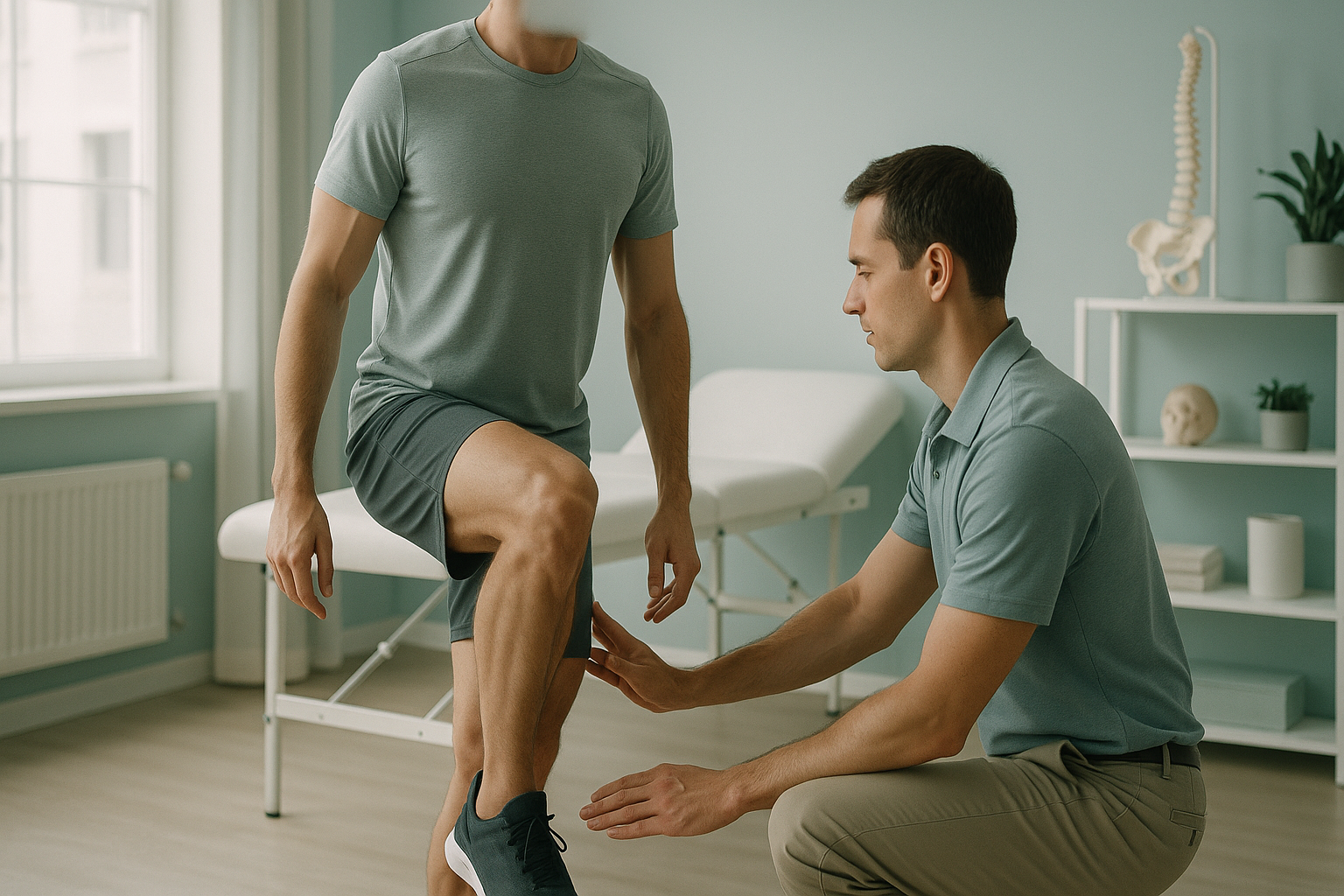
This is why a runner's knee pain might actually stem from a hip alignment issue, or why a tennis player's shoulder trouble could be connected to how their spine curves when they stand. Treating only the painful area without understanding the bigger picture often leads to the same injury returning.
What are the warning signs you need injury prevention screening?
Several patterns suggest that an underlying alignment issue, rather than simple overuse, may be driving your injury risk. Here are some of the most common signals.
The same muscle, joint or tendon flares up again and again despite rest and rehab.
Pain that always appears on the same side, suggesting uneven load distribution.
Your trainers wear down unevenly, pointing to an asymmetry in your gait or stance.
Discomfort that shifts from one area to another, a classic sign of compensation.
If any of these sound familiar, it is worth looking at the bigger picture rather than focusing only on where it hurts.
What causes alignment problems that lead to sports injuries?
Alignment imbalances can develop for a range of reasons. Some are structural and some are acquired through habit, training or previous injury.
Even a small difference changes how force travels through your hips, spine and knees with every stride.
A tilted pelvis changes the angle of your hip joints and the curvature of your lower back during movement.
A previous ankle sprain or knee injury can leave lasting changes in how you stand and move.
Mild scoliosis or excessive lordosis can shift your centre of gravity and increase rotational stress.
How does a standing EOS scan help with sports injury prevention?
A standing EOS scan captures your entire skeleton, from head to feet, in a single image while you are upright and bearing your own weight. This is important because your alignment under load is what actually matters during sport. Lying-down imaging, like a standard X-ray or MRI, relaxes your muscles and lets gravity flatten your posture, which can hide the very imbalances that put you at risk.
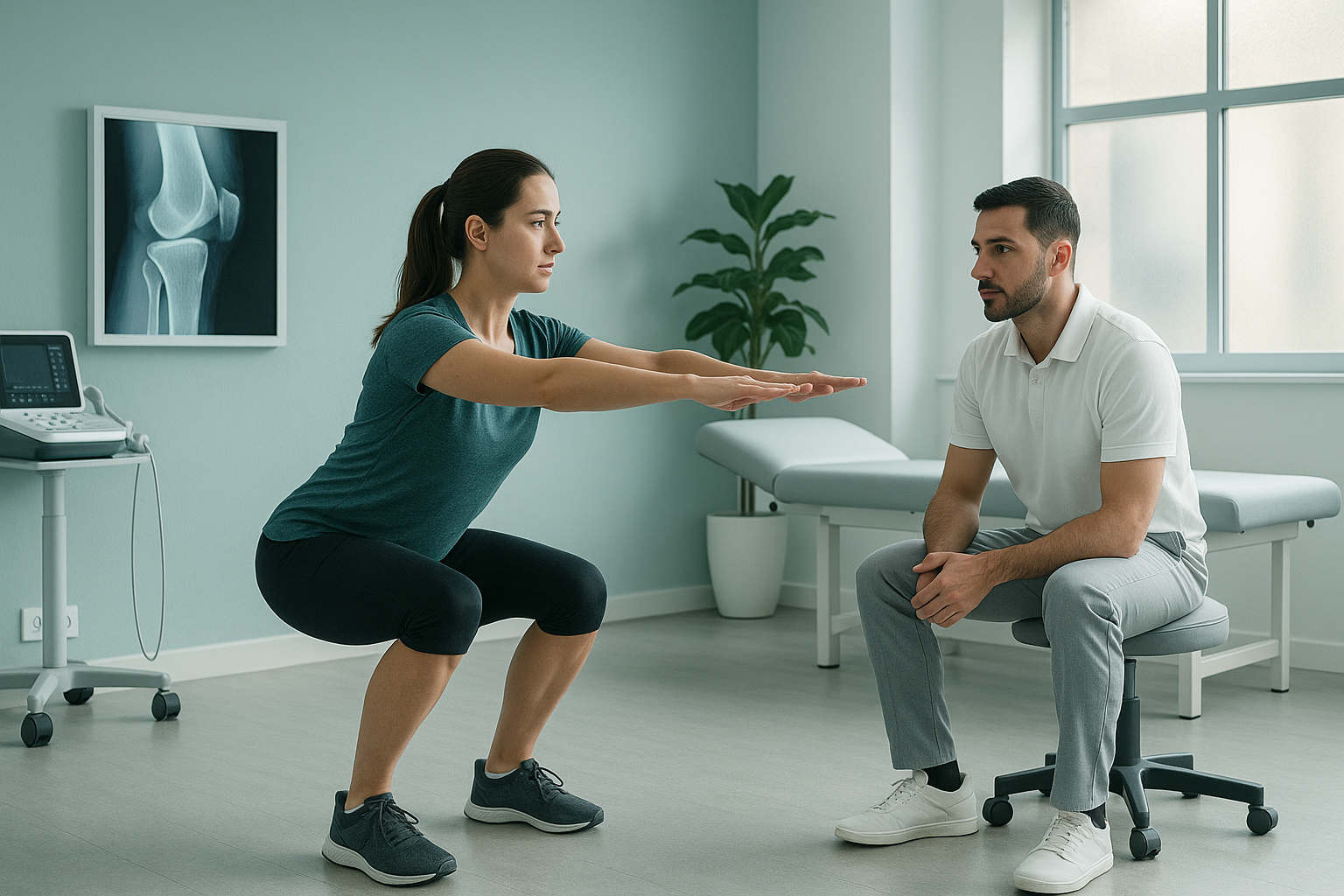
Because EOS captures everything in one go, your specialist can see how your feet, knees, hips and spine relate to each other. If your pelvis tilts slightly to one side, or one leg is functionally shorter than the other, the scan shows it clearly. This kind of whole-body view is very difficult to piece together from separate X-rays of individual joints.
The scan itself uses about 90% less radiation than a standard X-ray, around ten times less. You stand still for about 20 seconds while the scanner moves around you. No injection, no enclosed tunnel, no special preparation.
When is MRI the better choice? EOS shows bones, joints and alignment. If your specialist suspects a soft-tissue injury such as a torn ligament, cartilage damage or a disc problem, MRI is usually the better tool for that. The two types of imaging complement each other well.
How can alignment information help prevent common sports injuries?
Once your alignment is clearly mapped, the information can be shared with your physiotherapist, osteopath, sports medicine consultant or strength and conditioning coach. They can use it to tailor your training programme, adjust your biomechanics or recommend the right kind of support.
For example, if the scan shows a subtle leg-length difference, your physio might adjust your training to address the resulting muscle imbalances. If your hip alignment is slightly off, your coach can modify exercises to reduce the extra stress on one side. If a spinal curve is contributing to rotational issues, targeted core work may help manage the asymmetry.
ScanAlign provides the diagnostic imaging and a detailed report. It does not provide treatment or rehabilitation programmes itself. The value is in giving you and your team the information you need to make better decisions.
Want to find out whether an alignment scan could help you? Talk to our radiographer first, at no cost.
Book a free video consultationYou can learn more about what an EOS scan involves on our main EOS scan page.
Frequently asked questions about sports injury prevention screening
No. ScanAlign is a self-referral clinic, so you can book directly without a GP letter or consultant referral.
You can find current pricing and what is included on our FAQs and cost page.
Yes. The EOS system uses about 90% less radiation than a standard X-ray, around ten times less. It is one of the lowest-dose skeletal imaging methods available.
Alignment screening can highlight risk factors for common overuse injuries such as runner's knee, shin splints, stress fractures, IT band problems, hip impingement and lower back pain. By identifying the underlying imbalance, your clinician can help address the root cause rather than just the symptom.
No. EOS is a bone and joint imaging system. For soft-tissue injuries, including ligaments, tendons, cartilage and discs, MRI is usually the better choice. The two scans work well together.
When you lie flat, gravity removes the loading on your skeleton and your muscles relax. This can mask tilts, shifts and imbalances that appear only when you are standing and weight-bearing. A standing scan captures your skeleton under the same conditions you experience during sport.
The scan itself takes about 20 seconds. Your total appointment, including positioning and a brief consultation, is usually quite short. Full details are on our what-to-expect page.
Yes. You receive a detailed report and images that you can share with any healthcare professional or coach involved in your training and rehabilitation.
Absolutely. Alignment imbalances affect everyone, regardless of level. Weekend runners, gym-goers and amateur sports players are just as likely to benefit from understanding how their body is balanced.
ScanAlign is located at 19 Harley Street, London, inside The Harley Street Hospital. The clinic is easy to reach from central London.
Find out what your alignment is really doing
A free video consultation with our radiographer can help you decide whether an alignment scan is the right next step for your training or recovery.
Book a free video consultationSources
- Illés, T. and Somoskeöy, S. (2012). The EOS imaging system and its uses in daily orthopaedic practice. International Orthopaedics, 36(7), pp.1325–1331.
- British Association of Sport and Exercise Medicine (BASEM). Position statement on injury prevention and screening in sport.
- NHS. Overview: Sports injuries. nhs.uk.
Written by Abbas Dhami (Specialist Diagnostic Radiographer)
This page is general information and not a diagnosis.
ScanAlign is the trading name of CoreMed Solutions Ltd and operates under The Harley Street Hospital's CQC licence.