
Does Shockwave Therapy Work for Tendon Pain?
Shockwave therapy can help certain tendon problems, particularly plantar fasciitis and Achilles tendinopathy, when combined with a structured loading exercise programme. The evidence is moderate, not definitive. It is not a stand-alone fix, and it works best when the underlying cause of the tendon overload is identified first.
Key takeaways
- Shockwave therapy (ESWT) uses pressure waves to stimulate tendon healing.
- Evidence is strongest for plantar fasciitis and Achilles tendinopathy.
- It works best alongside progressive loading exercises, not on its own.
- Identifying why the tendon is overloaded matters more than treating the pain alone.
- Standing whole-body imaging can reveal alignment issues that drive tendon strain.
What is shockwave therapy and how does it work?
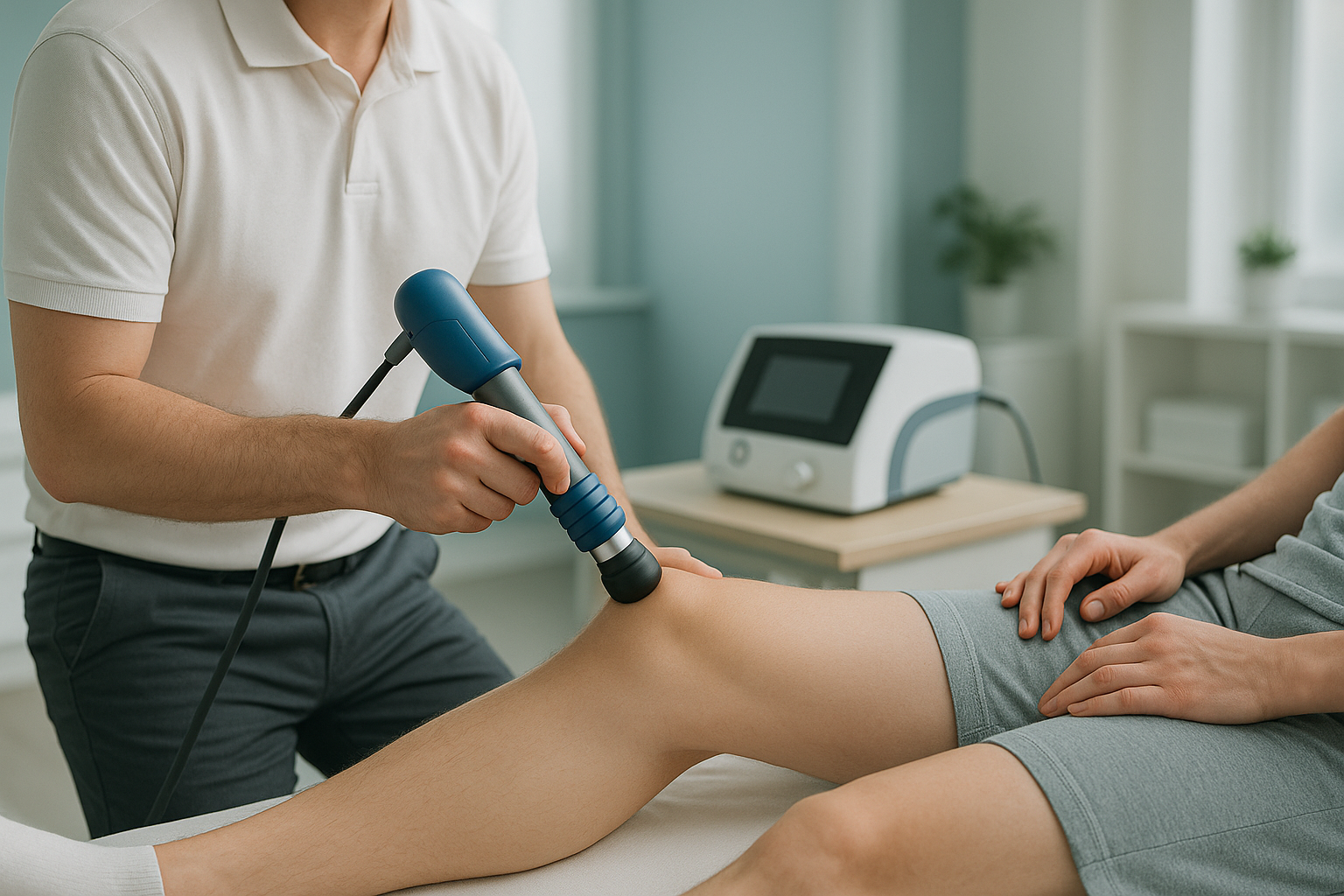
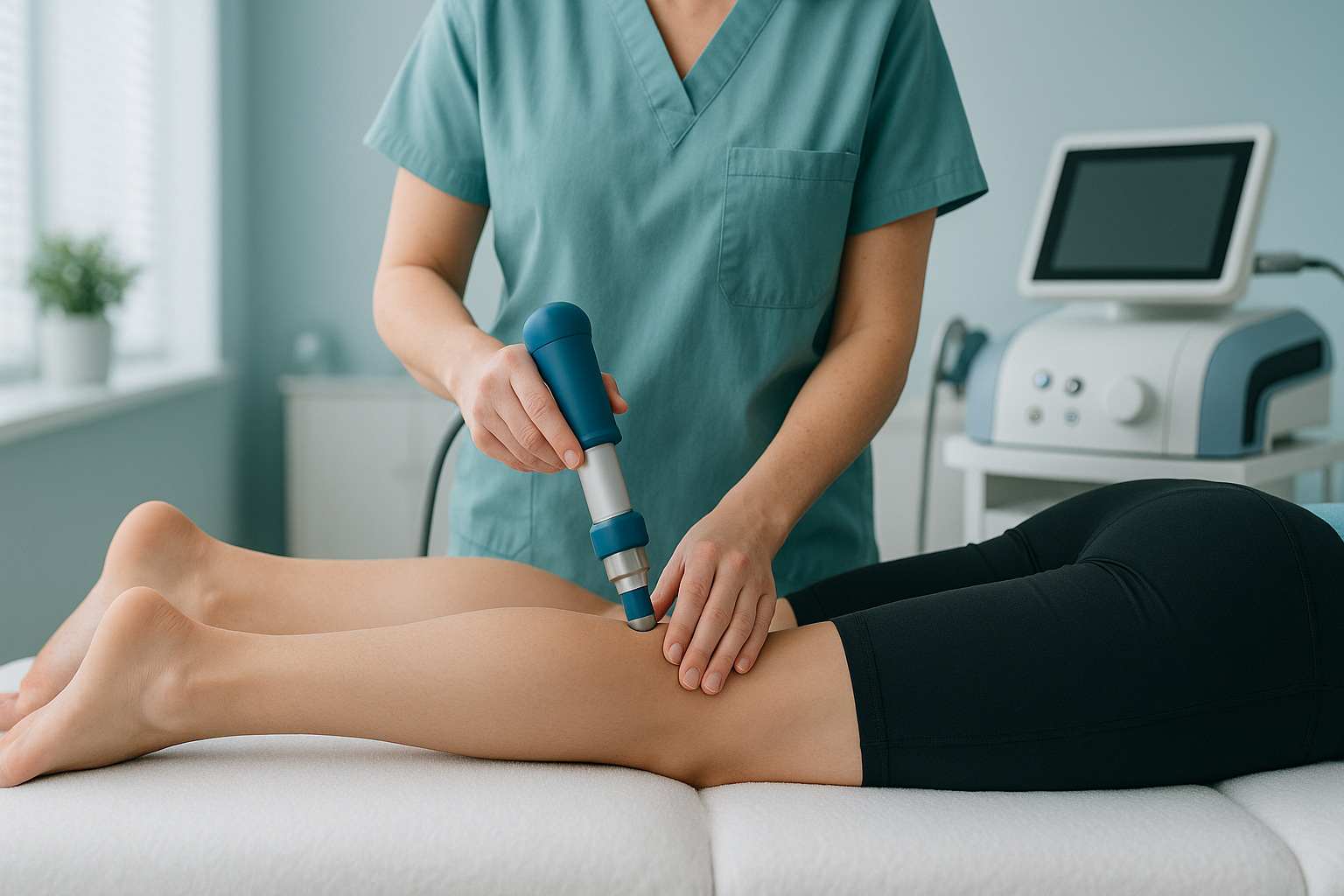
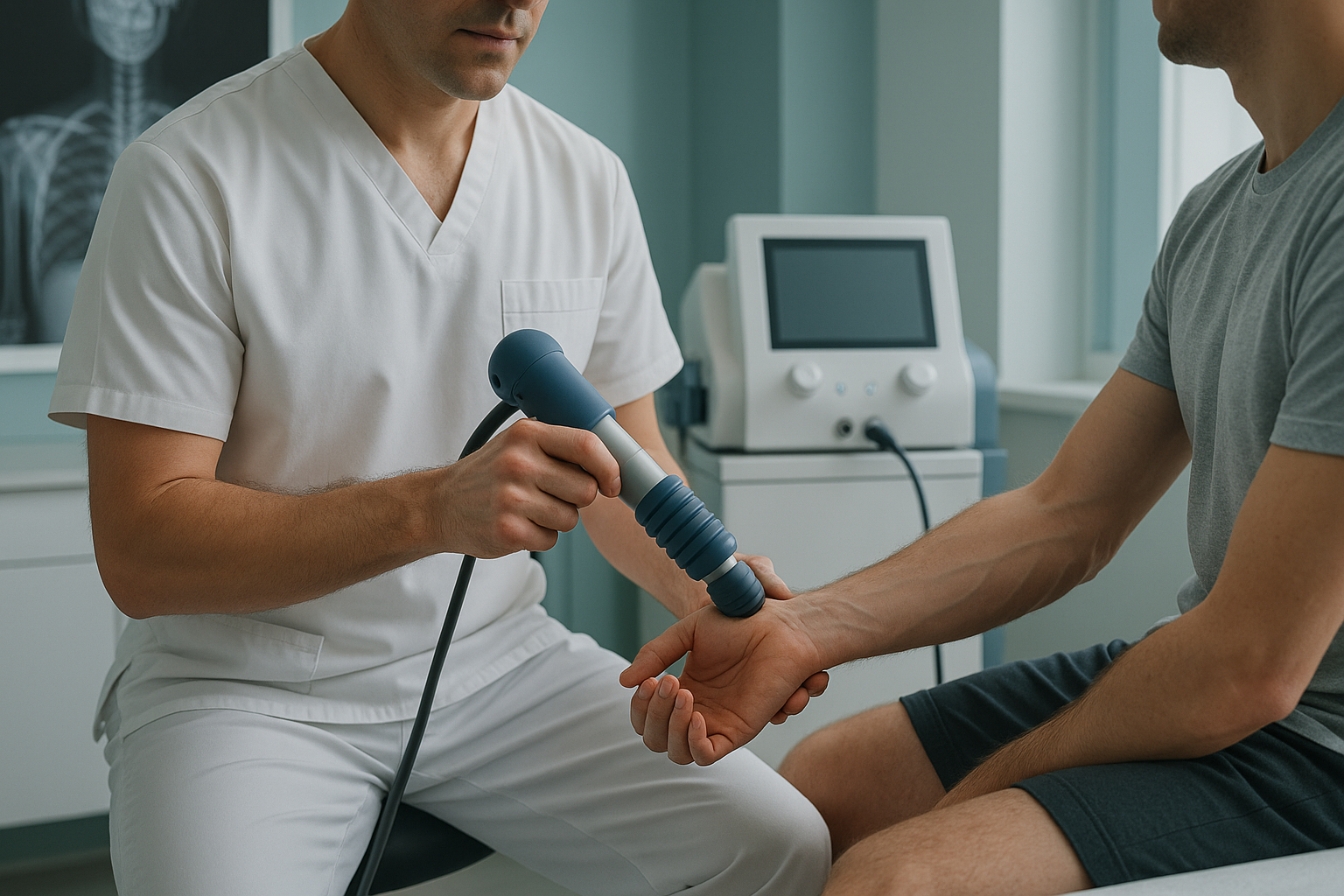
Shockwave therapy, formally called extracorporeal shockwave therapy (ESWT), sends focused or radial pressure waves through the skin into a painful tendon. These pulses increase blood flow, encourage cell repair and may reduce the nerve signals that carry pain. A clinician holds a handpiece against your skin and delivers the pulses in a short session, typically lasting around 10 to 15 minutes.
Radial shockwave spreads outward from the handpiece tip. It covers a wider area and is the type most commonly offered in high-street physiotherapy clinics. It tends to suit more superficial tendons such as the Achilles and lateral elbow.
Focused shockwave concentrates the energy on a smaller, deeper point. It is sometimes used for deeper structures such as the plantar fascia or the greater trochanter. Focused units are less widely available and typically found in specialist clinics or hospitals.
What does the evidence say about shockwave therapy?
The evidence is moderate and condition-specific. Several systematic reviews show that ESWT can reduce pain in plantar fasciitis and Achilles tendinopathy when conservative treatments alone have not been enough. For other tendons the picture is less clear, with smaller studies and mixed results.
Importantly, most positive studies combined shockwave with a structured loading exercise programme. NICE guidance notes that the evidence supports ESWT for certain tendinopathies but recommends it as an adjunct, not a replacement for rehabilitation. Shockwave on its own, without addressing why the tendon became overloaded, often leads to the same pain returning.
- Plantar fasciitis (heel pain lasting more than 6 months)
- Achilles tendinopathy (mid-portion)
- Greater trochanteric pain / trochanteric bursitis
- Lateral elbow tendinopathy (tennis elbow)
- Patellar tendinopathy (jumper's knee)
- Rotator cuff calcific tendinitis (some positive data, still debated)
Which tendon conditions respond best to shockwave therapy?
Plantar fasciitis and Achilles tendinopathy have the most consistent positive results. Both involve weight-bearing tendons that are often overloaded by alignment issues elsewhere in the body.
Stubborn heel pain, especially first thing in the morning. ESWT may help when stretching and insoles have not been enough.
Pain and stiffness in the mid-portion of the Achilles tendon, often linked to calf tightness or altered foot mechanics.
Pain at the outer hip, sometimes called trochanteric bursitis. Often made worse by pelvic or leg-length asymmetry.
In all three cases, the tendon is usually overloaded because of a mechanical problem further up or down the body's kinetic chain. A tilted pelvis, a knee that collapses inward, or a leg-length difference can redirect forces onto one tendon for months or years. Treating the tendon alone, whether with shockwave or anything else, may ease the pain temporarily. But unless you also address the alignment issue driving the overload, the problem is likely to return.
Does shockwave therapy hurt and what should you expect?
Most people describe the sensation as an intense tapping or mild discomfort during the session. It is usually tolerable. The area may feel sore for a day or two afterwards, similar to post-exercise soreness. Serious side effects are rare, though mild bruising or temporary numbness can occur.
A typical course involves three to five sessions spaced one week apart. Your treating clinician should also give you a tailored loading programme (specific exercises) to follow between sessions. Shockwave combined with progressive loading exercise produces better outcomes than either approach alone.
Wondering about costs? Shockwave therapy pricing varies between clinics. ScanAlign does not provide shockwave therapy. We provide the diagnostic imaging that helps your treating clinician decide whether shockwave, loading exercises, or another pathway is right for you.
Why does alignment matter before starting shockwave therapy?
Alignment matters because your body is a connected chain from your feet to your head. If one part is out of line, another area compensates. That compensation often shows up as tendon pain far from the actual cause. A flat foot might overload the Achilles. A pelvic tilt might strain the hip tendons. A knee that drifts inward might irritate the IT band syndrome treatment area and change how force travels through the leg.
Standard imaging, such as a lying-down X-ray or MRI, relaxes your muscles and can mask these alignment problems. When you stand, gravity compresses joints, tilts the pelvis, and reveals the true picture. ScanAlign standing EOS imaging captures a full-length, weight-bearing image of your skeleton in one scan, using about 90% less radiation than a standard X-ray, around ten times less. It shows your specialist exactly how your bones, joints, and posture line up under real-world load.
This matters for shockwave therapy because if your clinician knows exactly where the biomechanical problem starts, they can combine targeted treatment with the right rehabilitation programme. Without that information, shockwave risks becoming an expensive way to treat a symptom while the root cause goes unaddressed.
When MRI is the better tool. EOS shows bones, joints and alignment under load. If your clinician suspects a soft-tissue tear, disc problem or nerve involvement, MRI is usually the better choice. The two types of imaging answer different questions, and sometimes you need both.
Not sure whether alignment imaging would help your case? You can book an assessment to discuss your situation with a specialist radiographer at no cost, before committing to anything.
Book a free video consultationFrequently asked questions about shockwave therapy
For certain tendon conditions, yes, there is moderate evidence that it can reduce pain and improve function. The strongest results are seen when shockwave is combined with progressive loading exercises. It is not a guaranteed fix, and results vary between individuals.
Most people feel a firm tapping or mild discomfort during the session. It should not be unbearable. The treated area may ache for a day or two afterwards. Your clinician can adjust the intensity if it becomes too uncomfortable.
A typical course is three to five sessions, usually one week apart. Some people notice improvement after the first two sessions, while others take longer. Your clinician should reassess progress after each session.
Plantar fasciitis is one of the conditions with the most supporting evidence. It is usually recommended after at least six months of other conservative measures, such as stretching, insoles and footwear changes, have not fully resolved symptoms.
There is reasonable evidence for mid-portion Achilles tendinopathy. However, shockwave should be part of a broader plan that includes eccentric loading exercises and, ideally, an assessment of foot and leg alignment to understand why the tendon became overloaded.
Side effects are usually mild. Temporary soreness, redness or light bruising at the treatment site are the most common. Serious complications are very rare. If you notice sudden, severe pain, numbness or weakness after a session, contact your treating clinician promptly.
Costs vary widely depending on the clinic, the type of shockwave device used, and how many sessions are recommended. ScanAlign does not provide shockwave therapy. We provide diagnostic imaging that helps your clinician decide on the right treatment approach.
No. You can self-refer. You start with a free video consultation where a specialist radiographer reviews your history and explains whether standing alignment imaging is likely to help your situation.
Because tendon pain is often a symptom of a mechanical problem somewhere else. If a pelvic tilt or leg-length difference is overloading the tendon, shockwave may ease the pain temporarily but will not fix the cause. A standing full-body scan shows your clinician exactly where the chain breaks down.
Yes. An EOS scan uses about 90% less radiation than a standard X-ray, around ten times less. It captures a full-length standing image in a single, low-dose exposure. You can find more details on safety on our website.
Find out what is driving your tendon pain
A free video consultation with a specialist radiographer can help you understand whether standing alignment imaging is a useful next step, before you commit to any treatment.
Book a free video consultationSources
- NICE Interventional Procedures Guidance IPG313: Extracorporeal shockwave therapy for refractory plantar fasciitis. National Institute for Health and Care Excellence.
- Mani-Babu S, et al. The effectiveness of extracorporeal shock wave therapy in lower limb tendinopathy: a systematic review. The American Journal of Sports Medicine, 2015;43(3):752-761.
- Speed C. A systematic review of shockwave therapies in soft tissue conditions. British Journal of Sports Medicine, 2014;48(21):1538-1542.
Written by Abbas Dhami (Specialist Diagnostic Radiographer)
This page is general information and not a diagnosis.
ScanAlign is the trading name of CoreMed Solutions Ltd and operates under The Harley Street Hospital's CQC licence.