
What Does Slouching Actually Do to Your Spine?
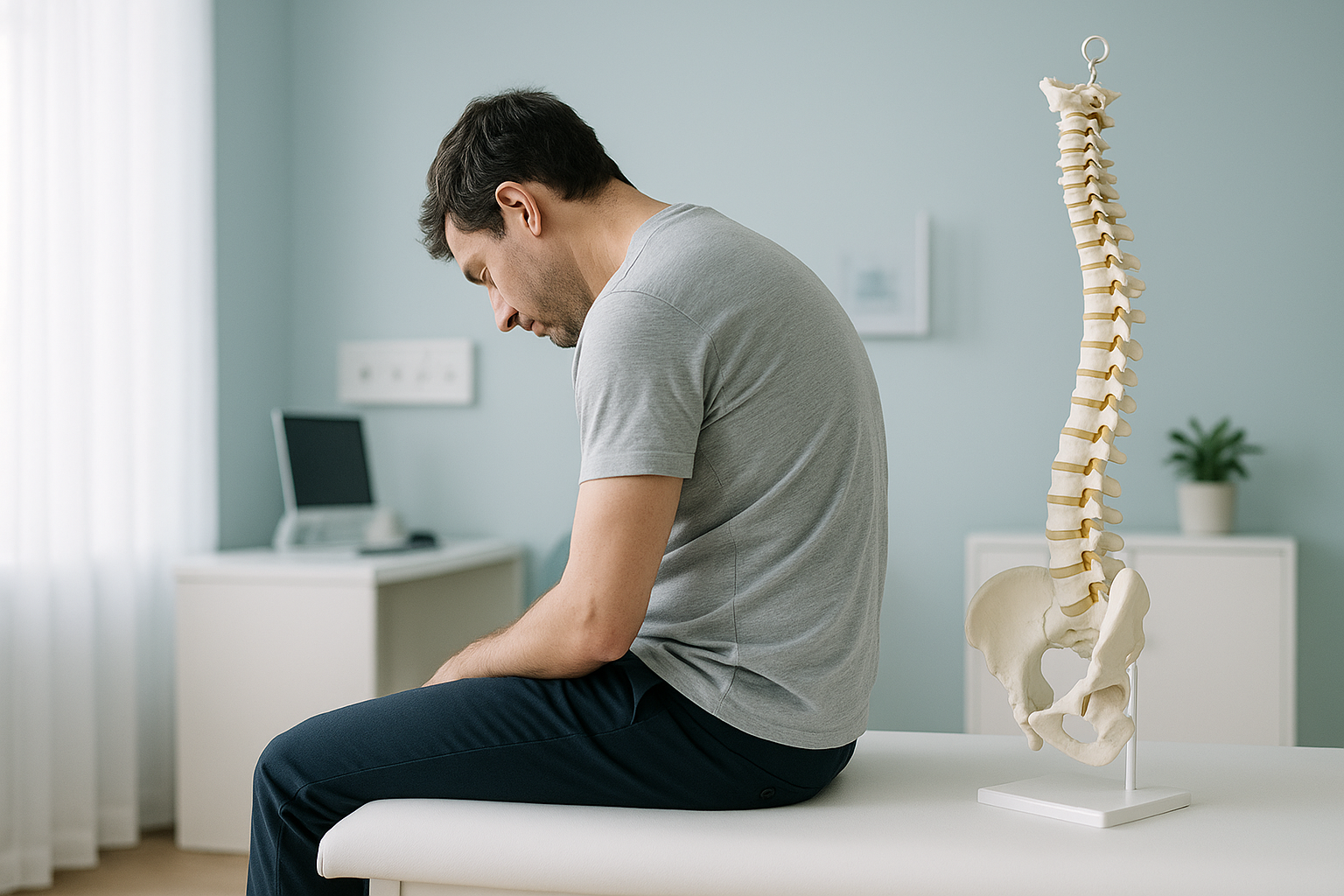
Slouching shifts your spine into sustained flexion, increasing the load on your discs and forcing your back muscles to work harder to keep you upright. Over many hours it can cause stiffness, fatigue and discomfort. But the evidence is clear: occasional slouching is normal, and no single posture is perfect. The real issue is staying in any one position for too long.
Key takeaways
- Slouching increases disc pressure and muscle fatigue, but it is not automatically harmful.
- Pain from posture is usually about how long you hold a position, not the position itself.
- There is no single "correct" posture. Variety and regular movement matter most.
- Standing whole-body imaging reveals alignment habits that lying-down scans can miss.
- If you have persistent back pain alongside slouching, an alignment assessment can help identify the cause.
Is slouching bad for you?
It depends on context. Slouching for a few minutes while you read or watch television is a normal resting posture. The body is designed to move through many positions, and briefly rounding your back is not going to damage it.
What can become a problem is sustained flexion. When you slouch in a chair for hours at a time, day after day, several things change inside your spine:
- Higher disc loading. Your intervertebral discs carry more compressive force when your spine is rounded forward. Research shows disc pressure can be noticeably higher in slumped sitting than in upright sitting.
- Muscle fatigue. The muscles along the back of your spine have to work harder to stop you folding further forward. Over time, they tire out, which can leave you feeling stiff and achy.
- Ligament creep. The passive ligaments in your spine stretch gradually under a sustained load. This is temporary, but it can make your back feel unstable or "wobbly" when you finally stand up.
None of this means slouching will inevitably cause injury. The research on posture and pain is more nuanced than most people expect. Large studies have struggled to find a clear, direct line between any single posture type and long-term back pain. Comfort, movement variety and overall fitness tend to matter more than hitting a textbook sitting position.
What are the signs that slouching is affecting your body?
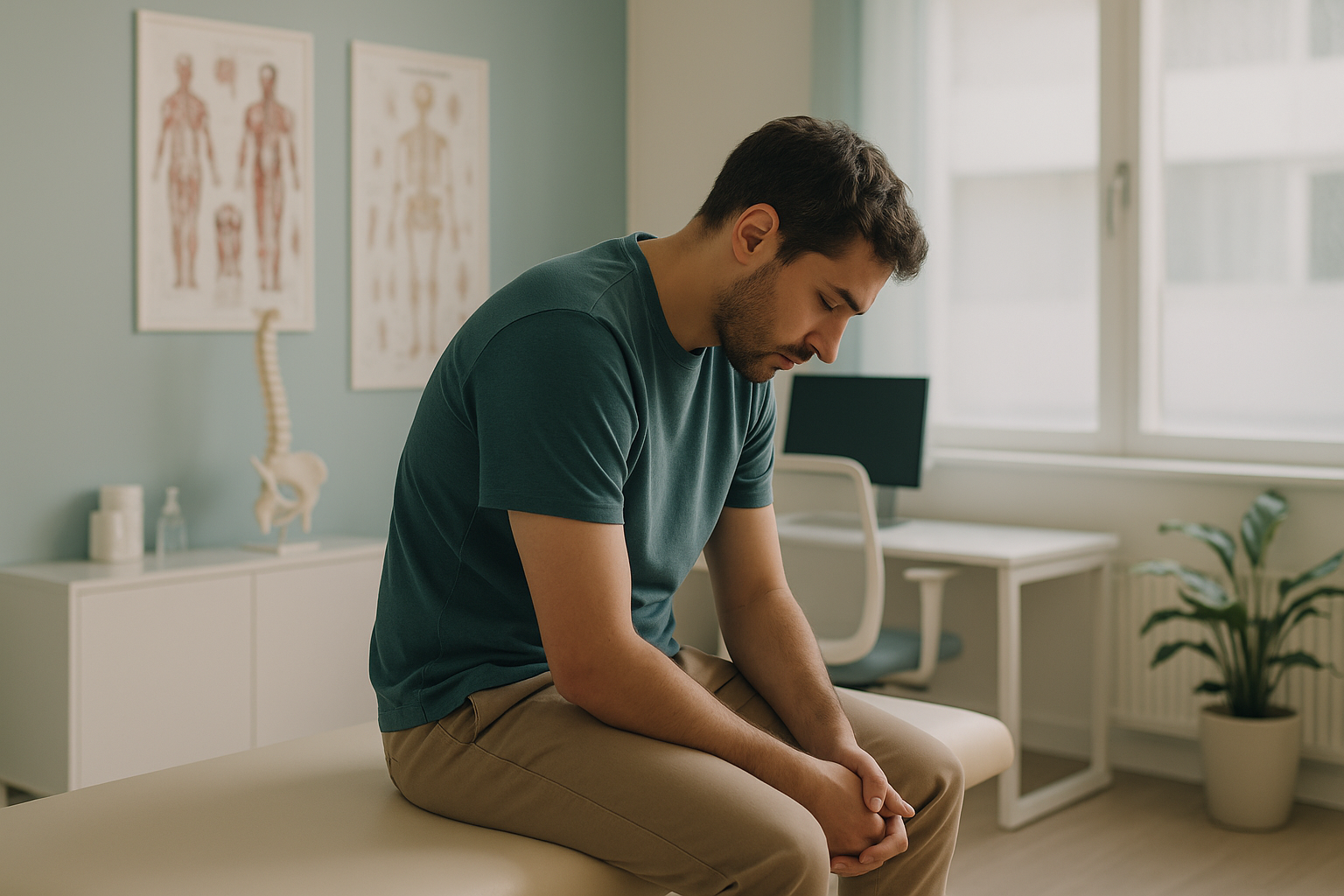
Most people who slouch regularly do not notice any symptoms at all. But if your body is starting to struggle with the position, you might recognise some of these signs.
A dull ache in the mid-back, usually worse by late afternoon.
Feeling locked in position after sitting for a long time, especially in the lower back.
Your head drifts in front of your shoulders. This adds strain to the neck muscles.
A visible increase in the curve of your thoracic spine, sometimes called a kyphotic lordotic posture.
Why do we slouch in the first place?
Slouching is mainly a habit driven by comfort and environment. Your body naturally seeks the lowest-effort position, and rounding forward reduces the muscular work needed to stay upright. That is not a design fault. It is energy conservation.
Hours at a desk or laptop without movement breaks.
When your postural muscles tire, gravity wins and you round forward.
The longer you sit in one shape, the more your body adapts to that shape.
A chair that does not support your lumbar curve encourages rounding.
Sometimes slouching is also a response to discomfort elsewhere. If your pelvis is tilted or your hips are stiff, your upper back may compensate by rounding. This is the compensation chain at work, and it is one reason why looking at a single area of the spine can miss the bigger picture. For more on how the whole body connects, see our posture correction guide.
How is posture assessed when you are standing up?
Most imaging happens while you lie down. An MRI or CT scan asks you to stay flat and still. That relaxes your muscles and removes the effect of gravity, so the image shows your spine at rest, not under load. It can hide alignment habits that only appear when you are upright and weight-bearing.
A standing whole-body EOS scan captures your skeleton from head to feet while you stand naturally. It shows how your spine, pelvis, hips and legs relate to each other under real conditions. If your slouching habit has led to a genuine shift in alignment, or if your slouch is actually a compensation for something lower down, standing imaging is the clearest way to see it.
The EOS system uses about 90% less radiation than a standard X-ray, around ten times less. That makes it a practical option for whole-body imaging without an excessive dose. You can learn more about how this works through ScanAlign standing EOS imaging.
It is also worth noting that subtle shifts in your centre of gravity, known as postural sway, can contribute to how you hold your spine when you are upright. A standing scan captures that real-world loading pattern.
When MRI is the better choice: EOS shows bones, joints and alignment. If your concern is about discs, nerves or soft tissue, MRI is usually the more suitable tool. Your clinician can advise which scan fits your situation.
How do you stop slouching so much?
The most honest answer is that you do not need to eliminate slouching entirely. You need to spend less time in any single position. Research consistently supports movement variety over finding one "perfect" posture.
Practical steps
- Movement breaks. Stand, stretch or walk for a minute or two every 30 to 45 minutes. This resets your muscles and reduces the sustained loading on your discs.
- Awareness cues. A sticky note on your monitor, a gentle phone alarm, or a posture-reminder app can nudge you to check in with your position through the day.
- Chair support. A small lumbar roll or cushion behind your lower back can help maintain some natural curve without you having to think about it.
- Strengthen gradually. General exercises that work the muscles around your upper back and core can make upright sitting feel more natural over time. A physiotherapist can guide you on this.
- Understand your alignment. If discomfort persists despite changing habits, there may be a structural reason why your body favours that position. A whole-body alignment assessment can clarify what is happening across your full skeleton.
Wondering whether your slouch is a habit or a sign of something structural? A free video consultation can help you decide if imaging is the right next step.
Book a free video consultationWhen to seek urgent help
If you develop numbness, weakness in your legs, or any loss of bladder or bowel control alongside back pain, contact your GP, call 111, or go to A&E straight away. These are signs of a serious condition that needs immediate medical attention, not a scan booking.
Frequently asked questions about slouching
It can contribute, but it is rarely the sole cause. Research shows that prolonged static positions of any kind, including sitting bolt upright, can lead to discomfort. Movement variety matters more than eliminating slouching completely.
Sustained flexion increases the load on the front of your discs. Over very long periods and in combination with other factors, this could contribute to disc problems. But occasional slouching is normal and does not cause disc damage on its own.
There is no single perfect sitting posture. The best approach is to change your position regularly, use a chair that supports your lower back, and take movement breaks every 30 to 45 minutes.
When you slouch, the muscles between your shoulder blades work overtime to stop you folding further forward. After several hours, those muscles fatigue, which typically feels like a dull ache or burning sensation in the mid-back.
In most adults, habitual slouching does not permanently reshape the vertebrae. However, years of sustained poor posture combined with other factors like reduced bone density can contribute to increased thoracic curvature over time.
An EOS scan captures your entire skeleton from head to feet in a single standing image. A standard X-ray focuses on one area and is often taken lying down, which removes the effect of gravity and can hide alignment problems.
Yes. The EOS system uses about 90% less radiation than a standard X-ray, around ten times less. It is a very low-dose imaging method.
No. ScanAlign is a private self-pay clinic and you can self-refer. The process starts with a free video consultation to make sure the scan is right for you.
You can find current pricing details on the ScanAlign FAQs page. The free video consultation will also confirm exactly what is included.
Not necessarily. Slouching alone is not a reason for imaging. But if you have persistent pain, stiffness or a visible change in your posture that is not improving with movement and habit changes, an alignment assessment can help identify whether there is a structural cause.
Not sure if your posture needs imaging?
A free video consultation with our specialist radiographer can help you decide whether a standing alignment assessment is the right next step.
Book a free video consultationWritten by Abbas Dhami (Specialist Diagnostic Radiographer)
Sources
- Nachemson, A. (1966). The load on lumbar disks in different positions of the body. Clinical Orthopaedics and Related Research, 45, 107-122.
- O'Sullivan, P. et al. (2012). Sitting posture and back pain: fact or fad? Manual Therapy, 17(5), 365-370.
- NHS. Back pain: how to prevent it. NHS website. Available at: nhs.uk/conditions/back-pain/prevention.
This page is general information and not a diagnosis.
ScanAlign is the trading name of CoreMed Solutions Ltd and operates under The Harley Street Hospital's CQC licence.