
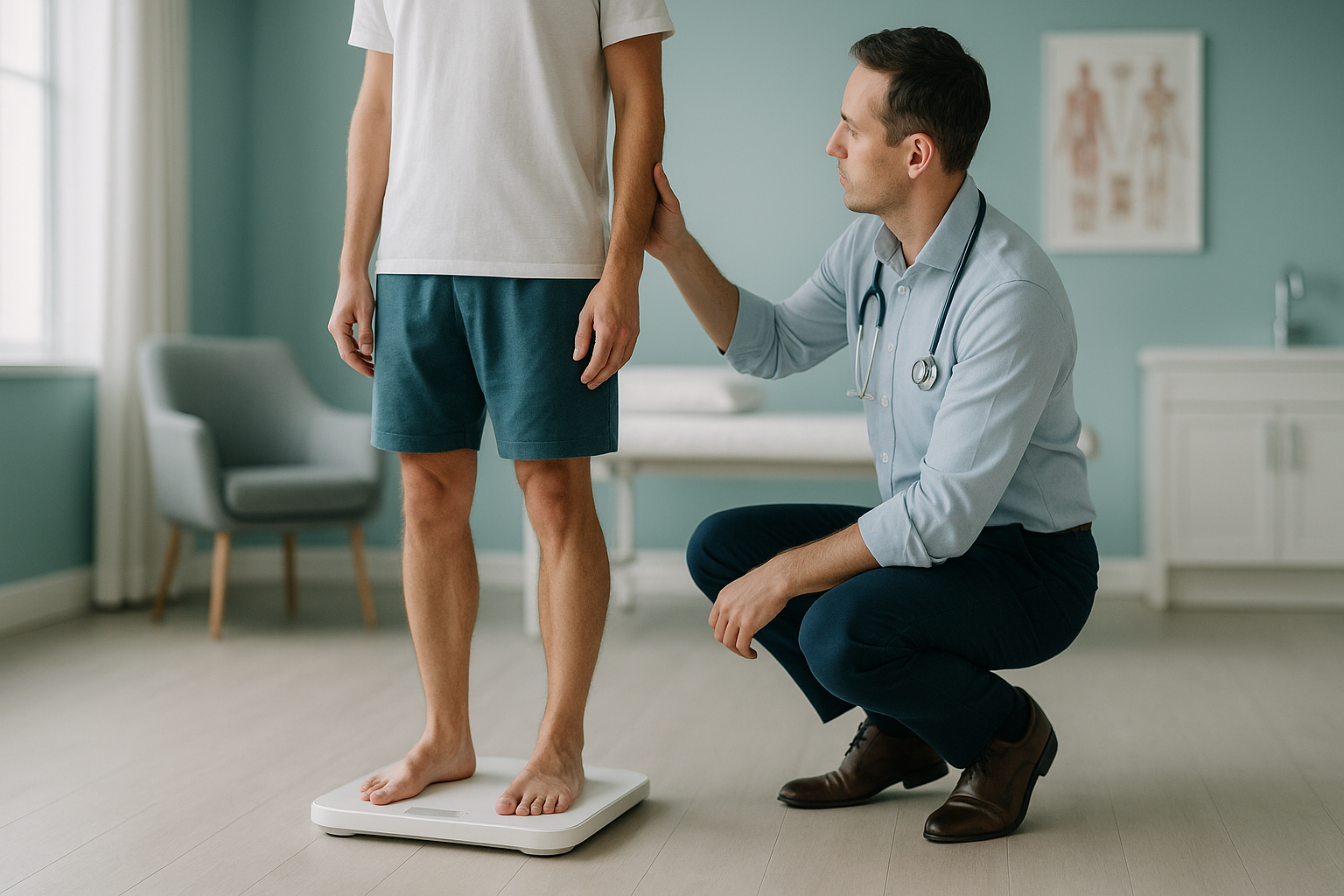
Postural Sway: What Is It and Why Does Your Balance Feel Off?
Postural sway is the small, constant movement your body makes to stay upright when you stand still. Everyone sways a little. But when sway increases, it can signal an alignment problem, muscle weakness or joint stiffness that standard lying-down scans may not reveal. Standing whole-body imaging captures how your skeleton actually balances under gravity.
Key takeaways
- Postural sway is normal, but excessive sway can point to underlying structural or muscular issues.
- Pain in your back, hip or knee may be caused by alignment problems that increase sway.
- Lying-down scans relax muscles and can hide the imbalances that appear when you stand.
- An EOS standing scan images your whole skeleton under load, using about 90% less radiation than a standard X-ray.
- ScanAlign offers a free video consultation to discuss whether standing imaging is right for you.
What does postural sway actually mean?
Postural sway is the ongoing, mostly invisible movement your body uses to keep your centre of gravity over your feet. Even when you feel perfectly still, your muscles, joints and nervous system are making tiny corrections every second. This is called postural control.
Think of it like balancing a broomstick on your palm. You constantly adjust your hand to keep it upright. Your body does the same thing, using signals from your eyes, inner ear and the sensors in your joints and muscles.

A small amount of sway is healthy. It shows your balance system is working. The concern arises when sway becomes larger or more one-sided than it should be. That often means something in the chain, from your feet up to your spine, is not aligned or not functioning as well as it could.
How do you know if your postural sway is too much?
Most people with increased postural sway notice it as a general feeling of unsteadiness rather than a dramatic wobble. Here are the common signs.
You catch yourself leaning or shifting weight, especially on uneven ground or when standing for a while.
Muscles on one side of your back, hip or leg feel more tired or sore than the other.
Queuing, waiting or standing in one spot feels harder than it should. You shift from foot to foot.
You stumble more often, especially when turning quickly or walking on varied surfaces.
If you also experience sudden weakness, numbness in your legs, or loss of bladder or bowel control, these are red flags. Please seek urgent medical attention through your GP, 111, or A&E rather than booking a scan.
What causes increased postural sway?
Increased postural sway usually comes from a combination of structural and functional factors. Your body is a connected chain from your feet to your head. A problem at one level can force another area to compensate, and that compensation itself can increase sway.
Increased or reduced curves in your spine change where your weight falls, forcing extra correction.
When the pelvis is not level, one leg effectively becomes shorter, throwing off your balance base.
Wear, stiffness, or a difference in joint angles between sides alters the way you load weight.
Weak core or hip muscles cannot stabilise you as well, so sway increases to compensate.
The important point is that pain often shows up away from its true cause. You might feel it in your lower back, but the underlying problem could be a tilted pelvis or misaligned knees that are making your body work harder to stay upright.
How is postural sway assessed with standing imaging?
Traditional imaging, like a standard X-ray, CT or MRI, is done while you lie down. That position relaxes your muscles and lets gravity pull differently on your joints. It can hide the very alignment problems that increase your sway when you are upright.
An EOS standing scan captures your entire skeleton, from head to feet, in one image while you stand naturally. Because you are weight-bearing, the image shows how your bones and joints actually line up under the force of gravity. It reveals tilts, shifts and compensations that a lying-down scan may miss entirely.
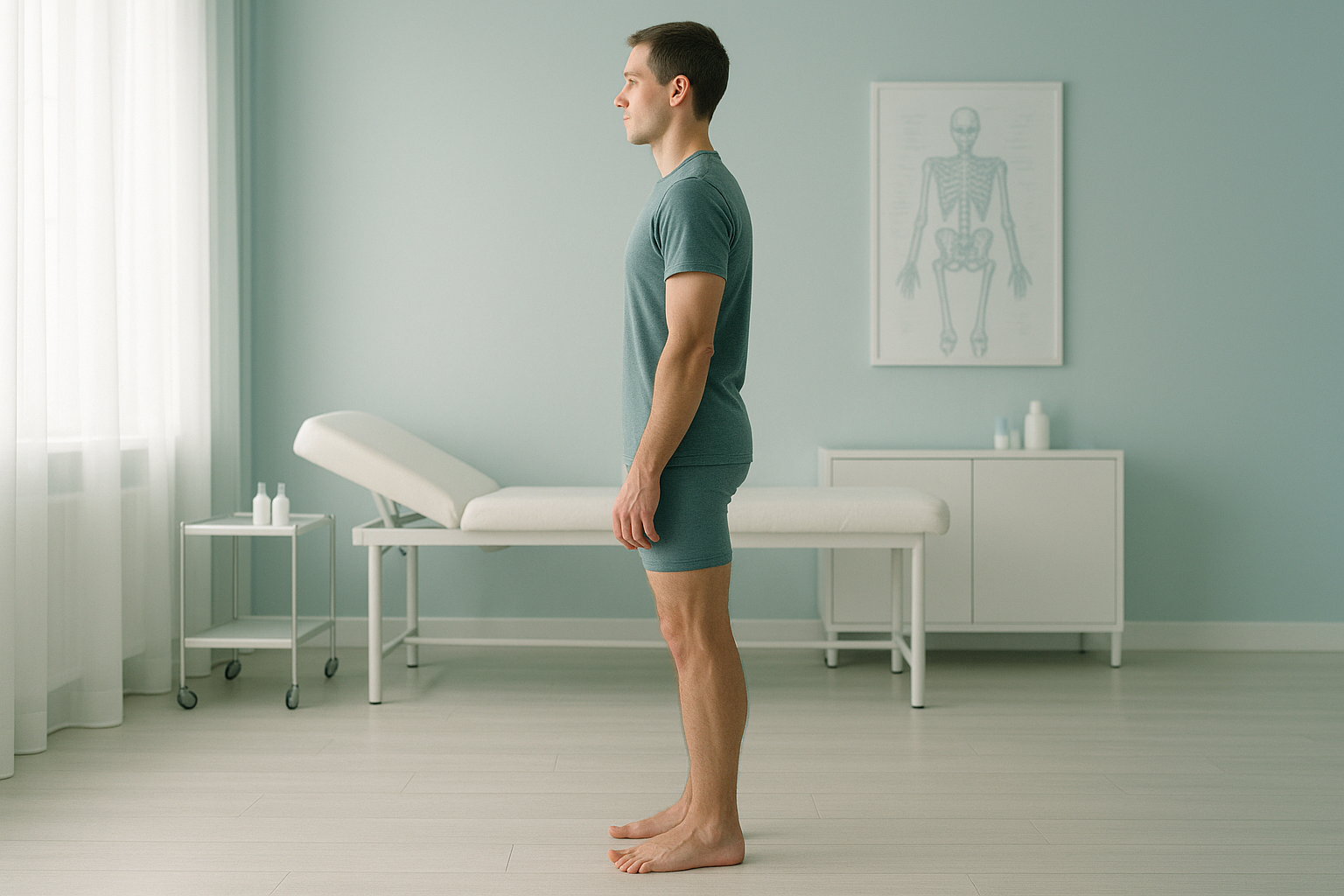
The EOS system uses about 90% less radiation than a standard X-ray, around ten times less. That means a whole-body image is achieved at a very low dose. For balance and postural sway concerns, seeing the full chain, from spine through pelvis to knees and feet, in one standing view gives clinicians a far clearer picture of what may be driving your instability.
When MRI is the better choice: EOS shows bones, joints and alignment brilliantly. If your clinician suspects a soft-tissue, disc or nerve problem is contributing to your symptoms, MRI is usually the better tool for that. The two can work well together.
What can help if your postural sway is a problem?
The first step is understanding where the imbalance comes from. Without a clear picture of your alignment, any approach is guesswork. A standing whole-body scan provides that picture, showing exactly which joints and segments are out of line and how the rest of your body is compensating.
Once the cause is identified through imaging, your treating clinician (physiotherapist, osteopath, orthopaedic consultant) can create a targeted plan. That might include specific strengthening exercises, manual therapy, orthotics, or in some cases, a surgical opinion. ScanAlign provides the diagnostic imaging, the detailed report that informs those decisions. We do not provide treatment ourselves.
Wondering whether your balance issue could be linked to your alignment? A free video consultation lets you discuss your symptoms with our team and find out if standing imaging is the right next step.
Book a free video consultationYou can also explore how alignment affects the spine, hip and knee on our dedicated pages.
Frequently asked questions about postural sway
Yes. Everyone sways slightly when standing. It is part of how your body maintains balance. The concern arises when sway becomes noticeably larger, more one-sided, or starts to affect your confidence on your feet.
Increased sway itself is usually a symptom rather than a cause. However, the alignment problem behind the sway, such as a pelvic tilt or spinal shift, can absolutely contribute to pain in your back, hip or knee because those areas are working harder to keep you upright.
Dizziness typically involves a sensation of the room spinning or lightheadedness and is often related to your inner ear or blood pressure. Postural sway is a physical movement of your body. You may feel unsteady without feeling dizzy at all. If you experience dizziness, it is worth seeing your GP to rule out inner-ear or neurological causes.
A standard X-ray usually images one area at a time and is often taken lying down. That relaxes muscles and removes the effect of gravity, so alignment problems that only appear when you are standing can be missed. A standing whole-body scan captures everything from head to feet in one weight-bearing image.
An EOS scan is a standing, whole-body X-ray that images your entire skeleton in one pass. It uses about 90% less radiation than a standard X-ray, around ten times less. You can read more about safety and what to expect on our FAQs page.
No. ScanAlign is a private, self-pay clinic, so you can refer yourself. We offer a free video consultation first to discuss your symptoms and make sure standing imaging is the right step for you.
You can find current pricing and package details on our FAQs and cost page.
It can contribute. If your habitual standing posture shifts your weight forward, backward or to one side, your body has to work harder to stay balanced, which can increase sway. But "poor posture" is often itself the result of an underlying alignment issue, which is why imaging the whole skeleton can be so revealing.
An EOS scan shows your skeletal alignment in detail. If your balance issue is related to how your bones and joints line up, the scan can identify that clearly. If the cause is neurological or inner-ear related, other investigations would be needed. The free video consultation helps determine whether standing imaging is appropriate for your situation.
Yes. Postural sway generally increases as we get older, partly due to changes in muscle strength, joint flexibility and the speed of nerve signals. Age-related changes in the spine and joints can also shift alignment. Understanding your alignment through imaging can help a clinician target the right areas for improvement.
Ready to see what's behind your balance concerns?
A free video consultation with our team can help you understand whether standing whole-body imaging is the right next step.
Book a free video consultationAuthor: Abbas Dhami (Specialist Diagnostic Radiographer)
Sources
- Paillard T. "Relationship between sport expertise and postural skills." Frontiers in Psychology, 2019. A review of postural control mechanisms and sway measurement.
- NHS. "Falls: prevention in older people." NICE Clinical Guideline CG161 (updated 2013). Covers balance assessment and postural stability in adults.
- Illés T, Somoskeöy S. "The EOS imaging system and its uses in daily orthopaedic practice." International Orthopaedics, 2012;36(7):1405-1411. Evidence on standing whole-body imaging and low-dose radiation.
This page is general information and not a diagnosis.
ScanAlign is the trading name of CoreMed Solutions Ltd and operates under The Harley Street Hospital's CQC licence.