
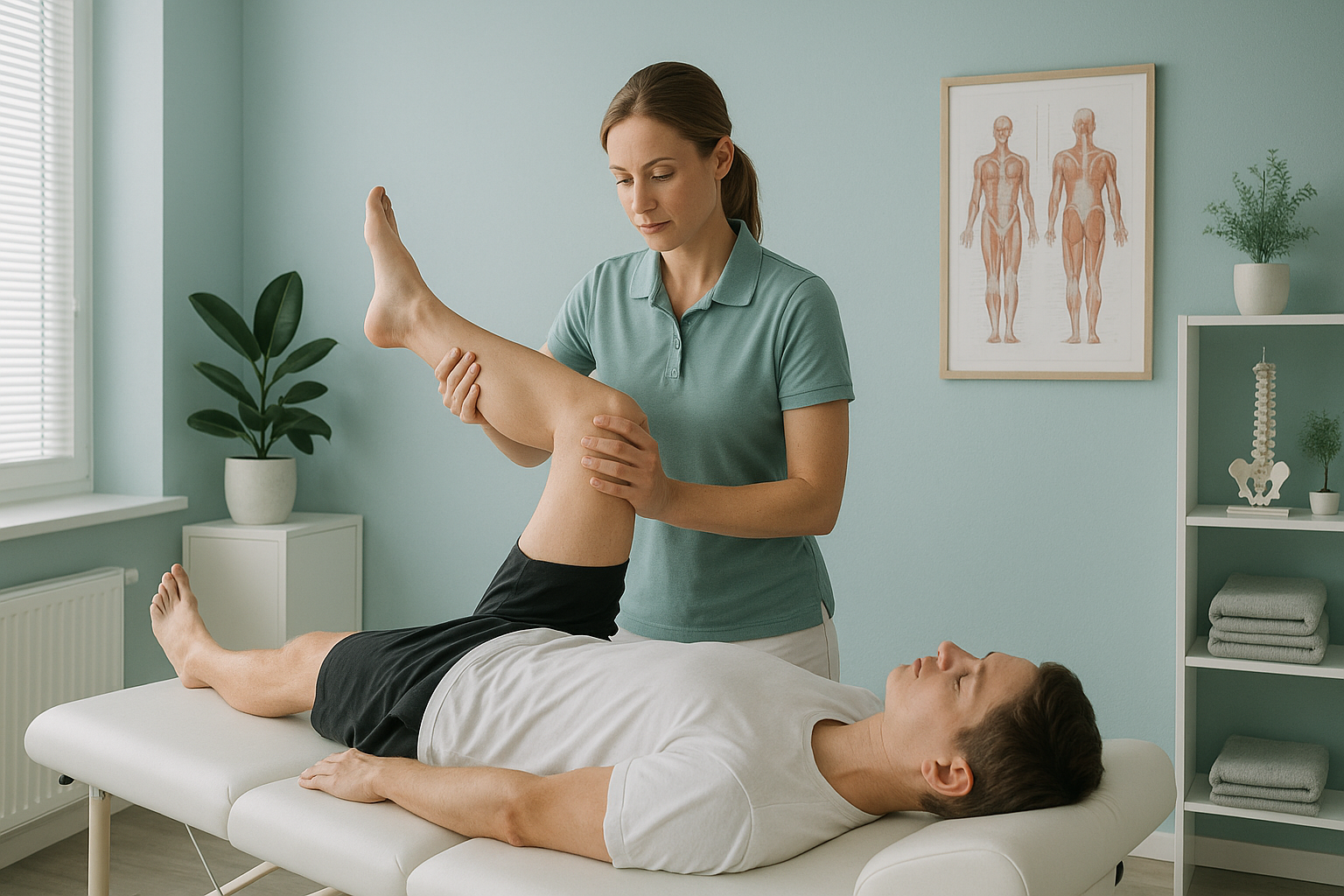
What Can Physiotherapy Actually Change, and What Can It Not?
Physiotherapy can improve muscle strength, joint range of movement, pain levels, and how you move. It cannot change bone shape, fixed joint deformity, or structural alignment problems that are built into your skeleton. Knowing which category your problem falls into is the key to setting realistic goals and getting better results.
Key takeaways
- Physiotherapy builds strength, improves movement patterns, and can reduce pain.
- It cannot reshape bones or correct a fixed structural deformity.
- Understanding your body's structure helps your physiotherapist set the right targets.
- A standing whole-body image can show which problems are structural and which are muscular.
- Combining clear imaging with good physiotherapy gives you the best chance of progress.
What does physiotherapy actually do for your body?
Physiotherapy works on the parts of your body you can train and adapt. It targets muscles, connective tissue, and the nervous system to help you move better, feel less pain, and build capacity. Think of it as reprogramming how your body handles load and movement.
These are real, measurable changes. A good physiotherapist will track your progress with outcome measures, things like how far you can bend, how long you can walk, or how your pain scores change week to week. If you have a muscle imbalance, physiotherapy is one of the best tools to address it.
What are the limits of physiotherapy?
Physiotherapy cannot change your skeleton. If a bone is shaped a certain way, or a joint has worn down over years, no amount of exercise will reshape it. This is not a criticism of physiotherapy. It is simply how bones work.
- Muscle weakness or tightness
- Poor movement habits
- Joint stiffness from inactivity
- Sensitised pain responses
- Balance and coordination
- Bone shape or length
- Fixed joint deformity
- Structural leg-length difference
- Advanced joint wear (arthritis)
- A curved spine caused by bone wedging
This is where knowing the difference matters. If your back pain comes from weak core muscles and poor movement habits, physiotherapy can make a big difference. If your back pain comes from a structural curve or a pelvis that sits unevenly because one leg is shorter, no exercise programme will fix the underlying cause. The exercises may still help you cope, but they are working around the problem rather than solving it.
People with hypermobility syndrome face a similar challenge. Physiotherapy is essential for building stability, but the underlying joint laxity is part of your body's make-up and cannot be "corrected."
Is physiotherapy different from just doing exercise?
Yes. General exercise is good for your health, but physiotherapy is targeted. A physiotherapist assesses where you are weak, stiff, or moving poorly and builds a programme around your specific problems. General exercise does not do that.
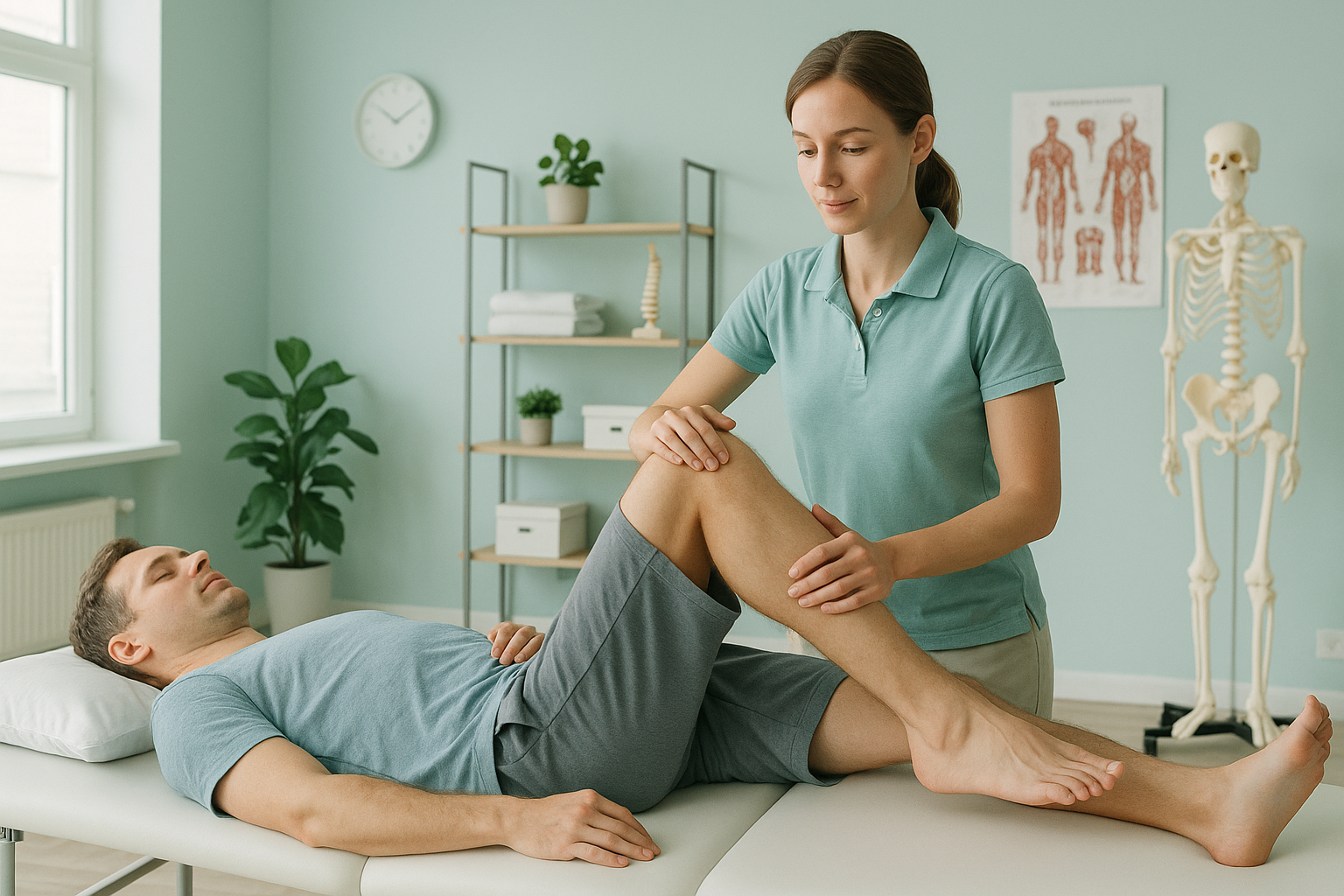
The home programme your physiotherapist gives you is the part that makes the biggest difference. Most of your progress happens between sessions, not during them. That is why consistency with your exercises matters more than the number of clinic visits.
For a broader look at how posture fits into all of this, see our posture correction guide.
How many physio sessions do I need?
There is no single answer. It depends on what is wrong, how long it has been going on, how active you are, and how consistently you do your home programme. Most physiotherapists will reassess after a few sessions to check whether things are moving in the right direction.
What matters more than session count is whether you are seeing measurable progress. If your range of movement is improving, your pain is settling, or you can do more than before, you are on the right track. If nothing is changing after a reasonable period, it is worth asking why.
Stuck in a cycle of physio without progress? A standing whole-body image can show whether a structural problem is limiting what physiotherapy can achieve.
Book a free video consultationWhy does knowing your body's structure help physiotherapy work better?
Because it tells your physiotherapist what is realistic. If imaging shows that your pelvis sits level and your spine is structurally sound, your physiotherapist can confidently target muscle weakness and movement retraining. If imaging shows a structural issue, like a leg-length difference or a fixed curve, your physiotherapist can adjust their goals and focus on managing the problem rather than trying to fix something that cannot be fixed with exercise.
Your body is a connected chain from your feet to your head. A problem at one level often makes another area compensate. Pain frequently shows up away from its true cause. Standard imaging, taken lying down, relaxes the muscles and can hide alignment problems that only appear when you are standing and weight-bearing.
ScanAlign standing EOS imaging captures your full skeleton from head to feet while you stand naturally. The scan uses about 90% less radiation than a standard X-ray, around ten times less. This gives your physiotherapist, surgeon, or other clinician a clear map of your alignment under real-world conditions, so they can plan around your actual structure.
A note on MRI. EOS shows bones, joints, and alignment beautifully. For soft tissue, discs, or nerves, MRI is usually the better tool. The two work well together, each answering different questions.
Frequently asked questions
Yes, for many types of back pain. It is one of the most evidence-supported treatments available. It works best when the pain is related to muscle weakness, stiffness, or poor movement habits rather than a fixed structural problem.
It can improve posture that is driven by muscle weakness or tightness. It cannot change posture caused by bone shape or a fixed spinal curve. That is why understanding your structure matters before setting posture goals.
A standing whole-body image is one of the clearest ways to tell. It shows your bones and joints under load, revealing alignment issues that would not appear on a scan taken lying down.
There is no fixed number. Your physiotherapist should be measuring specific outcomes, like range of movement or pain scores, and you should see some change within a few weeks. If nothing is improving, it is worth investigating further.
They serve different purposes. Physiotherapy targets your specific weaknesses and movement problems. General gym exercise builds overall fitness. Ideally, you do both, with your physiotherapy guiding which exercises matter most for your body.
Absolutely. A standing whole-body EOS image gives your physiotherapist a clear picture of your skeletal alignment. This helps them set realistic goals and tailor your programme to work with your structure, not against it.
Yes. The EOS system uses about 90% less radiation than a standard X-ray, around ten times less. The scan is quick, painless, and taken while you stand naturally.
No. ScanAlign is a private self-pay service. You can refer yourself. The process starts with a free video consultation to check whether the scan is appropriate for your situation.
Pricing details are available on our FAQs and cost page.
These are red-flag symptoms. Please seek urgent medical attention, through your GP, NHS 111, or A&E, rather than booking a scan. These symptoms need immediate assessment.
Not sure if your problem is structural or muscular?
A free video consultation can help you understand whether a standing whole-body scan would add useful information for you or your physiotherapist.
Book a free video consultationWritten by Abbas Dhami (Specialist Diagnostic Radiographer)
Sources
- National Institute for Health and Care Excellence (NICE). Low back pain and sciatica in over 16s: assessment and management (NG59). 2016, updated 2020.
- Chartered Society of Physiotherapy. What physiotherapy is. csp.org.uk.
- Illés T, Somoskeöy S. The EOS imaging system and its uses in daily orthopaedic practice. International Orthopaedics. 2012;36(7):1405-1411.
This page is general information and not a diagnosis.
ScanAlign is the trading name of CoreMed Solutions Ltd and operates under The Harley Street Hospital's CQC licence.