
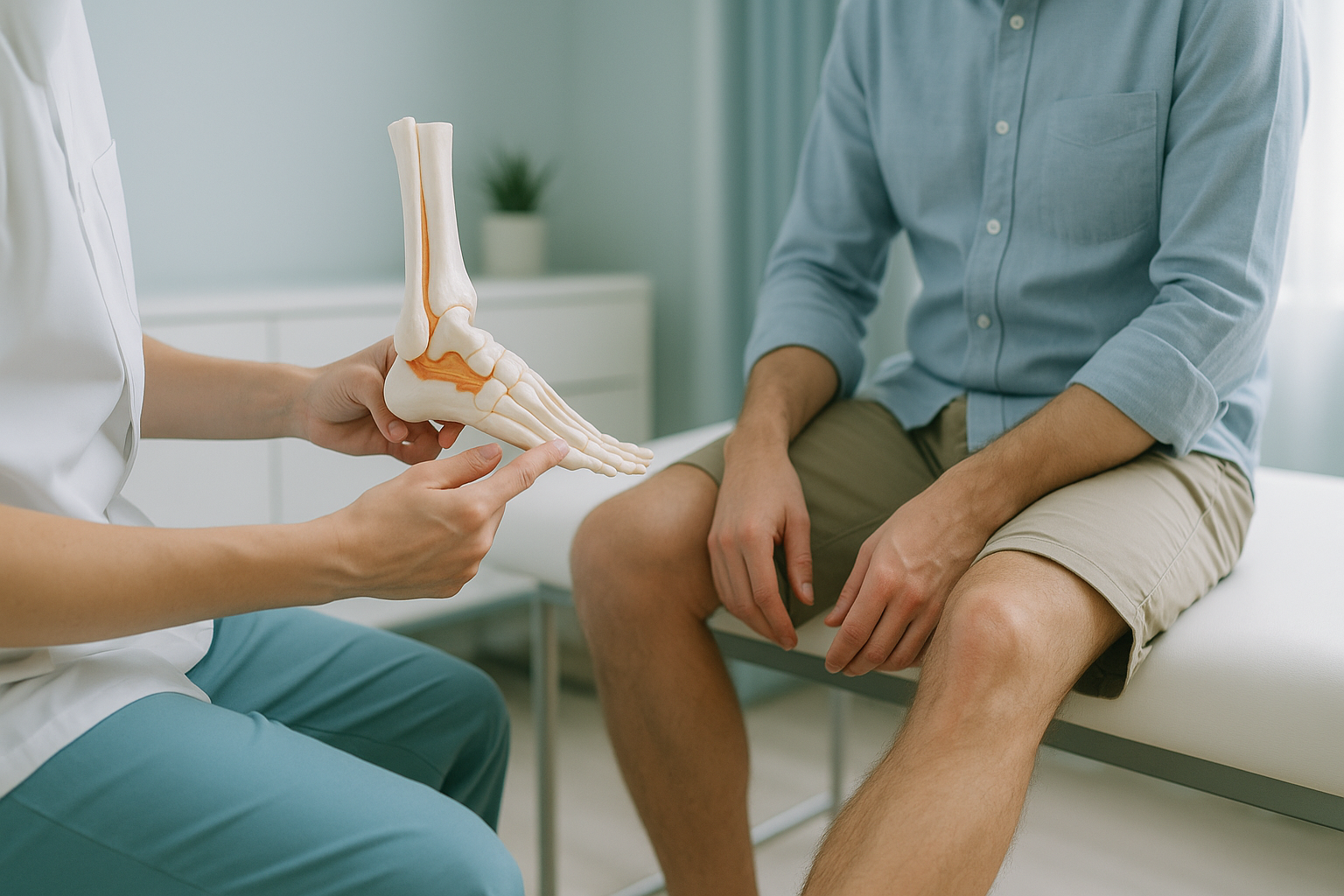
What Causes Achilles Tendinopathy, and How Long Does It Take to Heal?
Achilles tendinopathy is caused by repeated overloading of the Achilles tendon, the thick band connecting your calf muscles to your heel bone. Recovery typically takes three to six months of consistent rehabilitation, though it can be longer if alignment problems elsewhere in the body are adding extra strain. The condition is sometimes called achilles tendonitis, but tendinopathy is the more accurate term because it involves tendon degeneration rather than pure inflammation.
Key takeaways
- Achilles tendinopathy is a wear-and-tear problem, not simply inflammation. Tendonitis and tendinopathy refer to the same condition at different stages.
- The main cause is repeated overloading, often combined with sudden increases in training volume, poor footwear, or tight calf muscles.
- Healing usually takes three to six months with the right rehabilitation programme, but timelines vary.
- Problems in your leg alignment, hip, or foot posture can quietly overload the tendon, and these only show up on standing, weight-bearing imaging.
- EOS standing imaging captures your whole lower limb under load so your clinician can see alignment issues that lying-down scans may miss.
Your Achilles tendon is the strongest tendon in your body. It connects the gastrocnemius and soleus muscles (the two main calf muscles) to your heel bone, and it works every time you walk, run, jump, or push off the ground. When the tendon is loaded beyond what it can cope with, the internal fibres start to break down faster than the body can repair them. That is achilles tendinopathy.
You may see the term "achilles tendonitis" used interchangeably. Historically, clinicians assumed the pain was caused by inflammation. We now know that in most long-standing cases, the tendon shows disorganised collagen and failed remodelling rather than active inflammation. Tendinopathy covers both the early irritated phase and the later degenerative phase, making it the more useful word.
What does achilles tendinopathy feel like?
Achilles pain typically starts as a dull ache or stiffness at the back of the ankle, often worst first thing in the morning or after sitting for a long time. It may ease once you start moving, then return after exercise.
When to seek urgent help. If you feel a sudden snap at the back of the ankle, cannot bear weight, or experience numbness, weakness, or loss of bladder or bowel control, contact your GP, call 111, or go to A&E straight away. These symptoms require immediate medical attention, not a scan booking.
What causes achilles tendinopathy?
The root cause is almost always repeated overloading of the tendon beyond its current capacity. But what pushes it past that threshold varies from person to person.
Your body is a connected chain from feet to head. When your leg alignment is off, the tendon may be taking extra strain even during everyday walking. Understanding how gait is assessed helps explain why the problem can persist despite rest.
What is the difference between midportion and insertional achilles tendinopathy?
The two types are defined by where on the tendon the damage occurs. They behave slightly differently and respond to different loading approaches.
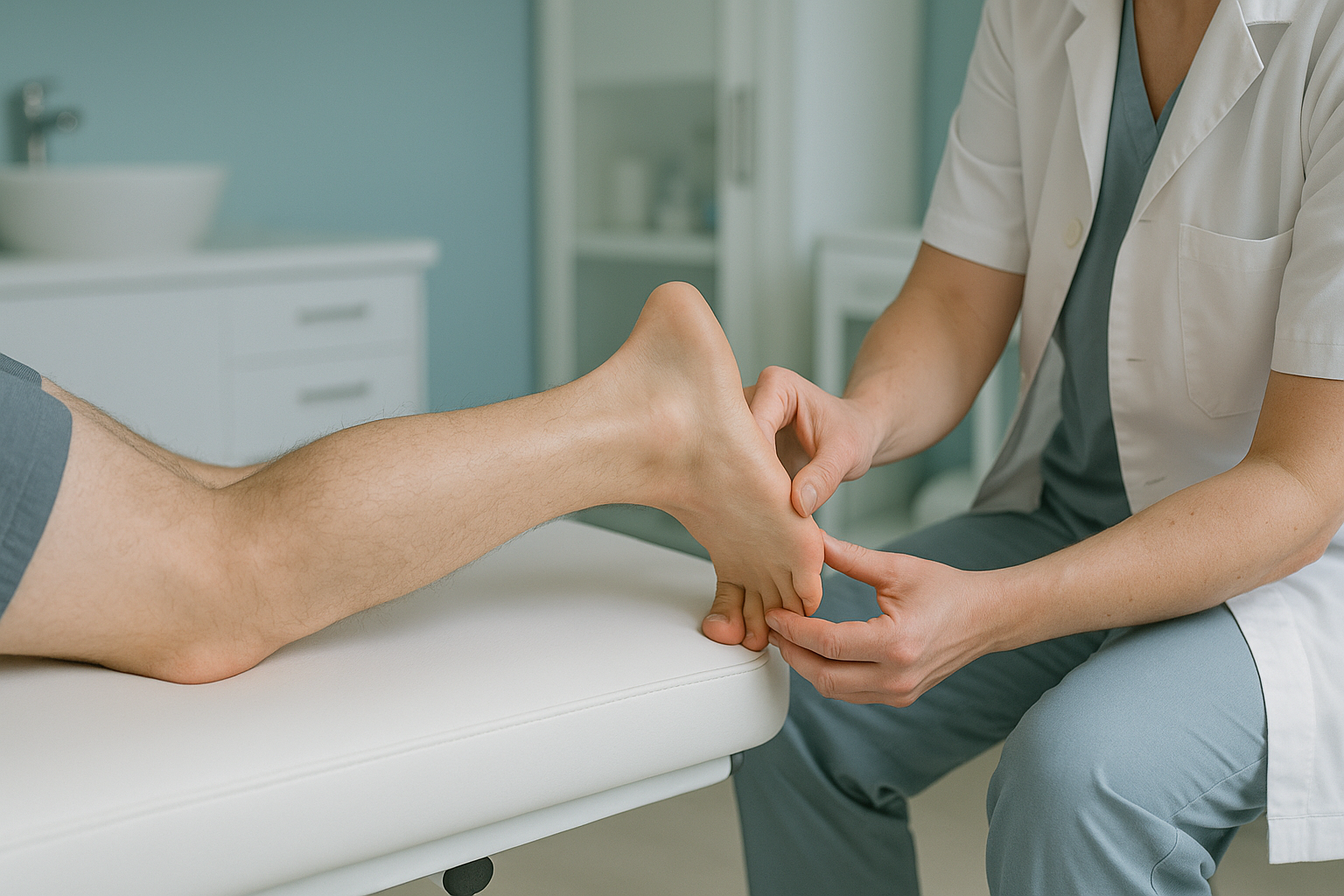
Midportion tendinopathy affects the middle section of the tendon, roughly two to six centimetres above the heel. This is the most common type and is strongly linked to running load and calf tightness.
Insertional achilles tendinopathy affects the point where the tendon attaches to the heel bone. It is more common in people who are less active and may involve bony changes at the insertion. It can also be aggravated by footwear that presses on the back of the heel.
How long does achilles tendinopathy take to heal?
Most people see meaningful improvement within three to six months of a structured loading programme. However, some cases take longer, especially if the problem has been present for over a year or if an underlying alignment issue continues to add strain.
Tendon remodelling is a slow biological process. Unlike muscle, which has a rich blood supply, tendons receive less blood flow and therefore heal more slowly. That is why quick fixes rarely work and why patience with a progressive loading plan is essential.
If your achilles pain keeps returning despite good rehabilitation, it may be worth looking further up the chain. A subtle rotation in the hip, a small leg-length difference, or an altered foot posture can keep overloading the tendon without you realising it.
Persistent achilles pain that is not responding to rehab may have a hidden alignment cause. A standing whole-body scan can show what lying-down imaging misses.
Book a free video consultationHow does standing imaging help with achilles tendinopathy?
Standing, weight-bearing imaging captures your skeleton under real-life load, showing how your joints, legs, and feet actually line up when gravity is at work. Standard lying-down X-rays, CT, and MRI relax the muscles and let the joints settle into an unloaded position, which can hide alignment problems that only appear when you are upright.
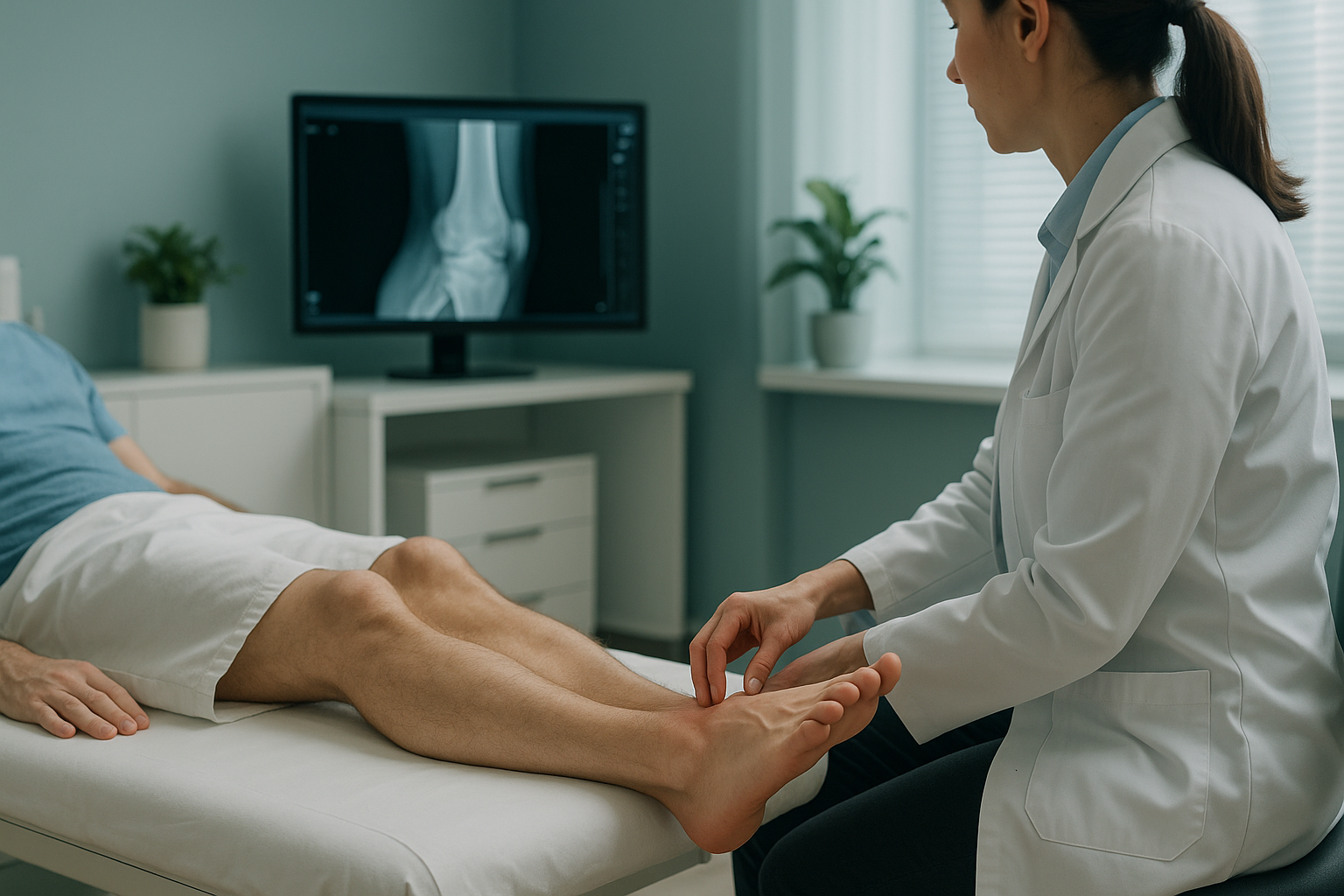
EOS is a low-dose standing X-ray system that captures your full body, from head to feet, in a single upright image. It uses about 90% less radiation than a standard X-ray, around ten times less. That means your clinician can see your entire weight-bearing chain and spot compensation patterns that may be contributing to your achilles pain.
For example, if one leg is slightly shorter or one hip sits higher, your foot and ankle on the longer side may overpronate to even things out. That extra inward roll increases the twist on your Achilles tendon. A standard ankle X-ray, taken lying down, would not reveal this. ScanAlign standing imaging in Harley Street captures the full picture.
When MRI is the better choice. EOS shows bones, joints, and alignment. If your clinician suspects a partial tendon tear, bursitis inside the tendon sheath, or other soft-tissue damage, MRI is usually the better tool for that assessment. The two types of imaging complement each other well.
What helps achilles tendinopathy recover?
The cornerstone of recovery is a progressive tendon-loading programme, usually built around exercises such as eccentric heel drops or heavy slow resistance. These exercises stimulate tendon remodelling by gradually increasing the load the tendon can tolerate. Your physiotherapist will guide the specifics.
Beyond the exercises themselves, several factors influence recovery.
- Load management. Reducing the activities that provoke your pain while keeping the tendon loaded enough to adapt.
- Calf flexibility and strength. Addressing tightness in the gastrocnemius and soleus helps distribute load more evenly.
- Footwear review. Supportive shoes with a slight heel raise can reduce strain on the tendon during daily life.
- Alignment assessment. If your lower-limb alignment is off, the tendon may keep being overloaded no matter how well your exercises are performed. Understanding the full chain, from hip to foot, is part of effective sports injury prevention.
Achilles tendinopathy can also co-exist with other conditions in the same kinetic chain, such as IT band syndrome treatment for lateral knee pain. When both are present at once, looking at whole-body alignment becomes even more important.
Frequently asked questions about achilles tendinopathy
They describe the same condition. Tendonitis implies inflammation, which may be present early on. Tendinopathy is now the preferred term because most long-standing cases involve tendon degeneration rather than active inflammation.
With a consistent loading programme, most people improve significantly within three to six months. If the condition has been present for over a year or there are contributing alignment issues, it can take longer.
It depends on the severity. Many people can continue running at a reduced volume, provided the pain stays manageable and does not worsen over time. Your physiotherapist can help you find a safe level of activity.
Eccentric heel drops, heavy slow resistance exercises, and isometric calf holds are commonly prescribed. The best programme depends on which part of the tendon is affected and your current fitness level. A physiotherapist should tailor the plan to you.
Midportion tendinopathy affects the middle of the tendon, a few centimetres above the heel. Insertional tendinopathy affects the spot where the tendon attaches to the heel bone. They respond to slightly different exercise approaches.
Yes. A leg-length difference, pelvic tilt, or foot overpronation can increase the load on one Achilles tendon. These alignment issues only show up clearly on standing, weight-bearing imaging, not on scans taken lying down.
EOS is a low-dose standing X-ray system that captures your whole body in an upright position. It uses about 90% less radiation than a standard X-ray, around ten times less. It reveals how your bones and joints align under your full body weight, helping clinicians spot compensation patterns that may be contributing to your achilles problem.
No. ScanAlign accepts self-referrals. You can book an alignment scan directly by starting with a free video consultation.
Pricing details are available on the ScanAlign FAQs and cost page.
Yes. The EOS system uses about 90% less radiation than a standard X-ray, around ten times less. It is one of the lowest-dose clinical imaging options available for full-body skeletal assessment.
Still dealing with achilles pain?
A free video consultation can help you understand whether a standing alignment scan is the right next step for you. No pressure, no commitment.
Book a free video consultationSources
- Alfredson, H. (2005). The chronic painful Achilles and patellar tendon: research on basic biology and treatment. Scandinavian Journal of Medicine & Science in Sports, 15(4), 252-259.
- NHS. Achilles tendinopathy. NHS inform. Available at: nhsinform.scot.
- Maffulli, N., Khan, K.M., Puddu, G. (1998). Overuse tendon conditions: time to change a confusing terminology. Arthroscopy, 14(8), 840-843.
Written by Abbas Dhami (Specialist Diagnostic Radiographer)
This page is general information and not a diagnosis.
ScanAlign is the trading name of CoreMed Solutions Ltd and operates under The Harley Street Hospital's CQC licence.