
Do Knee Braces and Supports Actually Work?
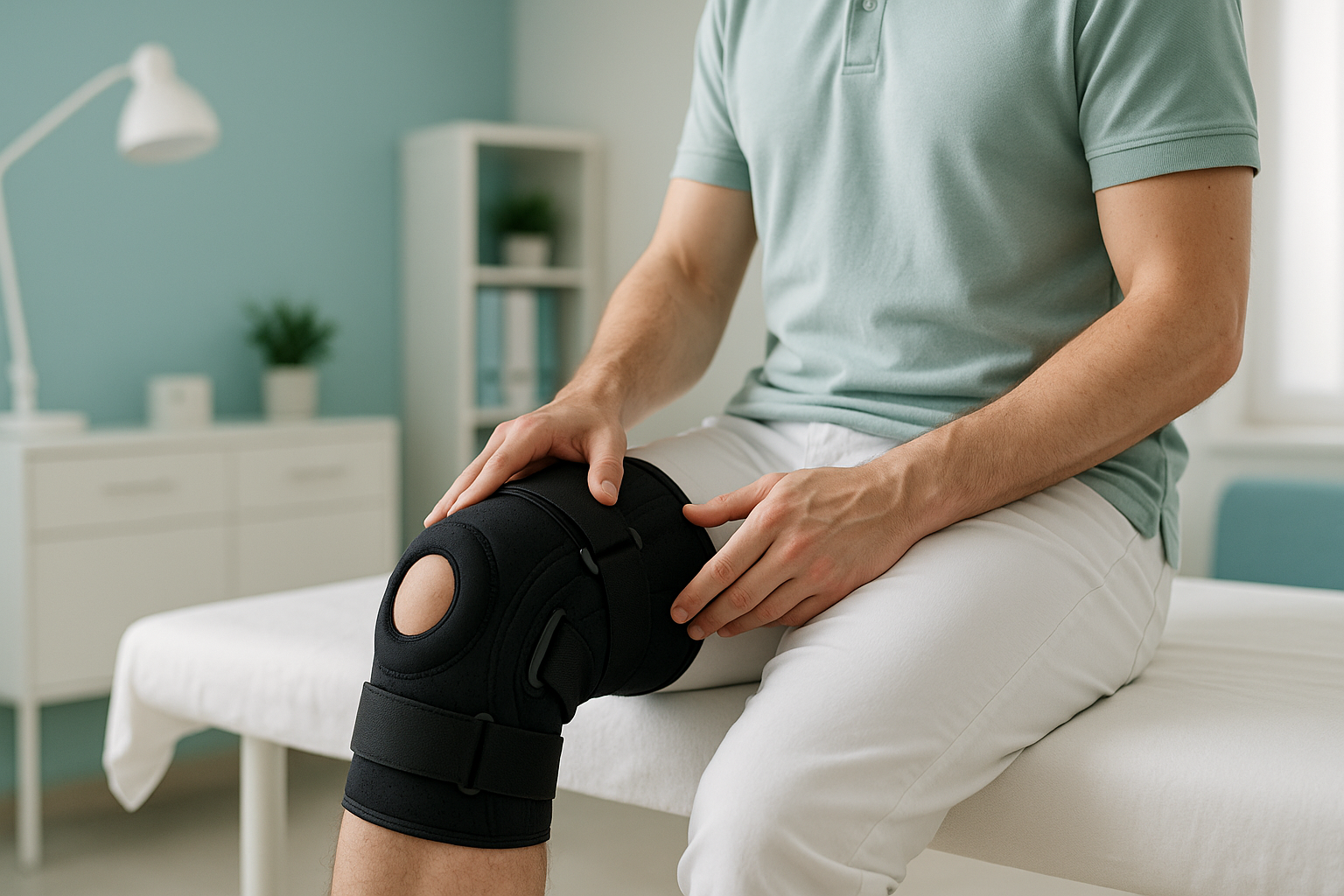
Knee braces and supports can reduce short-term pain and improve confidence during activity, but they do not fix the underlying cause of most knee problems. They work best as part of a broader plan that includes understanding your alignment and strengthening the muscles around the joint. Without knowing why your knee hurts, a brace is treating the symptom, not the source.
Key takeaways
- Knee supports offer short-term pain relief and added stability for many people.
- They do not correct the alignment or muscle imbalances that often cause knee pain.
- Choosing the right type matters. A compression sleeve, hinged brace and unloader brace each serve different purposes.
- If your pain keeps returning despite wearing a support, your leg alignment may need investigating.
- A standing, weight-bearing assessment shows how your whole leg loads the knee, something a brace cannot tell you.
If you have knee pain, a brace or support is probably one of the first things you have tried or thought about. They are widely available, relatively affordable and promise quick relief. For some people they genuinely help. For others, the pain returns the moment the support comes off. The difference often comes down to whether the real cause of the problem has been identified.
What are the main types of knee brace?
Knee supports fall into several broad categories, each designed for a different purpose. Picking the wrong type is one reason people feel they "don't work."
A stretchy pull-on tube. Provides warmth, mild compression and improved proprioception, which is your body's sense of where the joint is in space. Best for mild aches and swelling control during activity.
A narrow band that sits just below the kneecap. Designed to take pressure off the patellar tendon. Often used for runner's knee or patellofemoral pain syndrome.
Has metal or plastic hinges on either side. Limits sideways movement and protects the ligaments. Commonly used after a sprain or surgery, or for ongoing instability.
A prescription-level brace that shifts load away from the worn side of the joint. Designed specifically for knee arthritis affecting one compartment. Can reduce pain during walking.
Do knee braces actually reduce pain?
Yes, for many people they do, at least in the short term. Research shows that compression sleeves and unloader braces can lower pain scores and improve function, especially for arthritis-related knee pain. Braces work through a combination of mechanical support, improved proprioception and simple warmth, which increases blood flow and can ease stiffness.
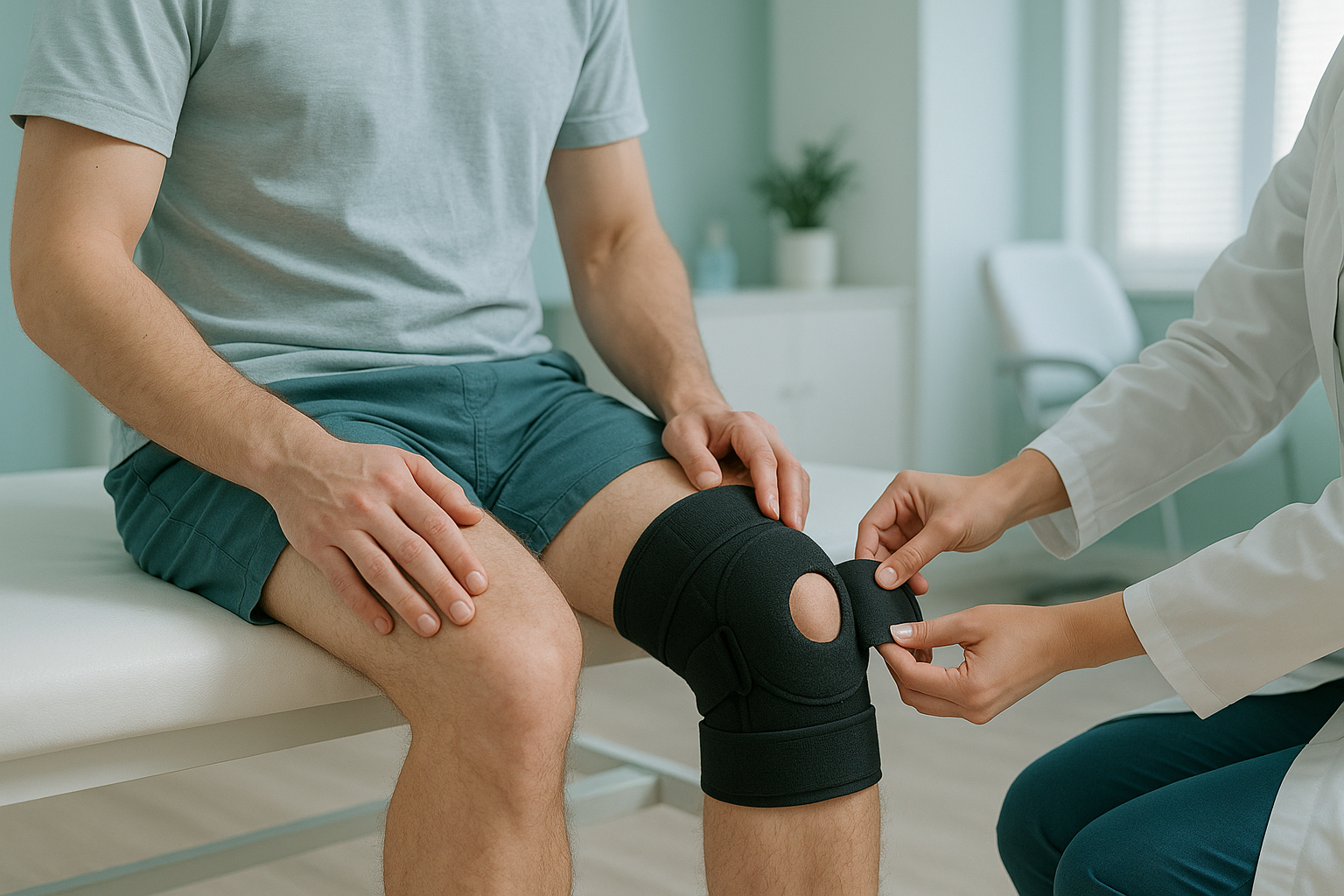
Unloader braces, in particular, have solid evidence behind them for single-compartment arthritis. They gently push the knee into a slightly different angle to take weight off the damaged side. However, they need to be properly fitted and the underlying alignment must be understood first, otherwise the brace may not target the right compartment.
The pattern most people notice is that a brace helps during activity but the benefit fades over weeks or months. This is not because the brace has "stopped working." It is because the reason the knee hurts has not changed.
Why does my knee still hurt with a brace on?
A knee brace manages symptoms. It does not correct the mechanical reasons your knee is overloaded in the first place. Several common issues sit beyond what any support can address.
If your hip, knee and ankle do not stack in a straight line, one side of the knee takes more load. This is common in knock knees and bowed legs.
Patellar maltracking means the kneecap does not glide centrally when you bend. A strap may ease the feeling, but it cannot fix the track itself.
The muscles at the front of your thigh are the knee's natural brace. When they are weak, a support does the work your muscles should be doing, which can make them weaker over time.
There is also a psychological component. A brace can make you feel more secure, which is genuinely helpful for returning to activity after an injury. But relying on it long-term without investigating the root cause can delay proper management.
How does leg alignment affect whether a knee brace works?
Leg alignment is the single biggest factor in how load passes through your knee. If your leg is even slightly angled inward or outward, one compartment of the knee bears more weight than it should. Over time, this accelerates wear and causes pain.
Your body is a connected chain from your feet to your spine. A tilted pelvis can angle the thighbone. A flat foot can rotate the shinbone. The knee sits in the middle and absorbs every misalignment above and below. A brace wrapped around the joint has no way of influencing what is happening at the hip or ankle.
This is why two people with the same diagnosis, say early arthritis on the inner side of the knee, can have very different experiences with the same unloader brace. If one person has good overall alignment and the other has a significant tilt further up the chain, the brace alone is not enough for the second person.
Wondering whether your knee pain is really an alignment problem? A standing whole-body assessment at ScanAlign shows how your hip, knee and ankle line up under your full body weight.
Book a free video consultationHow is knee alignment assessed when you are standing up?
EOS imaging captures your legs from hip to ankle in a single standing image, while you bear your full body weight. This is important because lying-down scans relax your muscles and joints, which can hide the very alignment shifts that cause pain when you are on your feet.
The EOS system uses about 90% less radiation than a standard X-ray, around ten times less. It produces a full-length view of both legs that a clinician can use to measure how straight your leg line is, how the kneecap sits and how the load is distributed across the joint.
This kind of information can help determine whether a knee brace is likely to be useful for you, whether an unloader design is appropriate, or whether something else entirely, such as targeted strengthening or a referral, would be more effective.
When is MRI the better choice? EOS shows bones, joints and alignment beautifully. For soft tissue problems like cartilage tears, ligament damage or nerve issues, MRI is usually the better tool. If your clinician suspects a soft-tissue injury, MRI may be recommended alongside or instead of alignment imaging.
When should you wear a knee support and when should you investigate further?
A knee support is a reasonable first step. It becomes a problem when it becomes the only step.
- You have a mild, short-lived ache during or after sport
- You are returning to activity after a known injury and need confidence
- You have been prescribed an unloader brace by a specialist who has assessed your alignment
- You use it alongside a strengthening programme, not instead of one
- Pain has lasted more than a few weeks despite wearing a support
- The knee feels worse when you take the brace off
- You notice your leg looks angled inward or outward when you stand
- You have tried several types of brace without lasting improvement
- Pain moves around, appearing at the hip, ankle or other knee
Frequently asked questions
They can if you rely on them constantly. A support takes over some of the stabilising work your quadriceps and hamstrings normally do. Used alongside strengthening exercises, this is not usually a problem. Used instead of strengthening, it can lead to gradual muscle loss.
For arthritis affecting mainly one side of the knee, an unloader brace is the most evidence-based option. For general arthritis stiffness, a compression sleeve that provides warmth and mild support is often enough. The right choice depends on where the wear is and how your leg is aligned.
No. A brace cannot change bone alignment. It can reduce symptoms caused by the malalignment, but the structural angle remains. Understanding the degree of angulation through imaging helps guide whether strengthening, orthotics or other approaches are more appropriate.
Generally, no. Most supports are designed for use during activity, not 24 hours a day. Wearing one constantly can reduce blood flow, irritate the skin and discourage the muscles from working. Follow the guidance of whoever recommended the brace.
Not at ScanAlign. You can self-refer as a private patient. The process starts with a free video consultation to make sure the assessment is appropriate for your situation.
Yes. EOS uses about 90% less radiation than a standard X-ray, around ten times less. The scan takes less than a minute while you stand naturally.
When you lie down for a traditional X-ray or MRI, gravity is no longer pushing through your joints. Alignment problems that only appear under your full body weight can be invisible on a lying-down scan. Standing imaging captures the knee as it actually works.
Pricing details are available on the ScanAlign FAQs and cost page. The initial video consultation is free and there is no obligation to proceed.
It can inform the decision. A full-length standing image shows exactly how load passes through the knee, which helps a clinician or physiotherapist recommend the correct type and fit, or suggest a different approach entirely.
Soft tissue injuries like ligament and cartilage tears are best seen on MRI. EOS is designed for bones, joints and alignment. If there is a suspicion of soft tissue damage, MRI is usually recommended. Both types of imaging can complement each other.
Stop guessing. See your alignment.
If your knee still hurts despite wearing supports, a standing whole-body assessment can show what is really going on. Start with a free video consultation.
Book a free video consultationWritten by Abbas Dhami (Specialist Diagnostic Radiographer)
Sources
- Defined Health Technology Assessment. "Unloader Braces for Medial Compartment Knee Osteoarthritis." Cochrane Database of Systematic Reviews, Cochrane Library.
- NICE Clinical Knowledge Summary. "Osteoarthritis: Management." National Institute for Health and Care Excellence (NICE), 2022.
- Brouwer, R.W. et al. "Braces and orthoses for treating osteoarthritis of the knee." Cochrane Database of Systematic Reviews, 2005; Issue 1.
This page is general information and not a diagnosis.
ScanAlign is the trading name of CoreMed Solutions Ltd and operates under The Harley Street Hospital's CQC licence.